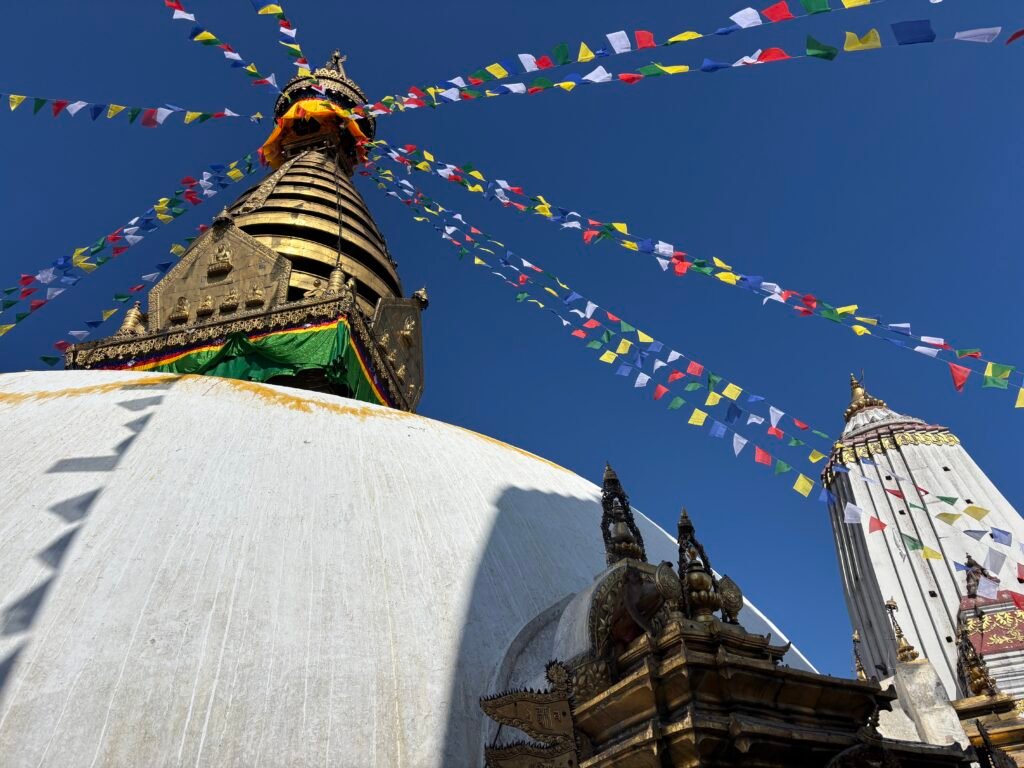
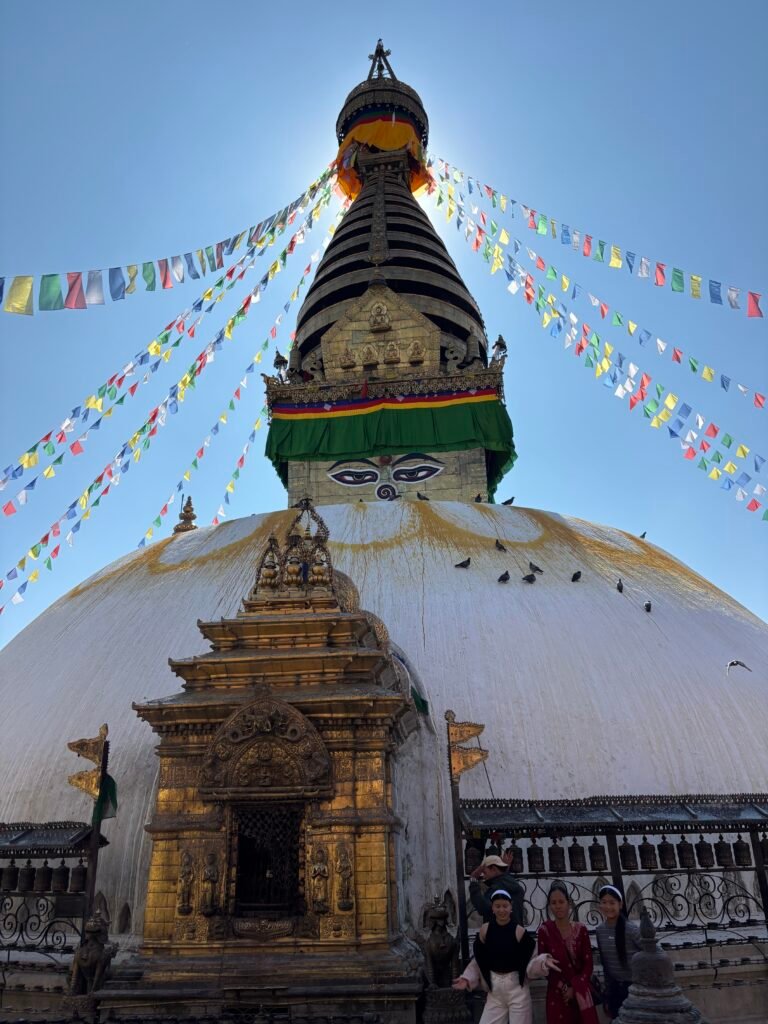
Writing and Exploring in Nepal. At our first Wild Writing meeting, we wrote and read to each other, creating a sacred group space. After this service to our creative spirits, we set out through the streets to the great Swayambunath Temple, an iconic Buddhist site on a hillside with its Eyes of Buddha in all four directions looking out at the world to remind everyone of Buddha’s teachings.
Walking in urban areas in Kathmandu Nepal is like walking in India – there are no rules and cars take no notice of pedestrians. Nepal still has its policemen standing in traffic circles pretending they are directing traffic which actually appears to chooses its own course. But it is so much quieter here — honking is basically non-existent, prohibited both by local laws and by the spirit of the people themselves. When I asked James about the changes he has seen here in the 20+ years he has inhabited this city, he mentioned the great increase in motorcycles, as in other parts of the world. Motorcycles here require helmets for those in front but the women, children and friends on the back are bare-headed and.take great risk. Cars drive on the left here, adopting the British-led rules of the road, squeaking by other vehicles and the pedestrians, so a walk means by necessity being constantly aware and vigilant of movement on the road.
While we were in a crowded market today, on a narrow street, a bicycle-rickshaw with passenger and a motorcycle moving in opposite directions tried to pass each other where there was only room for one of them. I stood and waited behind them for quite a while while the two tried to work out who needed to move first and eventually they squeezed by each and freed the few feet of roadway. The crowds are in part due to the ongoing Diwali holiday so hopefully this sort of issue does not happen that often. I was surprised to see that bicycle rickshaws are still part of the landscape here, in a capital city.
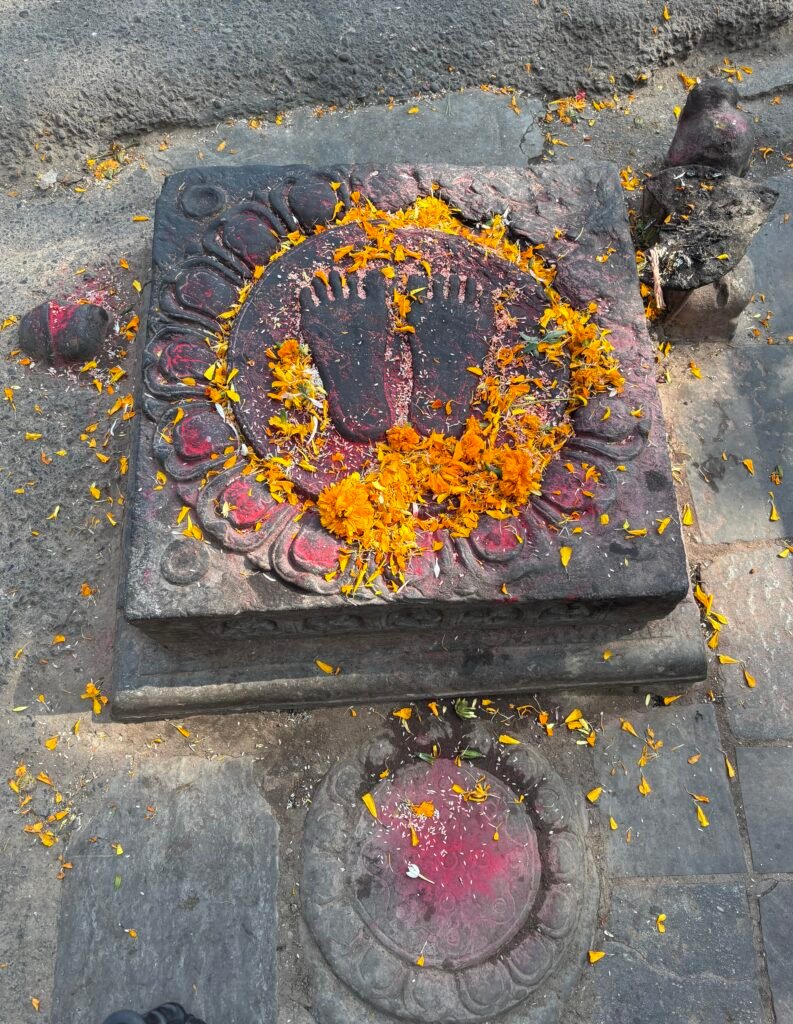
On our walk James pointed out to us the small religious stone monuments in the middle of the street, around which were newer buildings and he explained that there were many such holy relics in the city, once in the middle of forests or fields and preserved by the local population as the city expanded and encompassed all vacant land. At the foot of Swayambunath are the footsteps of the Goddess Lakshmi, venerated and, like the many images of Hindu Gods and Goddesses, part of the landscape of this Buddhist site, integrated into life here which sees them as part of the same universal spirit.
I gamely walked straight up for 365 steps plus some additional ones at the bottom bringing the total to about 400, slowly and taking some short breaks. I was huffing a little but then next to me I saw a young women in her twenties also a little short of breath and felt better about myself. The altitude of Kathmandu is about 4400 feet, so not significant but enough to perhaps cause some impact on exercise.
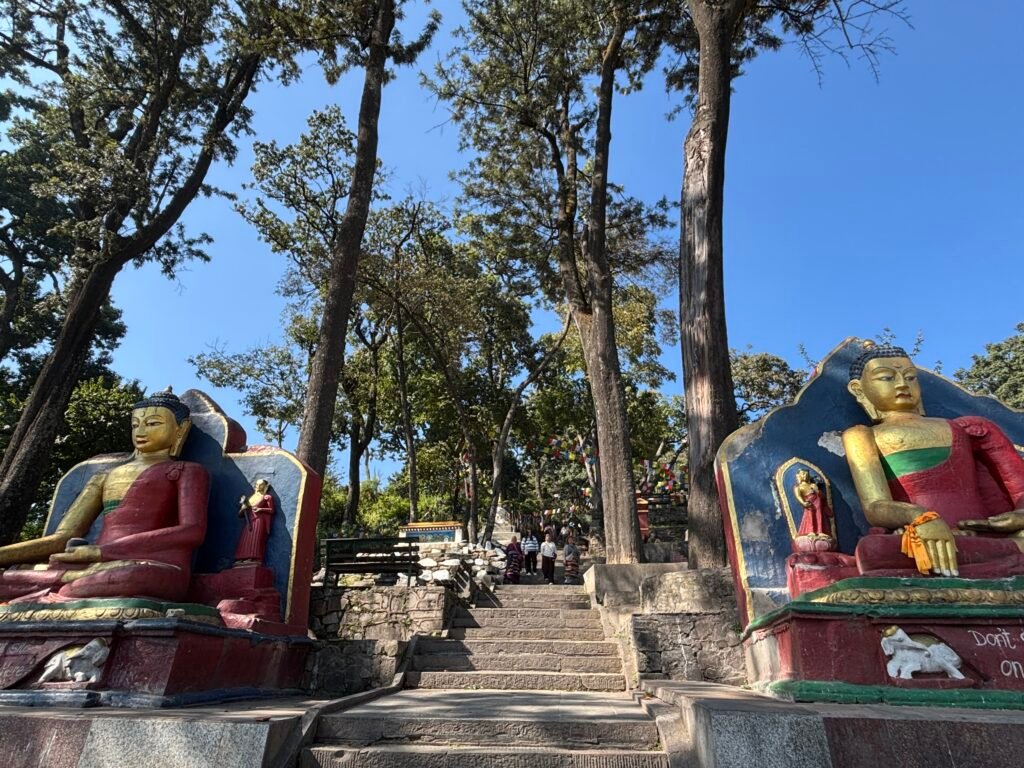
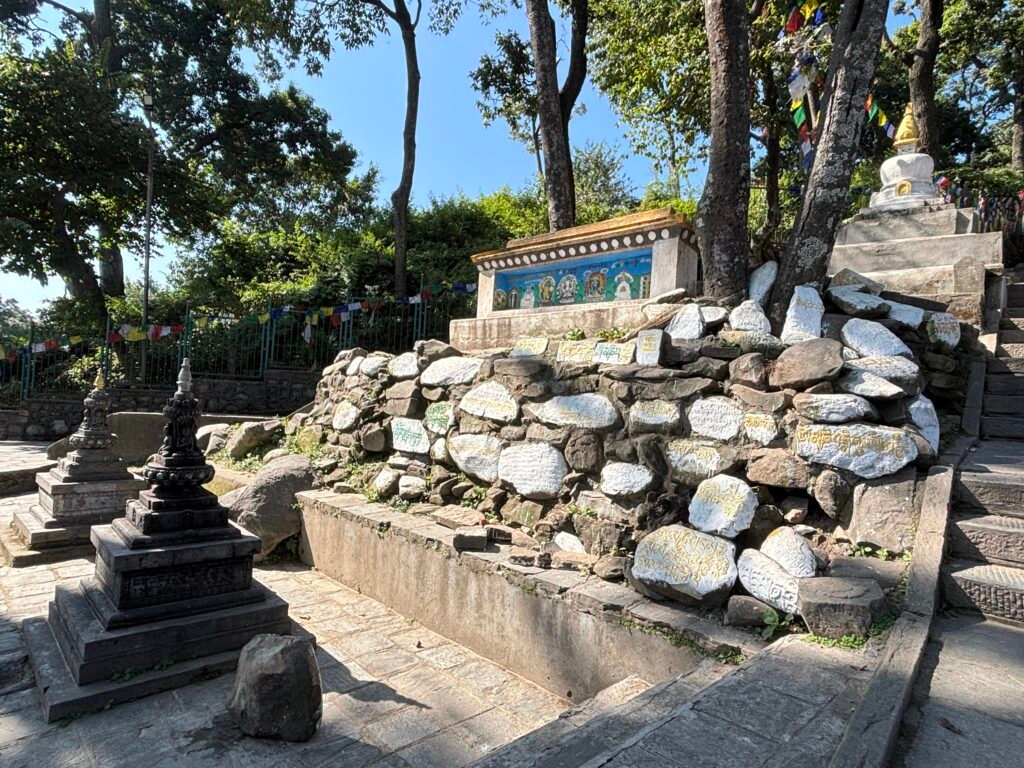
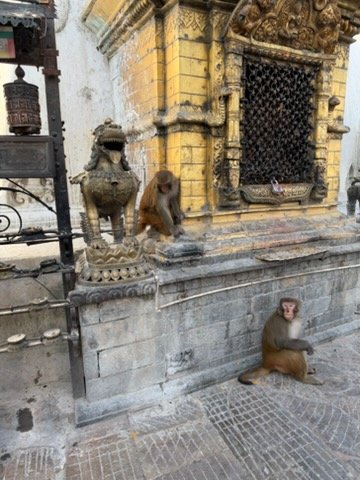
At the top we were met with my nemesis after my recent encounter in Vietnam – monkeys, in this case about 450 macaque monkeys that permanently live around the site and give this stupa the informal name of “monkey temple”. I did not know this before visiting and was surprised and put on edge. They scamper all around but I saw no negative behavior (like grabbing people’s glasses!) – maybe they have been influenced by the Buddhist prayers and precepts. The monkeys were clambering all over, with large red bottoms, many with babies clinging to their chests and little ones learning how to climb from their elders. I became more cautious with my backpack.
The stupa and surrounding buildings were greatly damaged from the Earthquake of 2015 during which many of the brick structures collapsed but have since been reconstructed. The 7.8 earthquake killed about 1,700 people in the Kathmandu area and more in the mountains. You would not know from looking at what exists today as the present surrounding prayer halls and temples look old. I heard that if a building comes down in certain parts of Kathmandu these days, it is required. to rebuild it in the old style, with wooden carved window frames and a traditional exterior and the reconstruction work at Swayambunath seems evidence of that philosophy.
At Swayambunath, there were many families visiting on this holiday as well as a general sense of both devotion and holiday enjoyment in the air.
As I headed for the restroom area, some of our group were concerned as to what I would find, but once inside I was astonished to find a sparkling white tiled set of stalls with both western and squat toilets. Everything was new and clean and worked. There was no one collecting an entrance fee but there was a basket out in the middle for donations and as Bidur had given me some rupees in advance for this excursion, I deposited it and thought how this system would not work in most other places in the world.
This brings up the lack of police presence and the recent history of Nepal in a nutshell:
The violent Civil War of 1996-2006 led by the Maoist party resulted in the abolition of the monarchy in 2008. There were additional protests in 2015 over representation in the new government. And then, only a year ago, in September 2025, there were massive protests, called the Gen Z Uprising, over government corruption, economic issues, and an elite class which led to confrontation with the military, the shooting of 19 young people, and led to destruction of police stations and the burning of government buildings. This generated an election and the establishment of a very different style of government, led by a 36-year old supporter of the Gen Z movement, formerly mayor of Kathmandu, who as Prime Minister has radically changed the perception of the government, attempting to root out corruption and said to work for the good of the common people. Our local friends tell us that one surprising result of this is that people and organizations are actually giving money to the government to disburse for good causes which only a short time ago would have been unthinkable.
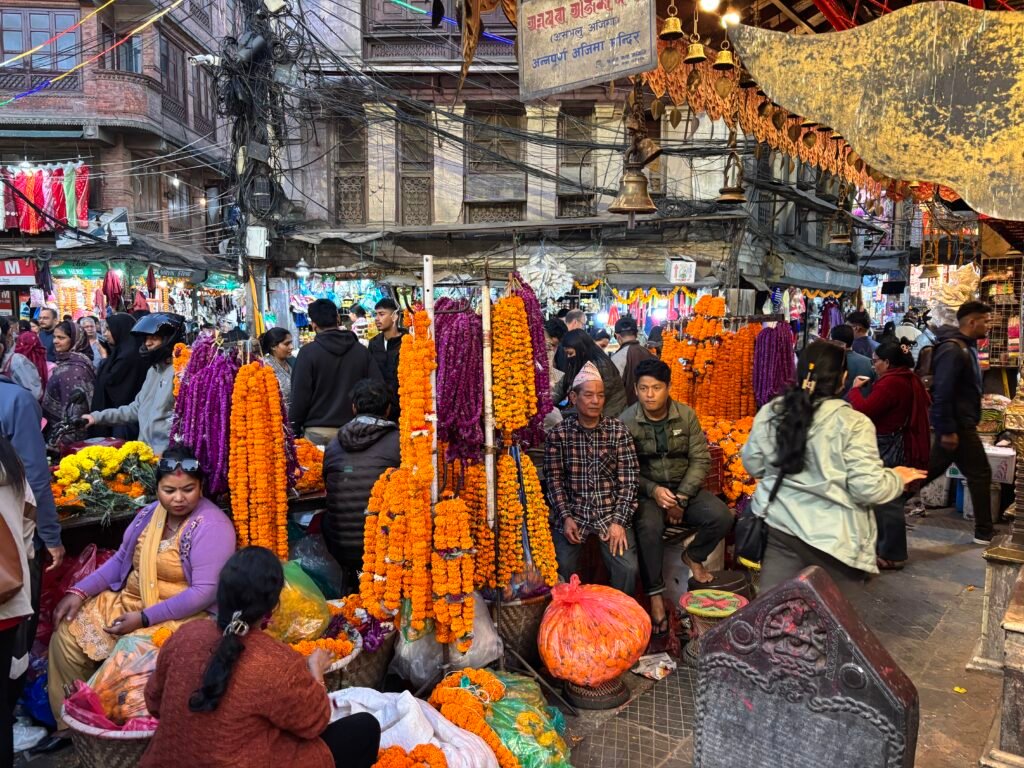
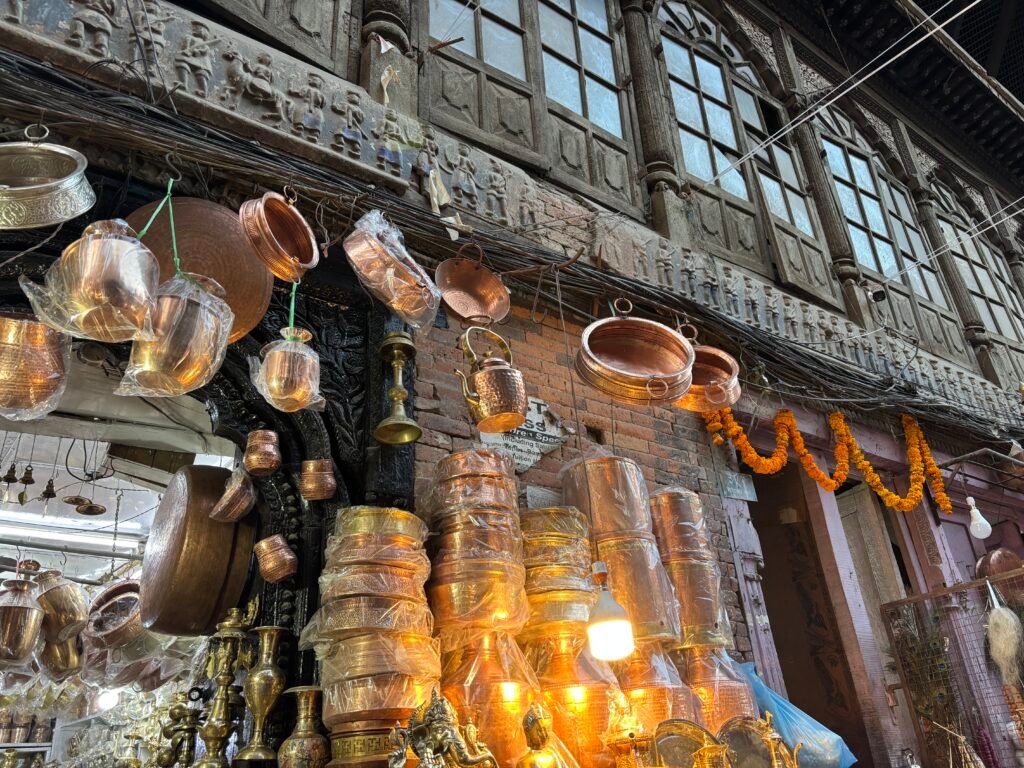
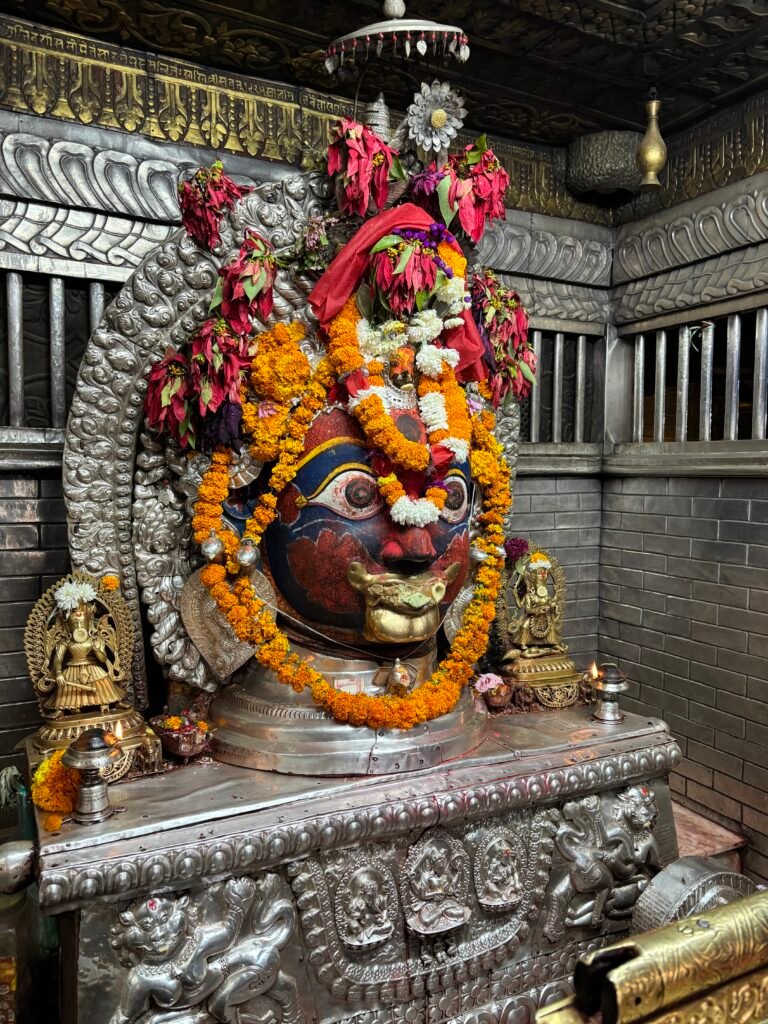
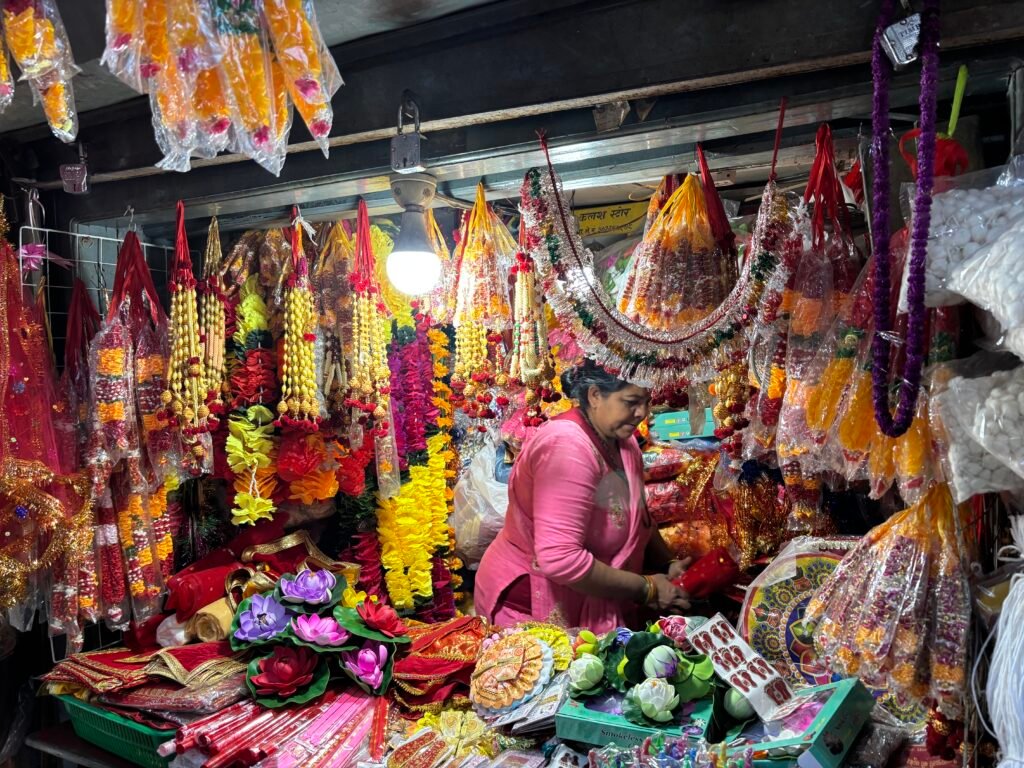
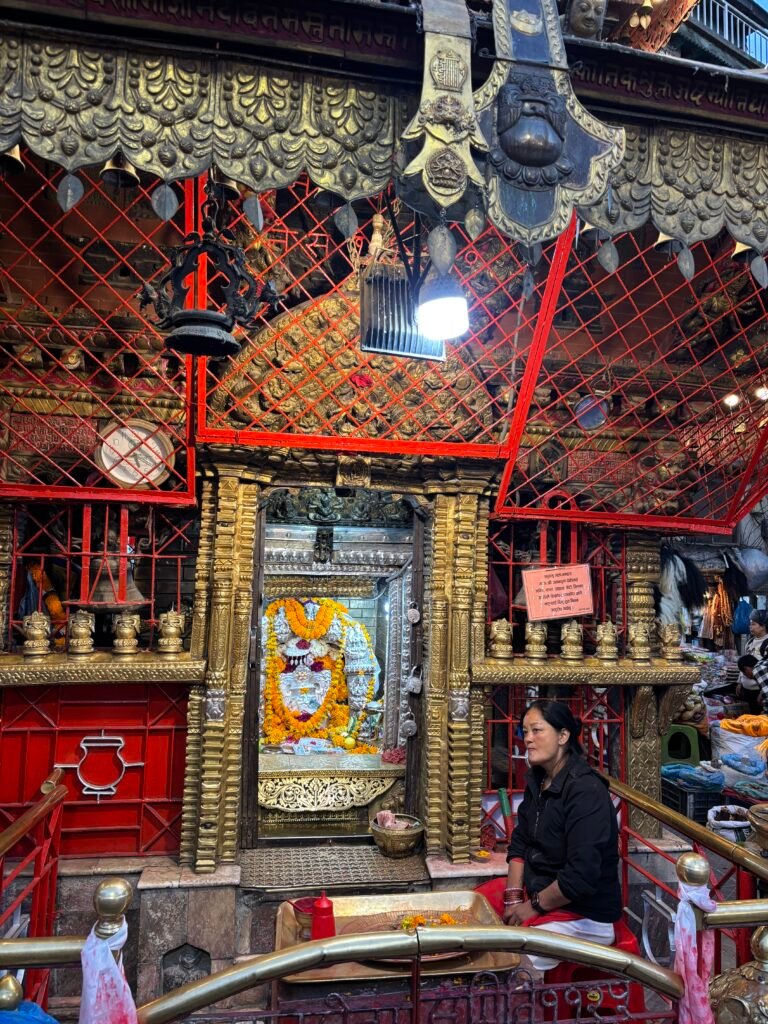
Later in the day, after lunch and rest, we enjoyed more Divali celebration by visiting the Indra Chowk market and a special ancient temple dedicated to Akash Bhairav, a fierce form of Shiva.
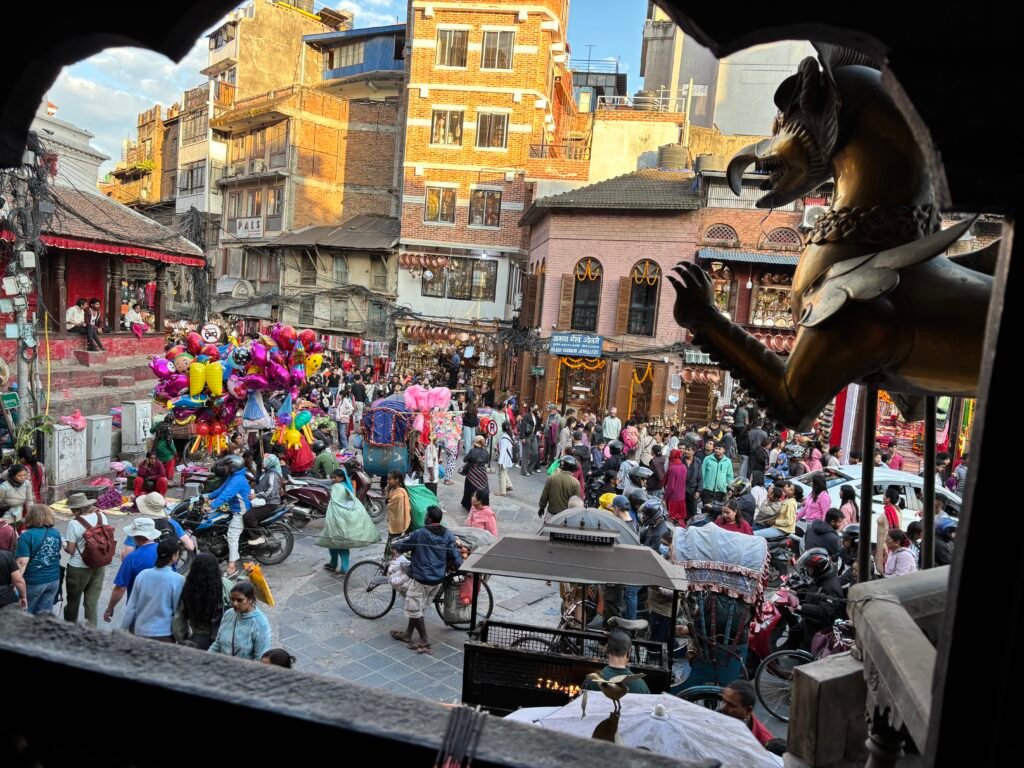
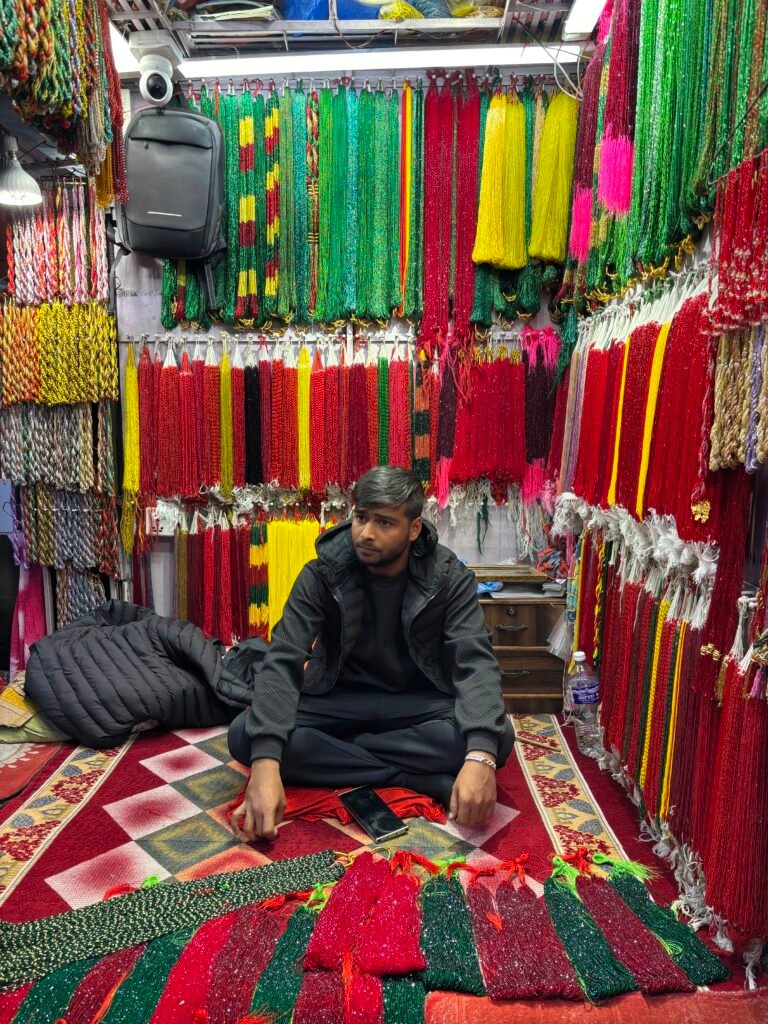
In the nearby Assan market in the center of town were the shops of the Muslim bead dealers who have been crafting glass beads for over 300 years, where crowds of people were enjoying the day. We were told the importance of the beads is as part of a traditional wedding ceremony of the Newaris, the ethnicity of the majority of the Kathmandu population. The wedding ceremony is between a very young woman and her first husband, a tree or fruit, sometimes the bel fruit or wood apple, representing Vishnu’s power. A woman could thus never become a widow even if her “second” husband should pass away thus avoiding the stigma found in other Hindu sects over widowhood. This market was selling the bright green and red beads used in that ceremony.
Our walk led from the crowded local markets to an orderly street of more upscale stores targeted for tourists, selling both beautiful local crafts, some made out of felt and metalwork and Tibetan-style paintings. Our dinner at Thamel House ended with a dance presentation of both the classical women’s form of dance, very different from but not completely unrelated to other South Asian dance forms, as well as local village folk dances. By this time, I was exhausted, still suffering from jet lag, and very happy to get back to our hotel and some sleep.