
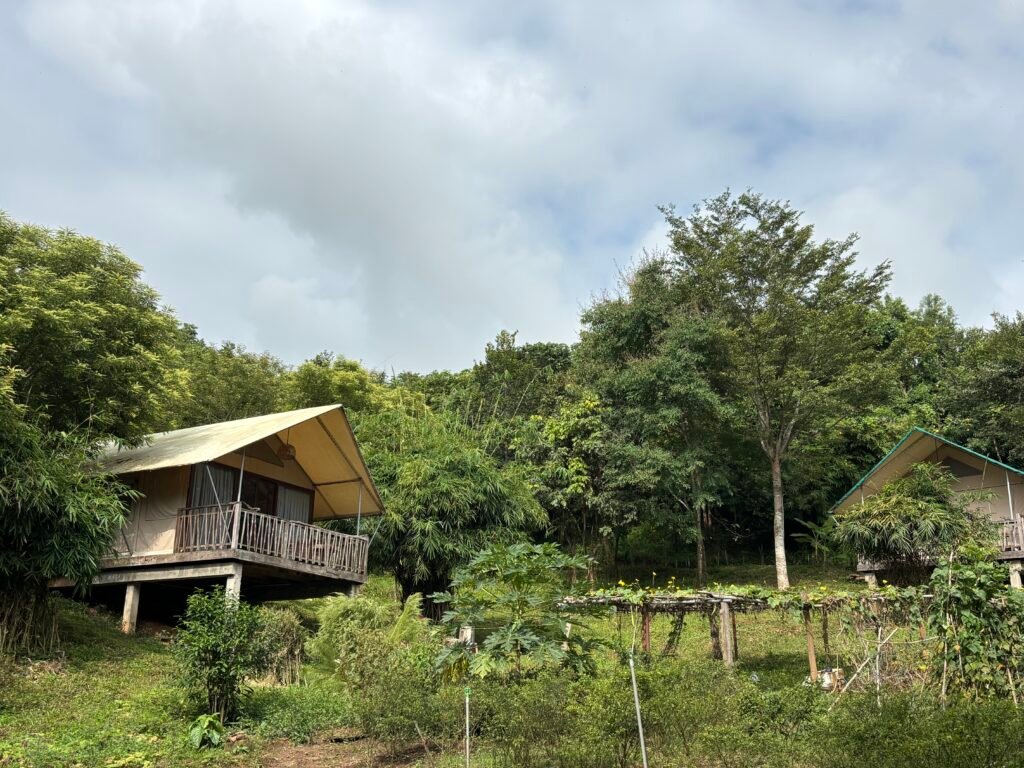
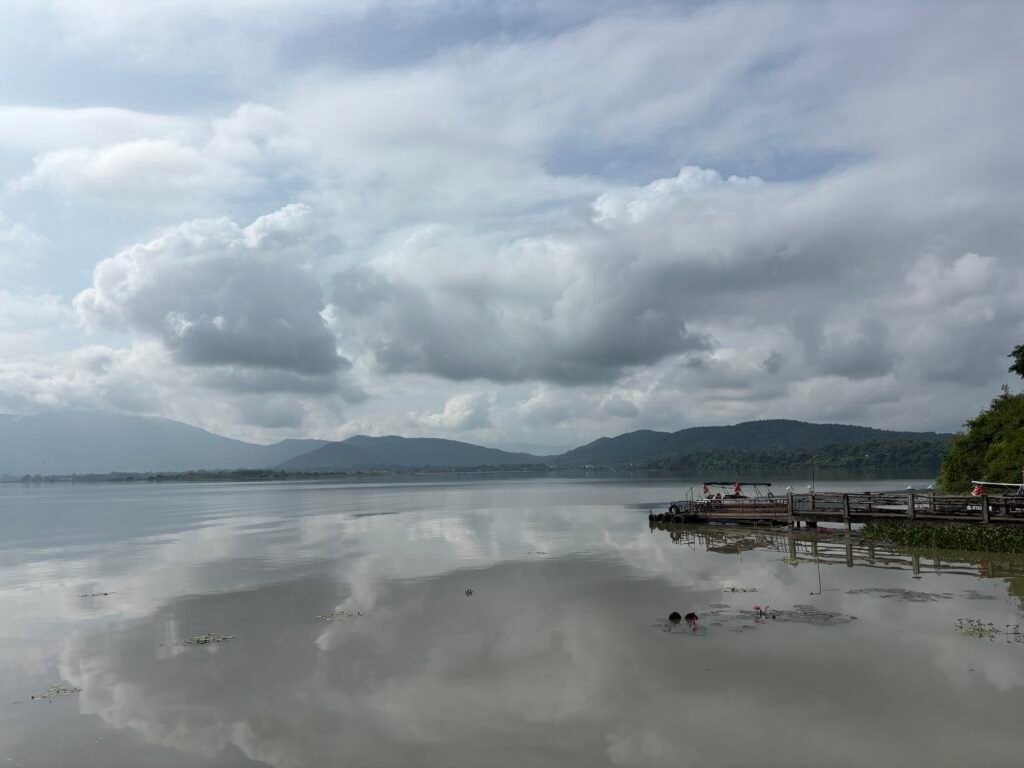
Right now I am in a luxury tent in a camp by Lak Lake with a full-blown monsoon rain pouring down around me. Lightning is flashing through the curtains and I am glad I am dry and cozy. The electricity went off for a few minutes but has now returned, bringing back my air conditioner and the lights. I am the only guest in this 15-cabin property tonight.
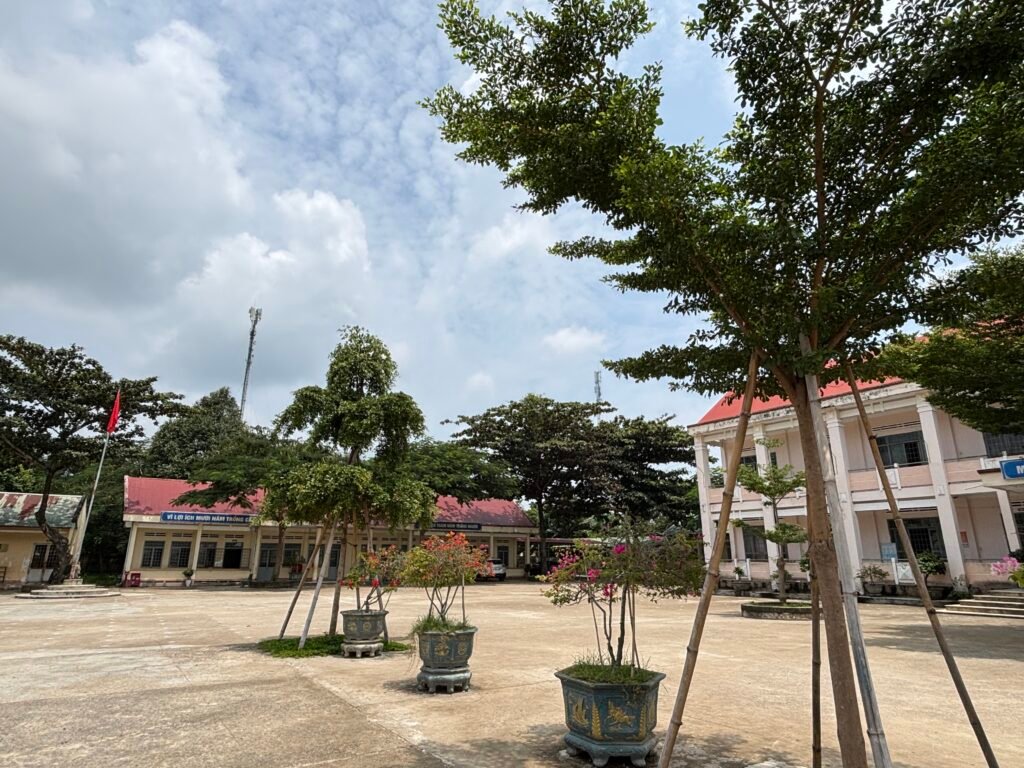
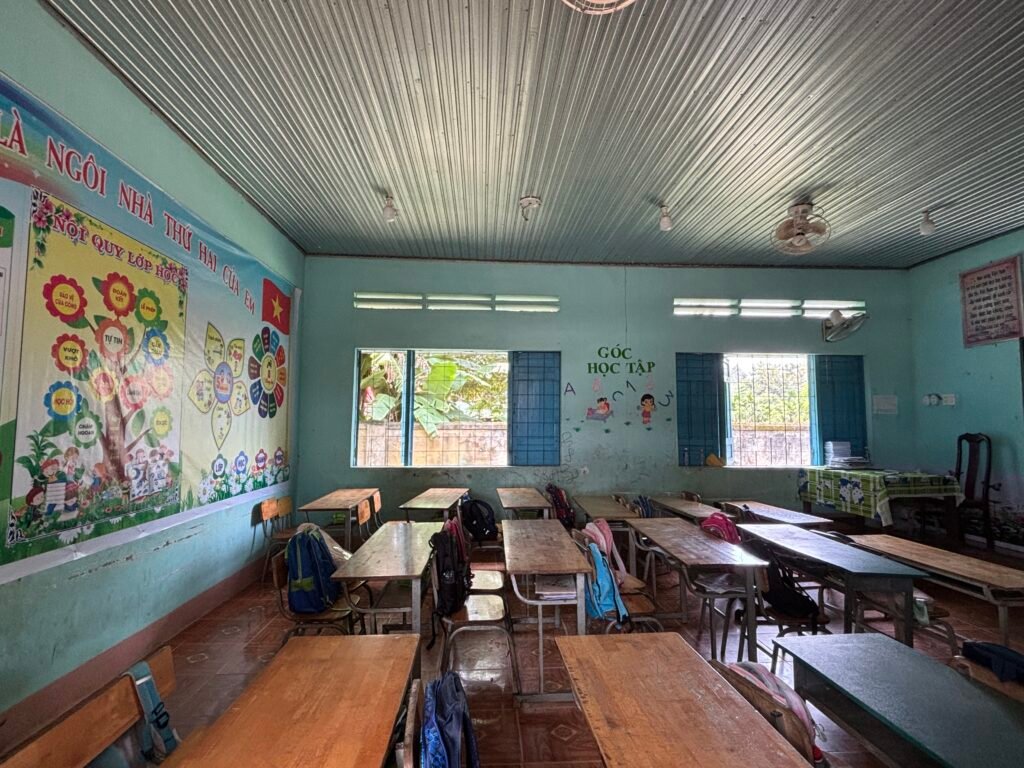
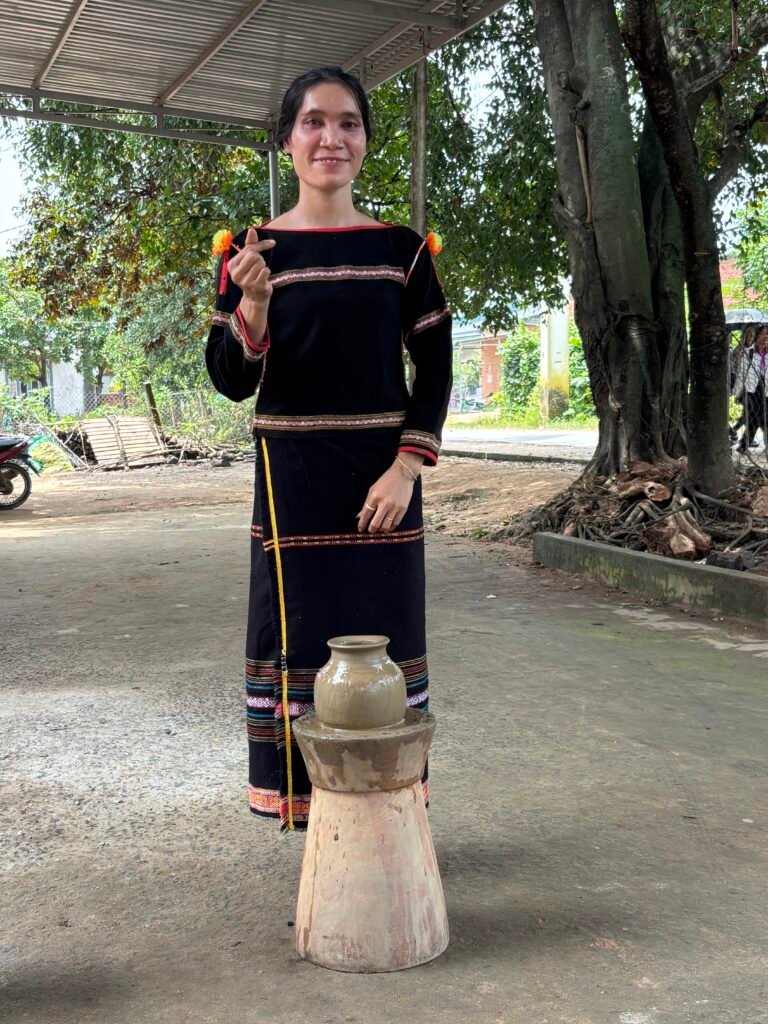
We spent time in a local Mnong Villlage where we visited a woman who makes beautiful pottery from clay harvested a short distance away. She is 30 years old and has 3 children, the oldest is 16 and youngest goes to a local primary school which we visited. The children have gone home for lunch and a few teachers are sitting outside while we walked around and peeked in their classrooms, including a computer lab. About 32-36 students per class, grades 1-5, two to a desk, everyone with back packs left during lunch break. After this school comes middle or secondary school for 4 years and then high school for 3 years. We have passed many schools in each village and town, all in decent shape and maintained I assume by the central government.
The pottery is unique because our host makes beautiful pots and urns — without a potter’s wheel. She gracefully walks around the clay and uses her fingers to shape it into a perfect round shape and smooth surface. Most pottery is then left to dry and some is cured by a wood fire, which makes the volcanic iron come out and, when polished, gives it a shiny black finish.
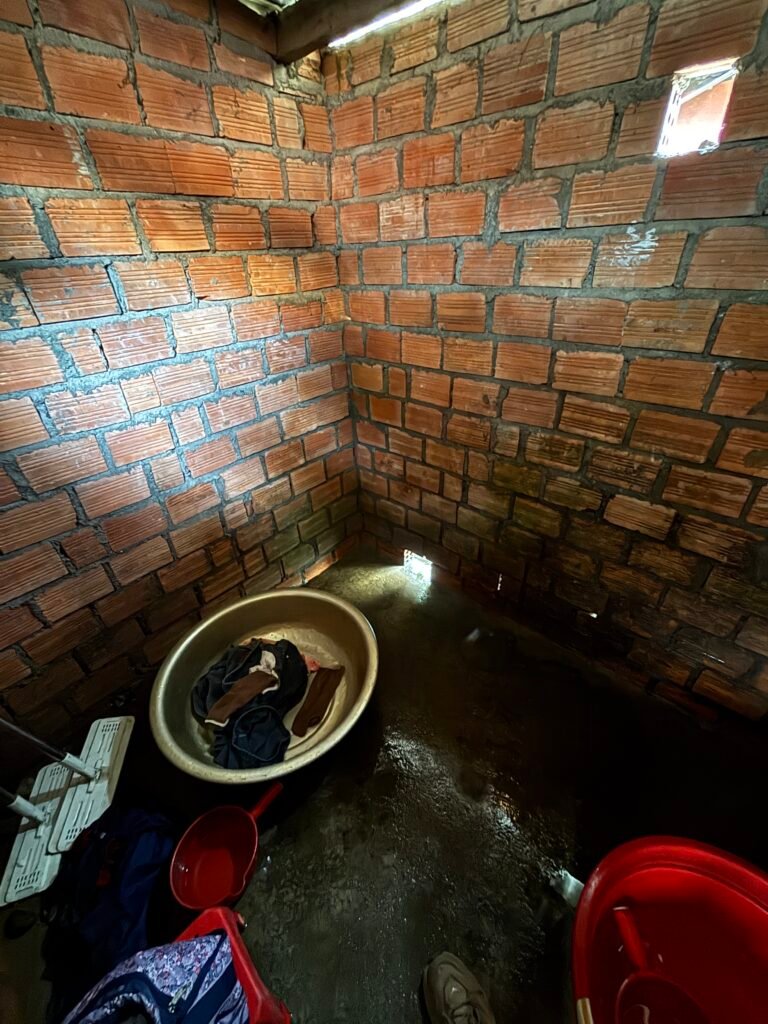
On more mundane matters, I asked to use her toilet and was taken to a shed in the back. I, who have experienced a very wide variety of latrines throughout Asia, was stymied because there was a concrete floor with plastic containers with clothes and a small square hole in the wall which was obviously the only way for any water to exit. But there was no water! No spigot or jug of water with ladle as commonly seen in rural outhouses for flushing. I confirmed with her this was where I was to go and I did, leaving nothing behind.
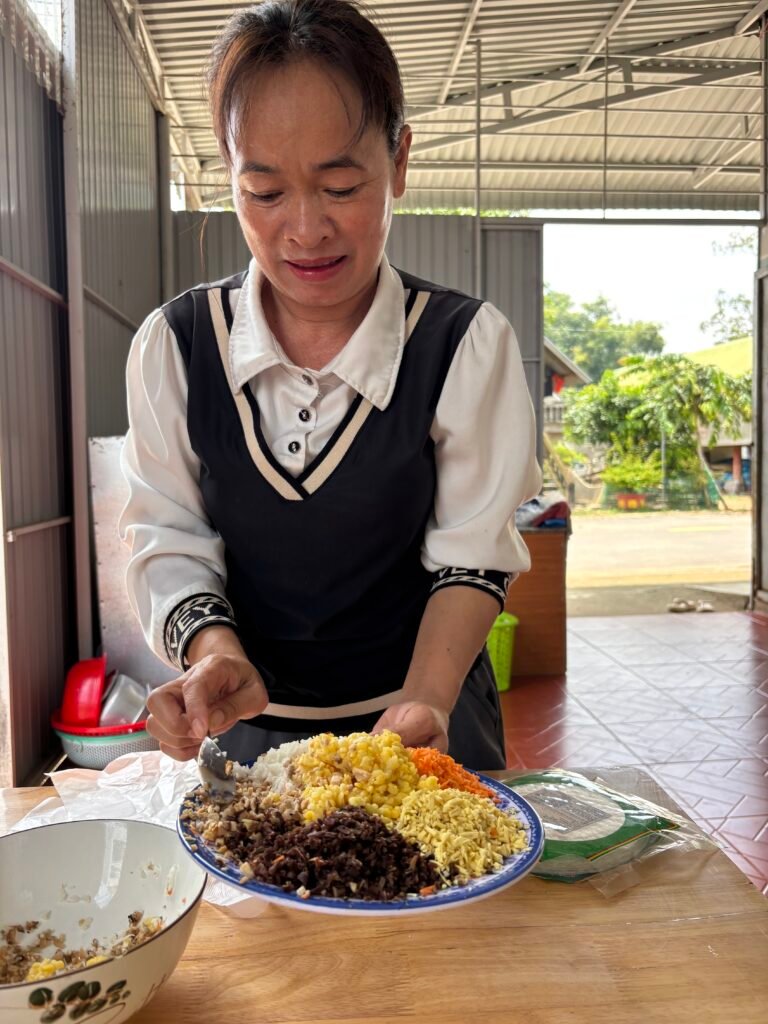
For lunch, a local restaurant cook gave me a spring roll folding experience but, unlike our earlier rolls, these were deep fried in peanut oil so came out small and crispy. Filling included two kinds of mushrooms, oyster and wood ear, carrot, bamboo shoot, and what they translate as “green beans” but I think it is green gram or dhal. Excellent.
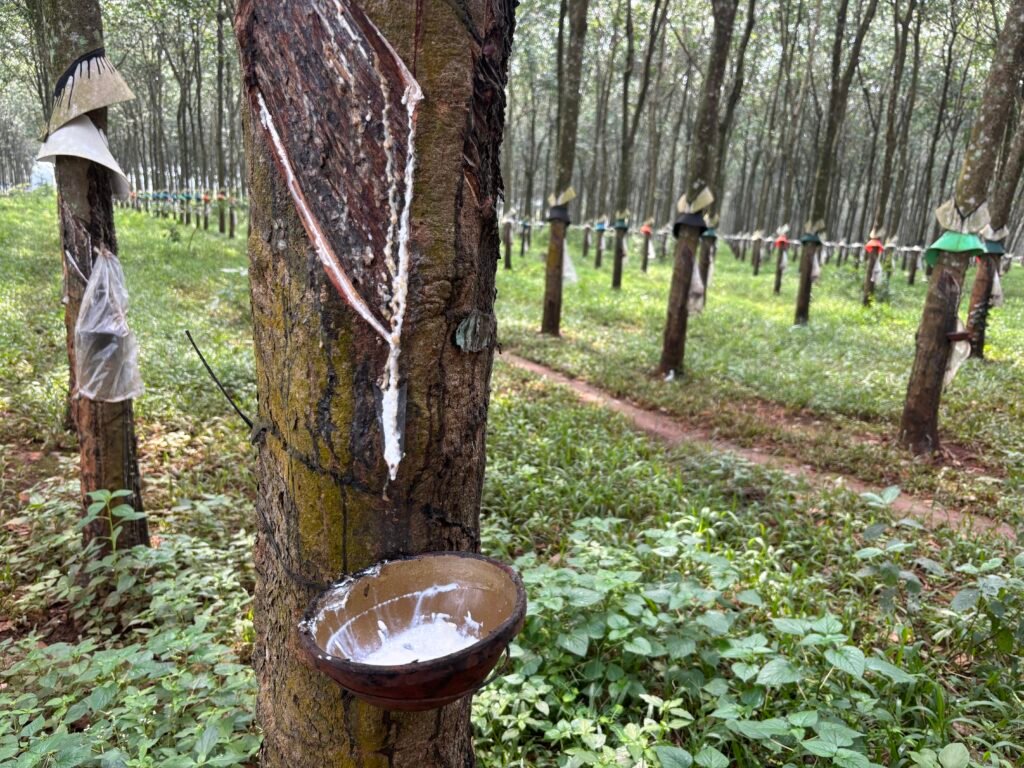
We also stopped at a rubber farm — a long stretch of carefully planted rows of trees, each with a small coconut shell catching dish underneath where the tree is cut, a slightly different place every day, so that the white rubber drips into the collecting cup and is brought to the larger vats on a daily basis. Mr. Vu says the rubber plantations are government owned with the workers each receiving a percentage of profits, not exactly according to need but I assume according to skill and work level.
The big shift in Vietnamese economy happened in 1986 when after 10 years of collectivized food production after independence, harvests were way down and food became scarce. It was gradually realized that, at least in Vietnam, people were willing to work hard to further themselves and their families but not for the government. The result was the adoption in 1986 of the “Doi Moi” policy and the beginning of an experiment in socialist capitalism or as more formally called, a “socialist oriented market economy” where farmers were given more freedom for individual development and production. The result was been successful in bringing Vietnam to a healthier economic level for everyone.
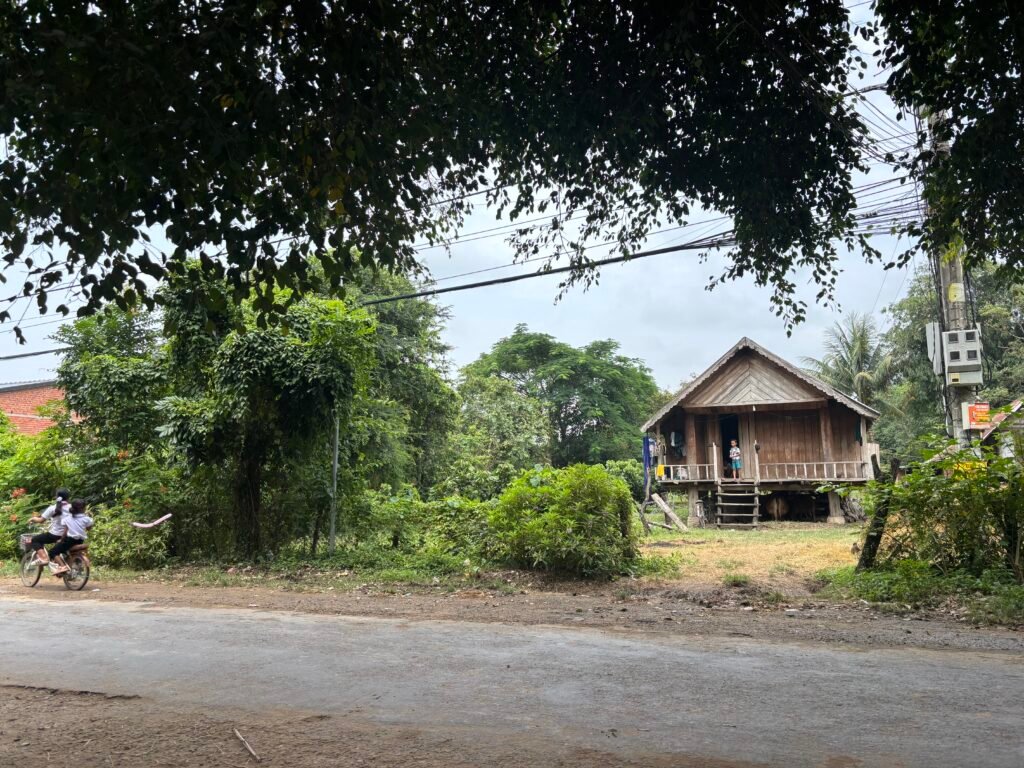
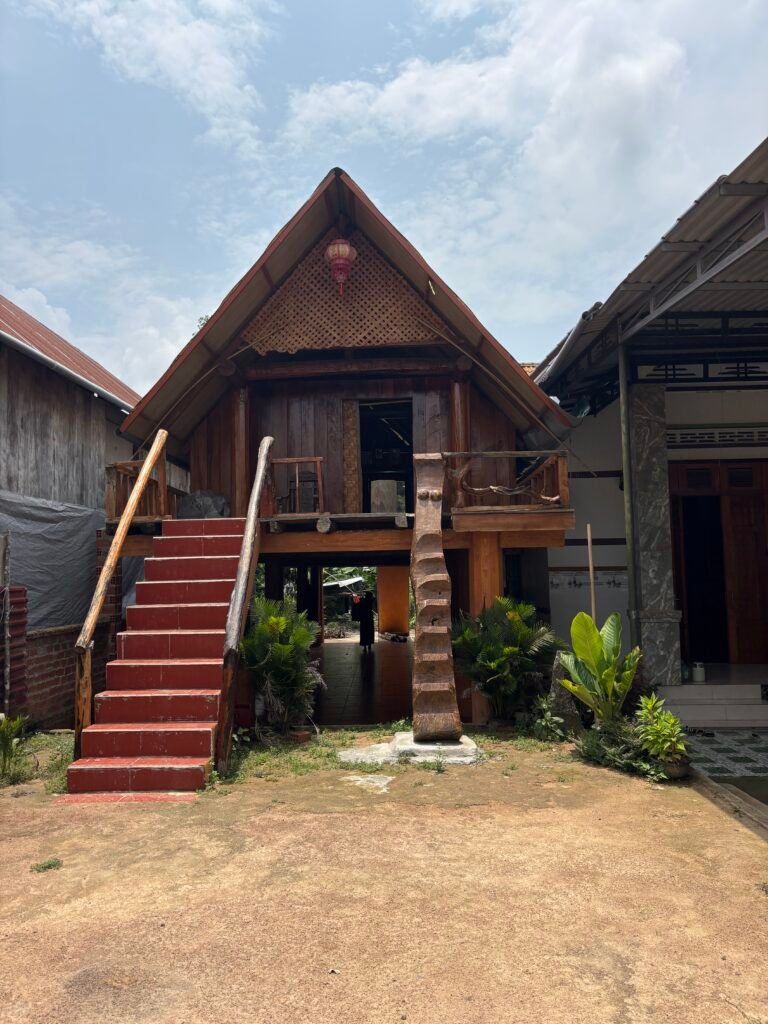
This morning, after the motor boat takes me to the other side of the lake, we take long drive through traditional Vietnam farming communities: forests cut down and planted with rice, coffee, and corn. A woman and child on the road are herding a block of white ducks to a nearby pond. A man is switching a group of black water buffalo to keep on plodding along. The emerald green fields are dotted with straw-conical shaped workers, male and female, doing daily back-breaking work to support themselves. The old house are all built above ground, to provide protection against flooding, for healthy separation between themselves and he livestock who often stay on the ground level which also ensures protection for them from prowling predators.
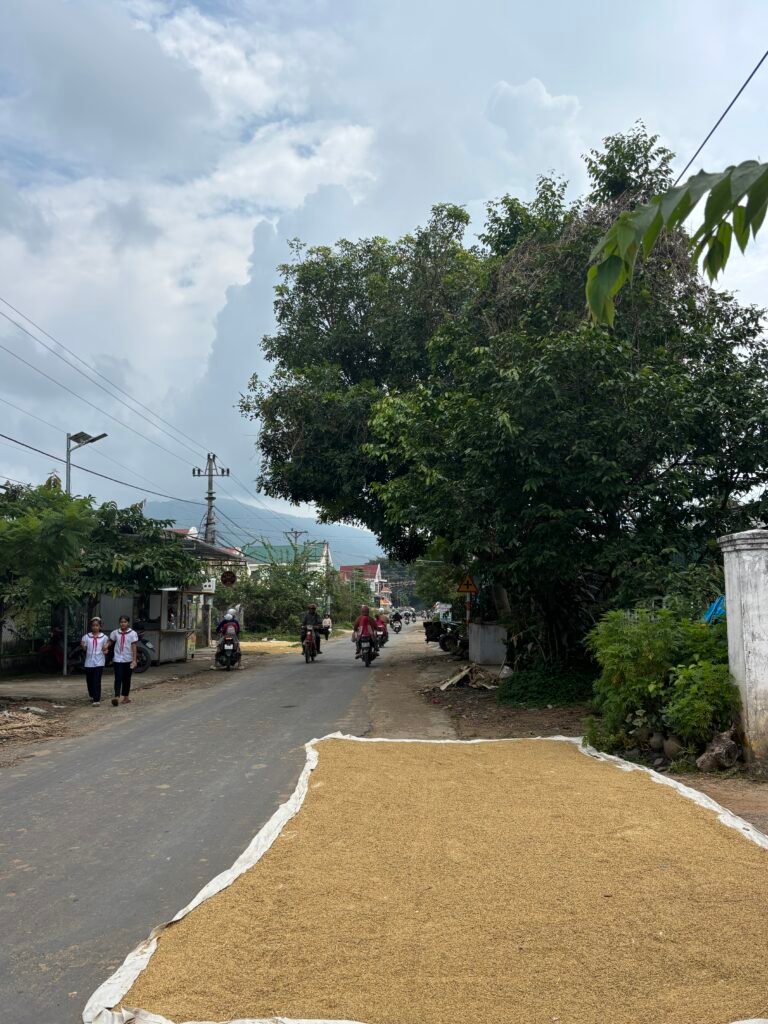
The land is so fertile here there are 3 crops of rice a year. As I have seen in South India, along the road the women spread out the threshed rice to dry which is then bagged and sent for husking. Vehicles that run over it are doing them a service by starting the husking process. Considering the amount and timing of rain squalls this time of year, there must be constant attention to the weather to run out and roll up the rice on the tarps spread on the ground before the grain gets wet.
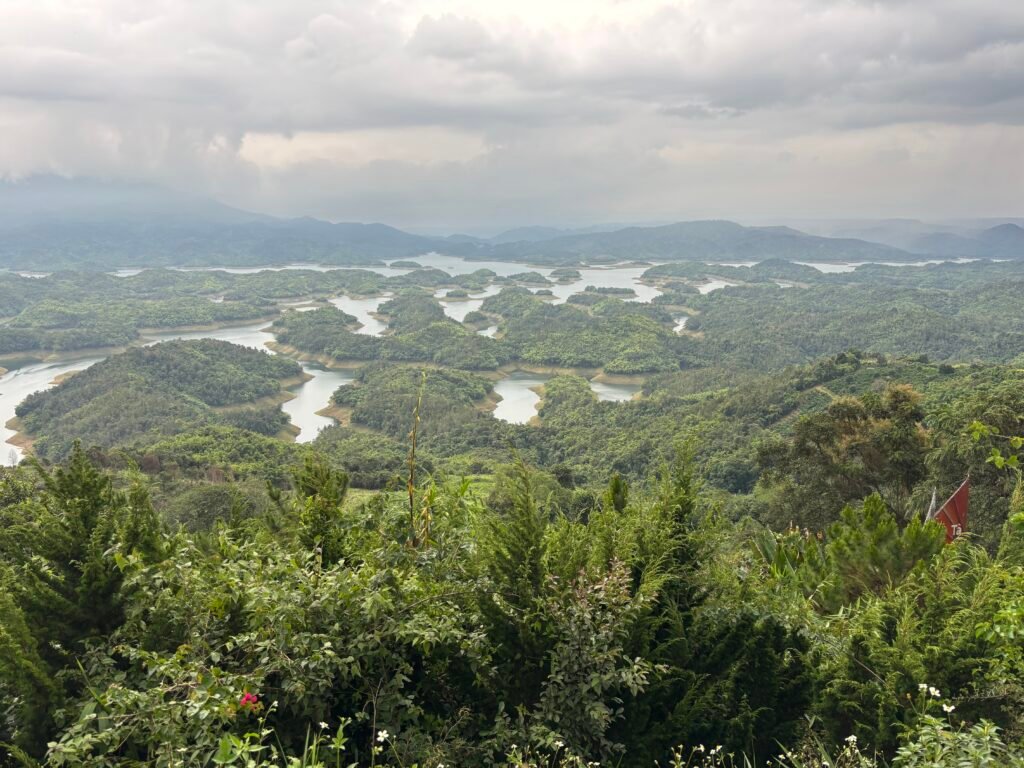
A hydroelectric plant was built around 15 years ago and flooded a beautiful valley. Mr. Vu says the people would have been given new nd and money to build a house. But what a disruption in life and probably generations of connection to their property. This is true tropical vistas of rice on the lower level, coffee on the upper terraces along with other crops. Fruit is everywhere. We just made a rest stop at a gas station and our driver picked some ripe guavas off a tree to share.
I am just told that the beautiful green landscape we are driving through is part of a river system. Below us is the “female” river, beautiful and gentle, while the “male” river, strong and turbulent flows down from Da Lat and the two rivers meet in the waterfall which we visited yesterday. The land is so fertile here there are 3 crops of rice a year.
A hydroelectric plant was built around 15 years ago and flooded a beautiful valley. Mr. Vu says the people would have been given new acreage and money to build a house. But what a disruption in life and probably generations of connection to their land. This is true tropical vistas of rice on the lower level, coffee on the upper terraces along with other crops. We just made a rest stop at a gas station and our driver picked some ripe guavas off a tree to share.
It is understandable why China, Japan, and France fought for control of this beautiful and fruitful land.
Still not a single European tourist. Tomorrow is my last full day exploring these Central Highlands before I fly out from Buon Ma Thuot. When back in town, I am going to try to buy Mr. Vu a pair of reading glasses as he is holding his phone an arms distance away to read anything. A good farewell gift for him.