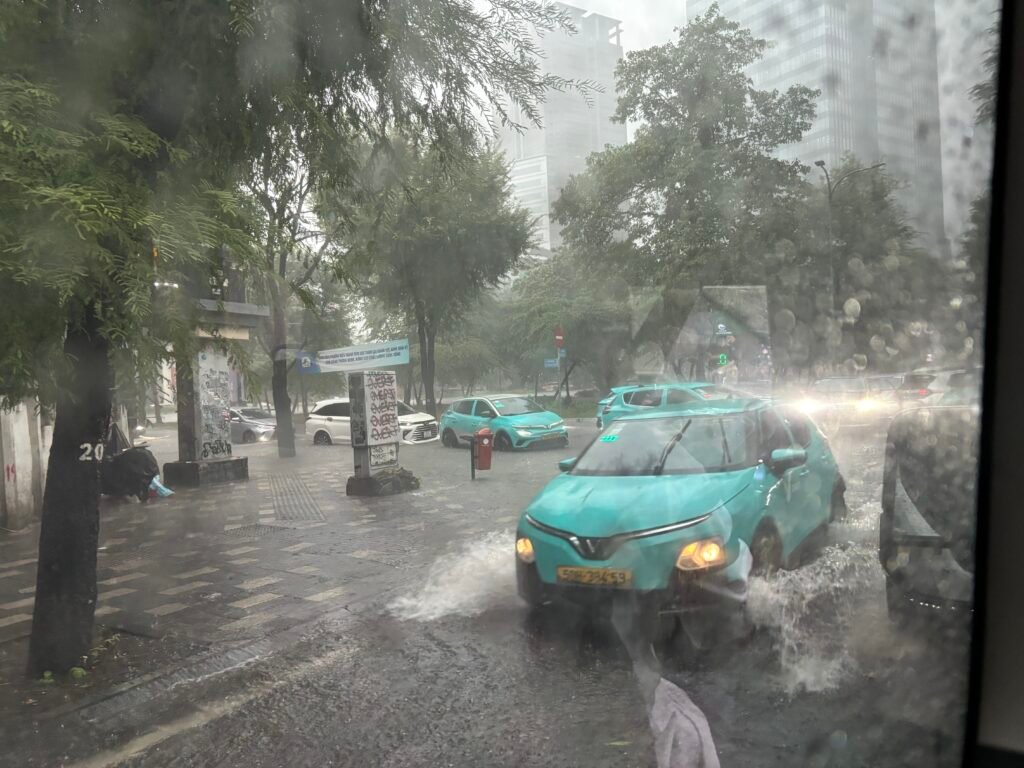
The Con Dao archipelago consists of 16 islands in the South China Sea off the SE Coast of Vietnam, of which Con Son is the main inhabited location. It was beautiful to see the islands below us as we landed in our prop plane on the narrow flight strip on this green-covered granite mountainous location. The Island has a painful history which I was subjected to with strong communist party-language and even stronger images the next day when I was taken to view its City Museum, 3 prisons, and a large cemetery. The French founded it exclusively as a prison camp and ran it, apparently brutally, between 1864-1952, for both political prisoners and criminals. They built a new prison in 1940 with the notorious “tiger caves” where men were shackled at night (after working all day) with guards viewing down through iron bars from the floor above.
During the “U.S. puppet-regime”, a term used throughout the English signage, a new prison was built, officially South Vietnamese but American run without tiger caves but with small concrete holding cells and hot metal roofs. About 20,000 prisoners in total were incarcerated and died before liberation in 1975, during the French and then South Vietnamese/U.S. period, with 10,000 buried in the nearby government cemetery we visited, mostly in unmarked graves.
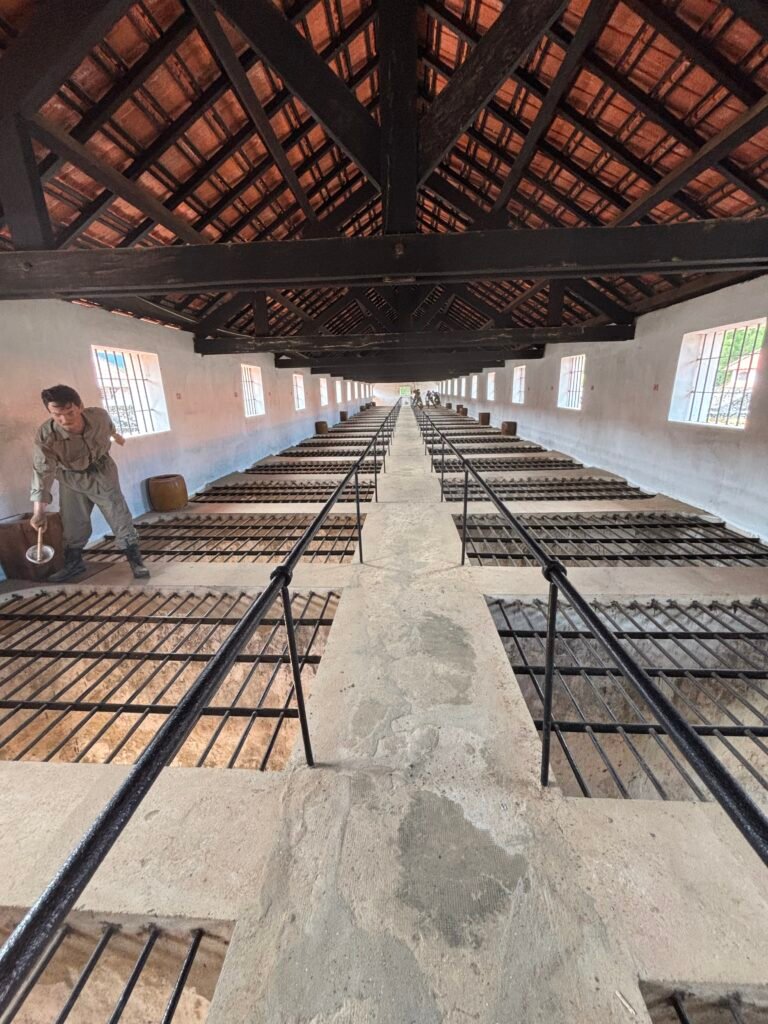
this one described as throwing lye down below to burn the prisoners.
I have been to the death camps in Europe and the museums and sites of the genocide in Cambodia as well as several historic sites in mainland Vietnam including the War Remnants Museum in HCMC but this was different — designed to forcibly “re-educate” visitors by presenting gruesome full-size sculptures of prisoners being held in cells and tortured. The signage and speech given by my English-speaking local guide was that of the Party platform.
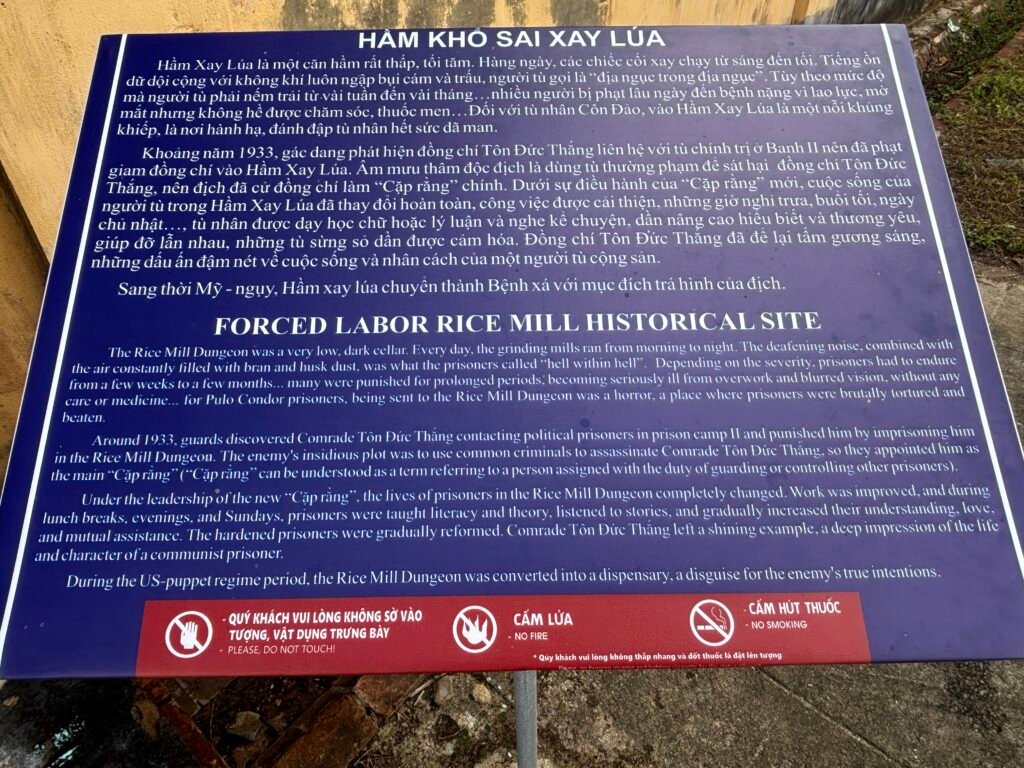
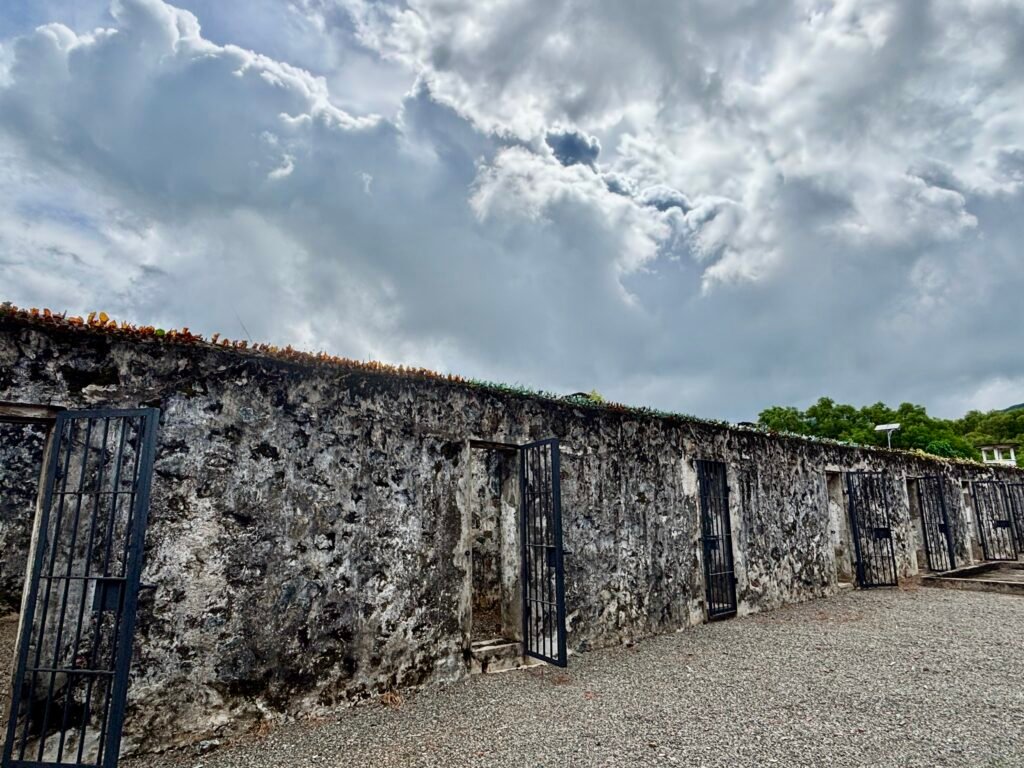
A visitor is left in no doubt about the cruelty of the French and the U.S. toward the Vietnamese in the past and the victorious struggles of the revolutionaries. We also made a stop at the former Governor’s mansion, a large French style compound, and were told this was preserved to demonstrate the difference between the life style of the oppressors and that of the people. I have my doubts about the verity of some of the stories of the revolutionaries that are being reported as fact.
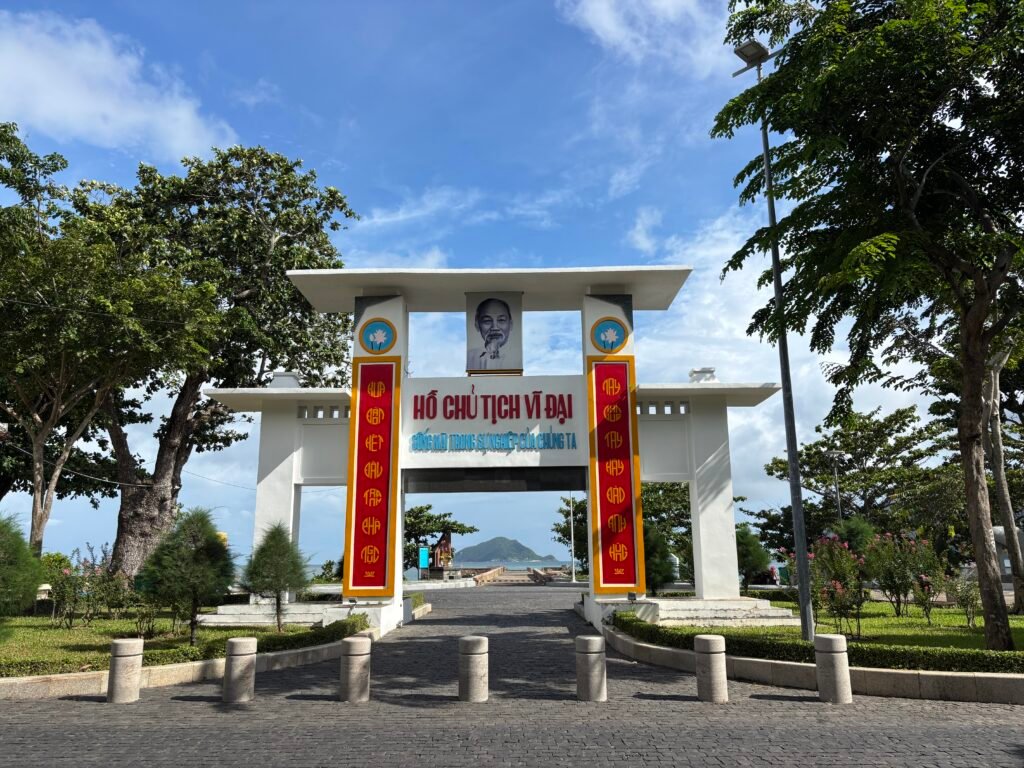
This noticeably includes the history of a young 19-year old female resistance fighter, Võ Thị Sáu, who was executed by the French in 1952 – who is now venerated as having had supernatural-powers (this was told to me several times) and she is now and seen as a form of Buddha and held up as a deity with her image along with Ho Chi Minh and General Secretary Lê Hồng Phong in the local temple.
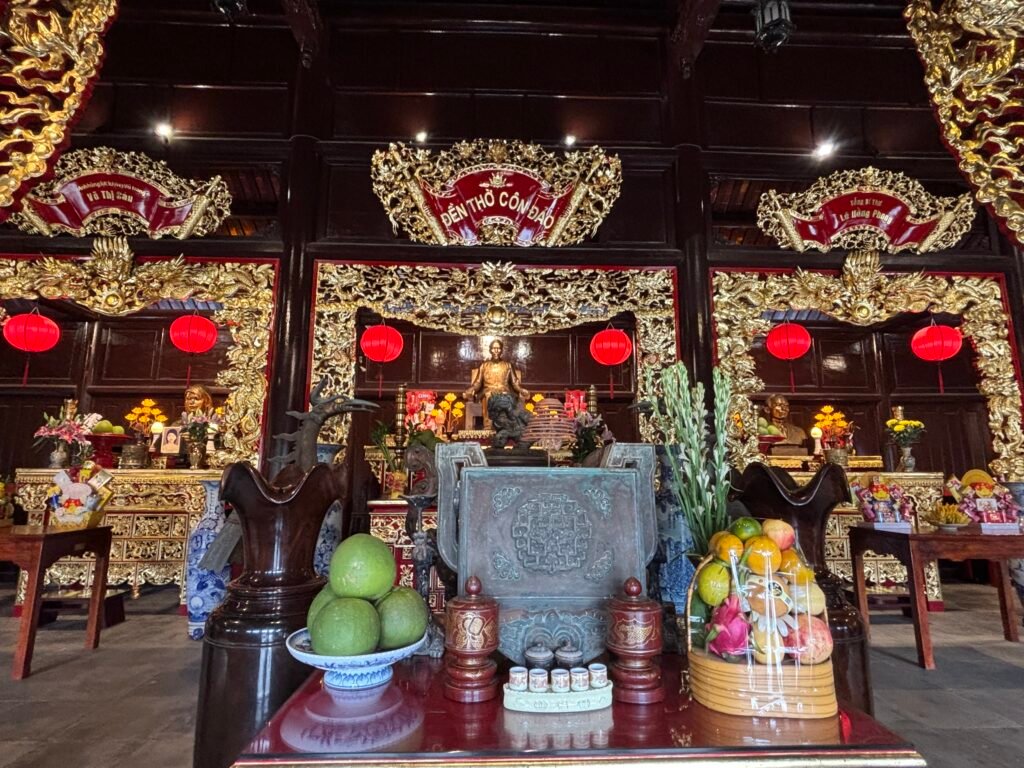
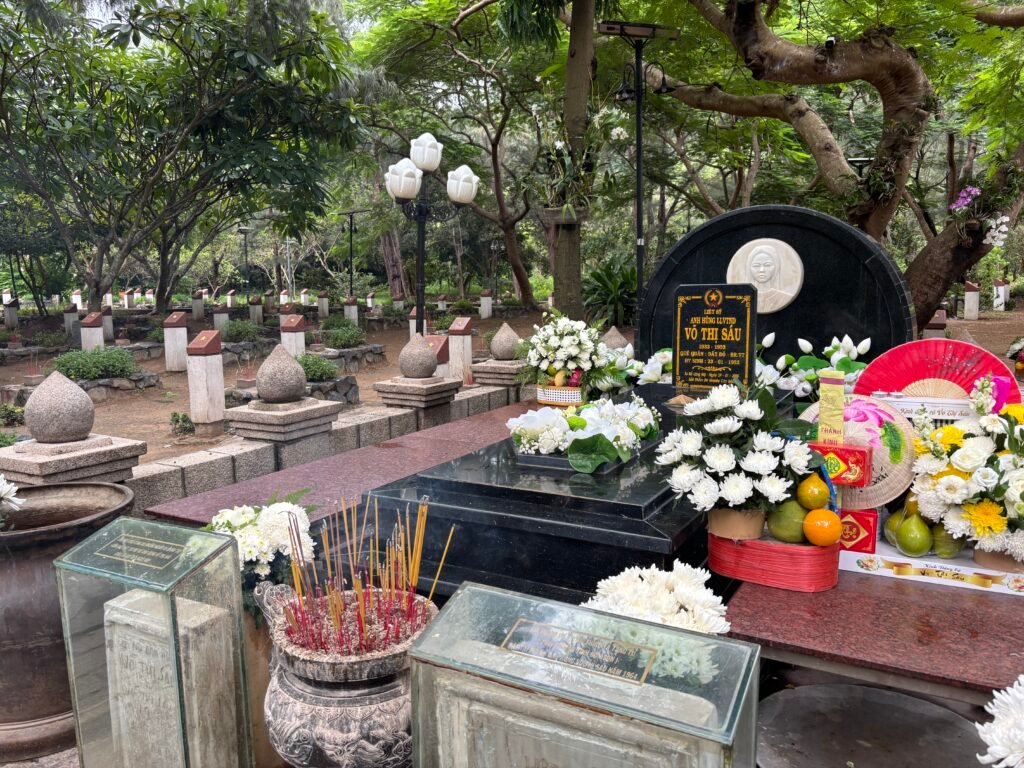
This juxtaposition of stark Communist realism and deeply-felt religious devotion is difficult to comprehend. I saw many Vietnamese people arriving at the cemetery with large bowers of flowers and fruits for offerings to Vo Thi Sau, hoping she will bless them. Perhaps the explanation is that the last century’s political changes that occurred in Vietnam threatened the ancient embedded Buddhist belief system and it now feels safer to bow and pray to a historic revolutionary than to the gods of old.
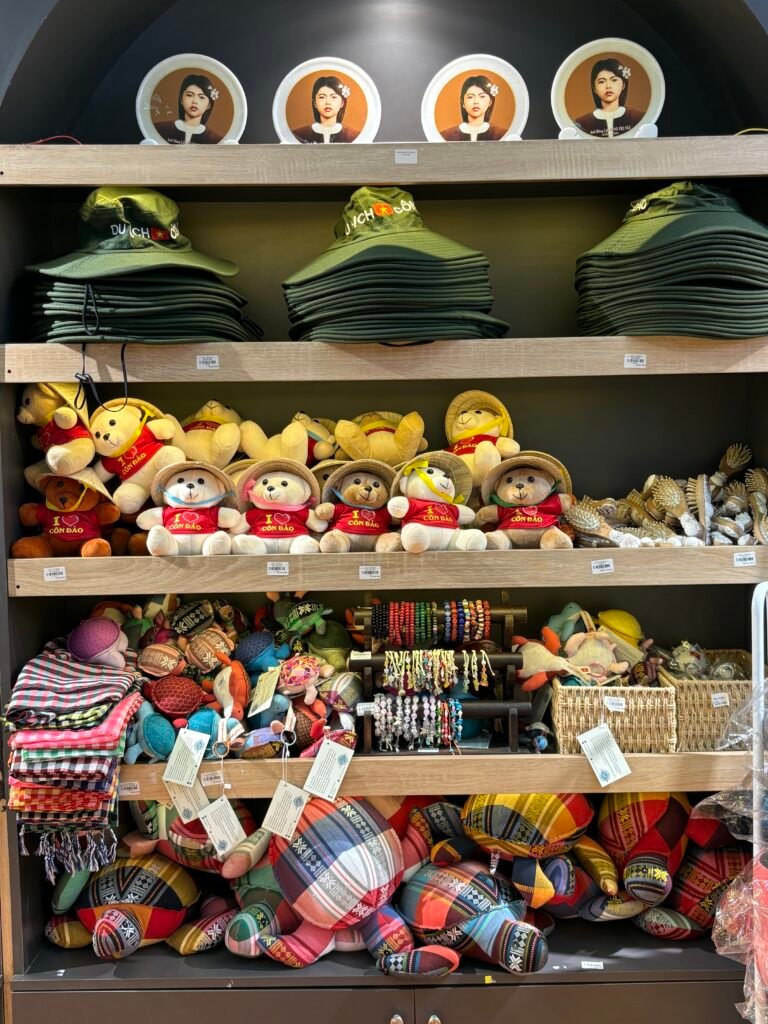
The Central Government decided to make it a priority to both preserve the history of this island and to move it forward into an international tourist destination by encouraging hotel development and promoting its national park and its turtle preservation activities on a nearby island. I am skeptical at this point and wonder if the government wanted to bring visitors here mainly so it could educate them about the history of its prisons as much as any economic support for the people. I was offered a tour of the “historical places” of the island and did not know that this meant the former prison system but perhaps I am one of the few visitors who was unaware of this fact.
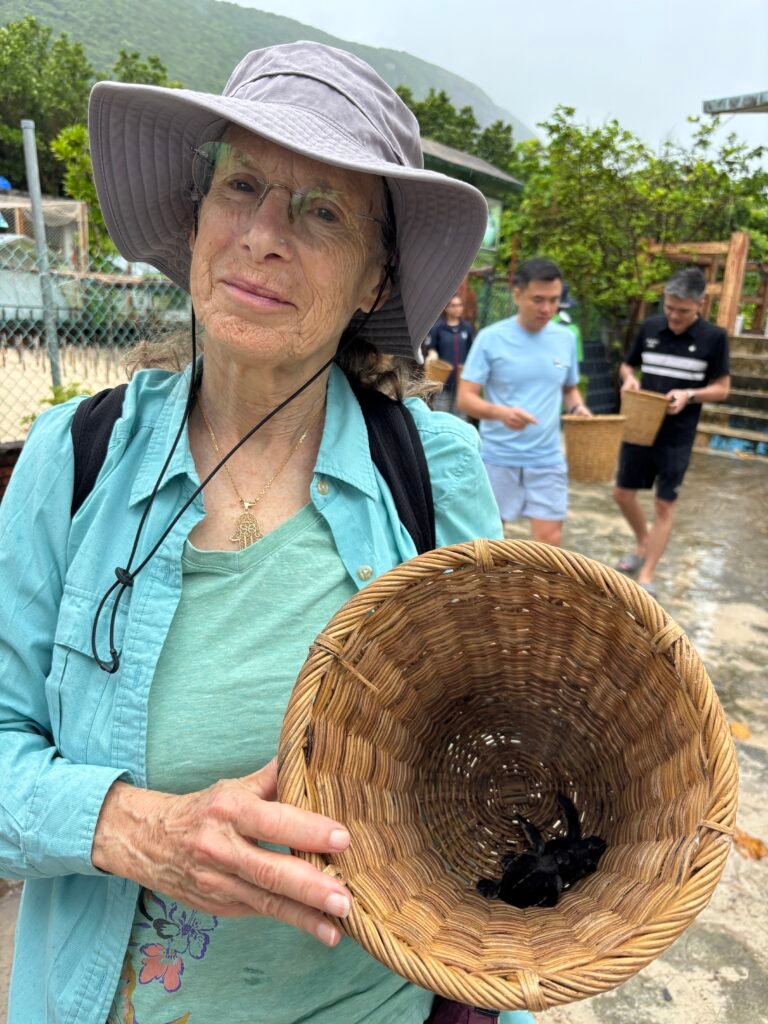
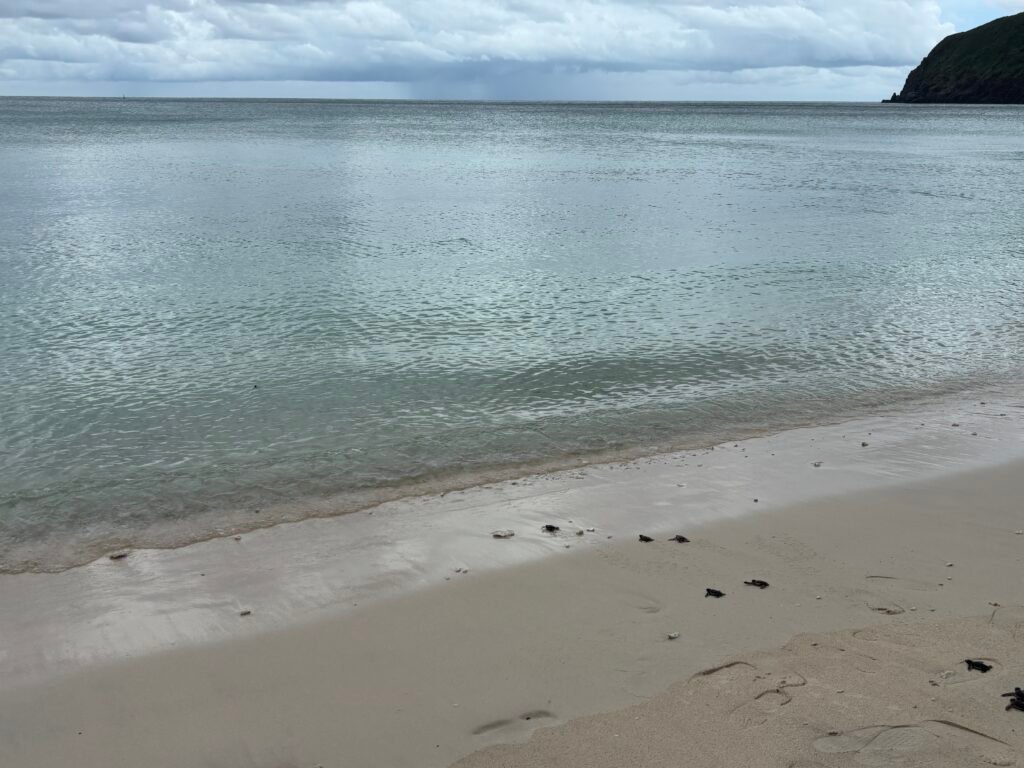
There is a separate island which Is developed Into an eco-tourism center to raise and release the very large sea turtles native to this area. I went early in the morning with a group by boat and we were each given 2 little turtles in a basket to bring to the sand and release, watching them hear the waves and run toward their native environment. We were told very few of them made it to adulthood and the females that do live will find their way from Indonesia back up to this very shore.
I understand there is a population of 6,000 people living here now, all centered around the main town on Con Son. It is a lovely peaceful place and I found a great vegan restaurant, Madame Ha’s, but it has been raining non-stop and my cold and chest feels worse so I decided to skip the last 2 days here and return early to HCMC and my conference hotel.
So the is where I am now, happily ensconced in a beautiful room at the historic Caravelle Hotel (where Charles and I visited in 1970, during the war, as it was considered safe and where most of the reporters stayed), recovering and doing some shopping. Tonight I meet a local conference friend who is taking some of us out to dinner and then to a walk to experience the Autumn Moon Festival. I hope the weather holds up as it has been pouring periodically the last few days but today was cloudy but dry. In the next few days I have planned a number of outings with groups of friends, as well as Inter-Pacific Bar Association meetings, so I may be too busy to write much more. This may be my last post for this very full trip to quickly changing Vietnam 2026. style.