
Day 3: At Sea
A fairly calm ocean as we head toward one of the most Southern Islands of Japan, Miyakoshima. A day to recover and catch up on my email. But it is hard to find the time as one of the more interesting parts of this Swan Hellenic expedition cruise is the quality of the naturalists and lecturers on board who fill in our knowledge gap about our voyage. We have a world-class geologist, ornithologist, and anthropologist with us in addition to younger botanists and marine biologists. So I am up for a 9 am talk on the Buddhist Science of the Mind by Wade Davis at which only a handful of us are visibly present. A talk on Japanese Gardens, a Plankton Workshop, the Geology of Japan and one on trying to capture images of a live volcano are all on the schedule for today. At noon, I attend a visit to the Bridge of this highly equipped vessel, learning that, like planes and cars these days, new technologies allow it to self-pilot and correct itself without hands-on contact. But our Norwegian captain is always the one to manually handle docking.
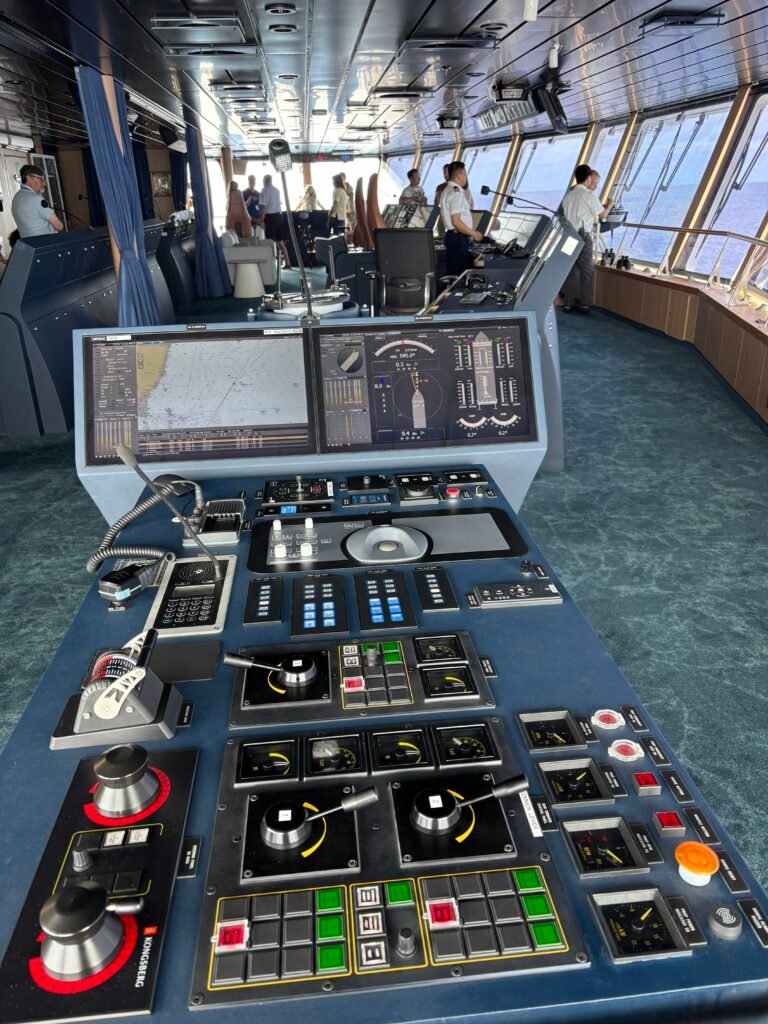
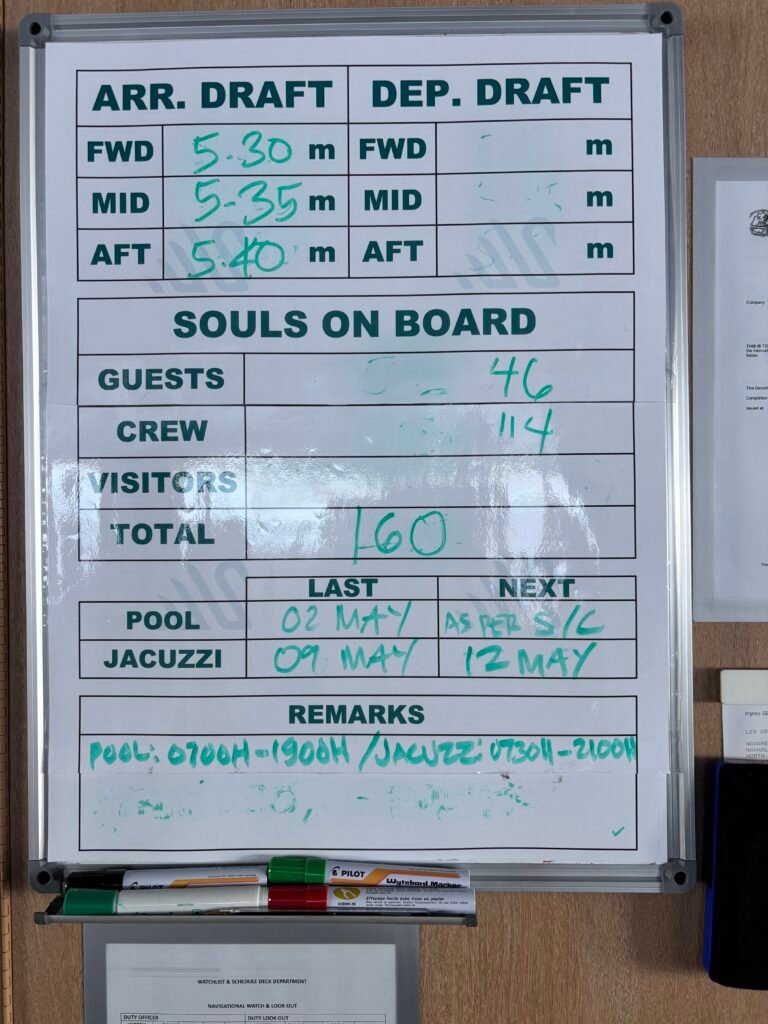
There are about 2.5 times as many crew as passengers!
Plus I indulge in 3 excellent meals and good conversations with new friends and ship mates. Being bored, even when traveling alone, is not an issue on this ship.
Day 4: Miyakoshima
I find that the most special moments of traveling are when I am by myself, wandering in an unknown destination, perhaps with map in hand, and open to the small flashes of understanding of another culture. To register what is happening around me and remember my path requires full concentration, which is becoming more difficult as I age. But wandering with eyes open in the moment results in far greater memory and clarity about what I experience than when I just follow along and enjoy the view.
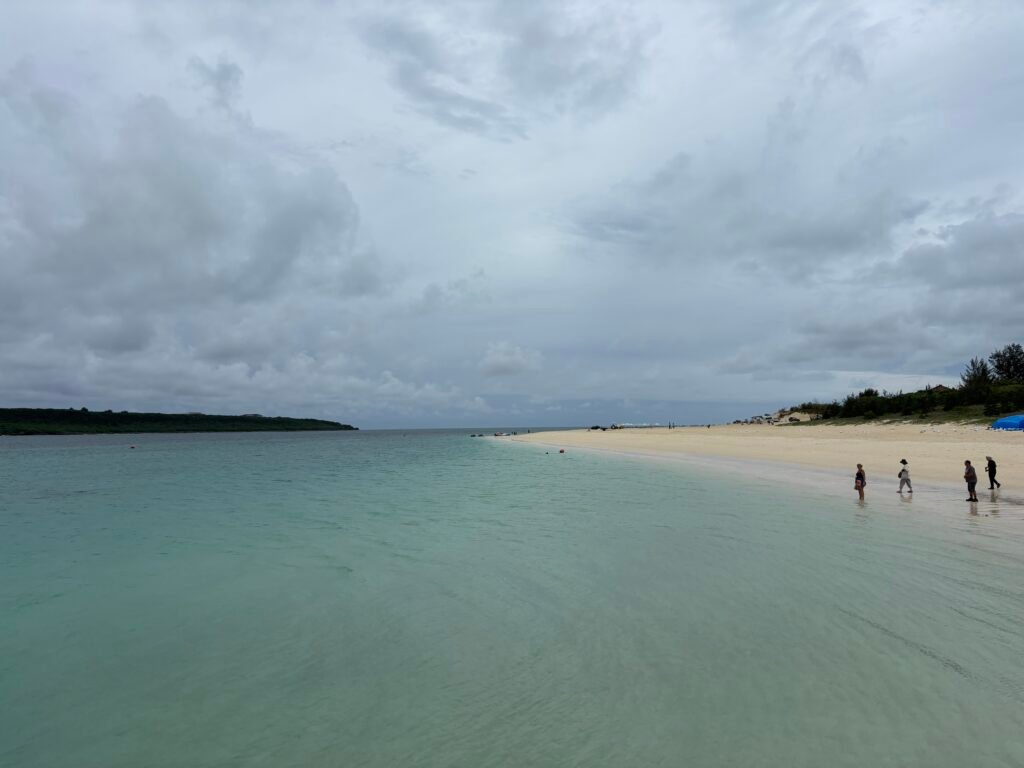
This afternoon, on Miyakoshima Island, our first entry into Japan, was one of those times. All the other guests chose to go back to the ship for lunch after our morning tour and then back to a beautiful beach. The weather was very overcast and we had stopped briefly by that same beach earlier in the morning which was a sufficient visit for me.
I looked on-line and found a recommended restaurant in the central part of Hirara, the main town on the island, and checked with the tourist office when we disembarked that it would be open and would take credit cards for payment as I had not brought any yen with me.
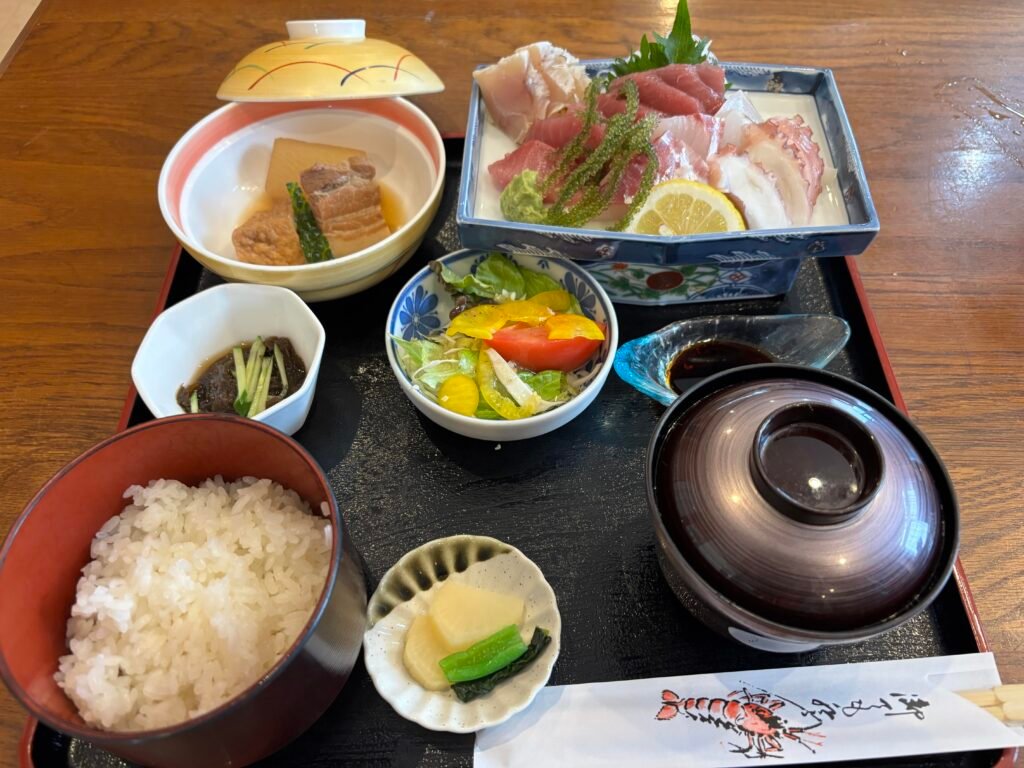
In one of the memorable moments of chance, the woman in the tourist office was a visiting former employee and offered to take me to the restaurant I had asked about. This turned out to be fortunate as it was a very small place with no sign in English and I don’t think I would otherwise have found it. It appeared to be one of the few places open for lunch and it was fairly full when I was seated with a menu all in Japanese. I ordered from the photos and looked around at the group of 3 men next to me, perhaps retired fishermen, and saw a young couple in one tatami-room with low seating. I then realized that there was a loud group of young adults in a second private tatami room nearby. Raucous laughter and sounds of enjoyment of men and women filled all the space. The stereotype of the Japanese held by many Americans is of a quiet and reserved demeanor. Unless when drinking. And this group, perhaps friends or business associates, although it was only 12 noon, were, as the saying goes, well into their cups or perhaps it was just their personalities or the reason for their gathering. They were having a very good time in a very loud way that is rarely heard at lunchtime in the U.S. I looked down and an older woman who was serving saw I had failed to put some kind of sauce in my seaweed salad and without asking poured some in my bowl. It did greatly improve the dish.
After lunch I went to try to find an ATM to get yen and walked to a major bank I saw on my map, only to find out that my ATM Bank card was not accepted. And a sign said “Foregn currency conversion has been discontinued”. I switched gears and headed for a Family Mart convenience store which always has an ATM, although with a higher fee – at least I can now buy water out of a vending machine, once I break the single 10,000 yen note I received! The US Dollar is strong right now, 158 Yen to the Dollar. I remember in past visits it was about 110/dollar, a big difference. That difference was happily used by me on a mango sorbet cone, delicious, which I ended up paying by credit card, only $2 and a good value.
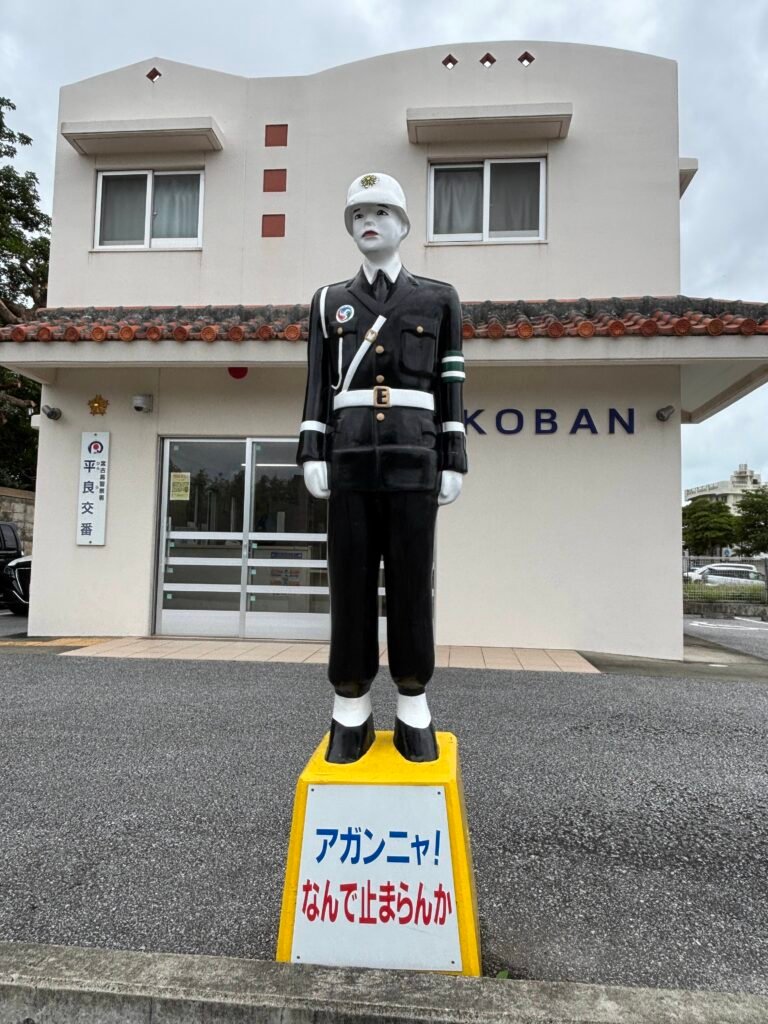
Once my tasks were accomplished, I enjoyed walking around the very small unattractive town — many buildings are 3-4 story solid concrete masses to withstand the annual typhoons and the rest smaller in size but of similar construction. Some newer, some older, many showing signs of the constant battering of water, wind and high humidity.
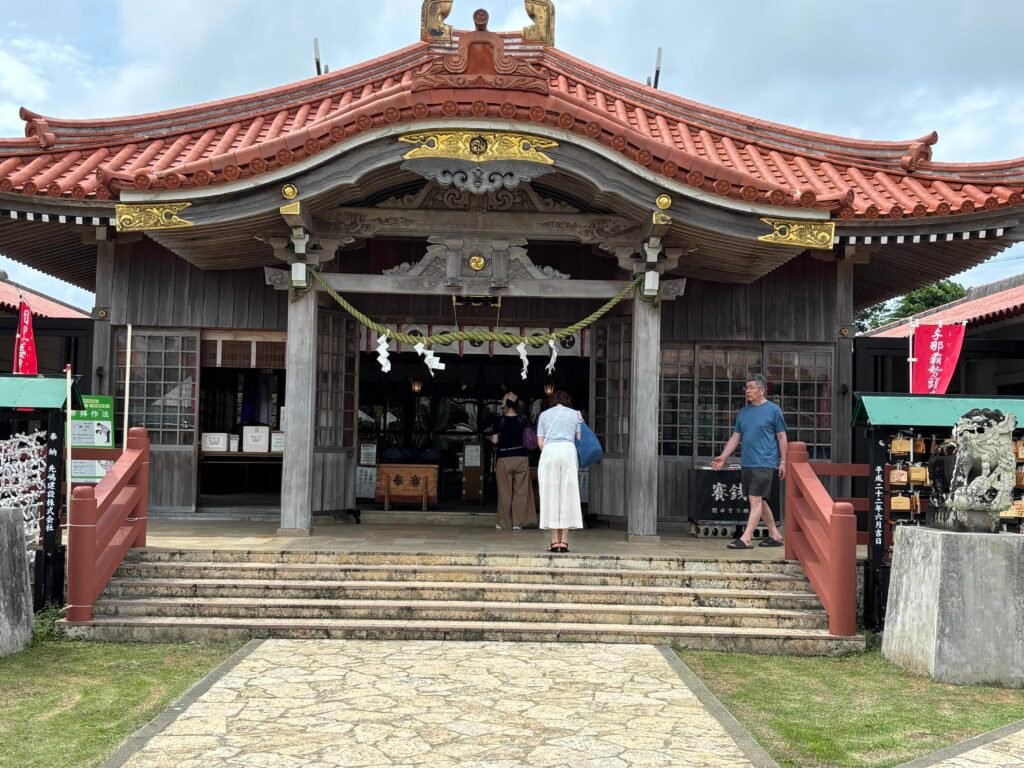
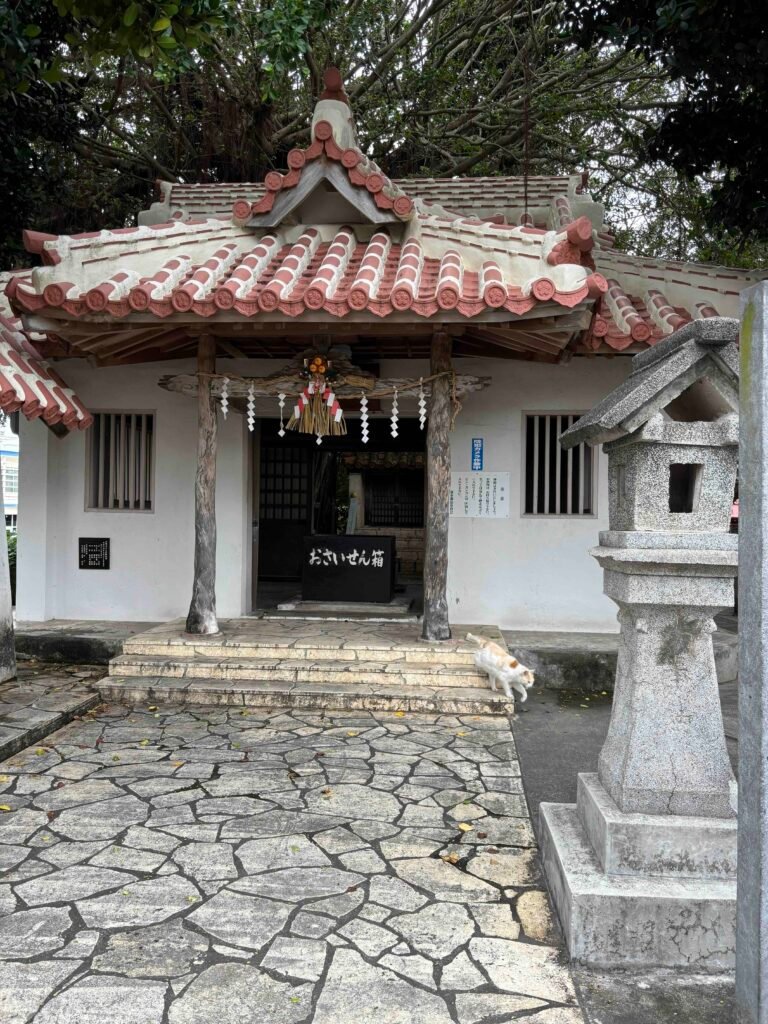
But then I follow my map and find the town’s main Shinto shrine, well maintained and open to everyone. A piece of traditional Japan in style and purpose. Continuing my stroll, I turn a corner and meet a smaller temple complete with in situ cat. That is the wonder of wandering in Japan, always a surprise, and because what I experience is not part of my own culture, it has stronger impact and resonance in my heart.
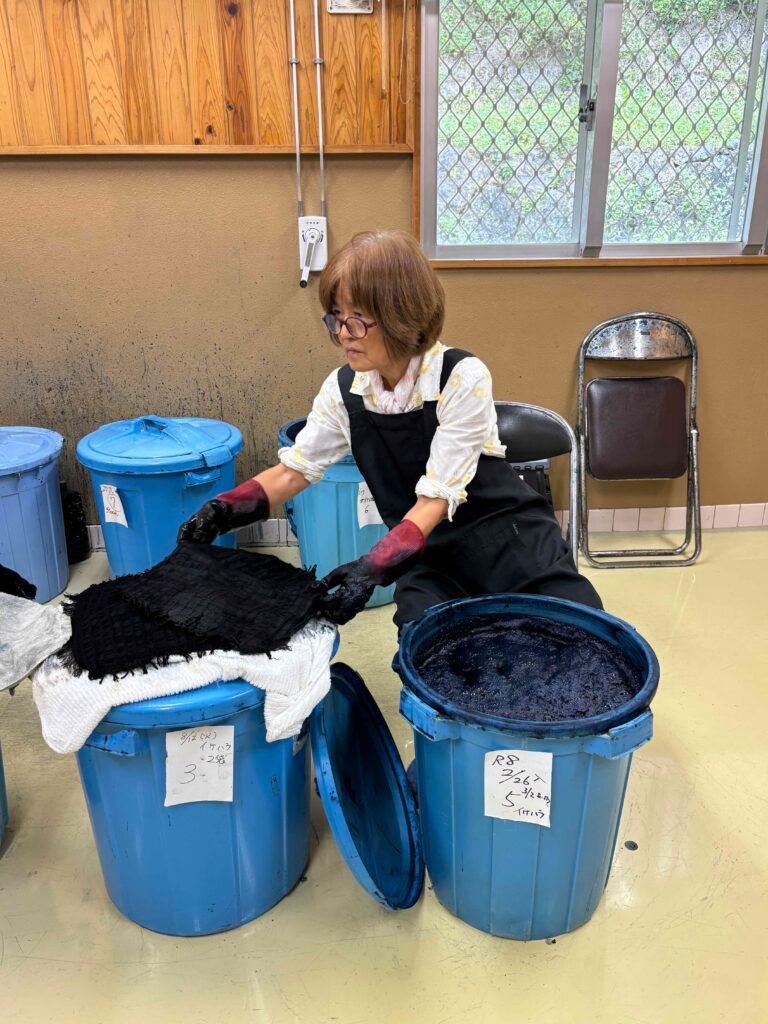
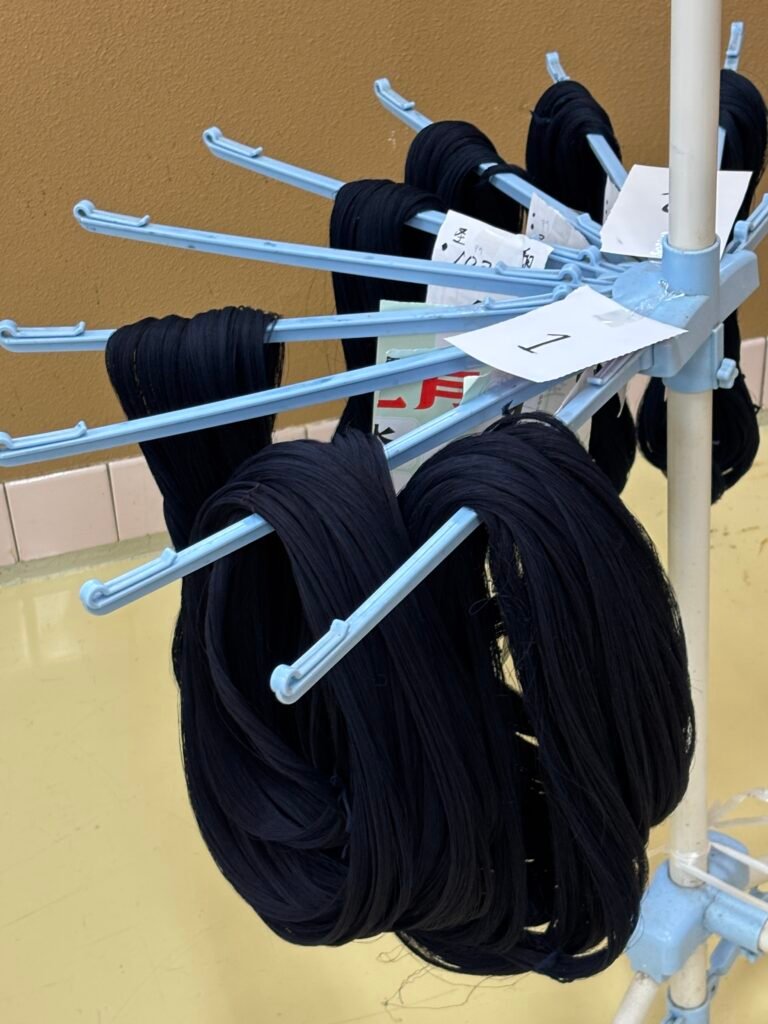
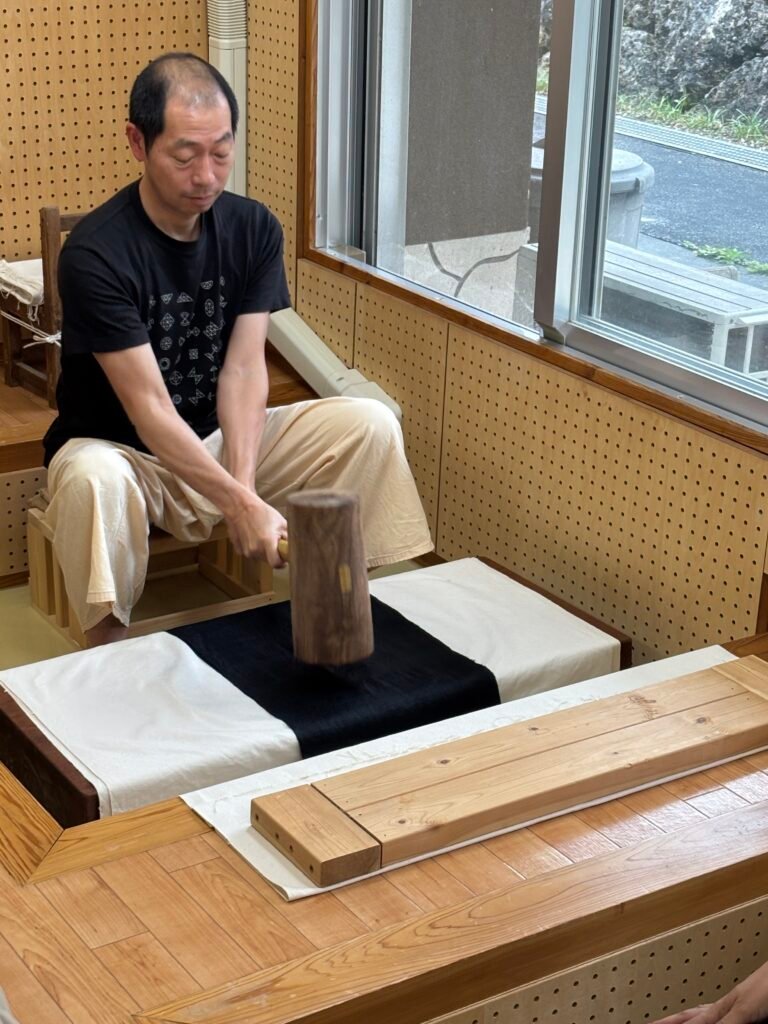
Earlier in the day, my shipmates and I went on a bus tour of the island, driving North to a special salt factory with many flavored varieties all containing far more minerals than our usual sea salt. We next visit a textile factory where a special indigenous fiber is made and woven, requiring great skill and much time. The weavers can only create 5-10 mm of cloth per day. It is then dyed with local indigo and pounded to a smooth resilient texture which makes it totally unique. It does not feel like any other textile with which I have ever been in contact. Known colloquially as a form of Ramie, it is of course very expensive but also lasts forever if treated properly.
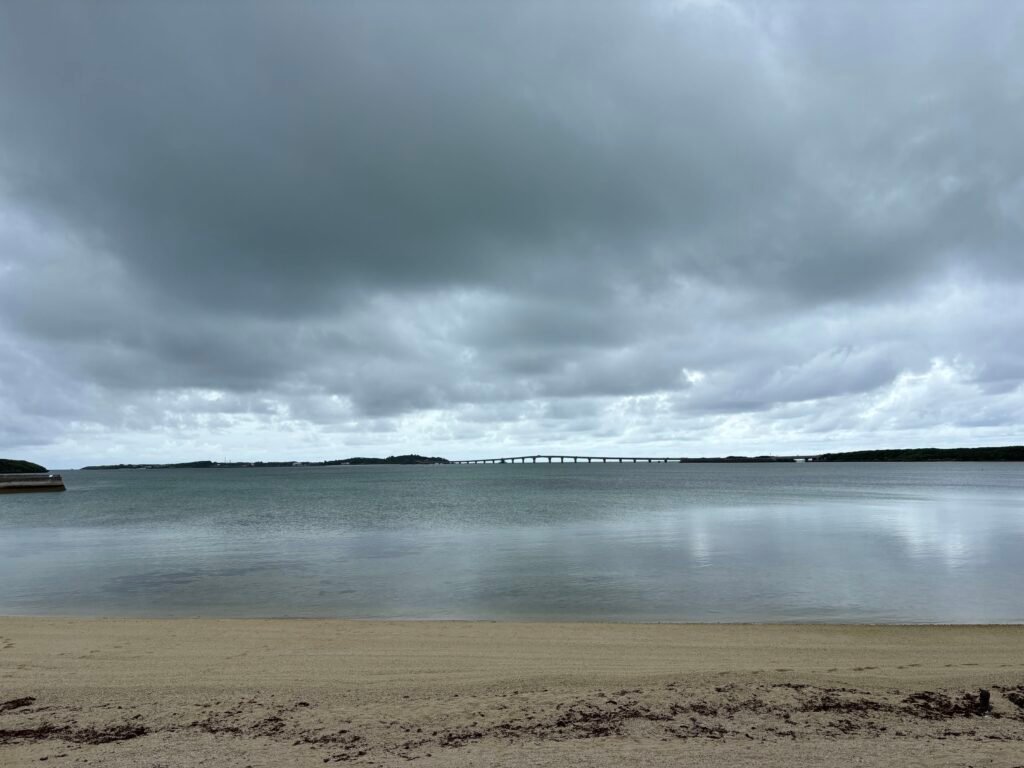
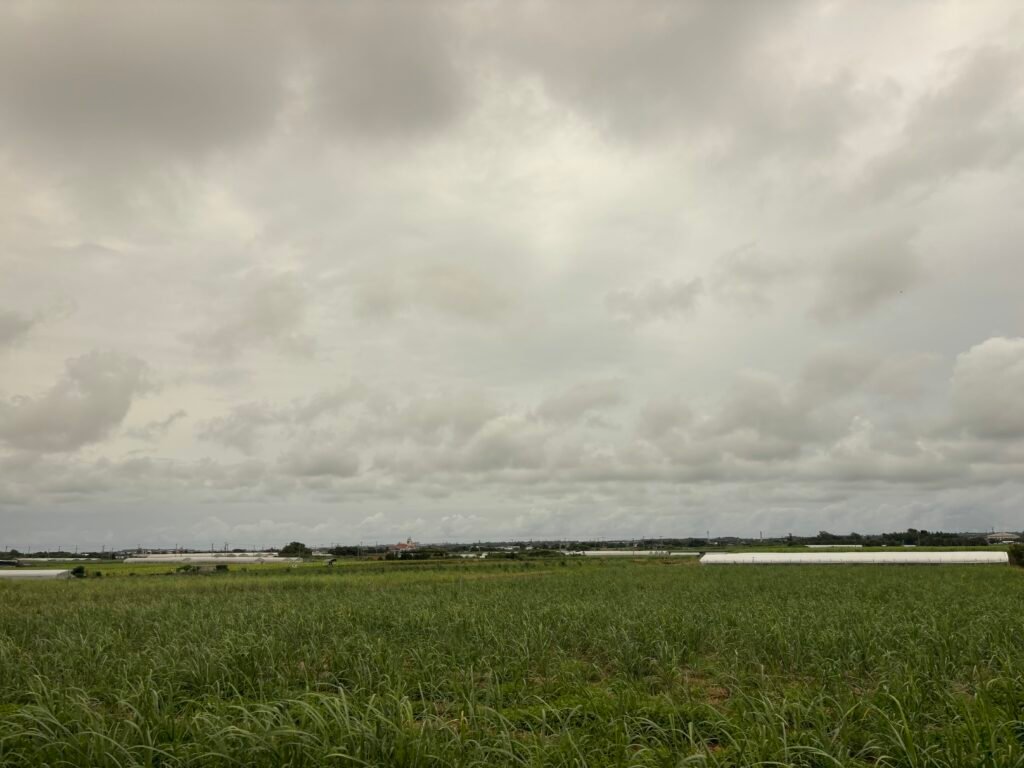
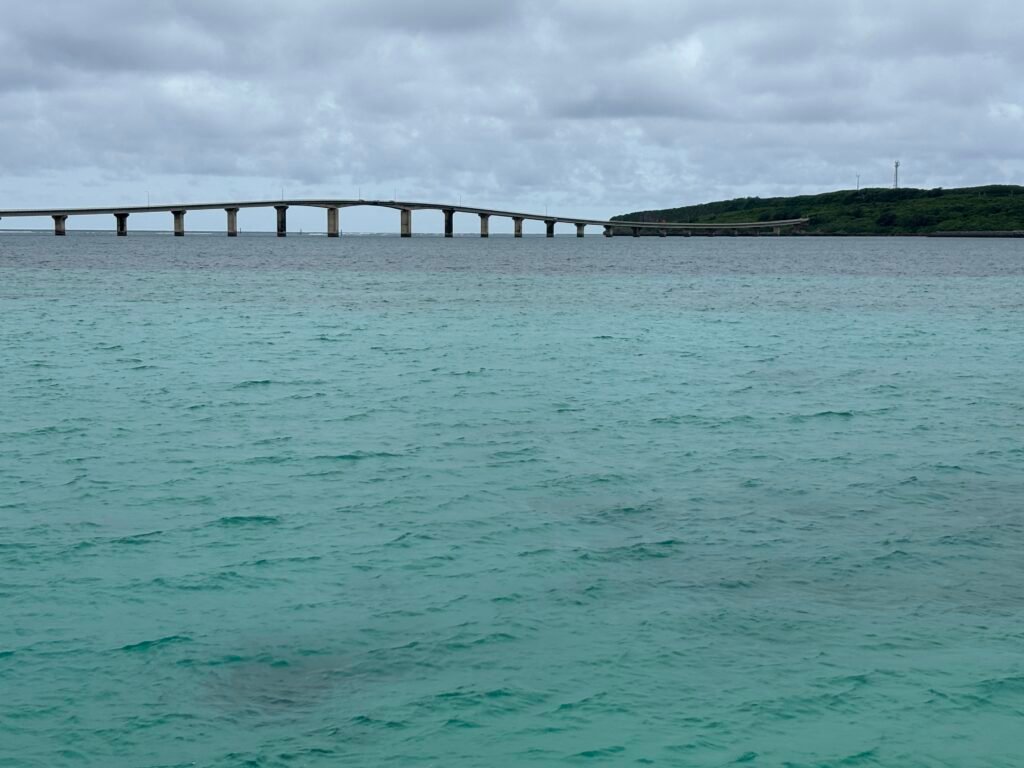
We visit two spectacular beaches, which is what this island is known for, a destination for Japanese on vacation. But today we woke up to a light drizzle and it is overcast all day, making the vista less spectacular but still a wide expanse of turquoise blue and white beaches greets us. The Japanese have built several attractive long bridges to move from one small island to another which adds to the grandeur of the scene.
We leave this small piece of Japan in the late afternoon, sailing for the much larger and more historically important island of Okinawa.