Day 6 Amami Oshima
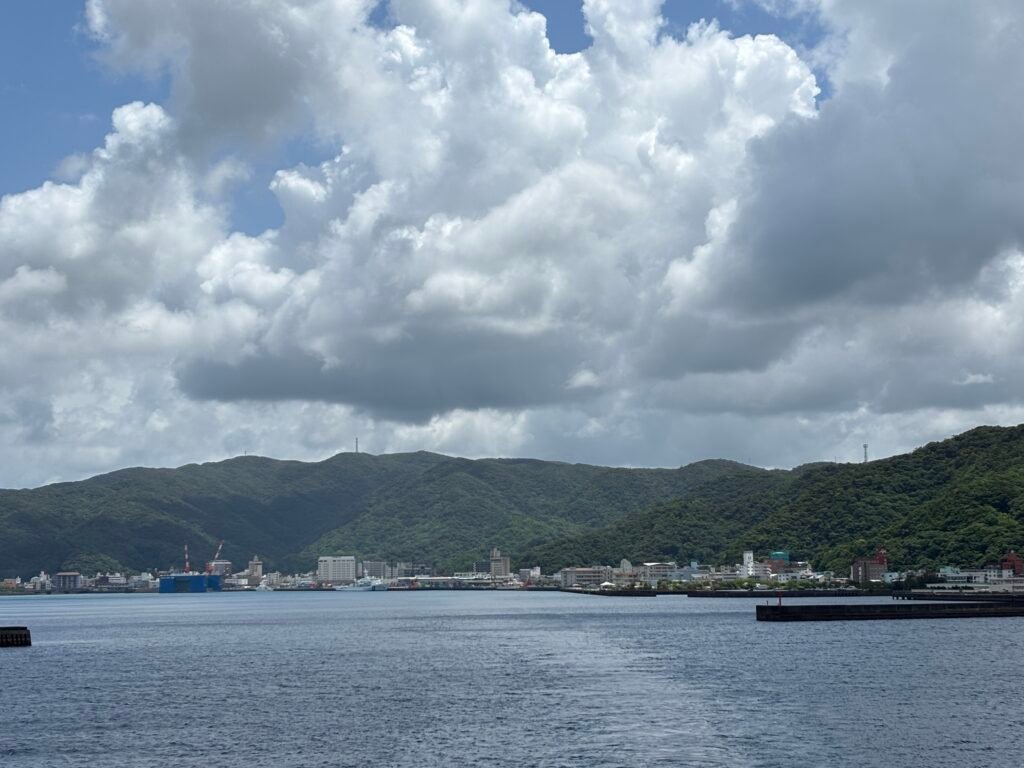
It is grey outside as we sail into the Naze port of the island of Amami Oshima in the South Japanese archipelago. There are dark clouds and suddenly, as I walk into the dining room at 7:15 for breakfast with only 2 other passengers present, there is a rainbow arching over the land. A perfect beginning of the day. My breakfast each morning has consisted of fresh squeezed orange juice, hot oatmeal with nuts and berries, and a soy milk mango shake. It will be hard to come down to earth after this culinary heaven aboard the SH Minerva.
We disembark for our morning outing, a choice of a cultural visit or a nature walk. I might have chosen the nature walk but it is beginning to rain and the idea of a visit to see a special Japanese textile in production is too enticing to turn down. After a period of heavy rain while we are in our bus, the sun comes out and we arrive at the Oshima Tsumugimura factory. Located on the North part of the island, I am once more astonished, as I was when we visited the Ramie production earlier in Miyokojima, of the inventiveness, creativity and difficulties overcome by the Japanese over centuries to develop an exceptional textile.
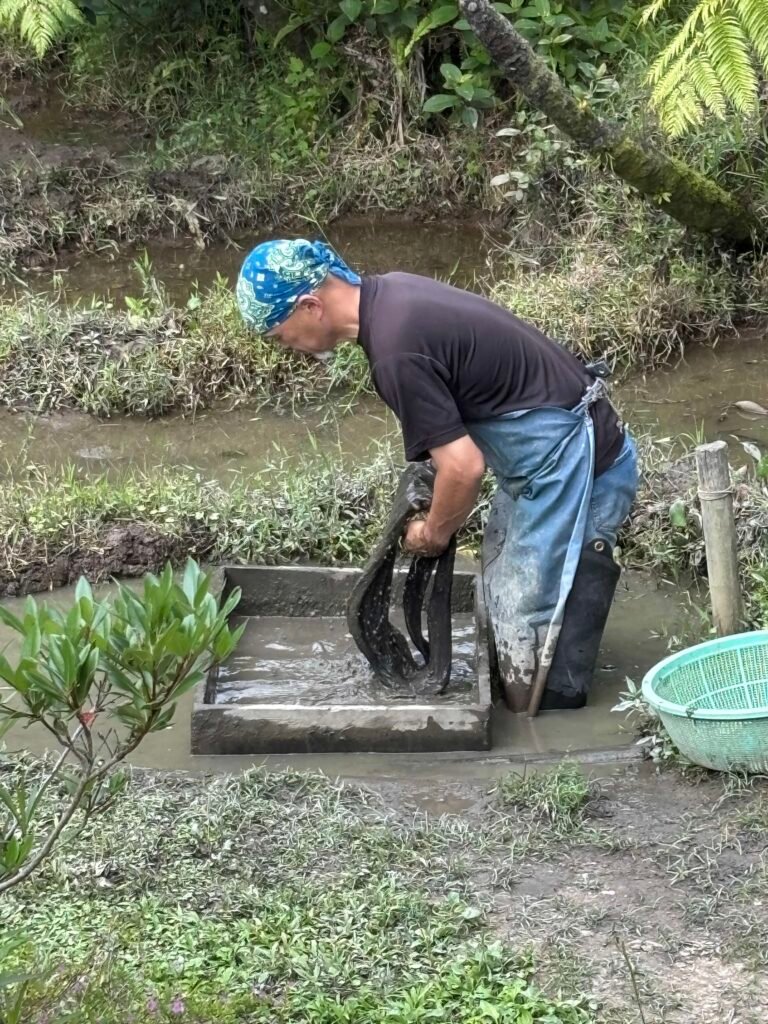
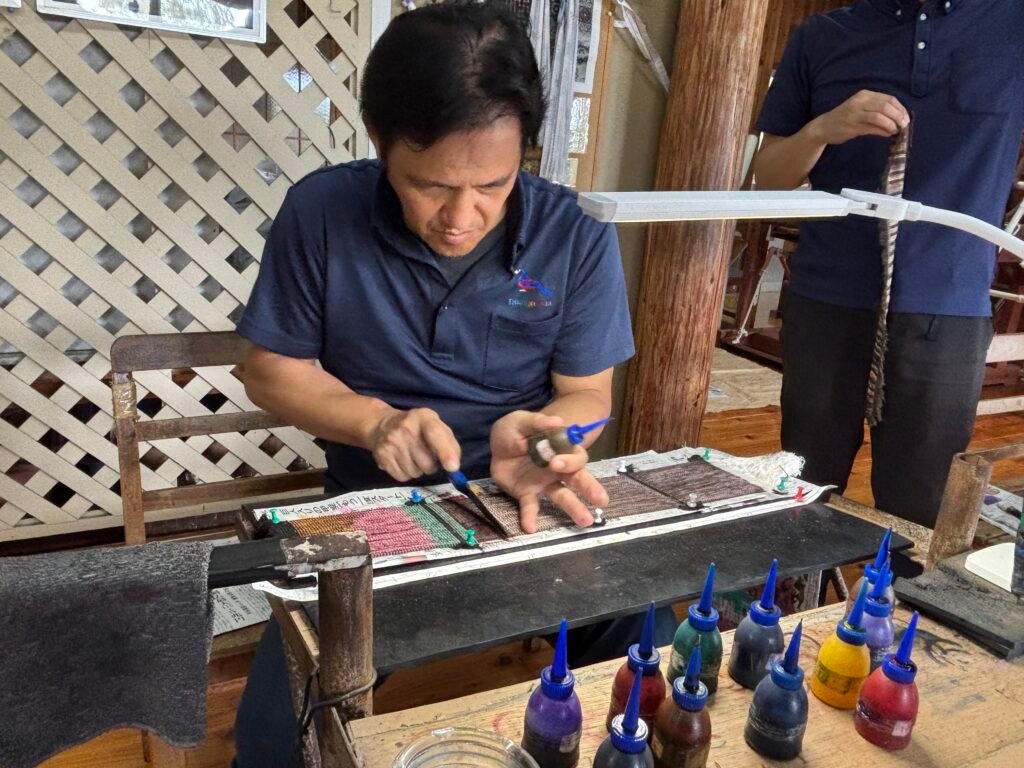
In this case, it is a silk dyed with the most exacting precision to create a warp and weft that will produce a very fine intricate design and pattern. The dye process is itself amazing as the silk is first soaked in a vat with a local wood that has been boiled for 20 hours and then immersed in a mud pit outside the building that produces a very dark black color born of the iron in the mud from meteorites and the tannic acid from the wood. The silk is tied with cotton thread in a dye-resist process and then later removed through a very time intensive and delicate process. The result is a pure silk fabric with fine white designs on a black background that take a long time to create and is consequently very expensive. The raw silk itself, originally produced on the island, is now imported from Brazil.
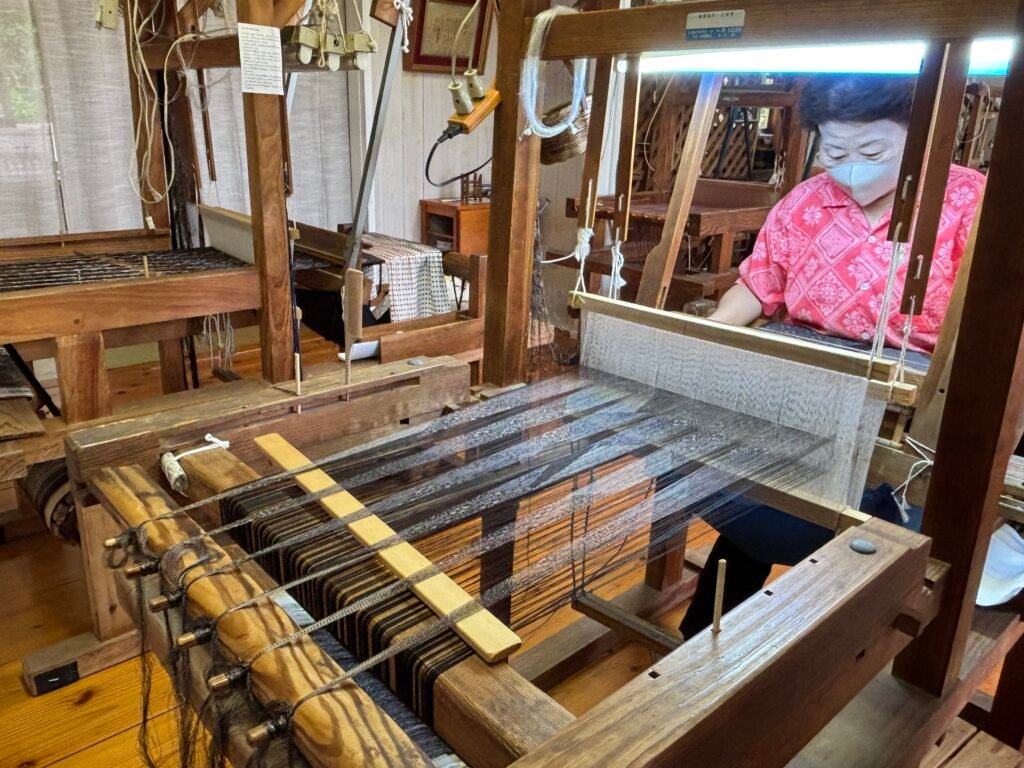
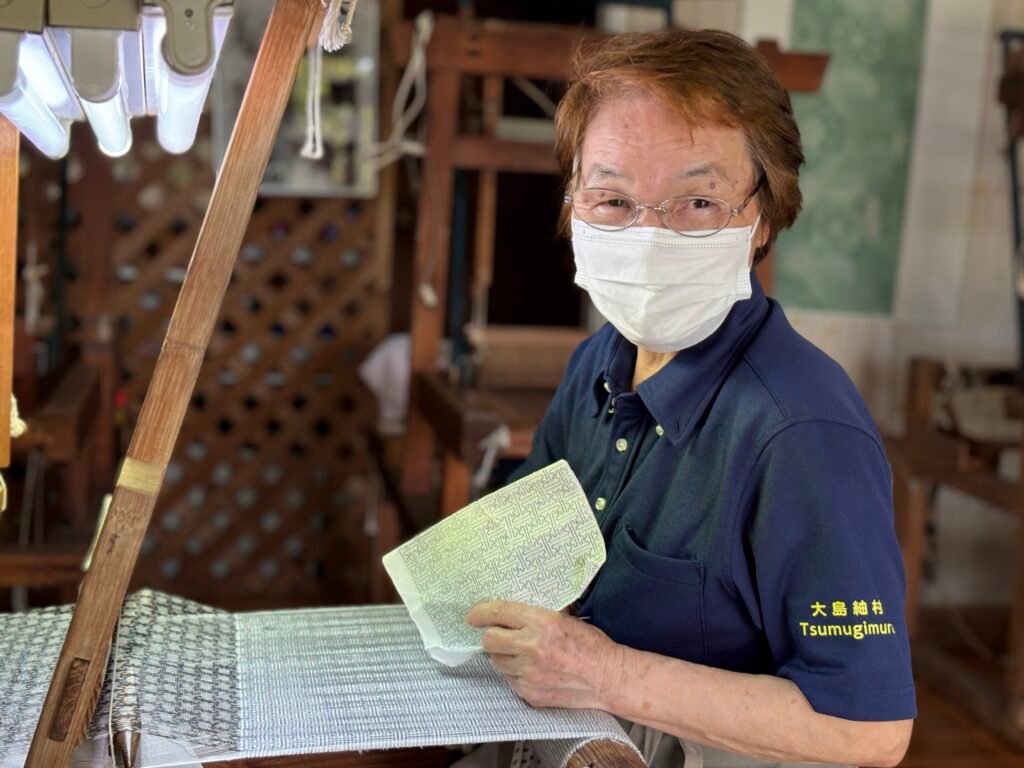
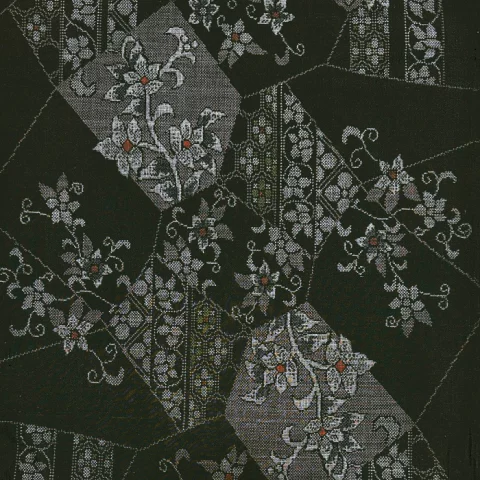
Further north we drive to the Amami Park and the Tanaka Issan Memorial Museum. The building itself is striking, designed as an inverted sea shell, and displays the cultural history of Amami and its inhabitants. The observatory situated above it all provides views of expansive green forests, fields, and ocean.
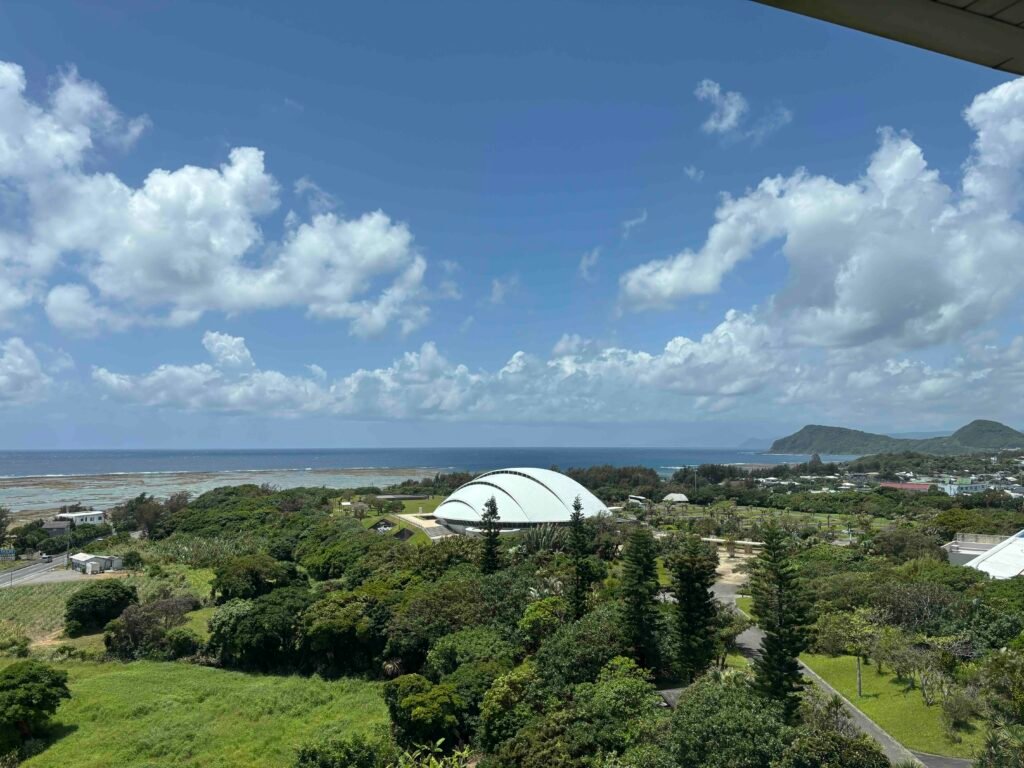
The art of Tanaka Issan (1908-1977) is in a separate museum. This fine artist lived out his adult life here in poverty, painting as much as he could and working at dying the Tsumugi fabric to support himself. His art was not appreciated while he was alive and is beautiful, part classical Japanese and part impressionism.
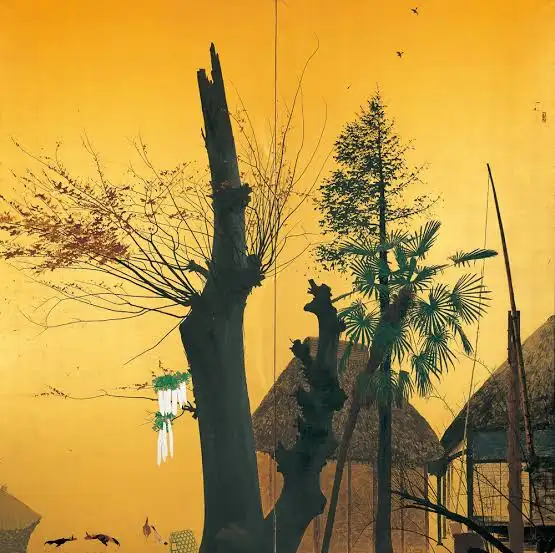
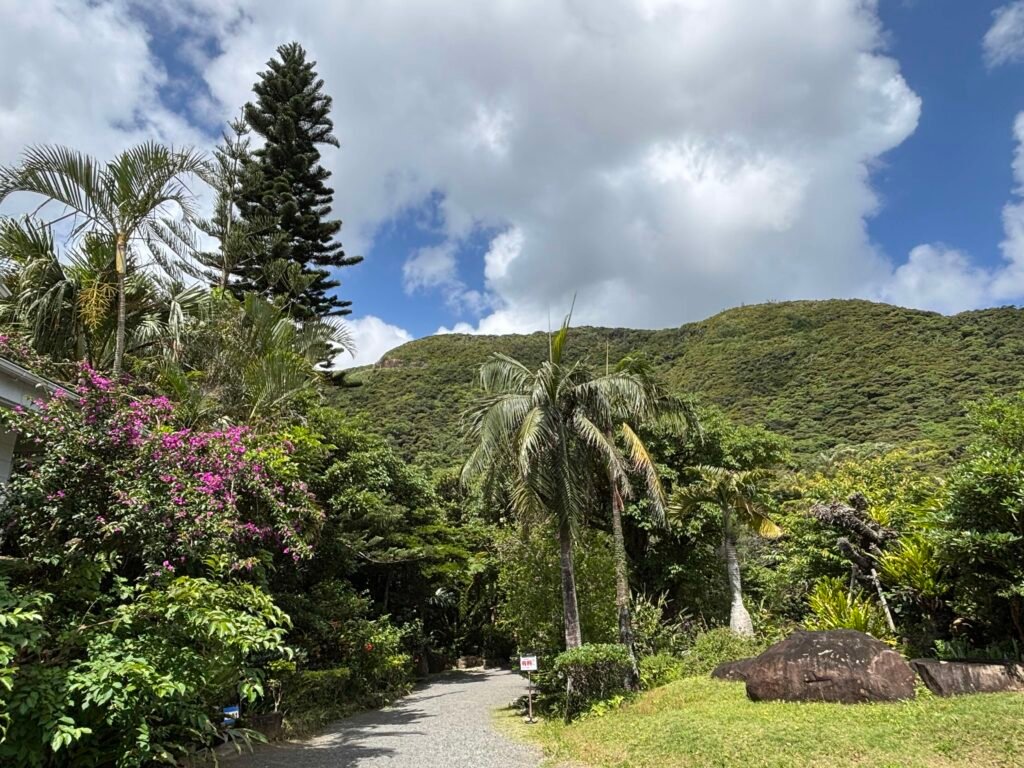
But most impressive of all is the botany of the island itself, rich lush green forests of subtropical trees and plants. A truly gorgeous island, rich in its green cover from frequent rain.
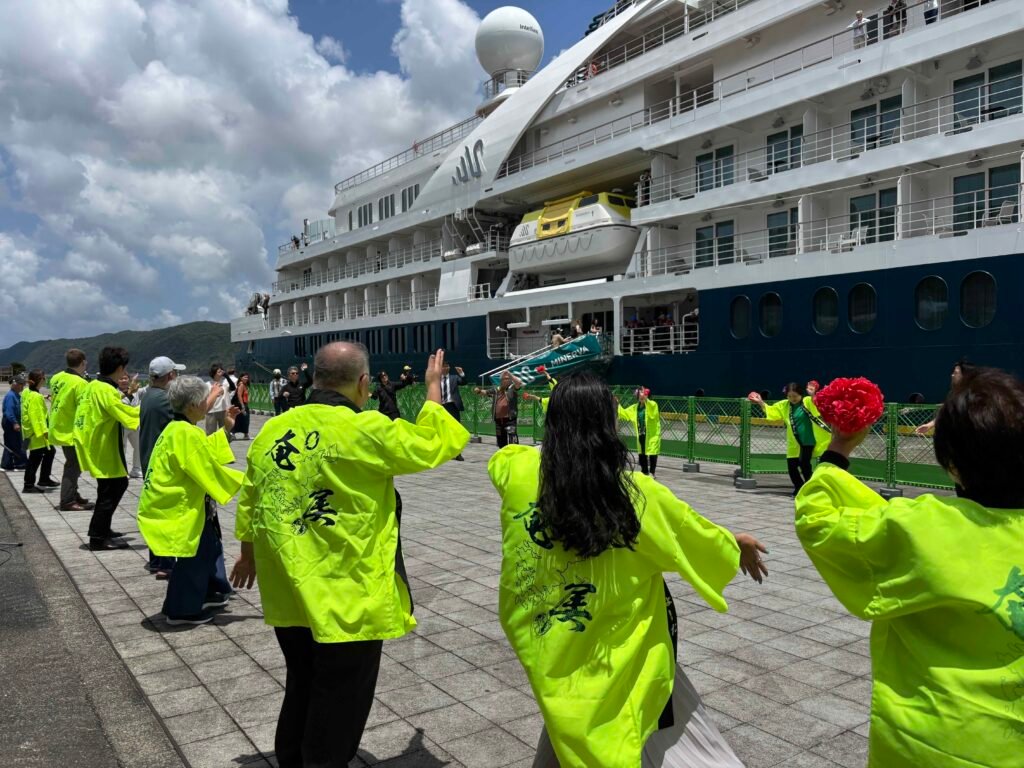
We are met with a circle of local dancers in front of our ship as we arrive back to the ship. I joined the dance for a minute to the delight of my nearby dancers. Once onboard, lunch and an afternoon of lectures and perhaps a nap awaits. The sun is out as we head further north for another island near Kyushu.