Invergordon
We sail into Northern Scotland. I had arranged private tours for us for the next two days with Tartan Trailblazers, a woman owned tour company which proved an excellent choice as our guide Margaret, called Mags, was thoroughly enjoyable, providing us with an insight to Highland life. Her father was an award winning bag pipe player and we had the pleasure of hearing Mags and her daughter sing for us in our private mini-bus on the way back after our visit around the Inverness area.
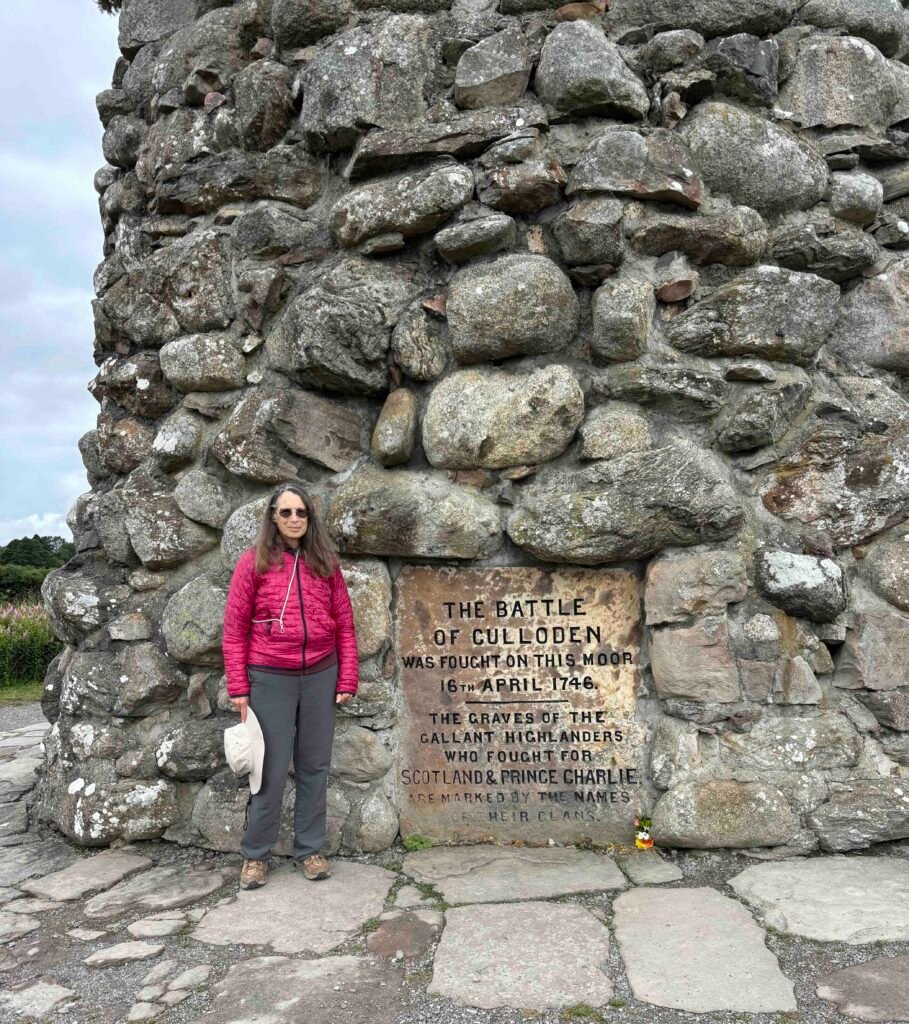
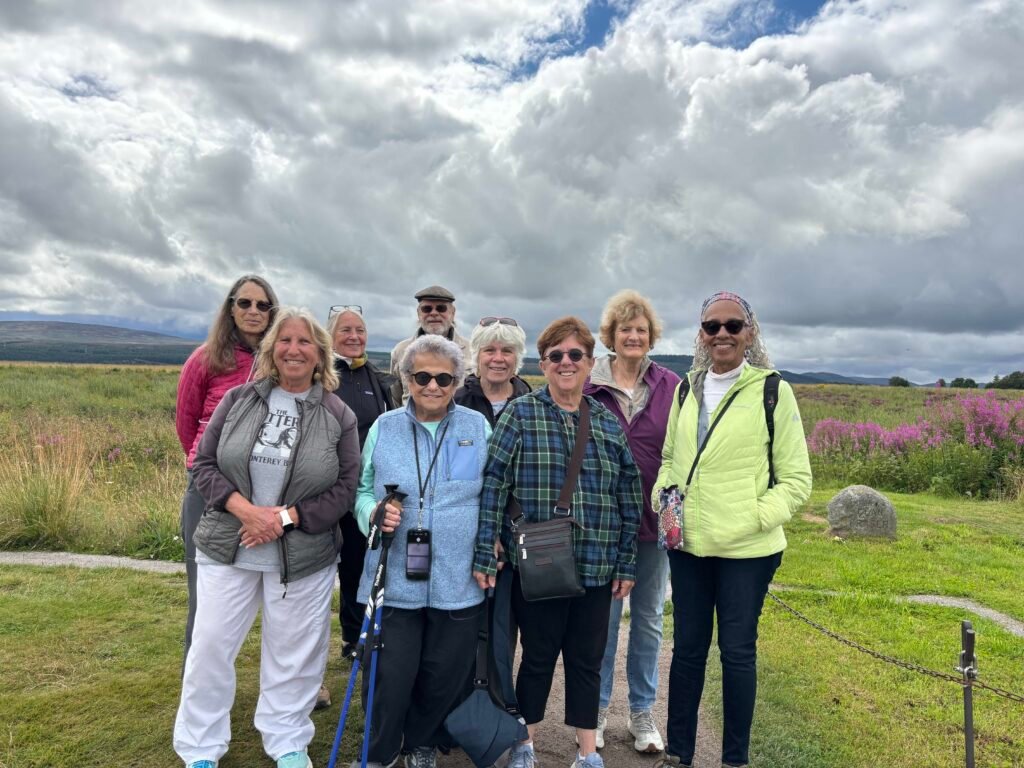
Our main visit was to the Culloden Battlefield, the famous 45 minute fight in 1746 between the Government troops and the rebellious Jacobites during which only about 50 of the former and between 1,000-2,000 men women and children of the latter were killed. A slaughter by any standards. The main clans each have stones here commemorating their dead and flags show the lines between the two sides over the large boggy field now filled with grass and flowers. It is these days better known as the place where Jamie Fraser of the Outlander fictional series was injured and the real Clan Fraser stone has had to be fenced off and protected from the many fans who want a piece of a fictional memory.
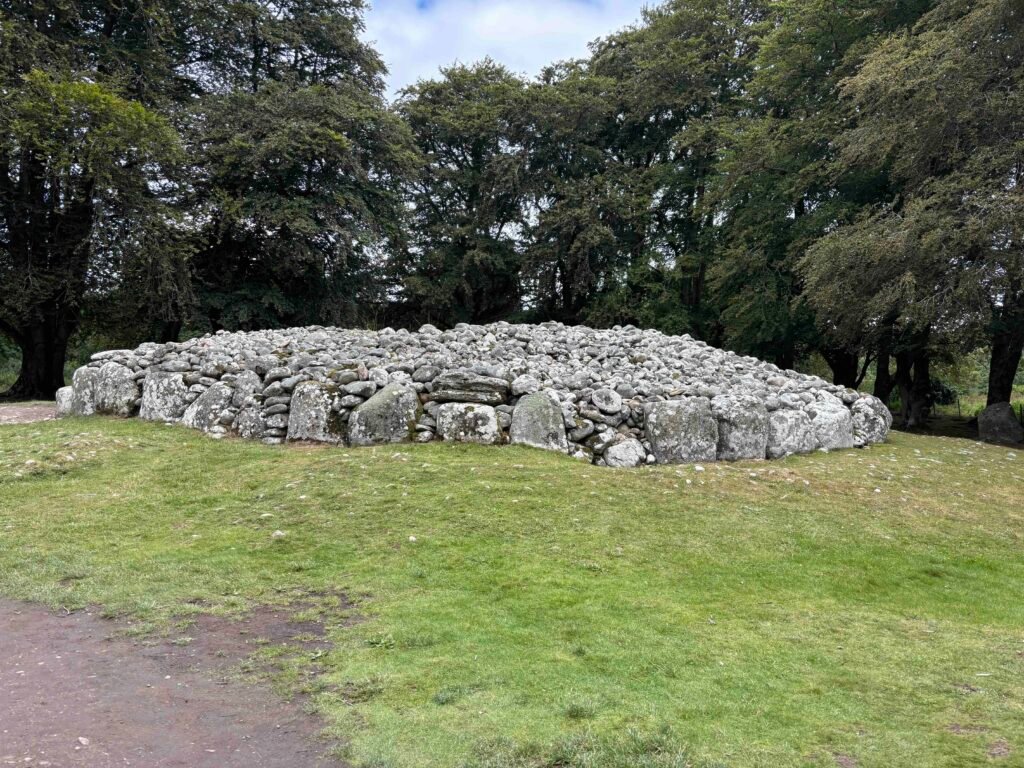
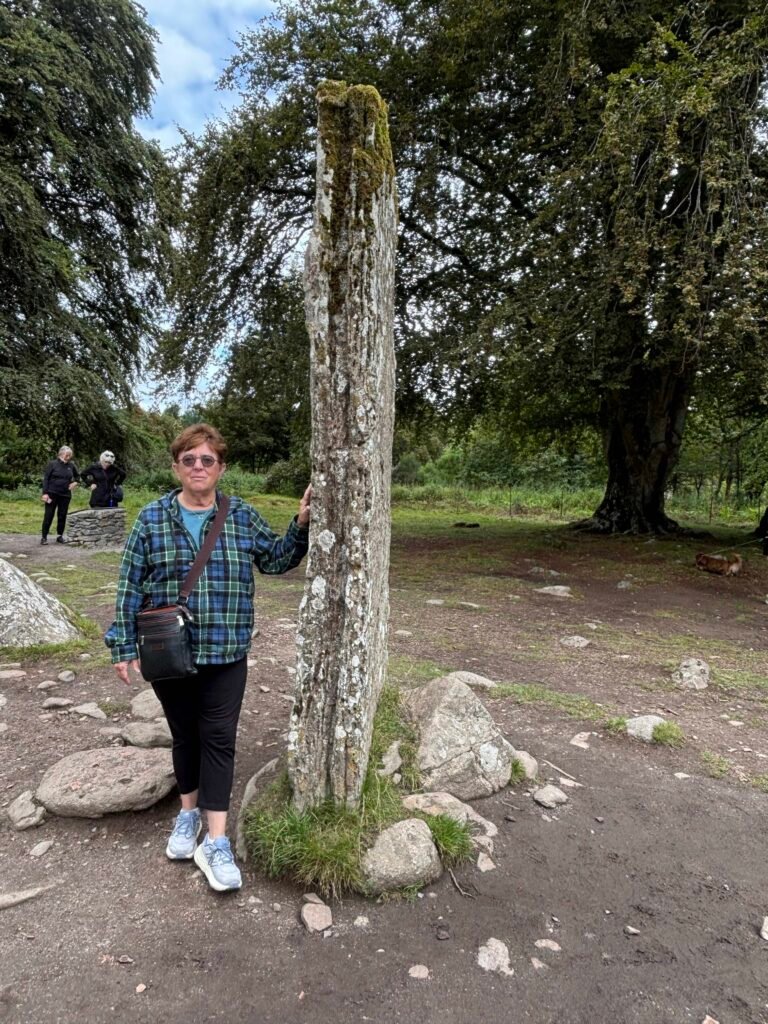
Nearby Clava Cairns is a bronze-age burial site with three impressive round stone tombs and many standing markers in a peaceful location. These are also considered the inspiration for the standing-stones which feature so prominently in the Outlander books, moving people from one time period to another. They are part of a significant history but did not transport us physically but were an emotional reminder of the vast periods of time and numbers of people who lived in this land. And there are those who believe their spirits still can be found in this place.
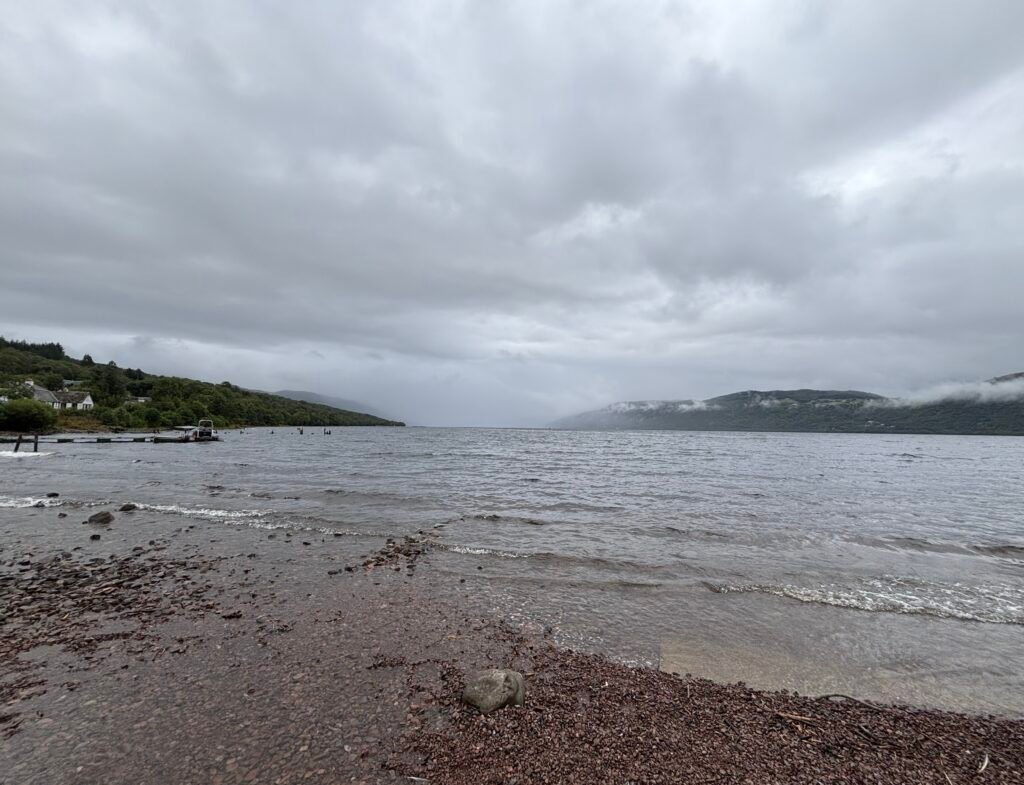
We were not so lucky with the weather in the afternoon. After lunch at the Waterfront Cafe we arrived to see famous Loch Ness in a wet drizzle so that in the grey murky sky and dark roiling water, you could easily imagine the infamous Nessie rearing up to scare the nearby inhabitants.
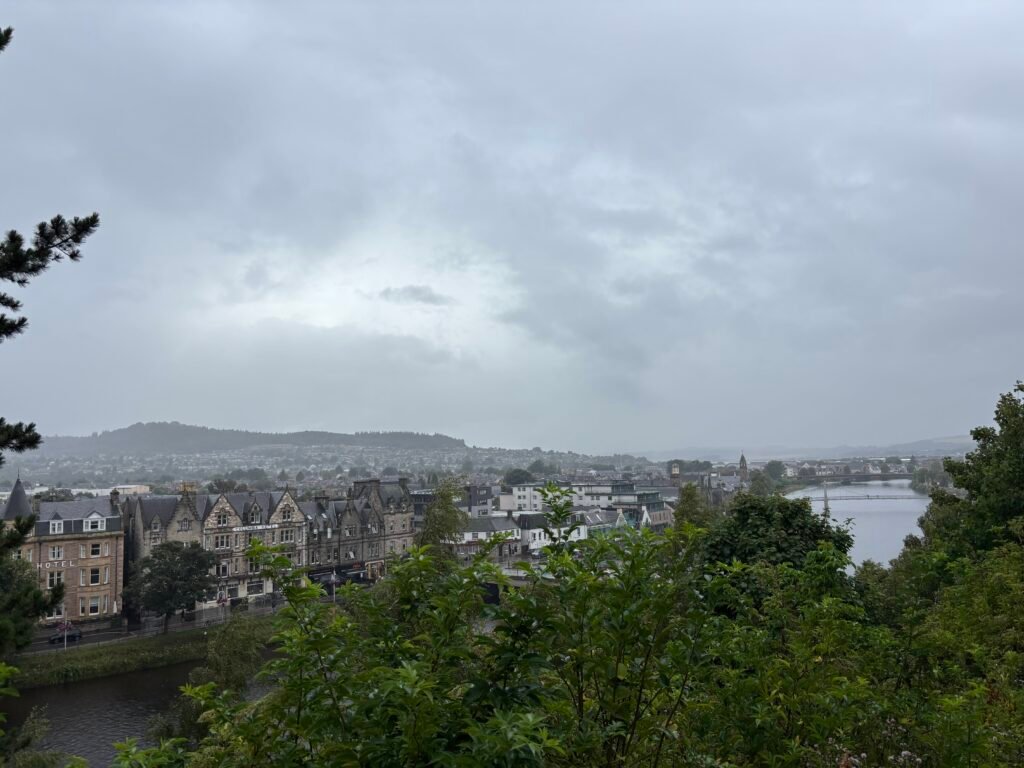
Our last stop was at the Inverness Castle, which was destroyed after the Battle of Culloden by the Jaobites and then rebuilt in the mid 1800’s. It existed until 2020 as the local tribunal, court and jail and has recently been turned into a high-level museum. Our group of 9 arrived too late to see much of it except the North Tower including an exhibit of community-sewn textilt art and a display of the castle’s history. The light rain prevented much exploration of its beautiful gardens But we were tired after our tour of 8 hours and were glad to get back to our restful cabins to prepare for dinner.
Scrabster
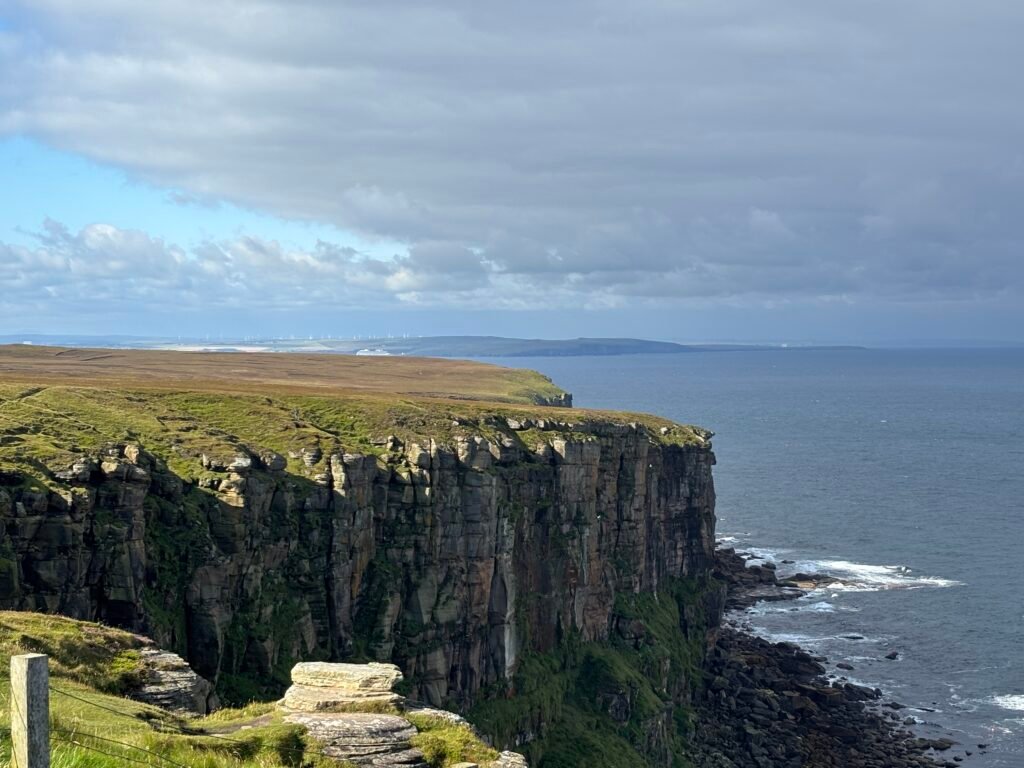
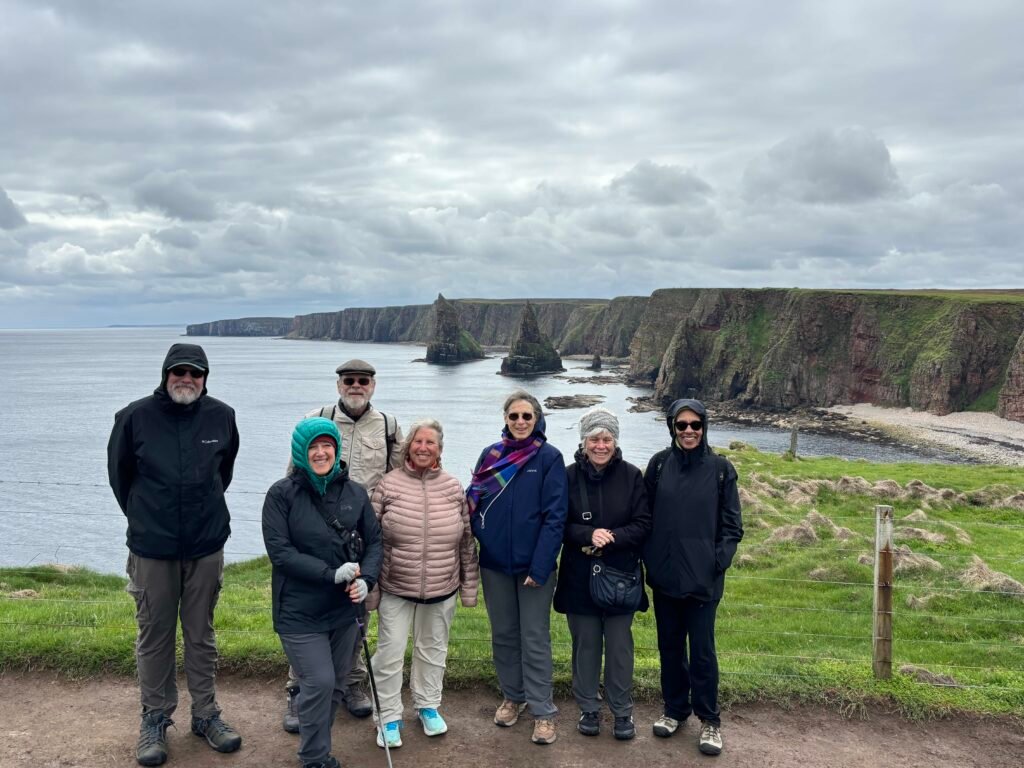
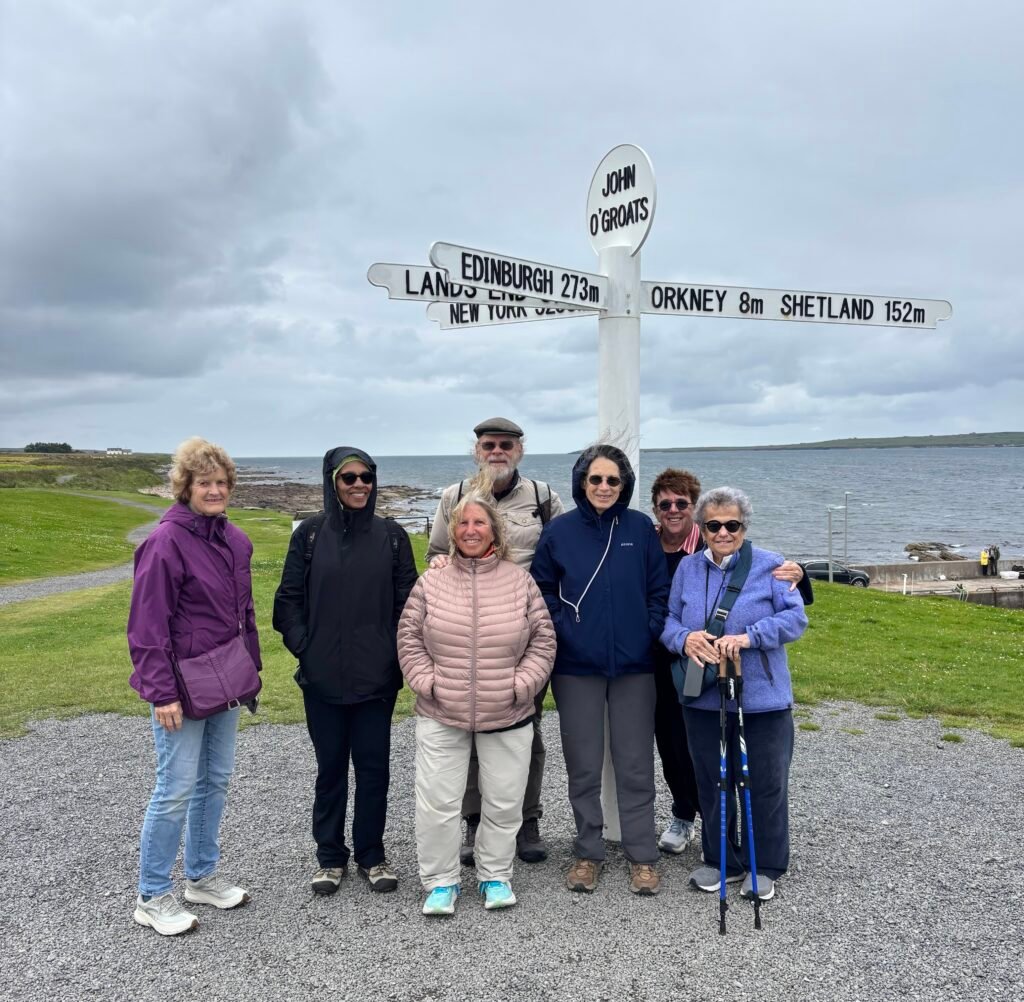
Scrabster is a port at almost the most northern point of the Highlands of Scotland. Our same two great women met us in the minivan for todays private tour — although they had to drive 2.5 hours from Inverness to meet us. Our outings today started in the most northern part of this country, Dunnet Head, with a visit to the nearby village and coast of John O’Groats. Beautiful green scenery and coastline, rugged with high cliffs and flocks of grazing sheep. We were told that a main historical change of this land happened in the early 1800’s when North Country Cheviot sheep were introduced onto the landscape which became so profitable from their finer wool that the large landowners began clearing the land and evicting the tenant farmers who had been there for generations to make room for more sheep.
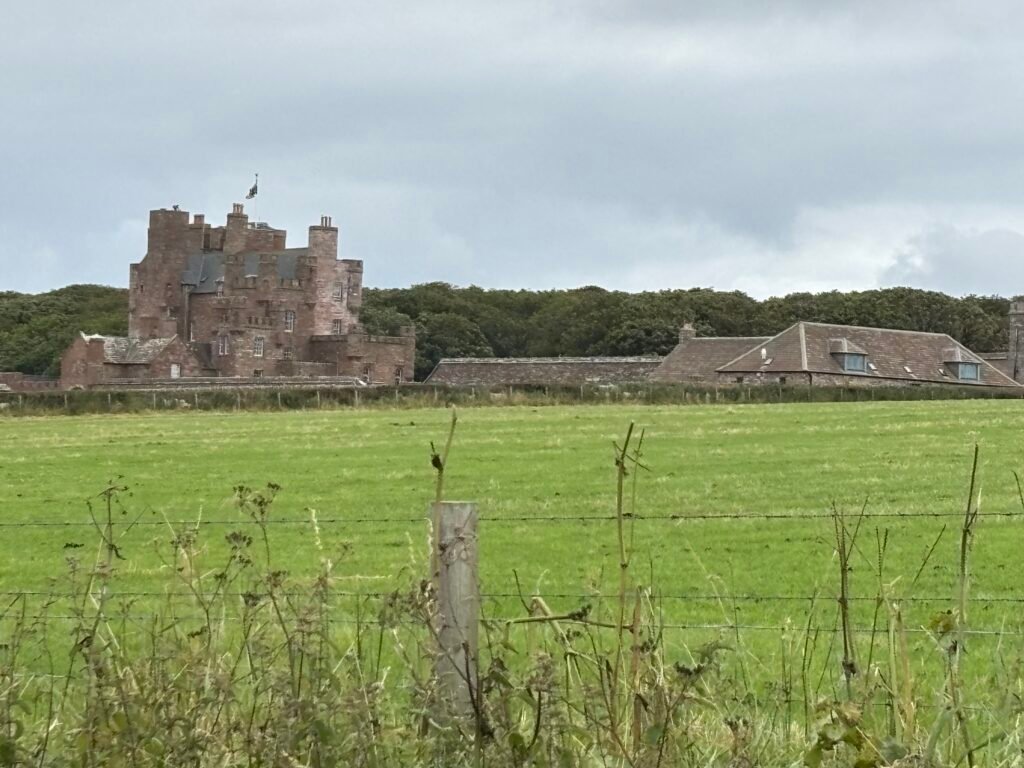
King Charles just happened to be visiting this day so Castle Mey was closed to visitors as he and his family were in residence. As we approached the castle and saw the “Road Closed” signs we were disappointed but our intrepid driver thought she could find a way to get us closer for a view and so she did. On the road, wth the castle entrance nearby, we all got out of the van and stood nearby taking some photos although we could see a little ways down the road the guard and guardhouse and another visitor in a car being turned away. And then a local police car, maybe there were 2 of them, pulled up and demanded our driver show us her registration and ID and asked questions. We were afraid she would be fined but it was just a reprimand — abut we did get good photos of the castle with the flag flying to show that the royals were in residence.
Our last stop was in the small town of Wick, where we had a late lunch and walked around its central area, with most people going to the local whisky distillery for a visit while Claudia, Ginny and I wandered through its main streets and did some shopping. It was a strange town as so many shops were closed. We thought maybe it was just August holidays but we met a local man along the way who told us that the Council had raised the rent in town and many businesses had to close. The large brownstone downtown church was for sale. We saw them taking the sign down for a restaurant. But we found what we wanted: a Boots pharmacy with some products we can’t get in the U.S. and a local thrift store where I was able to buy a handmade woolen sweater and a new unused warm puffy vest in preparation for the colder climes to which we are heading.
Most interesting of all was learning from Mags about life in the Highlands and about its history. We heard a medley of famous Scottish music, some of which was played by her father on the bagpipes, on our van along the way. And she concluded with this local saying about the Highlanders – British by passport, Scottish by law, and Highlander by the grace of God.
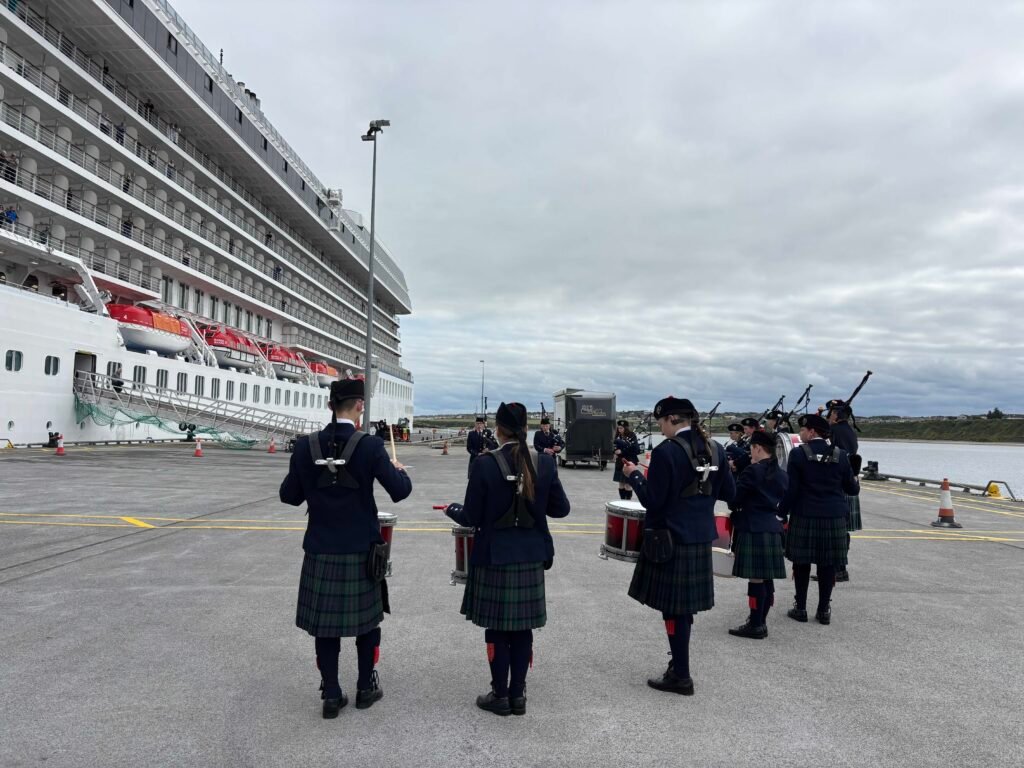
Then back to the ship where a finale to our Scotland visit was a group of young bagpipe players and dancers on our dock waiting to pipe us home to our cabins.