
Of my recent trips abroad, our experiences on the Faroe Islands were probably the most surprising. In part because I knew nothing about the country in advance, except that it was considered part of Denmark. So everything we learned on our excellent tour was new.
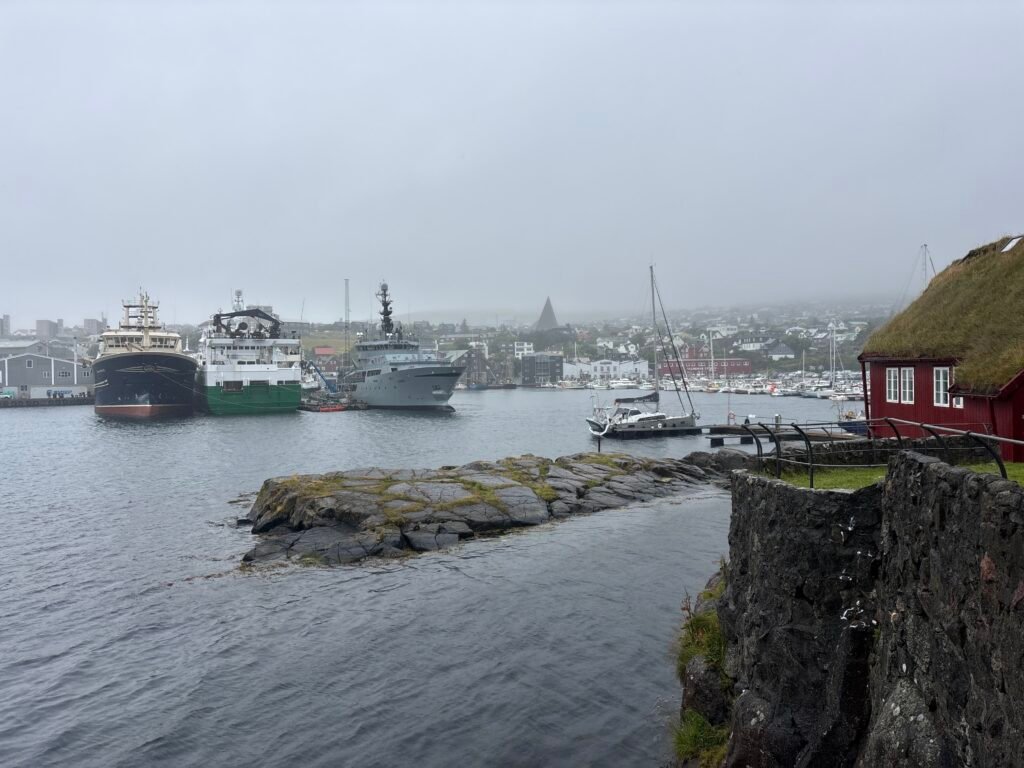
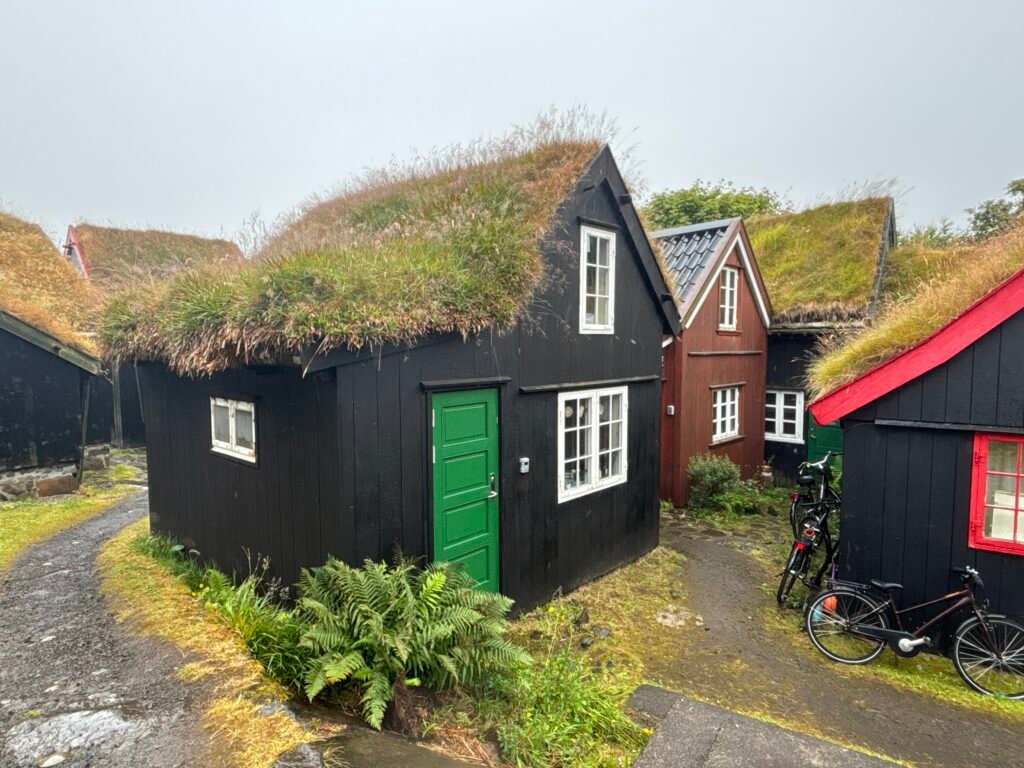
What stands out is the exceptional beauty of the barren bright green landscape with waterfalls running down its many hills into the sea and the charming sod-covered traditional homes that dot the hillsides like the many sheep.
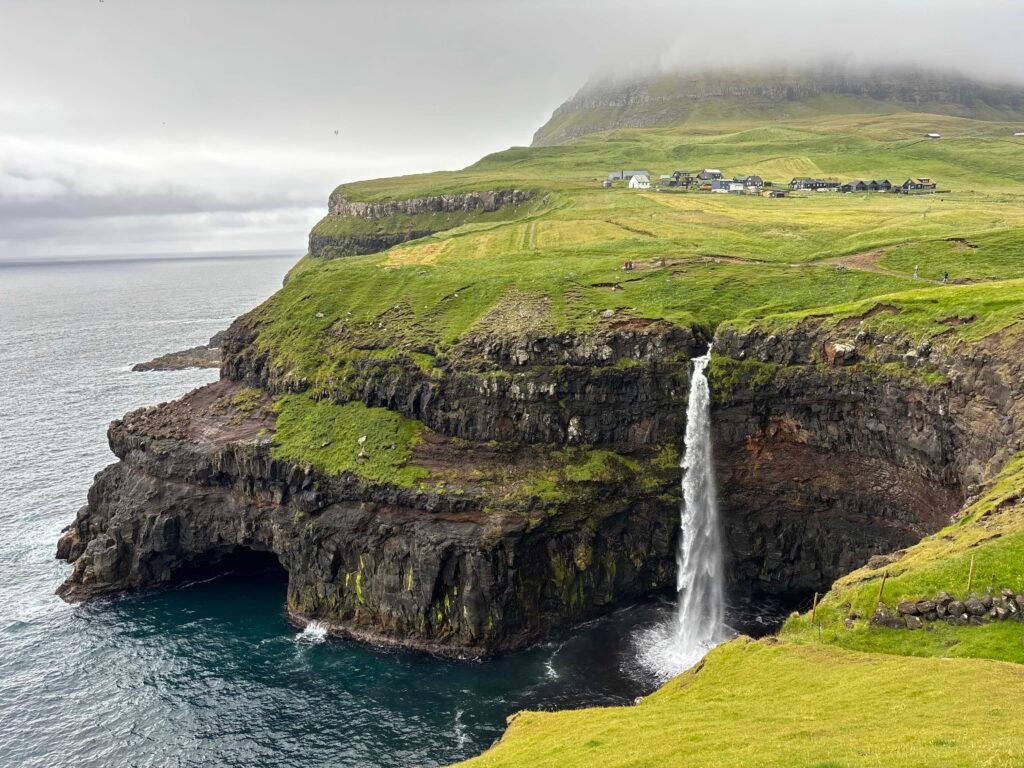
The native language although similar to Danish is actually closer to Icelandic with children speaking Faroese but learning Danish and English in equal measure starting in second grade. Although in a close and mutually beneficial relationship with Denmark, it struggles to maintain its own national identity and way of life. Comprised of 18 main islands, many separated until recently by the sea, there are now under sea tunnels connecting most of them.
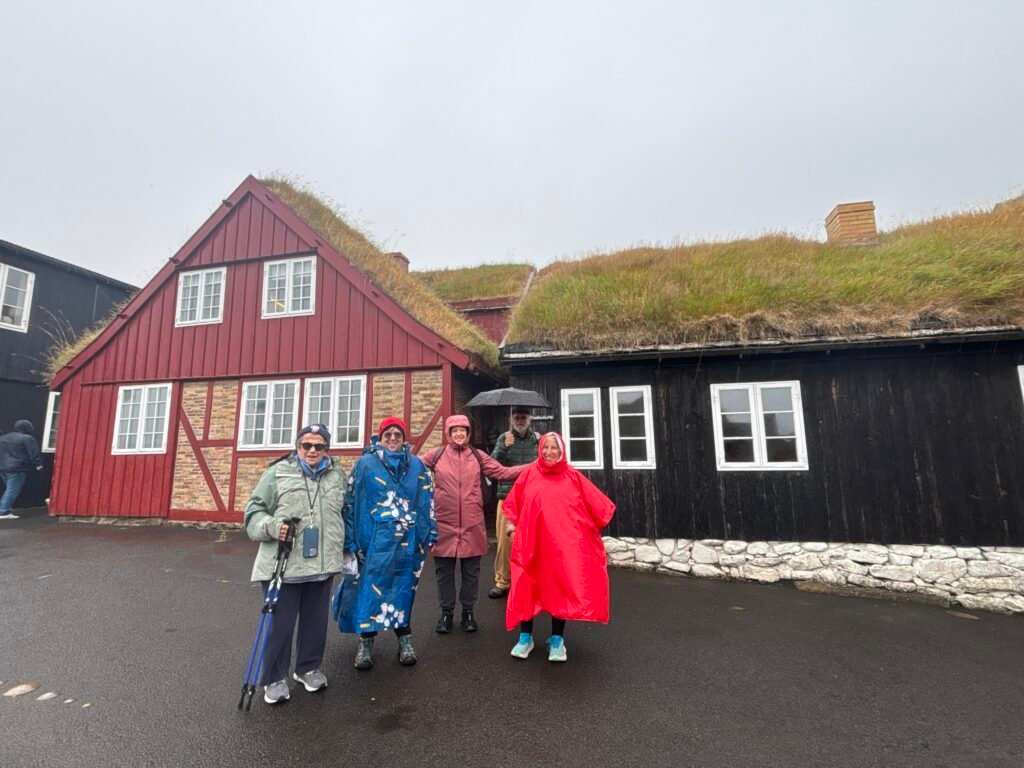
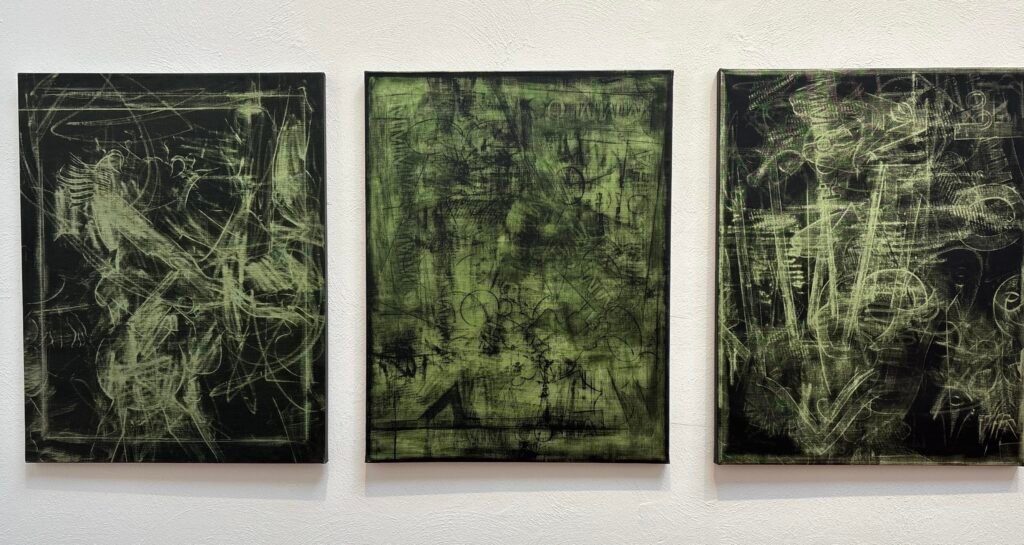
A few of us, after walking around town, went to the National Gallery of Art which displays a striking collection of modern works – very surprising in that some are dated in the 1930’s but are as modern as any and very impressive for such a small country. Today, there are only about 55,000 people — half of whom live in the capital town of Torshaven — and there would have been far less 100 years ago. To find so many artists represented reflects that the arts were respected and encouraged. We were told many talented people from here went to Denmark to study art.
Our guide has 2 adult children – both of whom now live in Iceland. Although a beautiful place, the young people today look for more than a simple life and, like many countries, are emigrating elsewhere. It has always been a religious community, perhaps a little strict in its Lutheran life style for some, so I imagine being a little different here may be difficult. Although we did see some gay pride flags and a rainbow painted walkway, I read online that it is conservative in many ways, including its abortion laws.
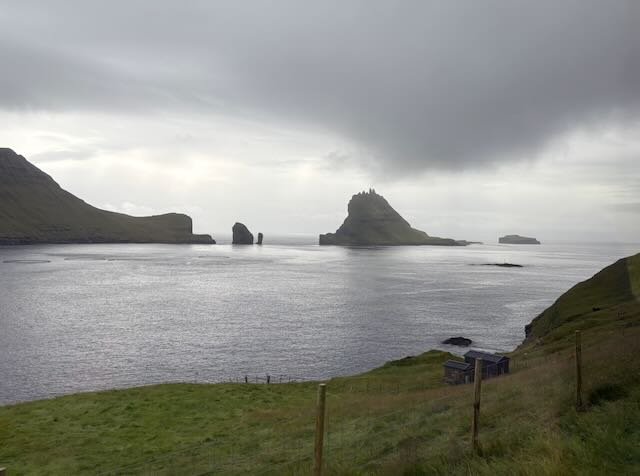
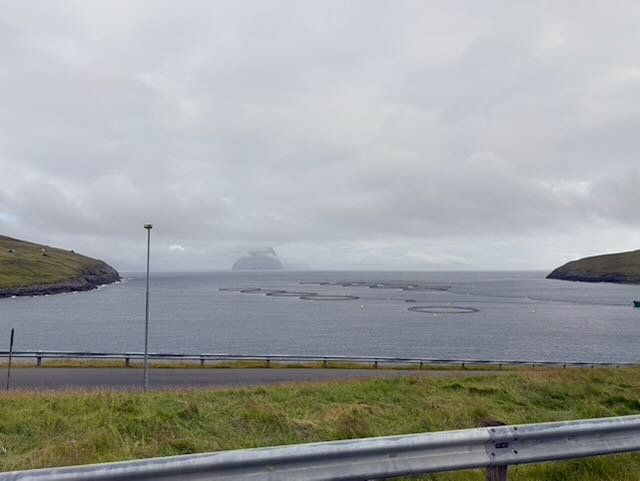
Its first and central way of life is fishing. Commercial salmon farms being one of the most productive of their resources — each fishing ring holds 30,000 – 90,000 full grown salmon! The eggs are fertilized in a factory and then brought to the rings and fed after hatching. To protect its industry from certain restrictions, the country voted not to join the EU although its fatherland Denmark is a member.
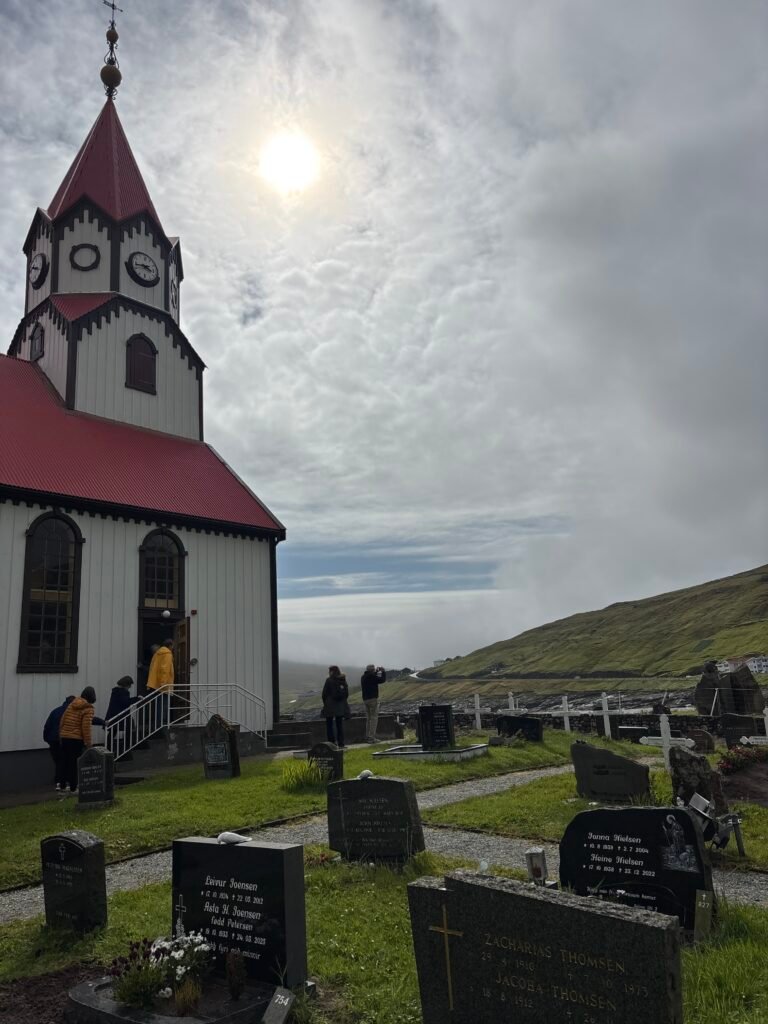
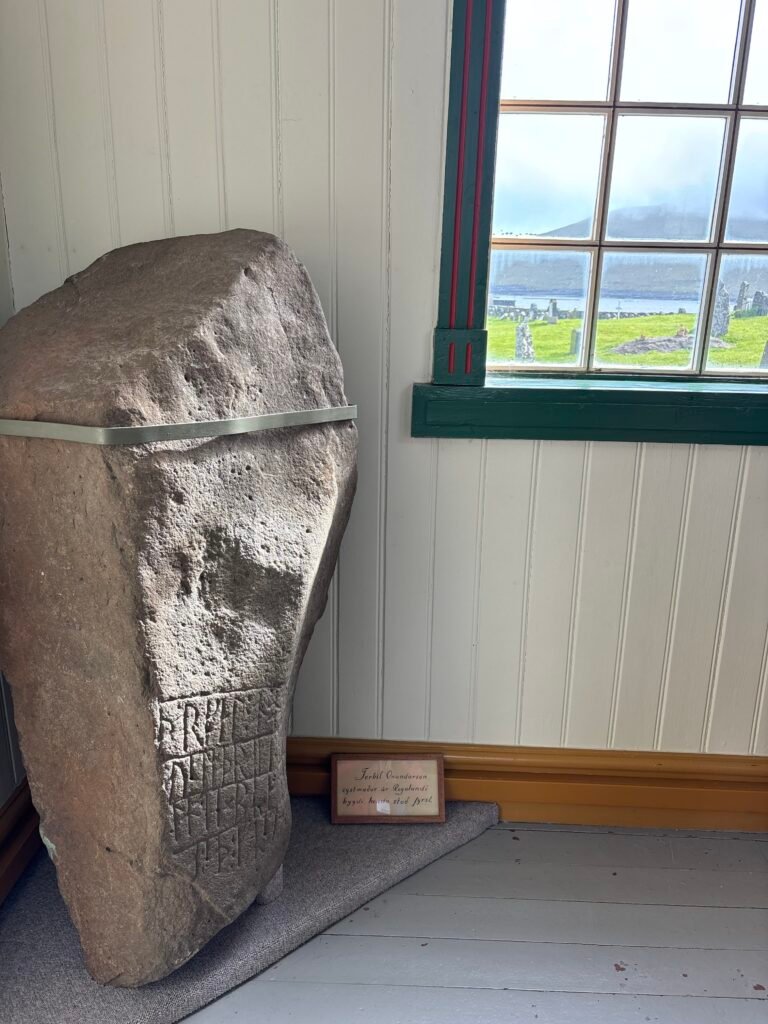
People had to be strong to survive and community was important. At the local church we visited, we heard the story of the 5 ships that went out fishing on the day before Christmas many years ago and ran into a storm so that only 1 ship came back — and this tragedy is still an important memory on this island.
We are back on the ship for a day at sea, resting and eating, before we make our first stop in Iceland. We have had a number of excellent lectures about the upcoming eclipse from notable astronomers but the weather prediction is not good at all. In fact, it is unlikely we will have much visibility but will see the sky darken and the temperature drop. The question we have been thinking about is where will the 1100 passengers stand to view this event? There is not enough room on the top of the ship and it is uncertain whether the ship can hold itself In one direction so we can stand on our balconies. Hopefully, we will hear more about that in the next few days.