
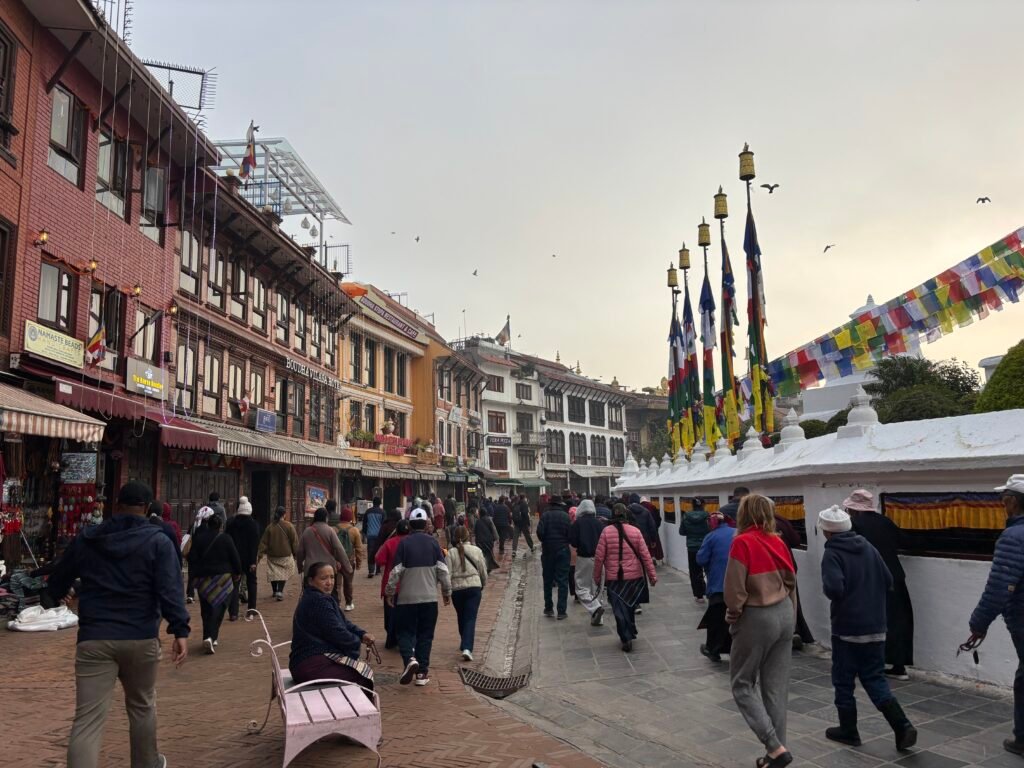
It is the morning at 6 AM, we are back at the Kora, in Noble Silence, walking around the stupa 3 times. It is a barely pink sky and the pathway is filled with pilgrims and local devotees chanting prayers and clicking their prayer beads as they walk with heads slightly bowed. The quietly murmured recitations from so many people fills the air with a wavering hum forming a cloth of sound over the area, occasionally punctuated with a louder or lower drone. It is, as intended, conducive for meditation.
After the end of our rounds, James leads us into the Tamang Gompa, a monastery right off the circle where we sit on the side amid the morning prayers of about 30 monks sitting in rows across from each other. Every inch of the walls and ceiling is brightly painted with the panoply of Tibetan deities (as well as portraits of the late king and queen around the doorway) and multi-colored fabric banners hang from the ceiling while the alter in the front has flowers below the portraits of this sects founders and its main teachers, including the Dalai Lama. Trays of lit votive candles flicker with movement as the monks continue their prayers in unison, with the occasional clang of symbols, gongs, and at one point the piercing sound of a reed horn, like an Indian shenai, which breaks through all other auditory output.
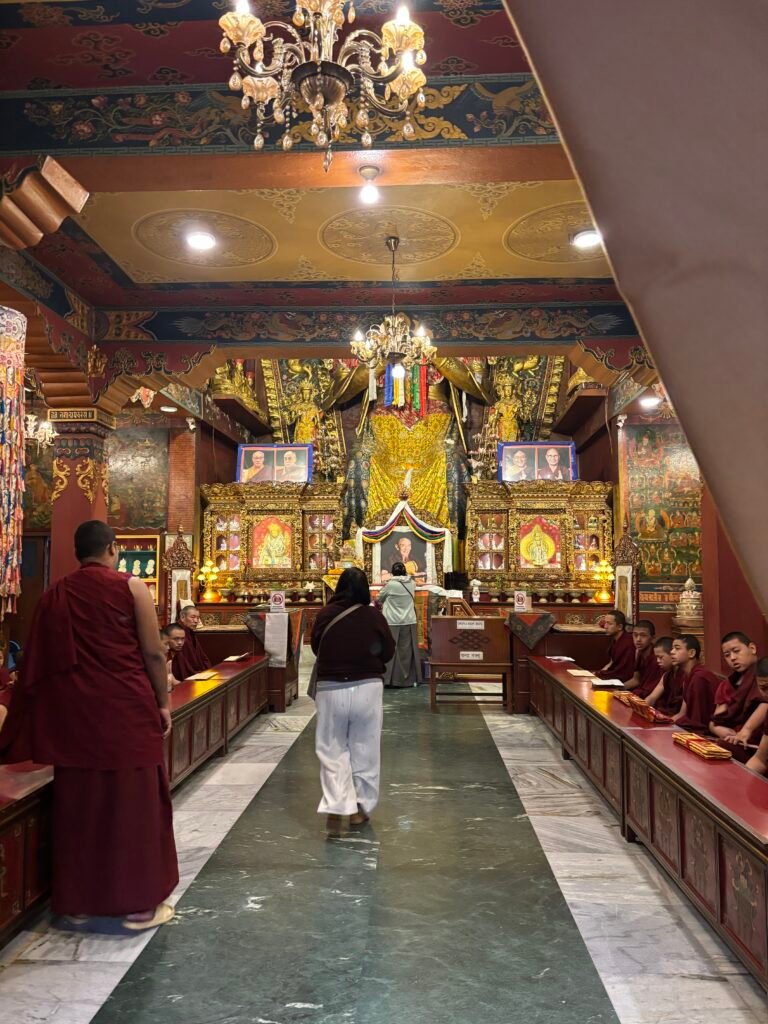
It is total immersion in a bath of sensory experience and it feels as if all of this, like the subdued chanting around the Kora, is designed to so overwhelm the human receptors to allow no thoughts but an entrance into awakening stillness. The monks are mostly young from about age 6 years old and up, and we were told later this is a daily gathering of those still in early training with their teachers present to lead by example. The seniors monks practice here later.
At one point one of the “monklets” as I have heard them called, jumps up and comes back with a spray bottle of a blue cleaner. He begins to spray and then vigorously slide with two hands a cloth rag along the low wooden counters below all of us. I have a sense it was determined this small one could not sit still very long and generations of teachers learned the best remedy was occasional movement and action. This little guy had the sweetest smile and seemed genuinely engrossed and happy to be doing this service
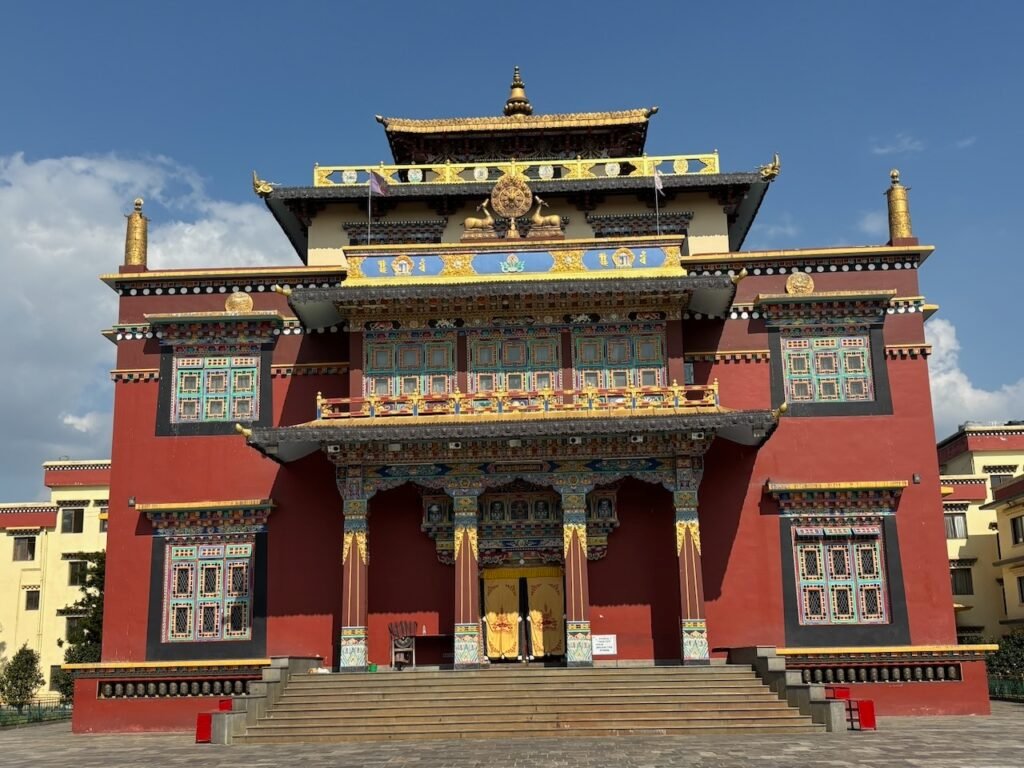
Our Wild Writing session with Laurie outside with loud airplanes occasionally overhead was excellent and beneficial to all of us. Then a walk to the nearby Shechen monastery in the Nyingma lineage which has been beautifully renovated. There we had lunch with Carroll Dunham, an anthropologist who has spent most of her adult live in Nepal, and from whom we got an overview about Nepalese history with some interesting stories thrown in. This monastery, like many in the area, realized that opening up a cafe or restaurant was one way to support their work as well as provide local employment. The food was good. At each meal James has requested vegan options for me and the various restaurants have complied, cooking separate vegan dishes for me as most Nepali meals includes paneer cubes (like cottage cheese) or else cheese or eggs. In this restaurant, outdoors in a courtyard, I was brought special vegetable balls without egg as well as a simple curry. Nepali food is not as highly spiced as Indian and in addition I understand that in the monasteries daily food is usually not spiced at all except for turmeric and salt.
From one experience to another: we now head to visit a very low income housing complex, called the “beggar’s camp”. James has set up a non-profit organization, Quilts for Kids Nepal Project (QuiltsforKidsProject.com if you would like to donate) that supports women in the camp to make quilts and provides assistance for some of the kids in the community to attend a good private school. The cost of one quilt is the cost for one year of tuition for a child. Almost all of the schooling recipients are girls.
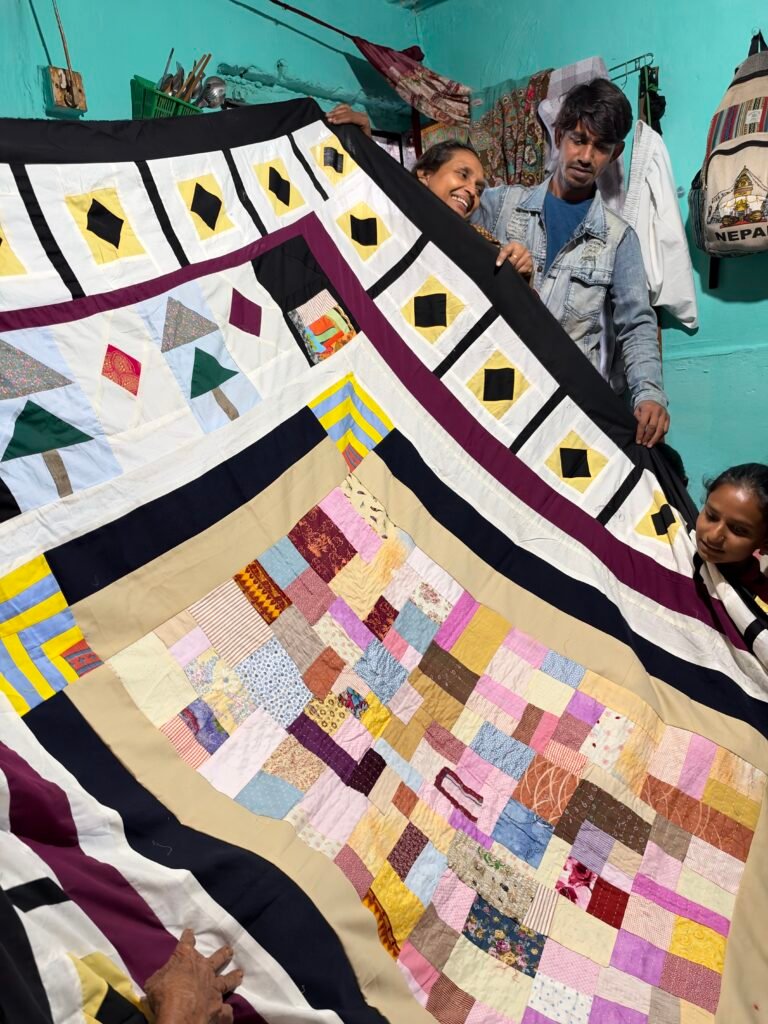
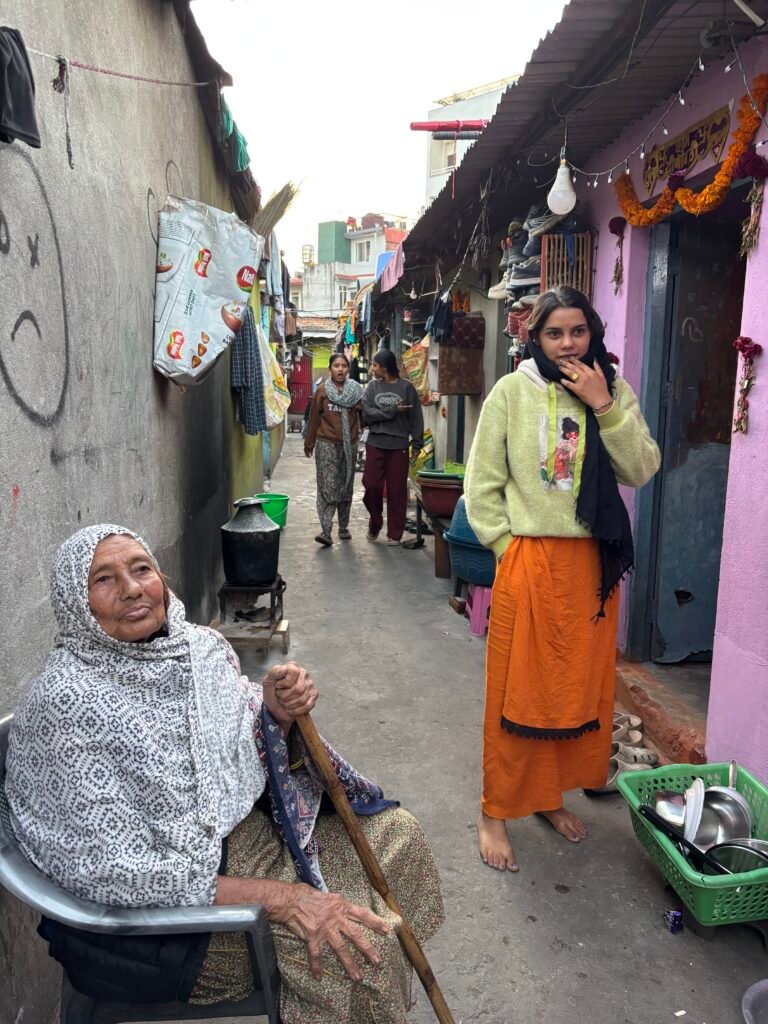
As we walk through the community, we can see family groups and many children in the alleyways. Each living space is just one room with some kitchen options in a corner and beds. Very very basic. A row of toilets and washrooms at one end of the complex. The parents mostly make their income by shoe shining on the street or some form of begging.
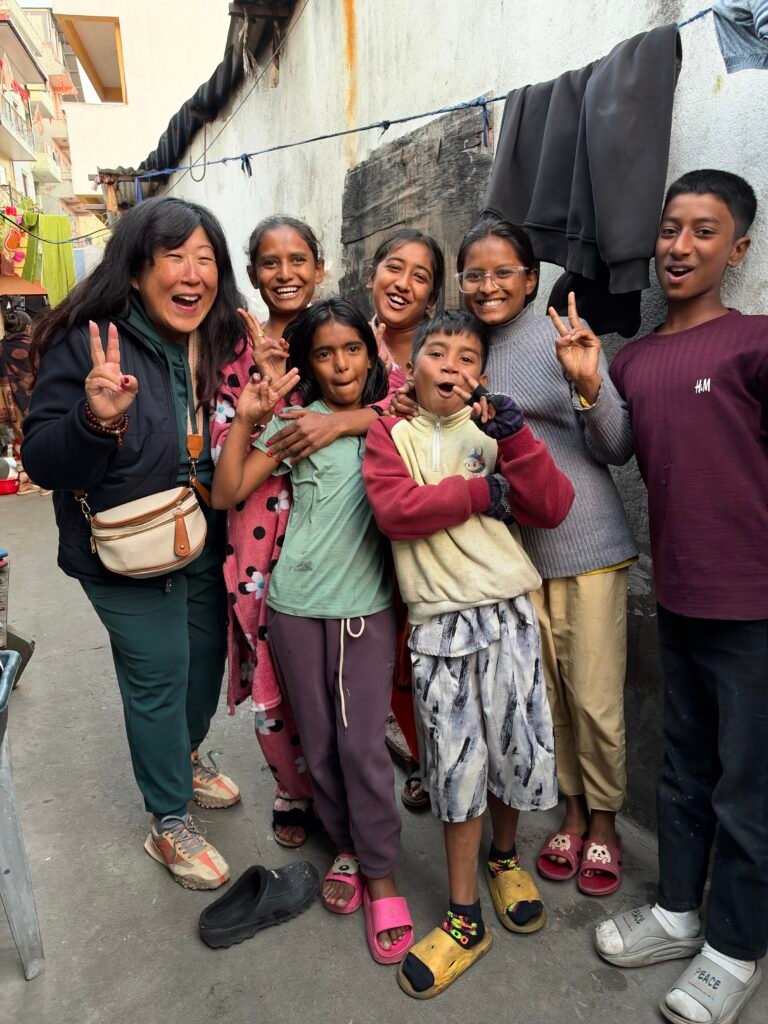
Six people lived in the bright-aqua painted one-room apartment we visited, the parents and 4 children, all girls. It was pointed out how the father was the first man in the community to agree to allow his oldest child to go to school and after that, others saw the benefit and allowed their children to attend. Now there are many more children who would like scholarships than the foundation can currently provide. Several middle-school girls who are studying English and science and hope to go to college introduce themselves to us. And one young woman whose parents’ room we were in was studying at a College level to become a nurse. This nursing student told us she wanted to finish her education and become independent because she saw getting married as a burden with housework and childcare.
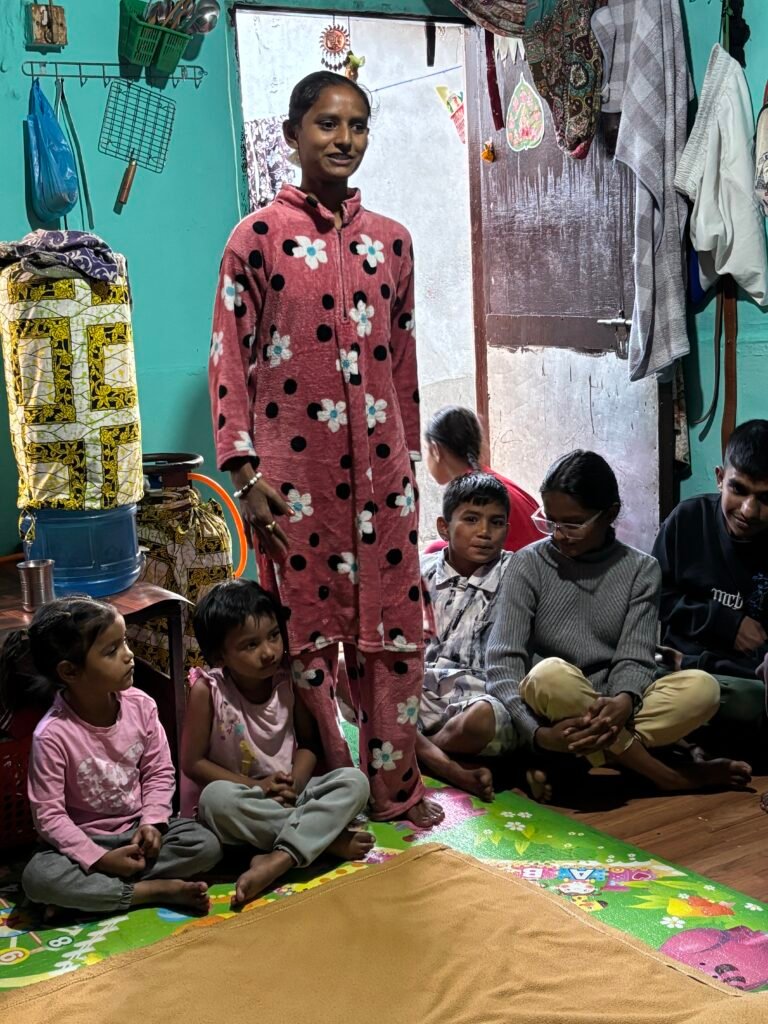
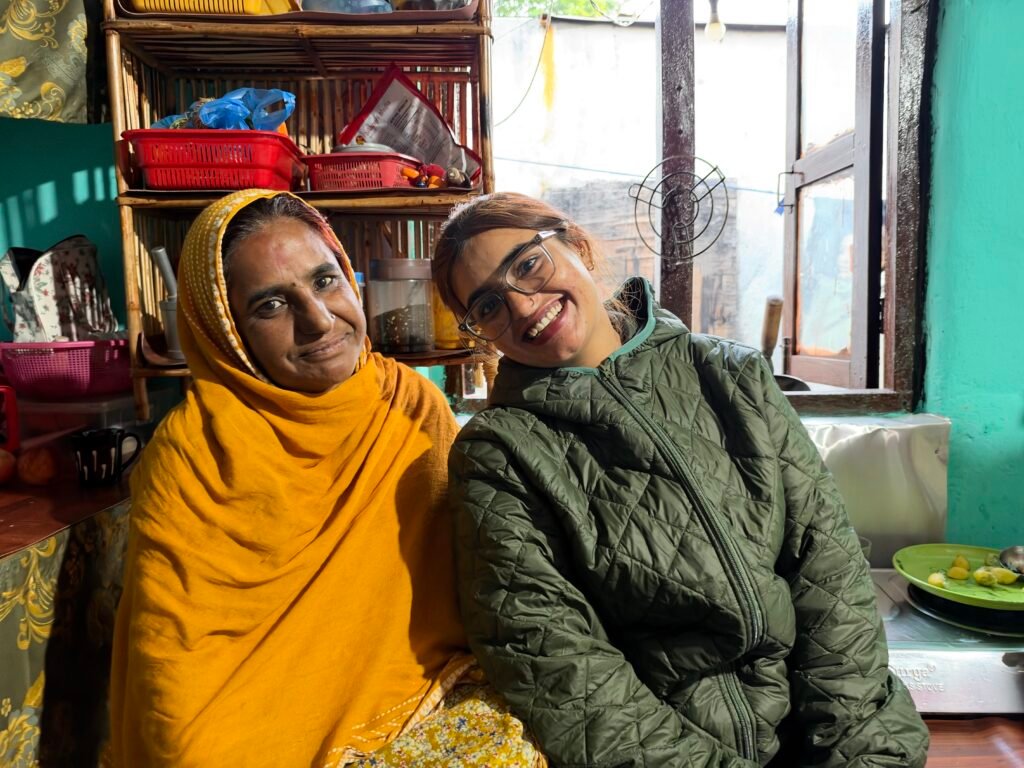
Everyone we met was gracious and glad to see us. The little kids were running around and seemed happy and I hope more and more of them will get the education they deserve.
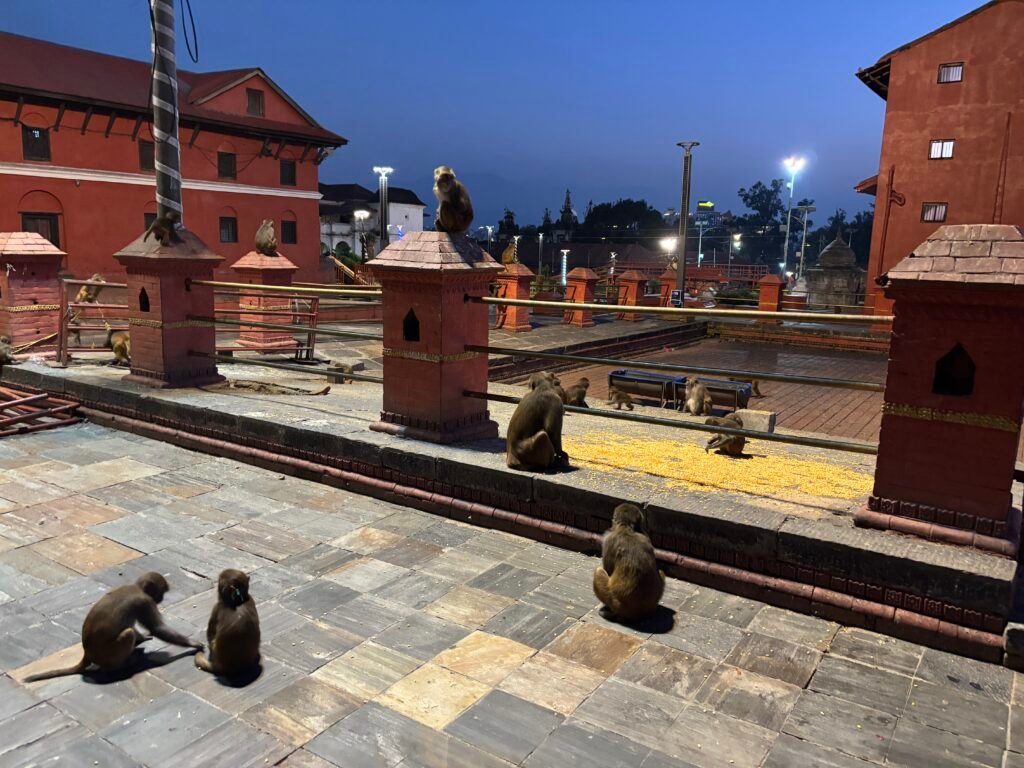
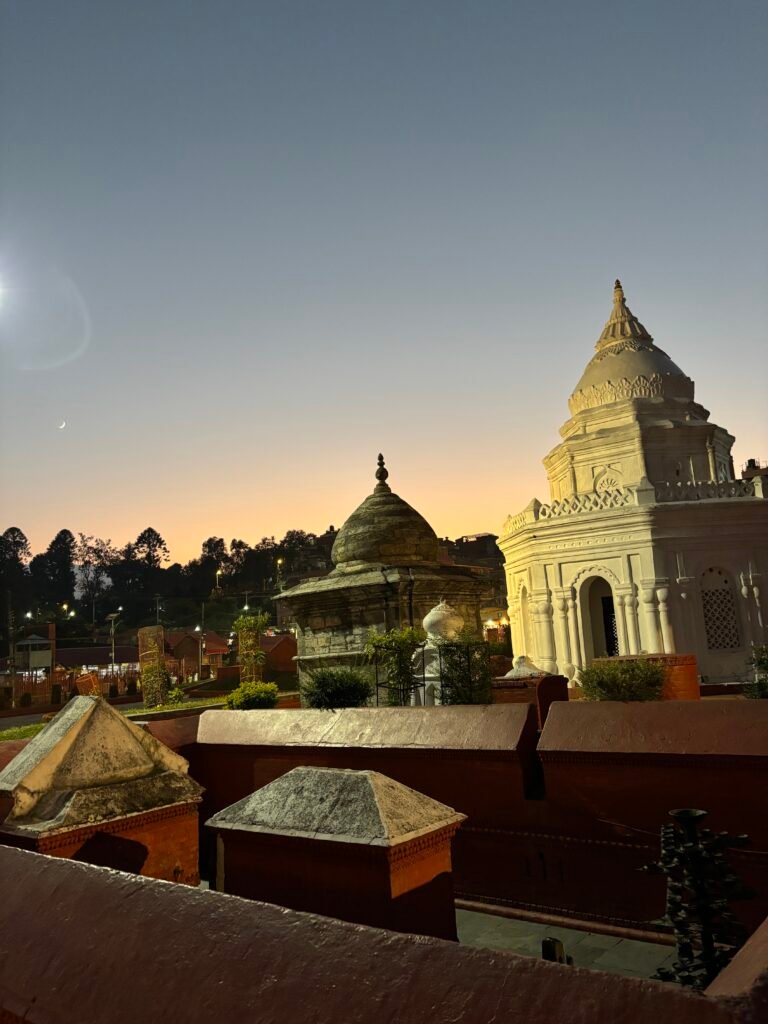
In the late afternoon as dusk was growing our group headed out to the Pashupatinath temple and cremation grounds. There were many monkeys in the area and one of our members became distracted and fell onto some jagged concrete, cut her head and needed medical care — so we saw community spirit in action as James and our local Nepali member took out injured friend to the private hospital favored by expats. There she was given good care, 7 stitches and has a very swollen face but has a very positive attitude and is doing well. And our Nepali friend stayed with her and made sure she got back safely for which we were all very grateful.
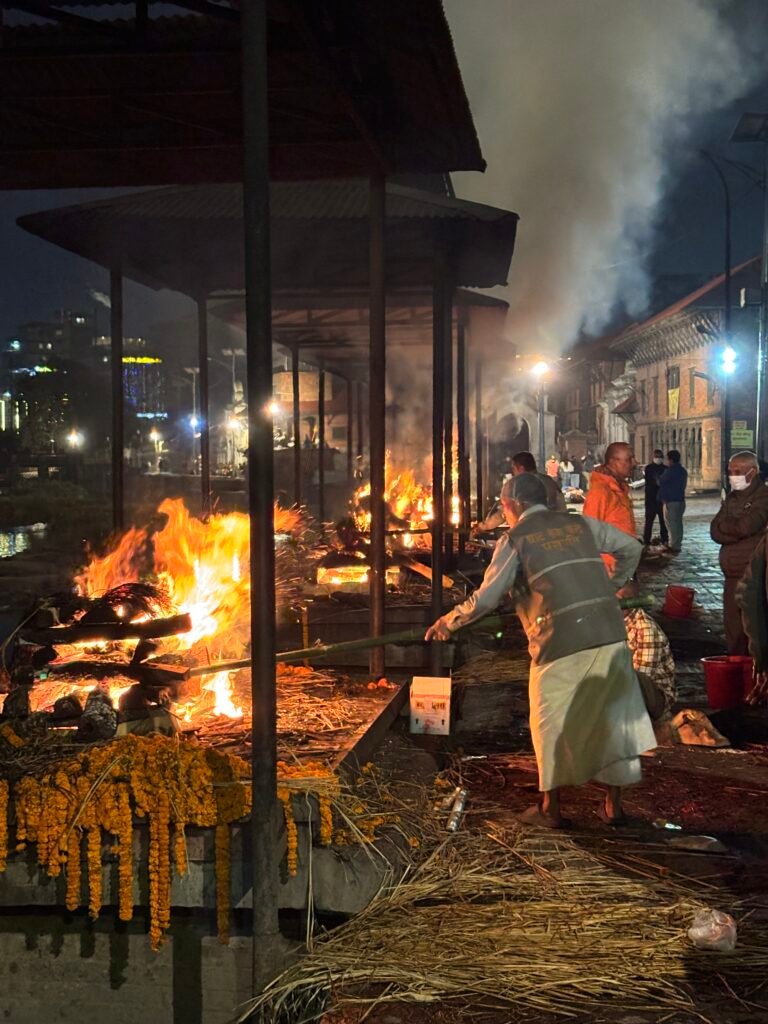
The rest of us went on with Bidur to the cremation grounds, the main funeral site in the city, located on both sides of the Bagmati river. The smoke spiraling up around us in the dark and the many brilliant fires were all very dramatic. We could get closer here to the pyres here than the burning ghats in Varanasi as we walked right by the burning corpses with family members quietly standing by. It was very peaceful with the main sound the crackling of the wood and the sudden explosion of embers blazing into the night sky.
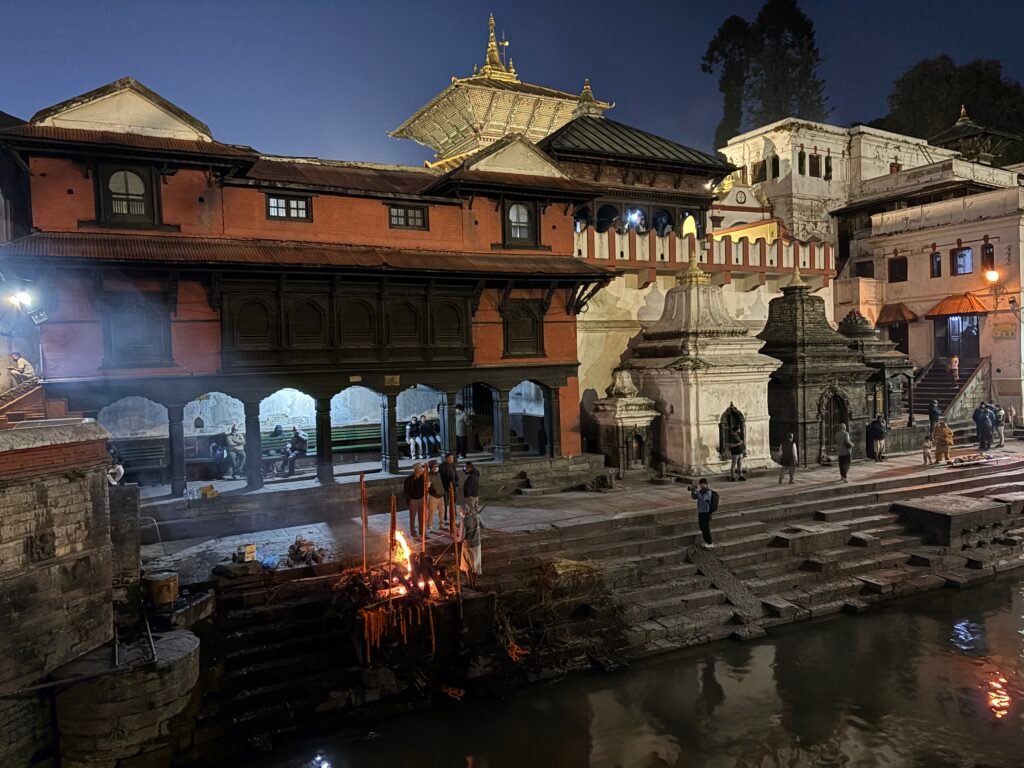
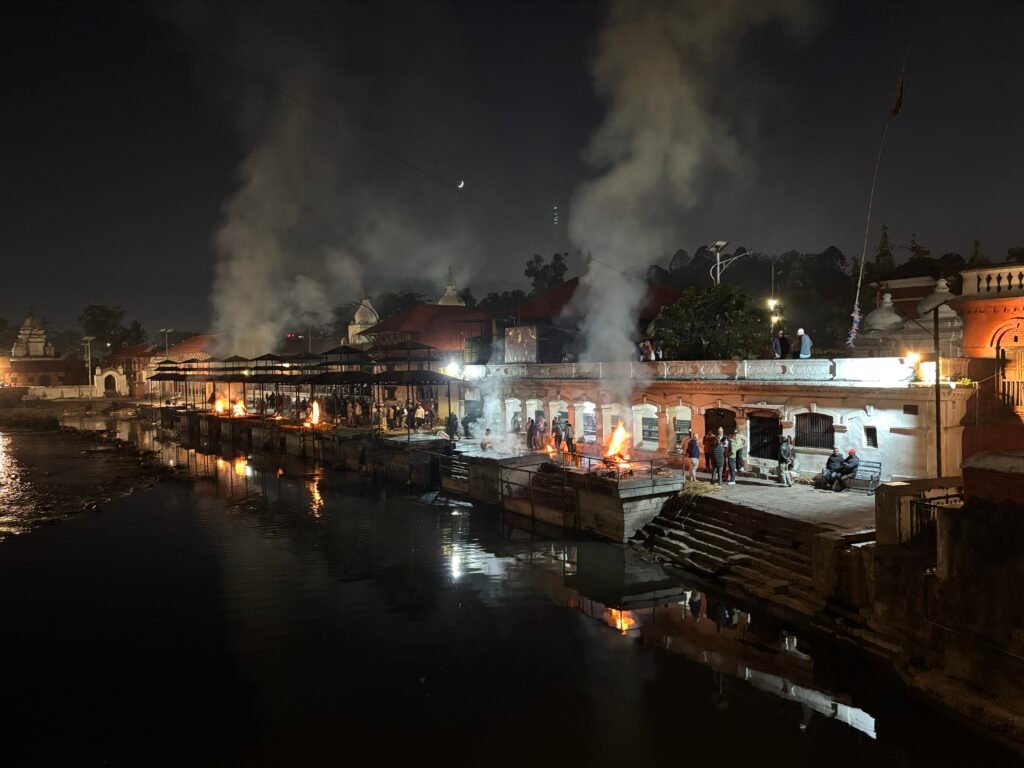
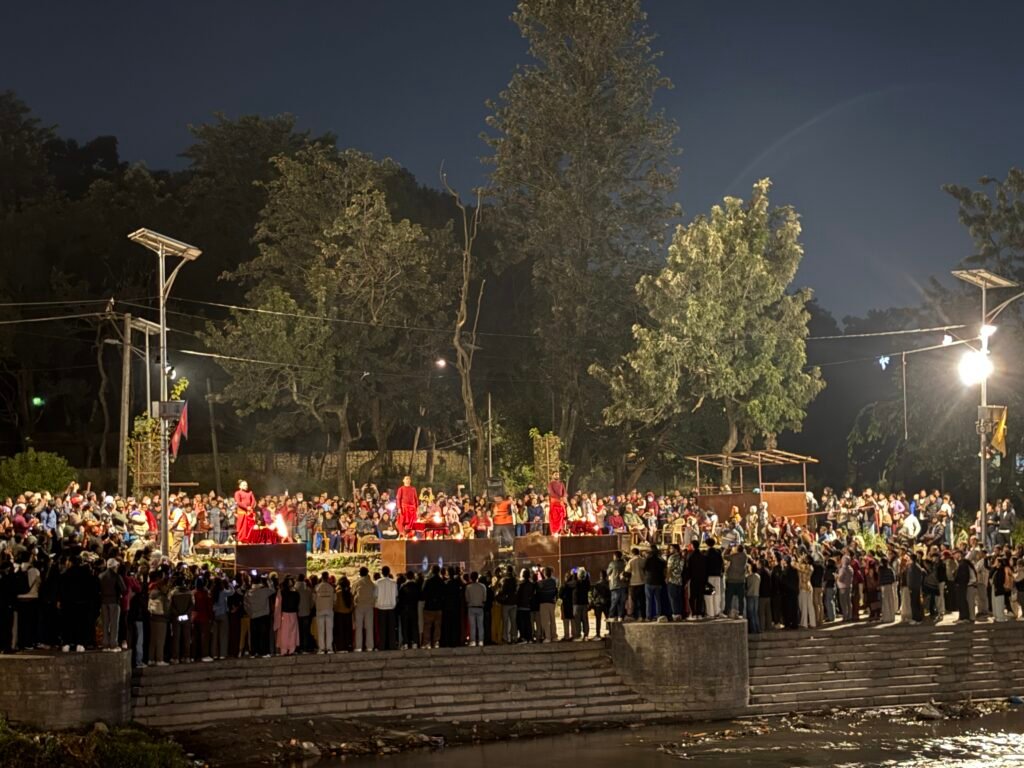
A little further along the river bank was the daily Hindu Aarti Puja ceremony, held every night, as in Varanasi, and similarly precisely choreographed with three priests enacting age-old devotional prayers to recorded music sent blaring over the area by loud speakers. We can see it is very well attended. We stood a distance away on the other shore of the river but the music and chanting easily reached us.
It has been a very fullfuling and exhausting day.
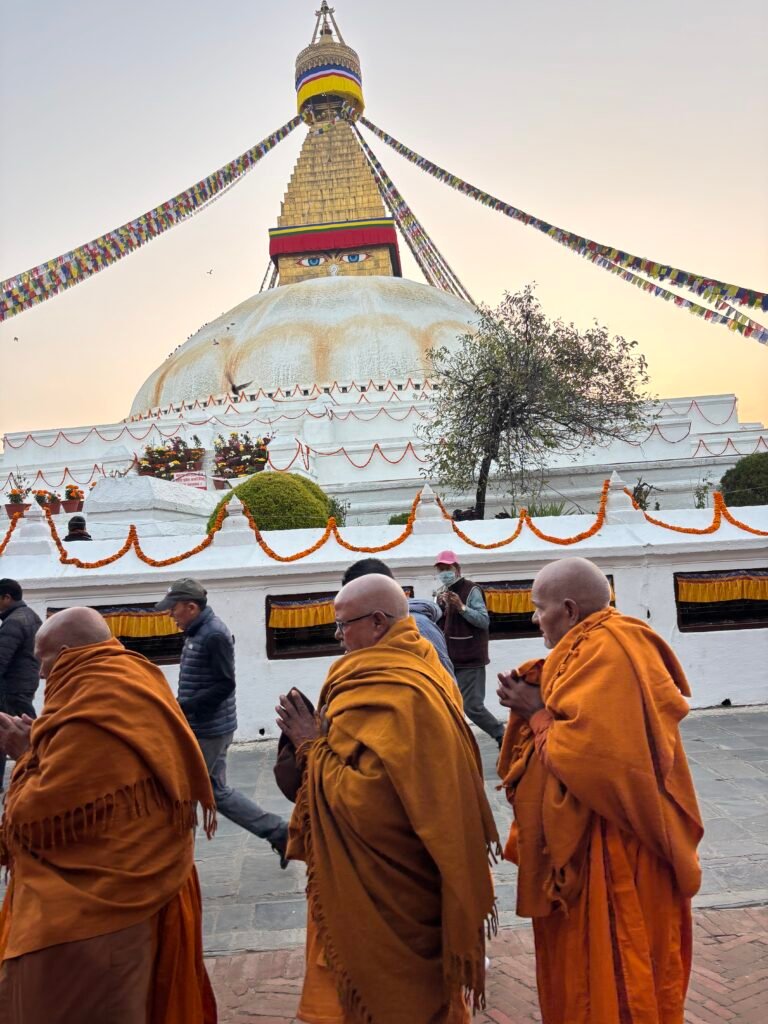
We begin our next day once more with a 6 am meditation walk around the stupa. This time I noticed that several groups of saffron-clad Theravada monks were also, more slowly than the rest of us, circling the holy relics. There were also some beggars, mostly with physical disabilities, waiting patiently for alms. We were following James who is tall and walks very quickly so there was not an opportunity to get more distracted by the many interesting sights along the way.
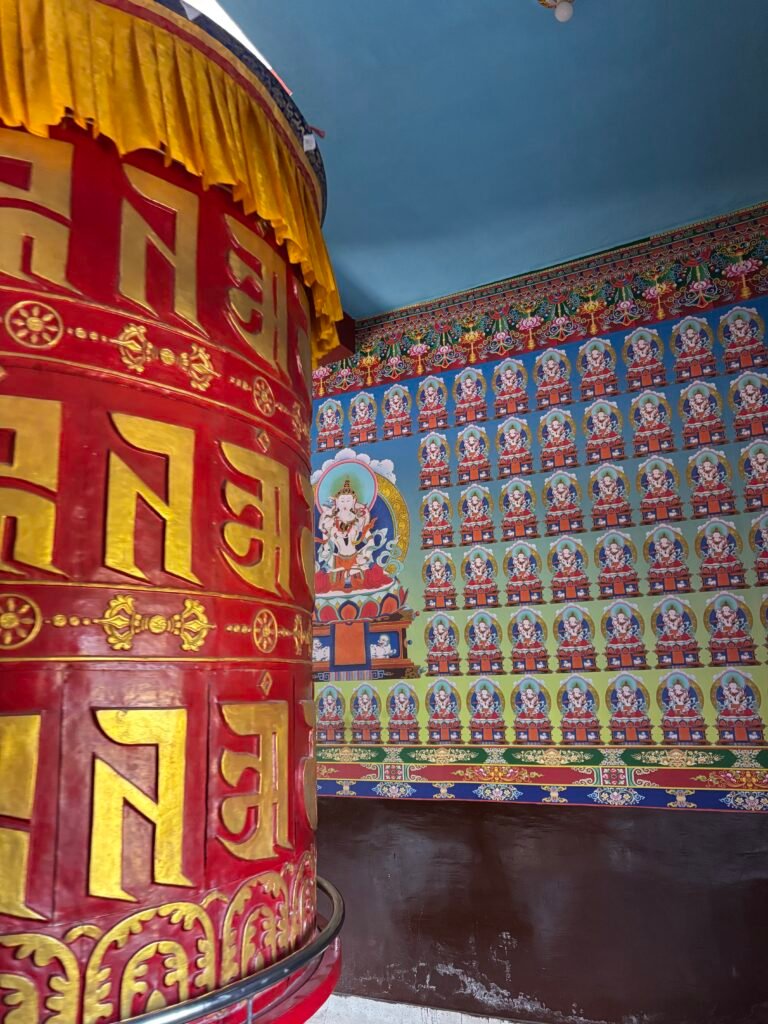
After our meditation walk, we sit once again in the same Tamang Gompa for morning prayers. I am drawn in once again to the loud sounds and repetitive chanting which somehow form a very peaceful atmosphere. Although we are there to pray and meditate, my monkey-mind can’t help thinking about the lives of these boys, teenagers, and young men, fully supported in this stage of their lives but having to make a decision in the future whether to take vows and become life-long monks or to return to an uncertain way of life. The little monk is directed to clean the wood counters once again so we are treated to his sweet smile while we quietly sit at the periphery of the temple area, surrounded by the whirling prayers around us.
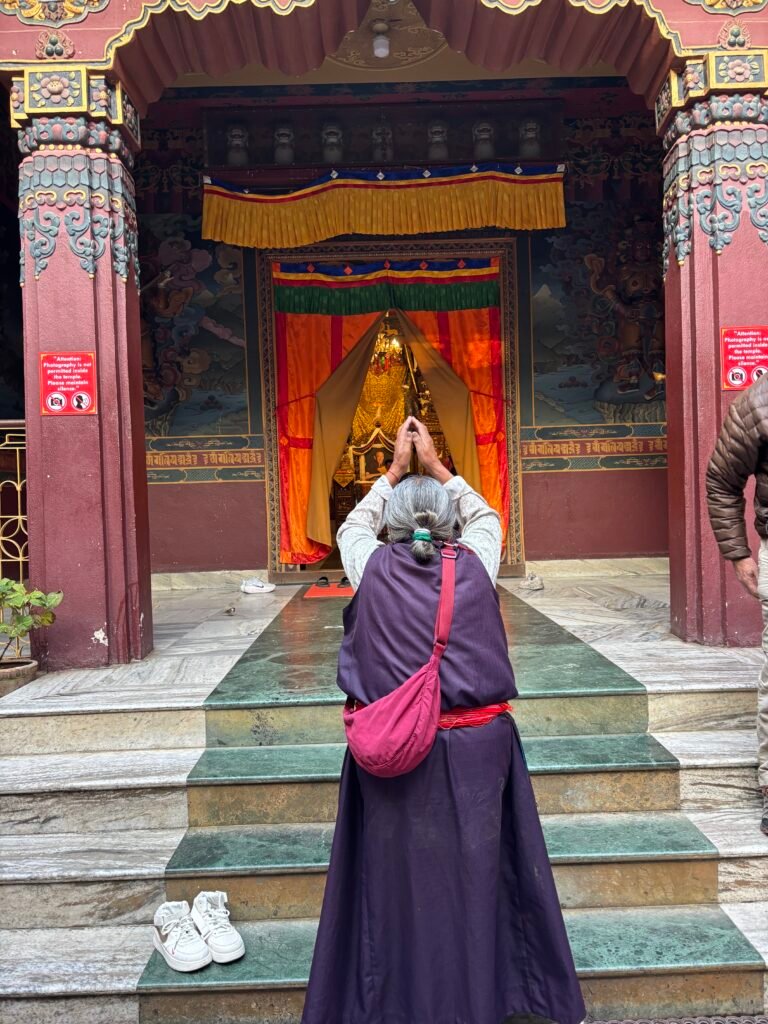
More wonderful Wild Writing and then a trip to the Nagi Gompa Nunnery up in the mountains in the late morning. We are accompanied on our travels in two 4-wheel drive vehicles by Ani Gyaldhara, the former head of this nunnery who has now moved down to Bhaktipur as she has aged and life became too difficult for her up on the isolated hilltop. She was invited by James to come up and give a teaching to us and she kindly accepted. She sits with a smile in the front seat of our car, quiet and perhaps saying prayers for us .
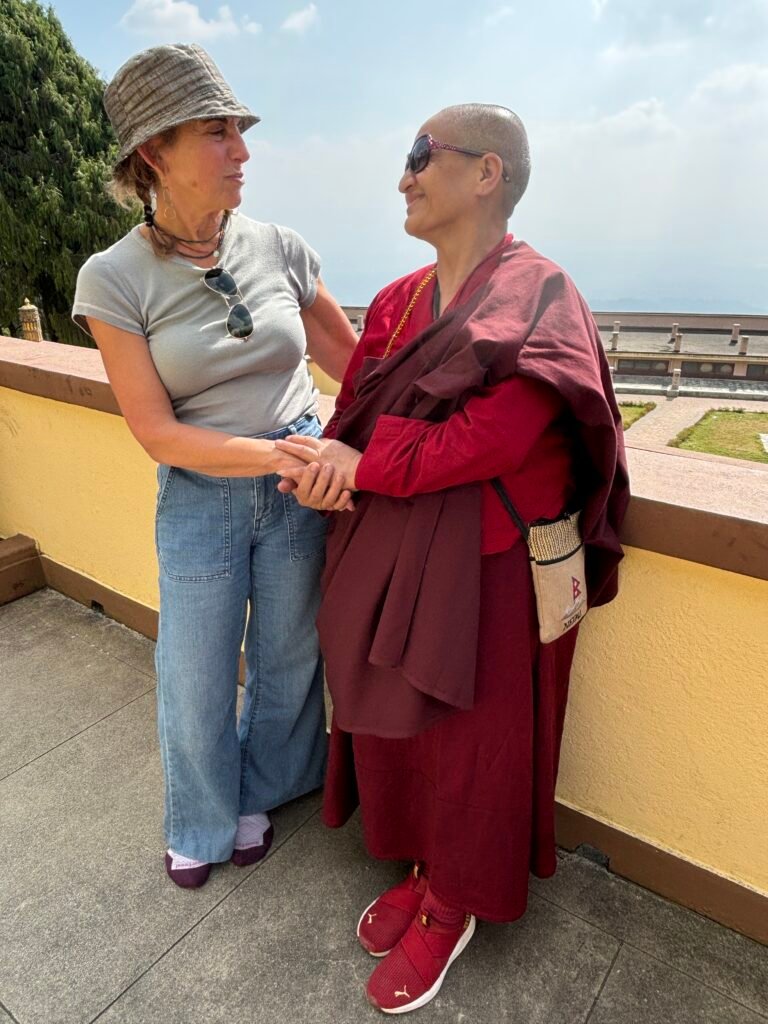
This religious complex in the Shivapuri-Nagarjun National Park above the Kathmandu Valley was given by the 16th Karmapa to Kyabje Tulku Urgyen Rinpoche in the 1960’s. This highly respected lama lived at the top of the hermitage and gave teachings to the nuns and the complex continued as a nunnery after his death. There are now about 100 nuns here involved in a strict practice including 3 year retreats. The residents maintain Urgyen Rinpoche’s room at the top of the building to remember him and his teachings. I understand that the 2015 earthquake damaged a number of structures including the retreat center and there is a current effort to raise money for rebuilding it.
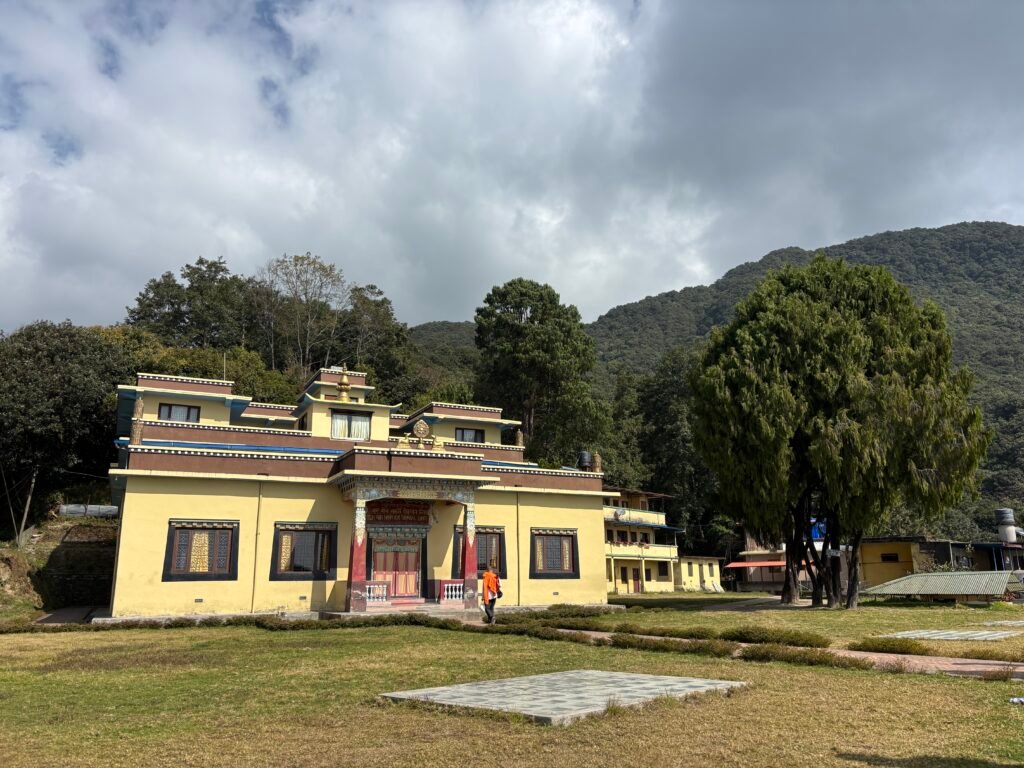
The present head teacher of the nunnery meets us and takes us to the rooftop for lunch where we have the opportunity to visit Urgyen Rinpoche’s room. There is a beautiful view of the valley below from this high perch.
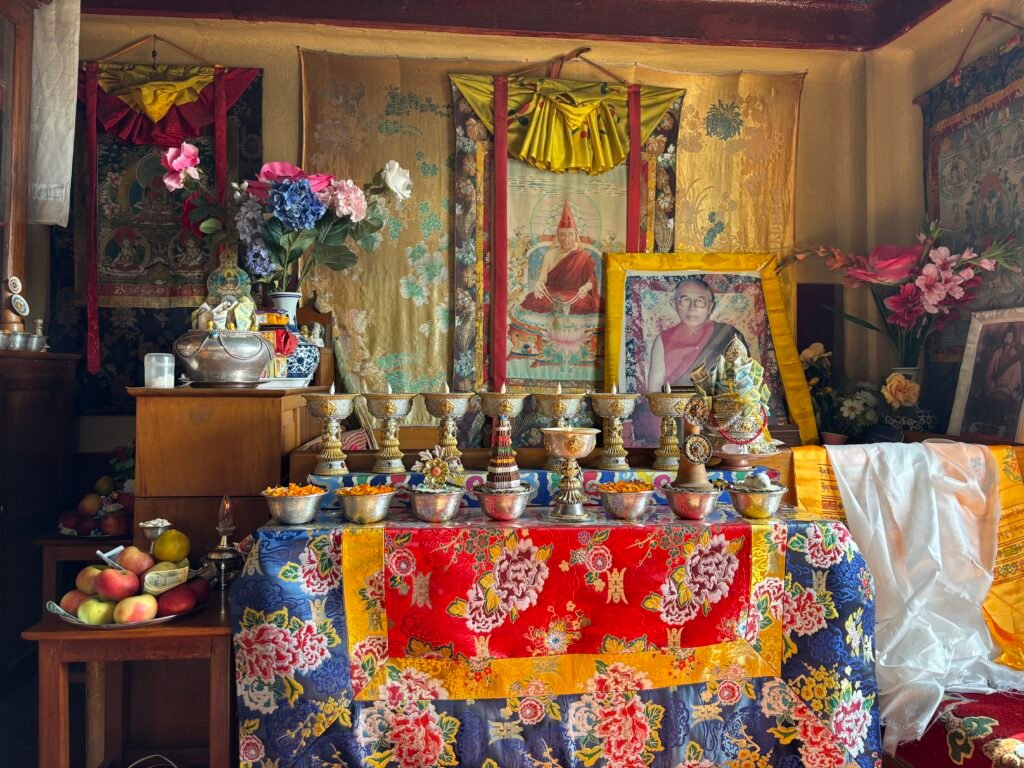
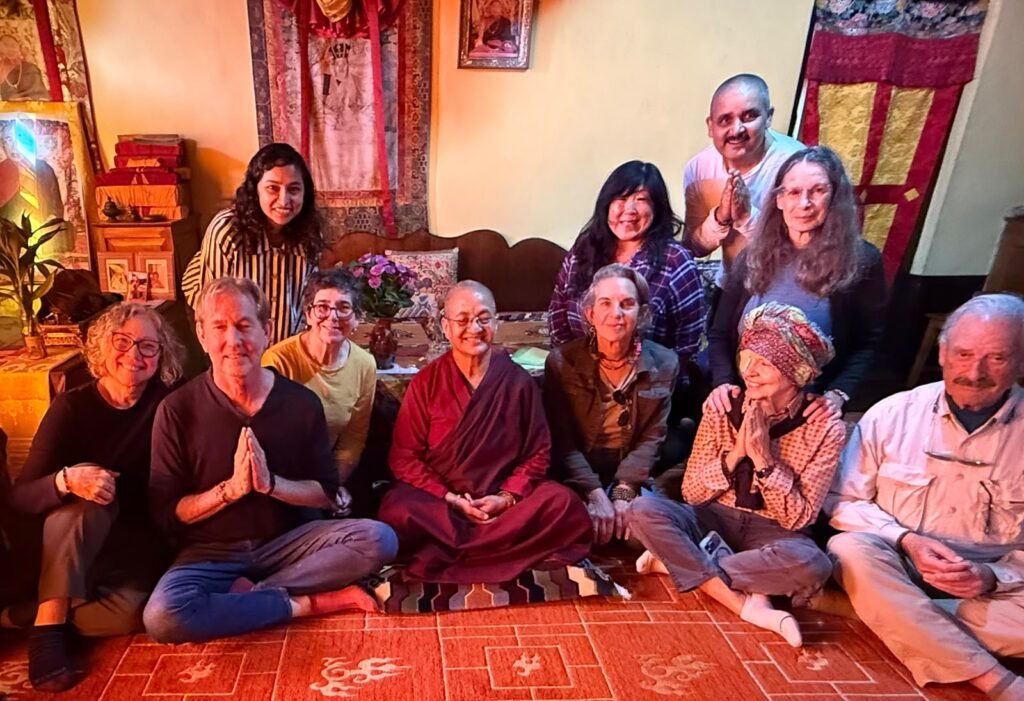
We are taken to Ani’s room where she gives each of us malla bracelets, teaches us several mantras, one for Guru Rimpoche (Padmasambhava) and one for Tara and leads us in meditation together. It is very powerful to sit with her and we have both Bidur and our local Nepali friend who has been such an unexpected help to us to translate her teachings to us. She offers to answer any question and I pose whether after her lifetime of practice she is afraid of death. She answers that she is — but the reason is not that of personal concern but that she knows that there is more she can do in the world to help others. I imagine it is difficult for her to leave this room in which she has spent so many years. The room has some large and small bronze statues as well as a bed and place for study and is unassuming, as could be expected for the head of a religious practice here.
We pass through the main temple, with large bronze statues and I think of the decades of worship there by women dedicated to Buddhist precepts who have chosen to bypass the roles that the outside society might impose on them. The difference between the very male oriented form of Hinduism practised in India which has few outlets for women and the amalgamated Hindu-Buddhist belief system in Nepal, may be one reason that Nepal appears to me to be more egalitarian with respect to gender roles than its much larger Southern neighbor.
We have a quiet ride back to Kathmandu and Ani returns home having given us the gift of her presence on this day.