
Today was a visit to the nearby town of Patan, a UNESCO World Heritage Site. There are 7 such sites in this city or nearby and I am hoping to see all of them. After our morning meditation and Wild Writing sessions, and upon the safe arrival of my good friend Bill, our group of 9, including teachers James and Laurie, is complete. Patan is one of the oldest Buddhist cities, thought to be founded in the 3rd century and known as a town of artisans.
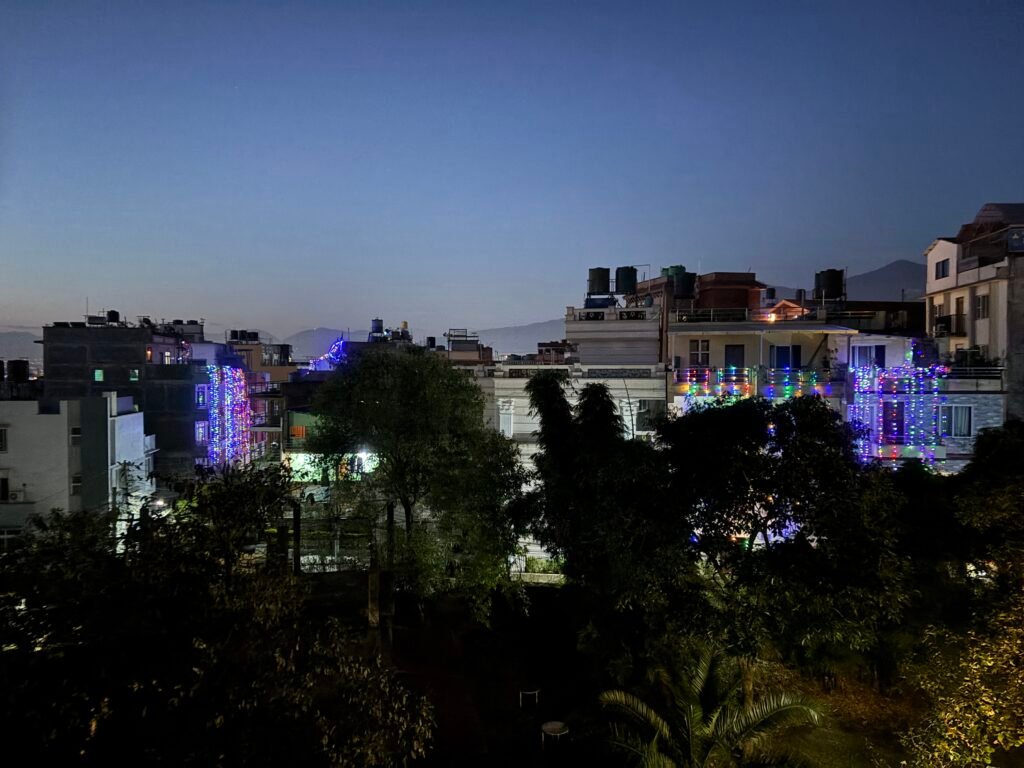
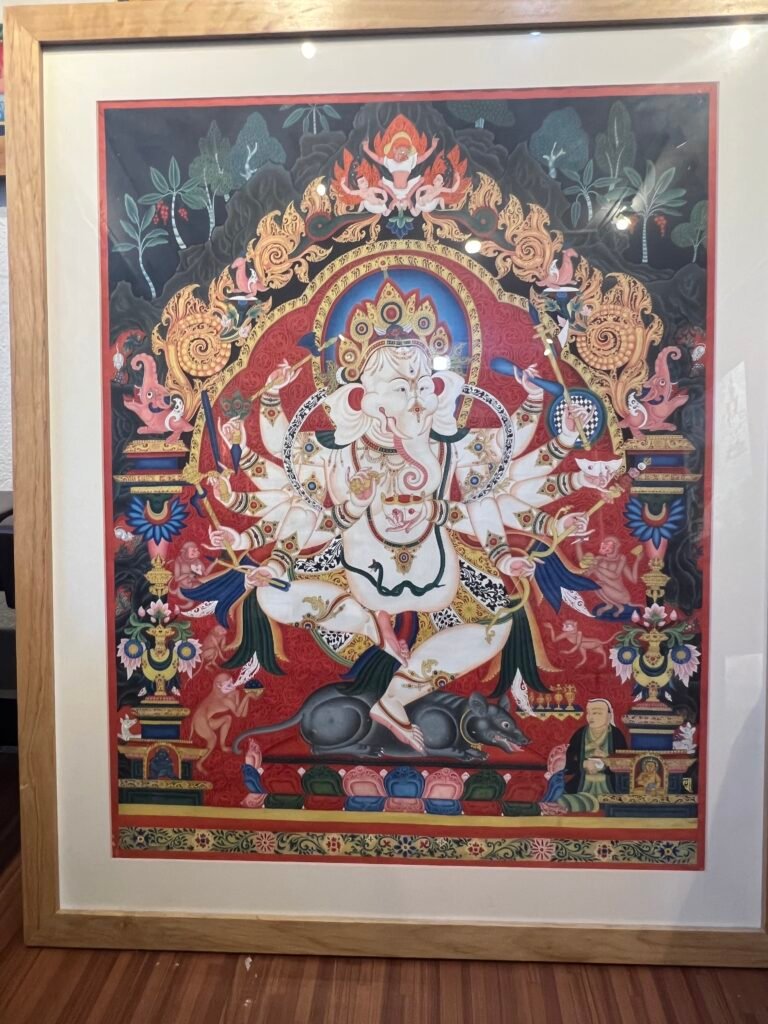
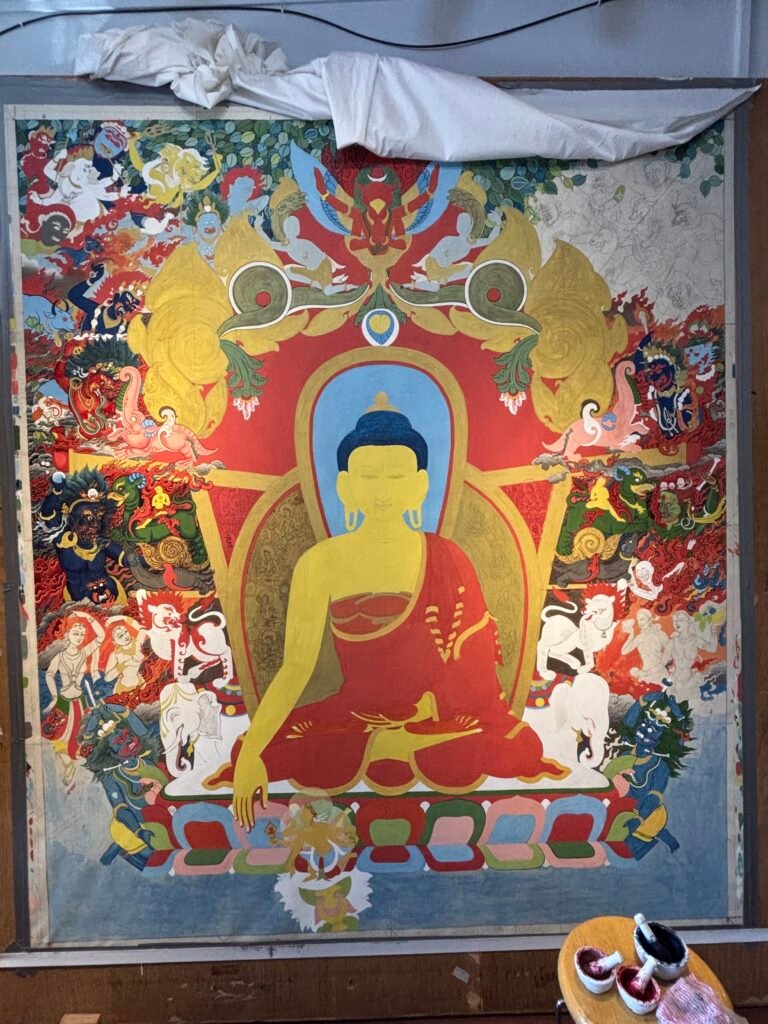
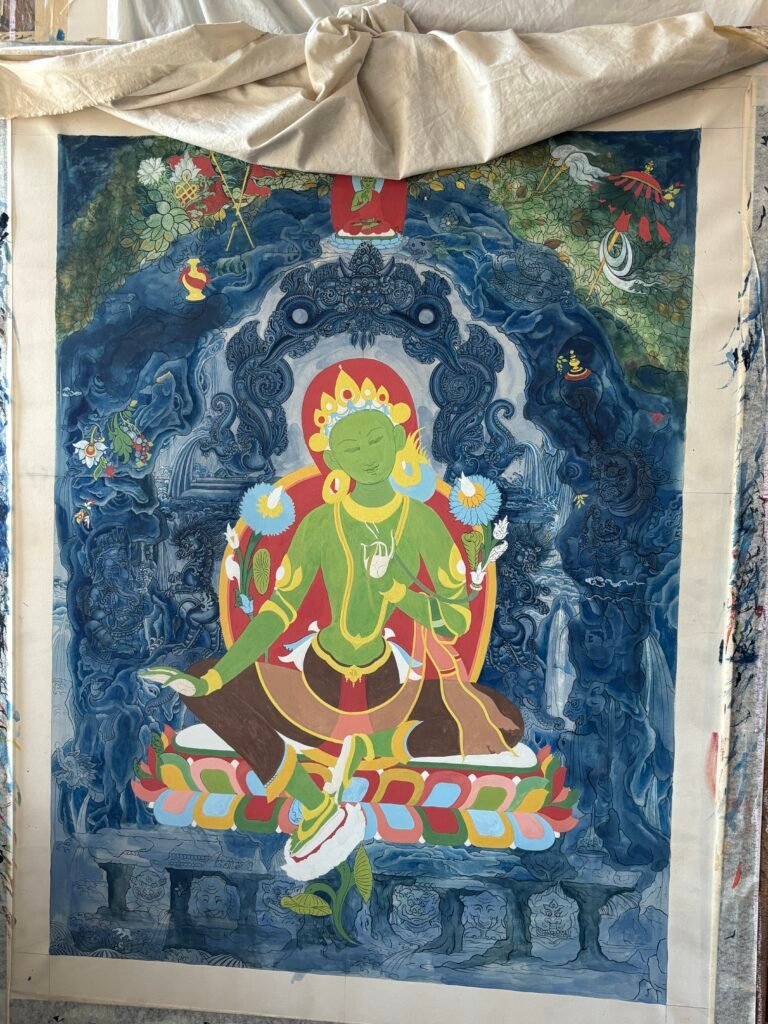
We are extremely fortunate to be invited to visit one of Nepal’s finest artists, Lok Chitrakar and the only remaining great master of the Paubha style of painting. Religious practice and initiation is part of the very long journey to become an adept and it shows in the art. Finely rendered paintings of the Tibetan pantheon of Buddhist gods on canvas prepared and painted only with hand ground pigments directly from natural materials. It is arduous training just to learn how to prepare the paints, much less master the intricate design and brushstrokes of the great Vajrayana images.
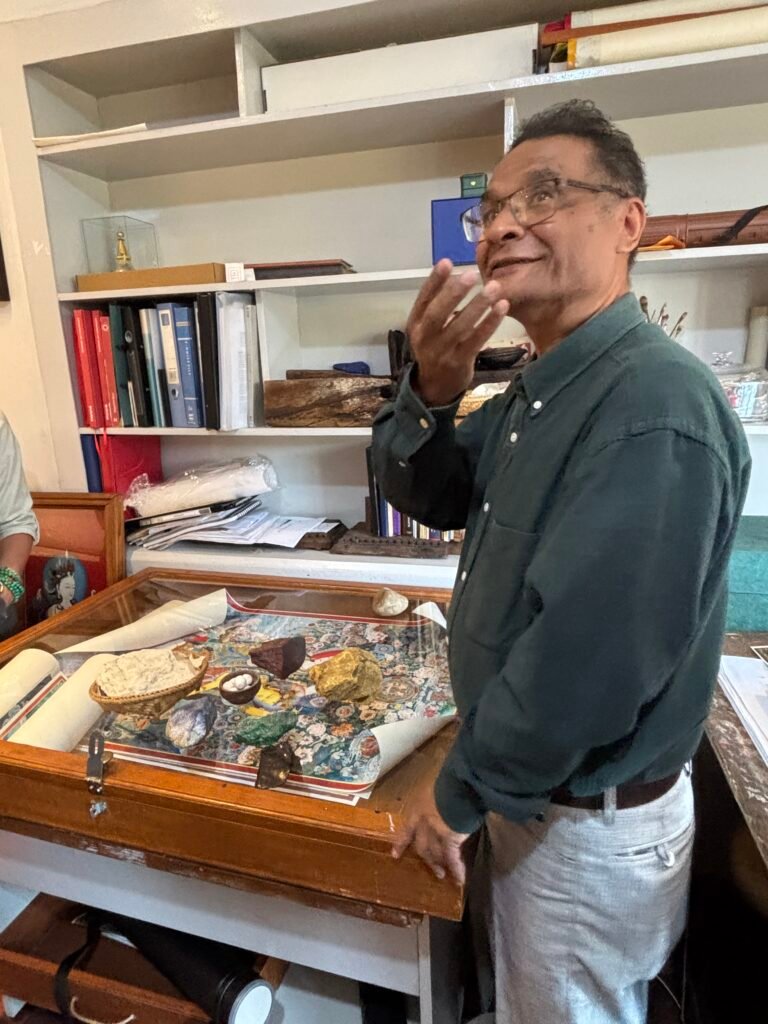
A number of students, including women and from abroad, have come and worked with Lok but none have yet stayed long enough to become his successor and this art form will cease when its last high proponent is no longer active. His pieces are in museums and in high temples. His son says he doesn’t want to work as hard as he has seen his father do all his life and is selling paintings, not creating them. Our group is fortunate as Lok recently decided to have some fine prints made of his work which we gladly purchase as a great gift to ourselves and in honor of Lok’s artistry.
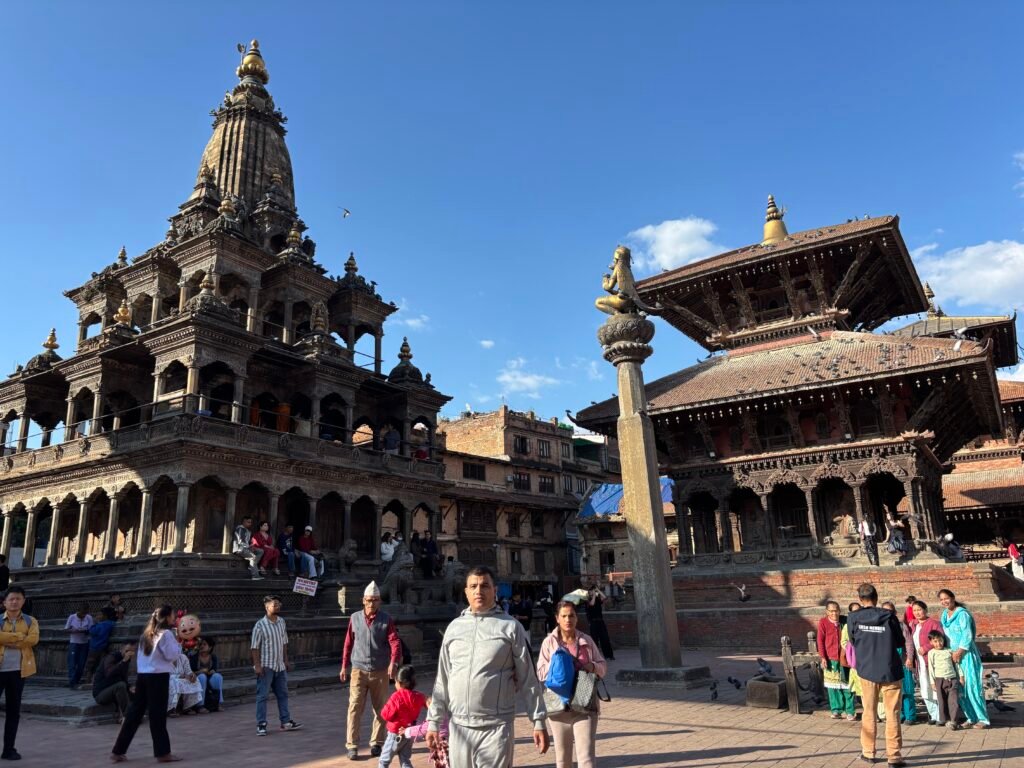
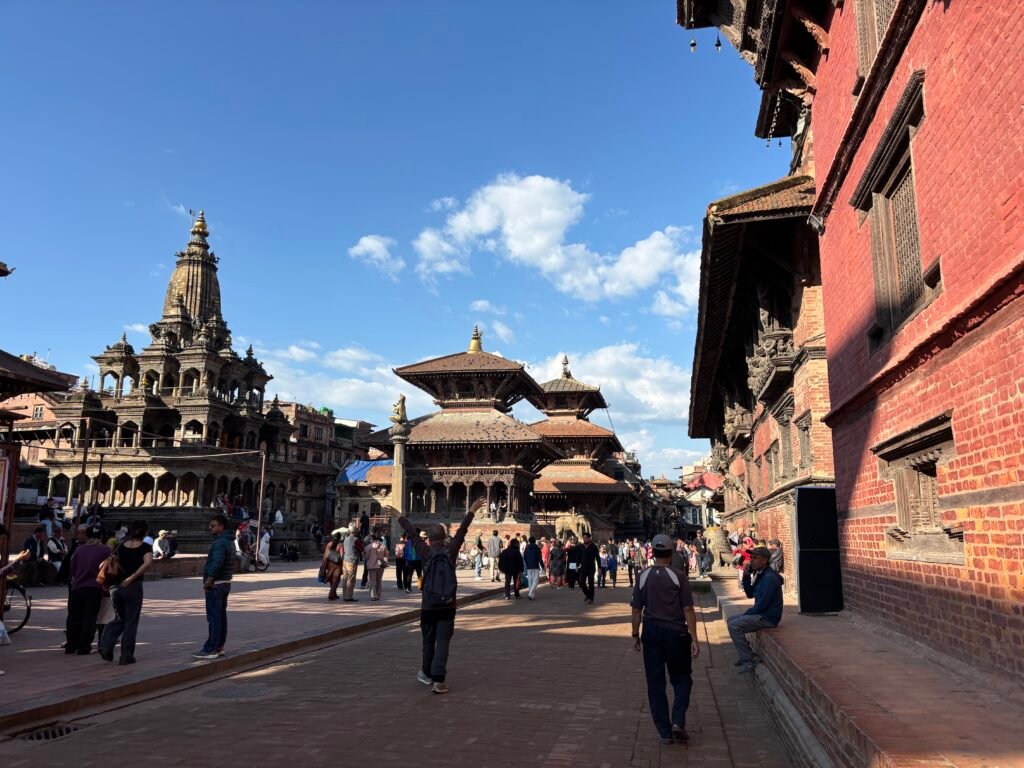
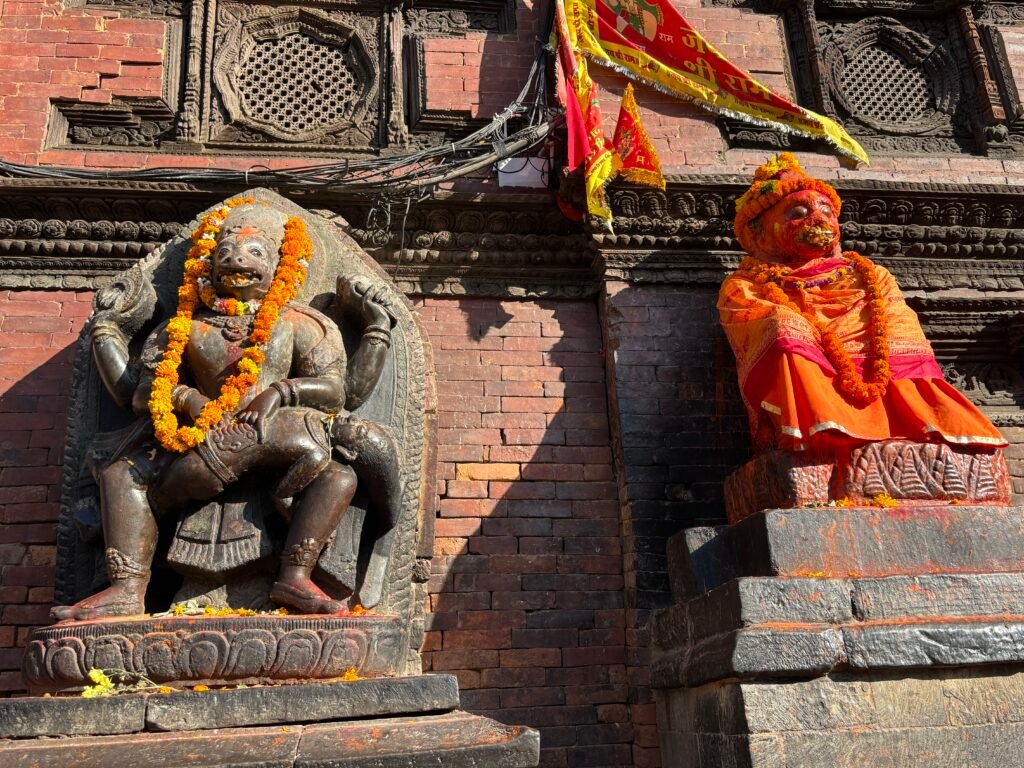
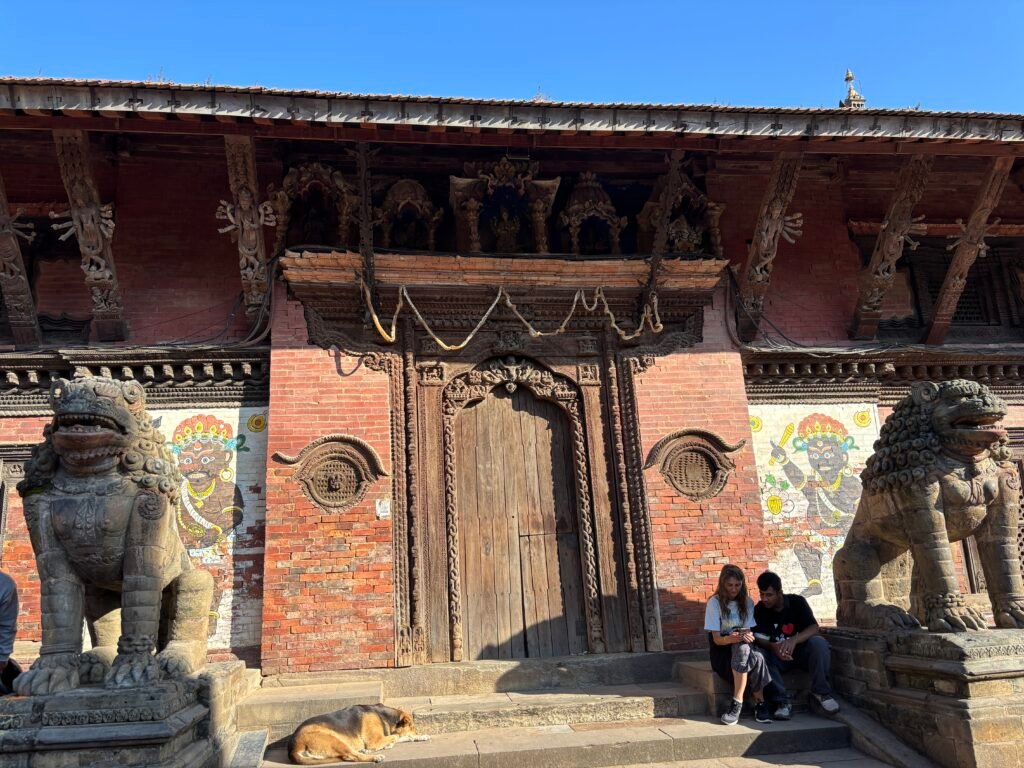
Our exploration of the Patan Durbar area, accompanied by the very knowledgeable Bidur, allowed us to experience a very unique and beautiful architecture, wooden towers and stone water reservoirs, impressive brick and carved wood exteriors, a large city center filled with historic gems that have been beautifully restored and maintained. Bidur guided a few of us through the interesting and well-organized Patan Museum with knowledgeable explanations of the art and history. These photos will hopefully convey something of the design and importance of these structure in a town which, arguably and not with any definite evidence, Ashoka the Great visited.
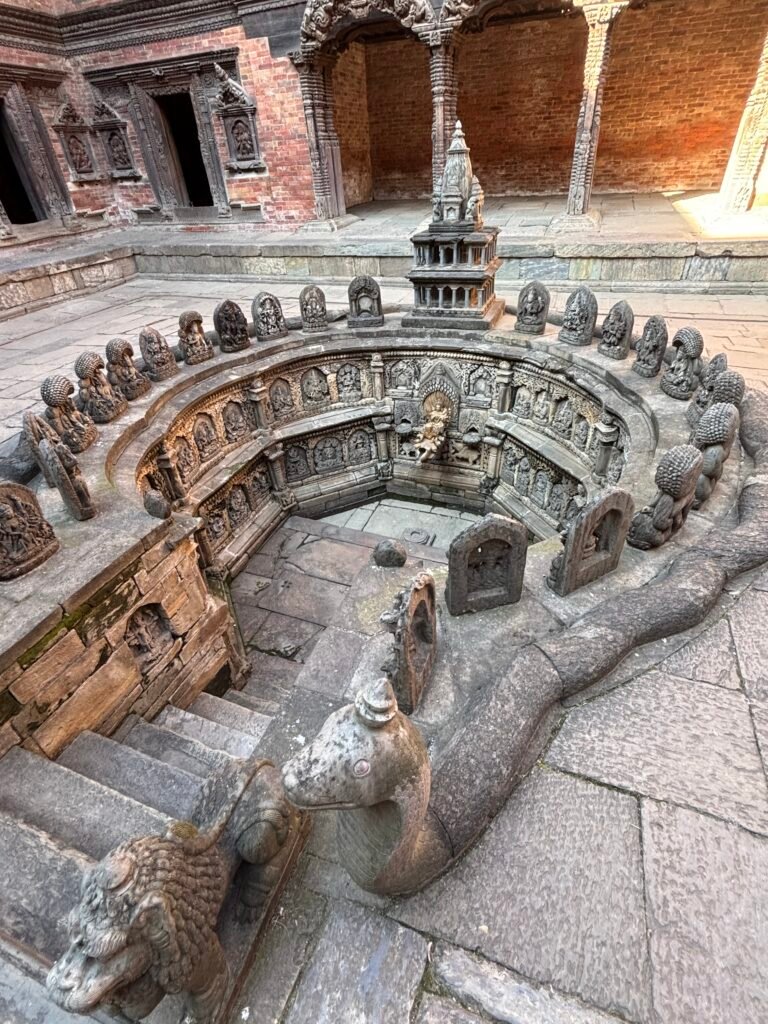
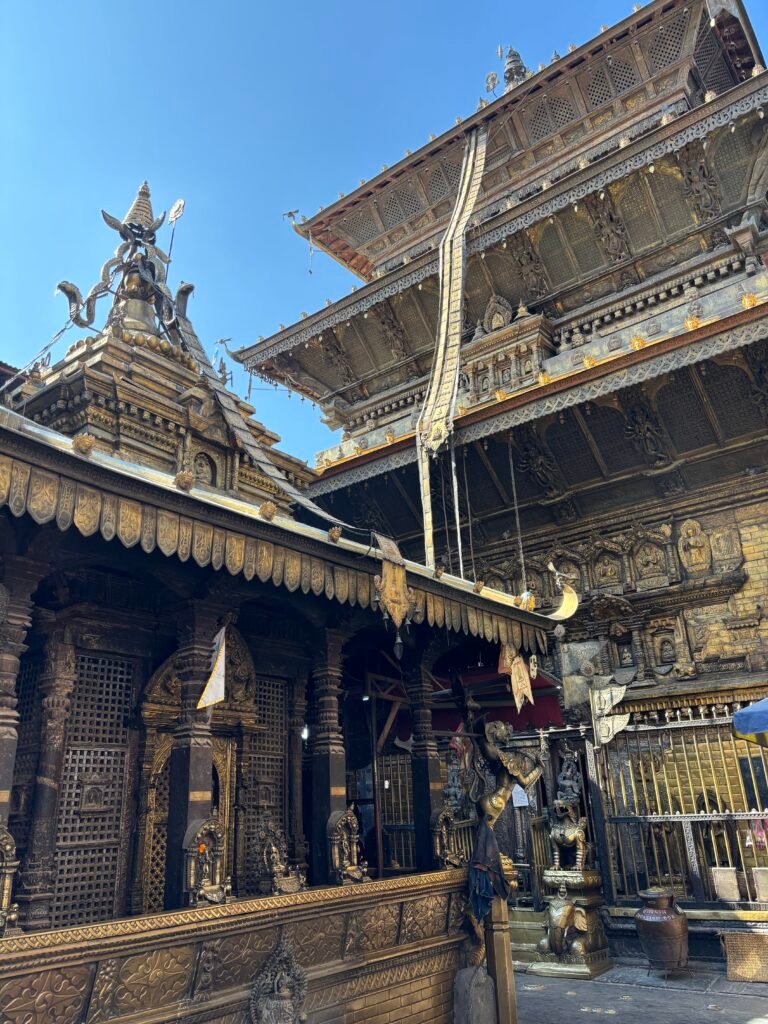
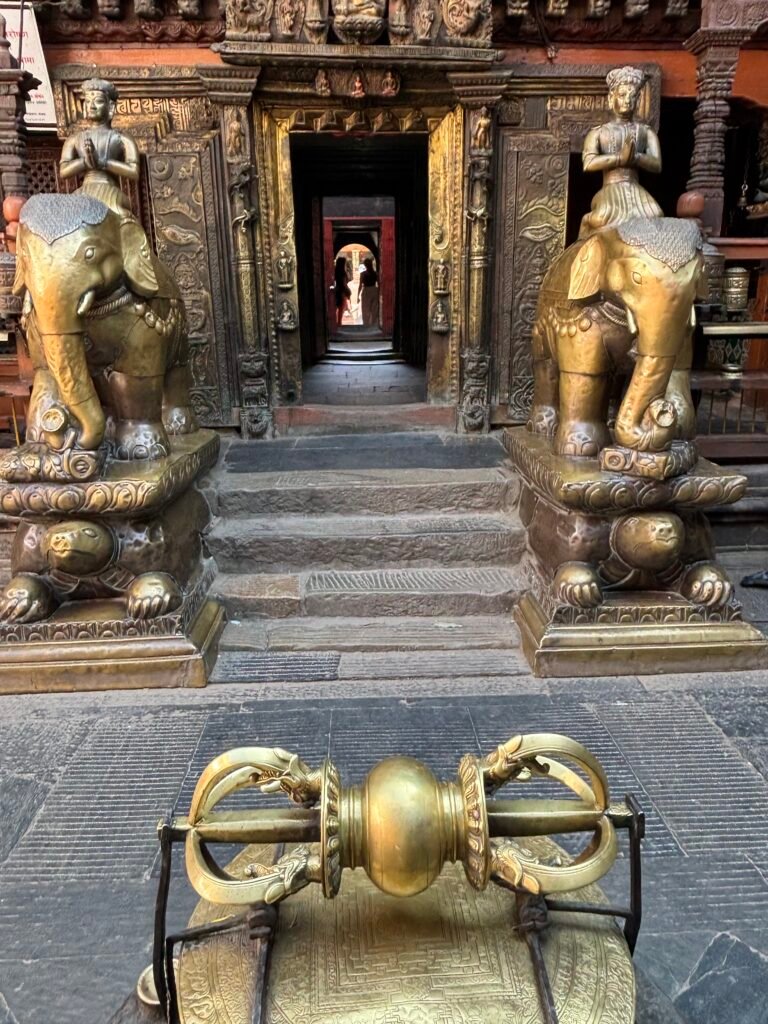
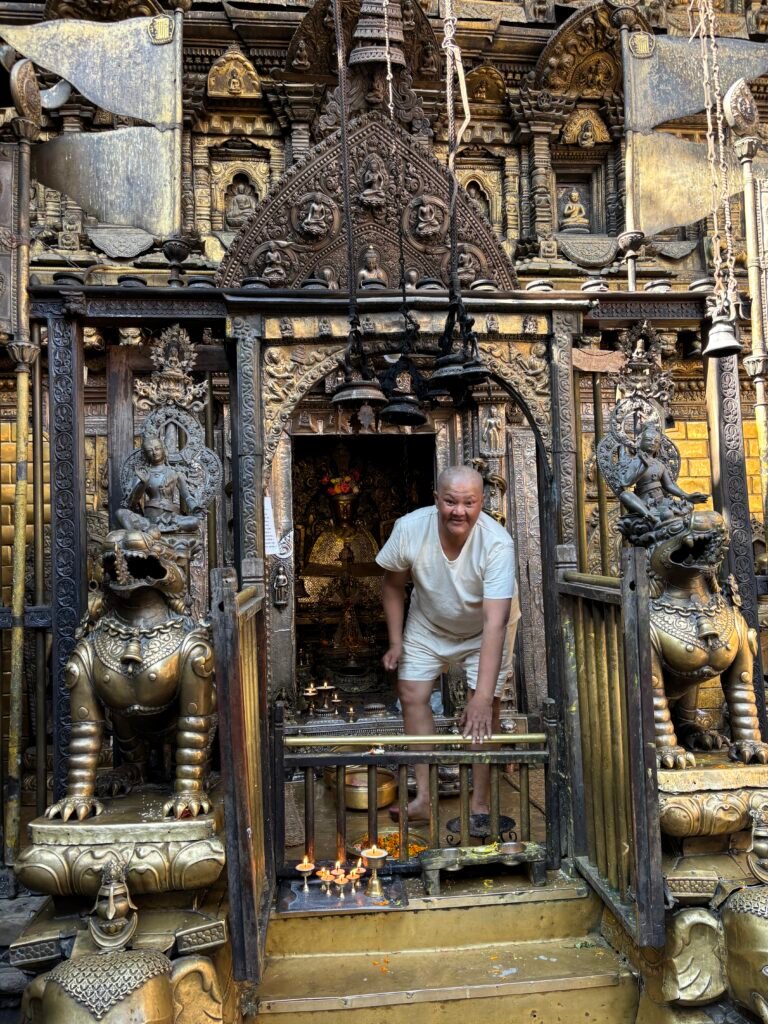
Most of the buildings were built during the city’s artistic flowering during the 16-18 centuries and about half of these historic structures collapsed during the earthquake of 2015. The people of the city did a magnificent job rescuing immediately what they could at that time and storing artifacts in the courtyard of the Patan Museum. The majority of structures have now been rebuilt and Patan is now considered a model of post-earthquake conservation.
The central Patan Durbar area is filled with a wealth of interesting buildings, with many locals and international tourists filling the square. It is still a holiday and I do not know if these crowds are all the time or especially large during this time of year.
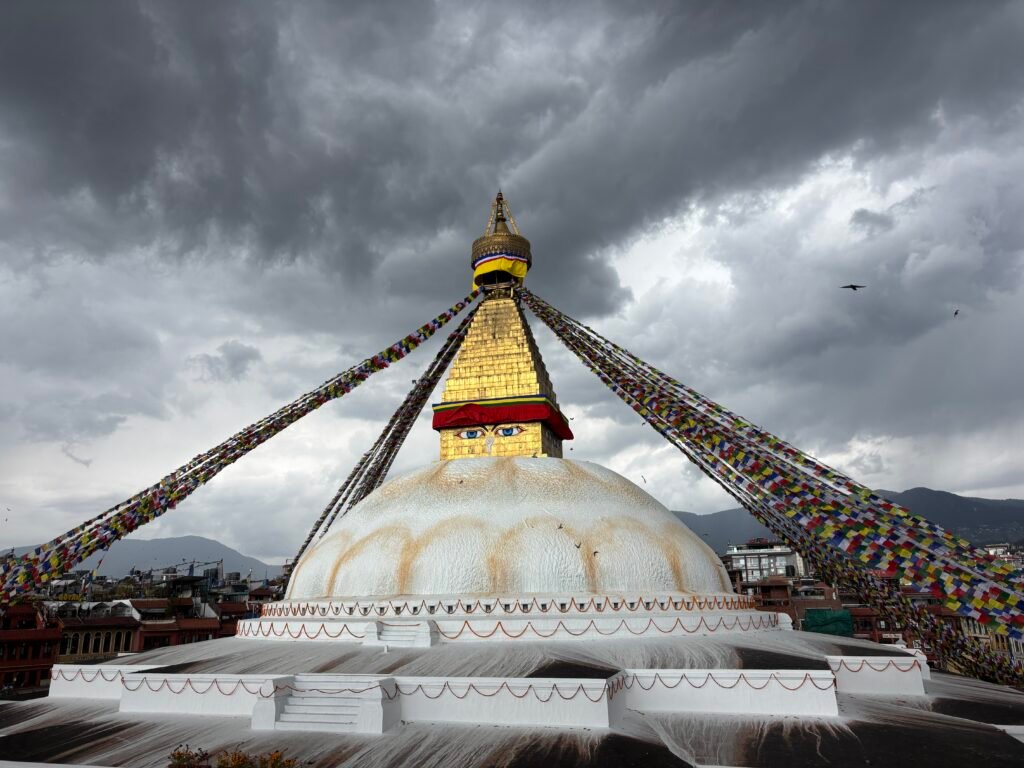
We have moved to a hotel in the Boudhanath area of the city very near the location of the well-known and venerated Stupa of the same name. Upon arrival, we walk around the Stupa and get acquainted with its beautiful massive dome, which we understand holds in its interior a great wealth of donations from many centuries, finally carefully cataloged and returned following necessary repair to the structure after the 2015 Earthquake.
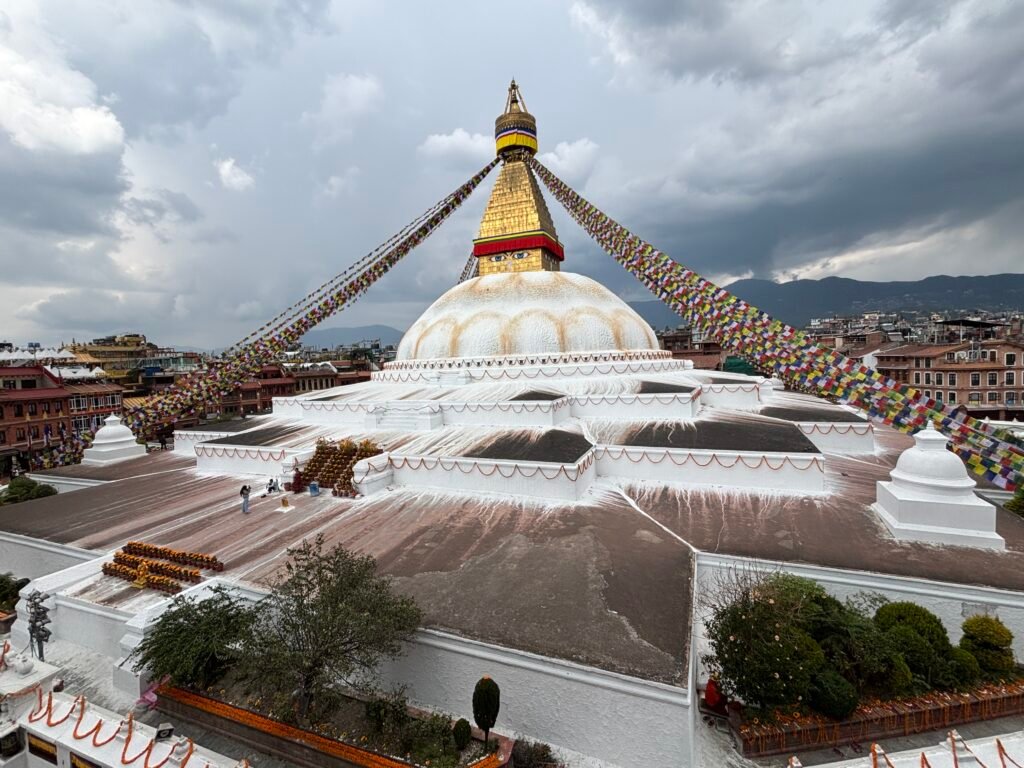
In the outer area of the Kora, or the circle around this important shrine, are shops and restaurants and hotels, 3-4 stories tall and creating a sense of enclosed and sacred space, although commerce is the main theme of this area. Numerous shops selling handpainted Tibetan Thankas, singing bowls, and religious artifacts. In contrast, the devout walk around the inner circle with mala beads in hand, chanting Om Mani Padme Hum, the Jewel is in the Lotus, or other mantras to invoke a spaciousness of mind. What seems a little strange to me, with my American concept of behaviour, is that these religious people , concentrating on their practice, bump into me on the path and do not stop or apologize. This may be part of an issue we heard about from my local friend, that in Nepalese homes, traditionally there is not a sense of privacy. It is common and accepted that family will come into your house without knocking or announcing themselves. As times are changing, young people may be finding this a little uncomfortable and it will be interesting to see if this concept of no boundary between you and me shifts in the coming years.
We are on a rooftop restaurant for lunch and large grey storm clouds appear and we hear thunder. Our group is quickly ushered under an awning just as the clouds open up and hail, the size of small peas, falls all around us. The locals tell us this is very unusual for this time of year. It also creates a strong backdrop against the glittering gold of the Boudhanath stupa which is in front of us. It soon stops leaving the air cleaner and brighter.
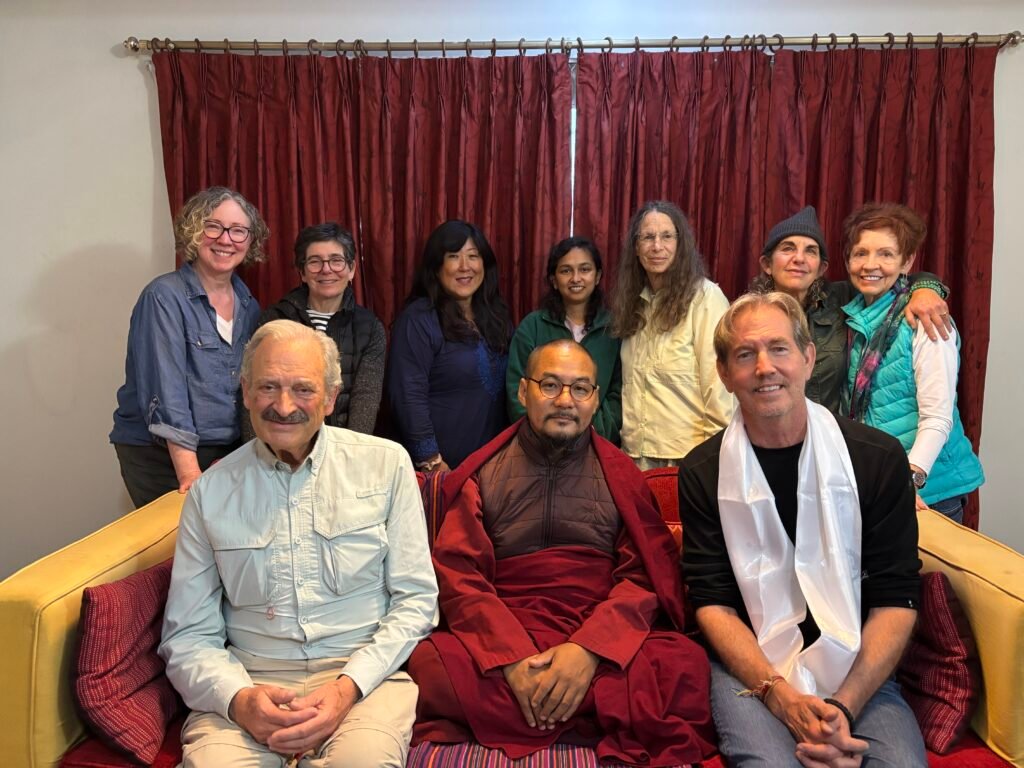
In the evening we were privileged to meet a local senior Khenpo or teacher at James’ nearby apartment, who graciously spoke openly and honestly to us about his life and answered our questions with compassion. He is unusual in that although recognized as a Tulku, or reincarnated teacher, from an early age, he has now left monastery life for the moment to care for his aging mother. We did a short meditation together and I think we all thought we received a great gift from this teacher.
It is our new friend Susan’s birthday today and the 9 of us celebrate at a very upscale and memorable restaurant where we eat great food in a beautiful courtyard and enjoy our conversations together as we deepen our connection.