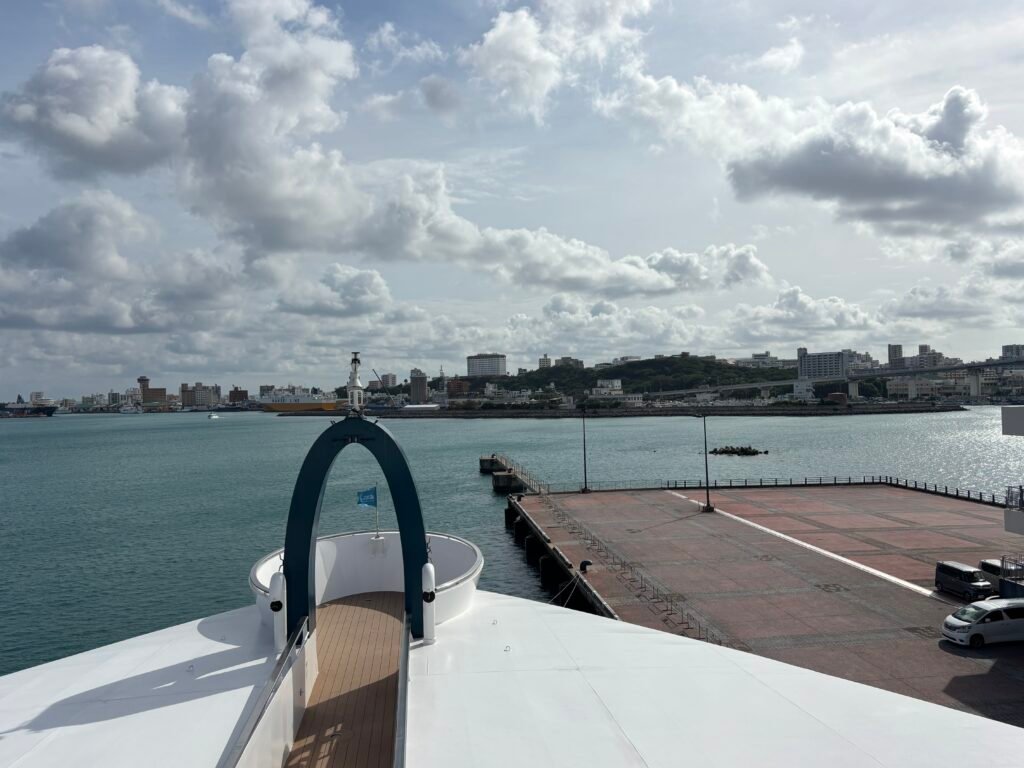
Days 5: Okinawa, Japan
After the quiet islands of the last few days, approaching the tall and crowded-in buildings near Naha Port on the Japanese island of Okinawa, was a bit jarring. Our bus trip from the port, through the capital city of Naha, to the Shuri Castle area, was even a greater mental change from the 21st century to the 15th, when the Shuri Gusuku/fortress and administrative/religious center first came to power as part of the Ryukyu Kingdom, uniting Okinawa and other islands in the chain.
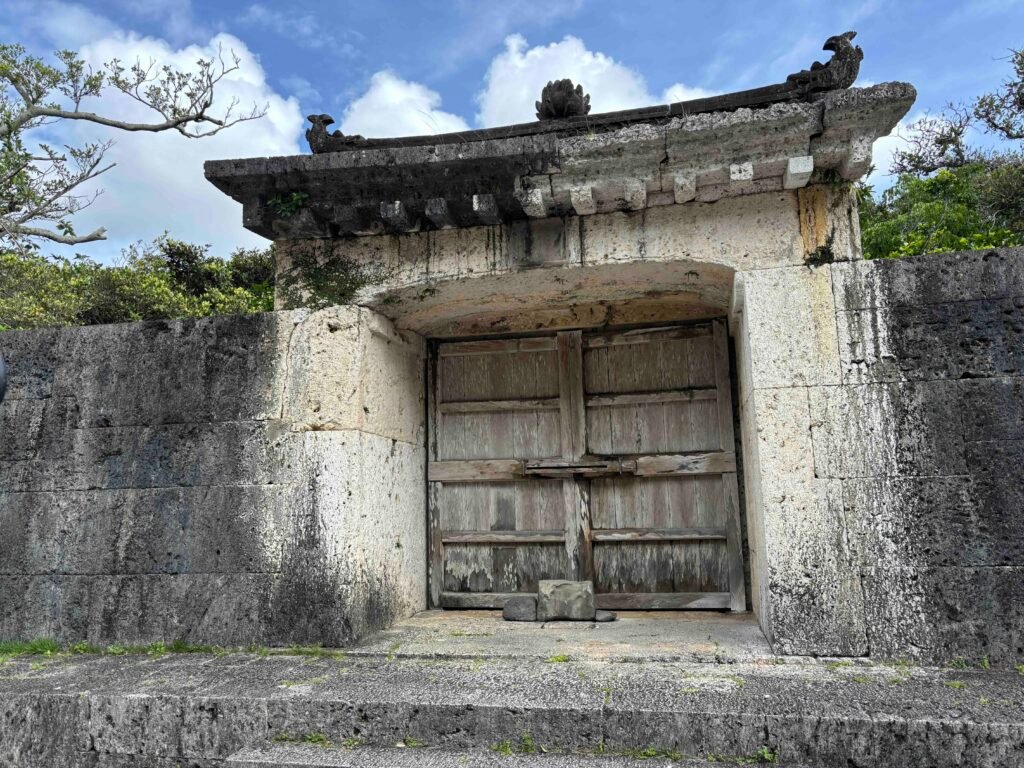
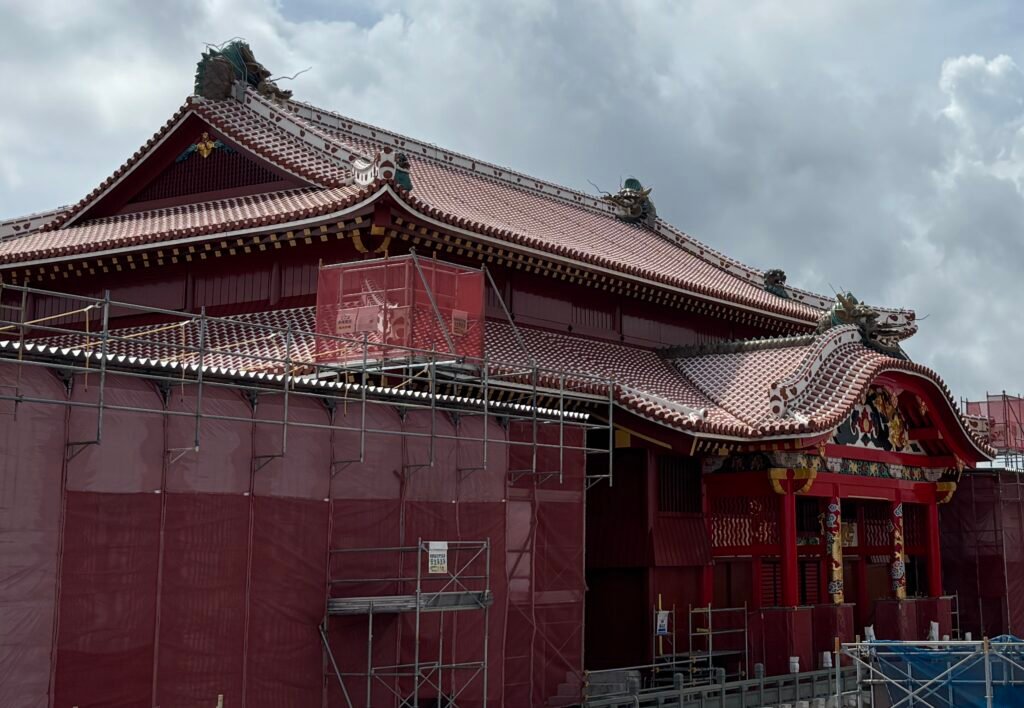
The devastation of Okinawa at the end of WWII in 1945 included the destruction of the Shuri Castle which was rebuilt and restored – only to burn down again recently in 2019 from an electrical fire. It is presently being reconstructed once again and the main hall, a symbol of the Okinawan Ryukyan legacy, now stands in its red glory once again. But the new interior is not yet completed so we can not enter but only see the newly painted great entry doors from a distance.
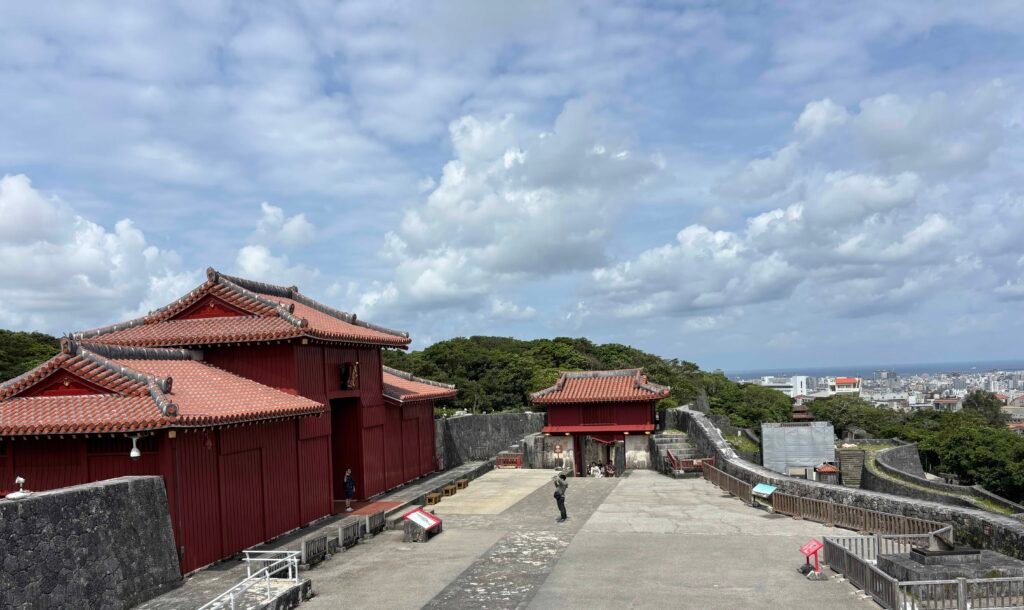
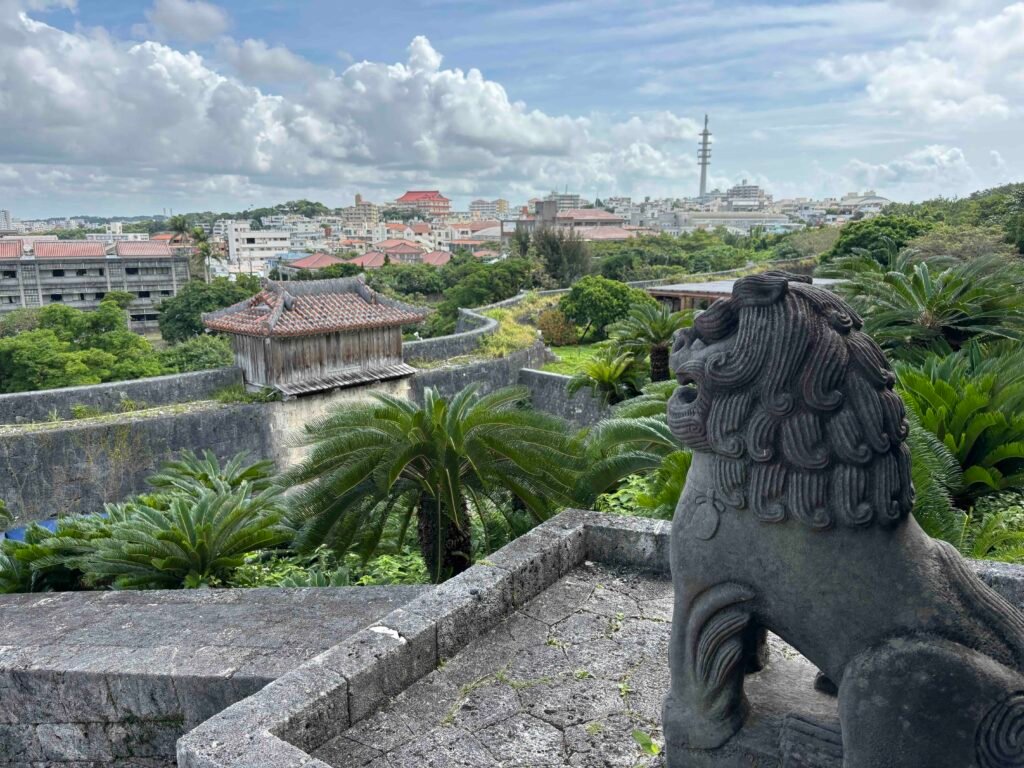
We were able to visit some of the secondary gates and buildings, to walk up to a viewpoint and enjoy the sight of the modern city below the ancient fortress.
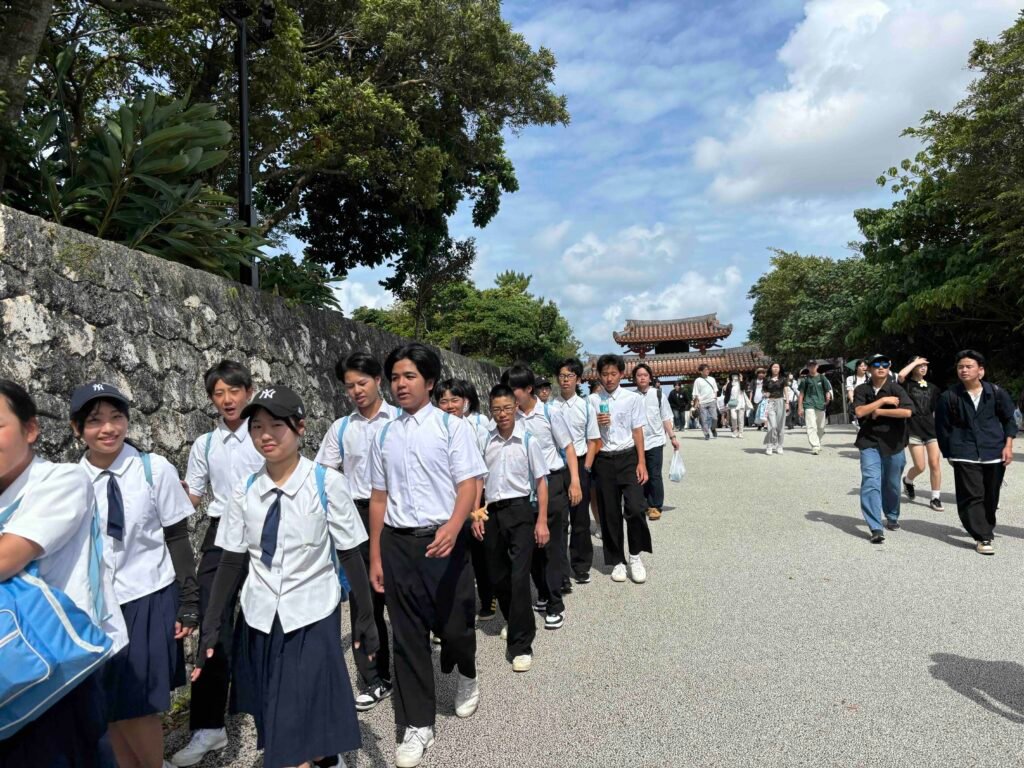
There were large groups of school children visiting, including some who were asked to gather information from the international tourists as a way for them to practice their English.
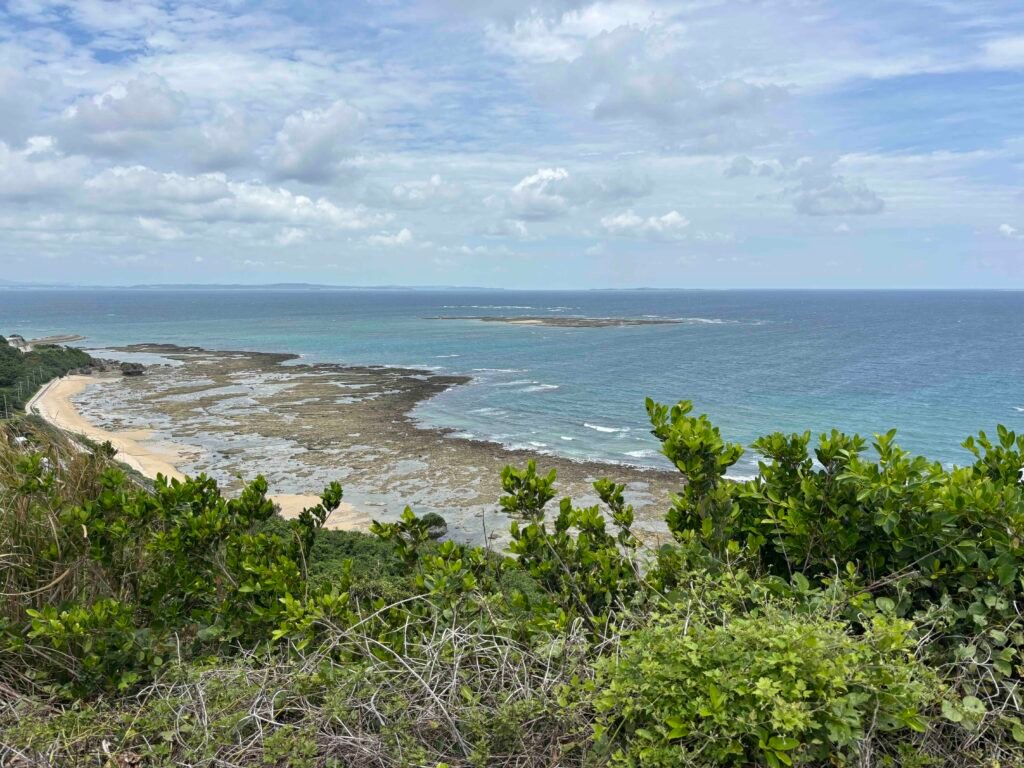
We then traveled South East to the World Heritage Site of the Sefa-Utaki, the most sacred place in the Ryukyu kingdom. Our guide gave us some confusing options, stating that the walk to the Sefa-Utaki was very difficult and that instead there was a beautiful wide panoramic park we could go alternatively visit. She said that there were no buildings on the trip to the sefa-Utaki, there was only forest. Fearing the steep steps and hill mentioned, I chose to walk to the park overlooking the sea but as it took very little time I decided to try to catch up to our group at the Sefa-Utaki site across the way.
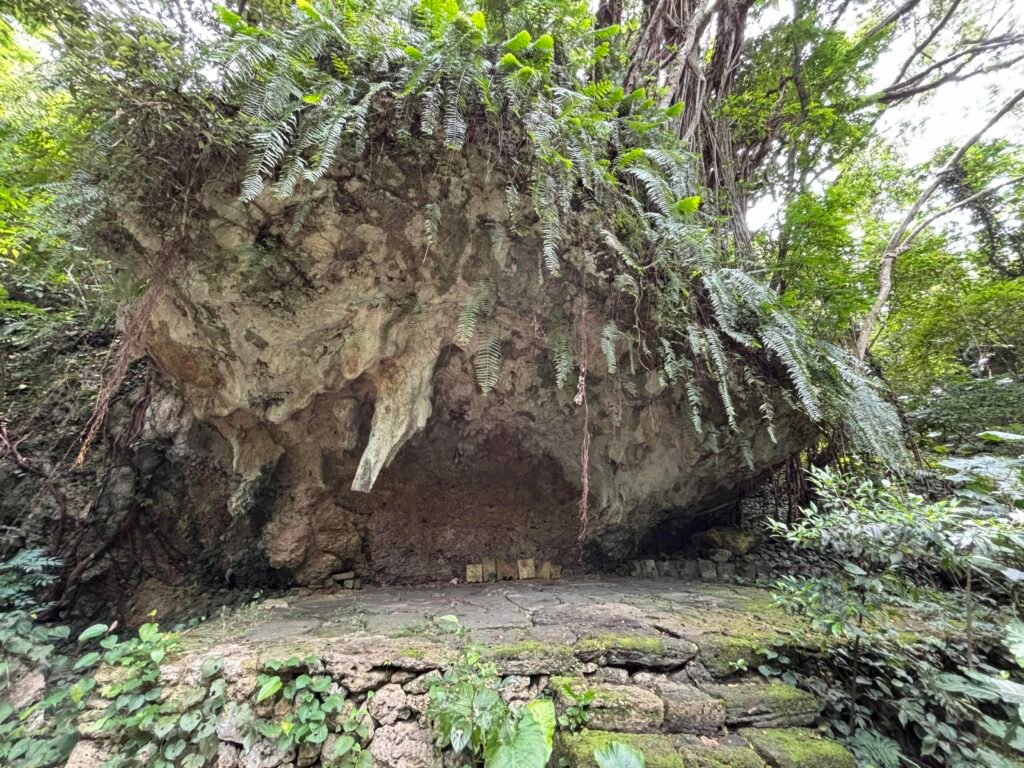
Despite the earlier report, it was not a very difficult walk, as the stepping stones, although not flat, were neatly organized, and the steep section included a handrail and carpet to prevent slipping. It was a beautiful walk, in excellent weather, and I was very content to walk by myself around the sacred sites and feel their strong presence. It was a religion worshipping nature so there is little left now except some impressive stones and places to place incense. I did meet up with our group but missed some of the guide’s descriptions at some of the various stone altars where the high priestess performed rituals for protection. Interestingly, men were not allowed and even the king was said to dress like a woman to be allowed entry into the sacred space. I was very glad I was able to do both parts of this day’s outings in Okinawa.
One of our excellent on-board lectures was about the history of Okinawa in WWII which opened my eyes to events I had no idea about – as an American I was taught very little about the War in the Pacific except for the denouement of Hiroshima and Nagasaki. I now understand that although the Japanese high command knew they were losing the war, they threw all their extensive force including squads of kamikaze suicide pilots behind fighting the U.S. in Okinawa to cause more Allied casualties before the war actually came to their central shores. In other words, they threw Okinawa and the people under the tires of the truck. One-third to one-fourth of the civilian population of Okinawa was killed in the process. And this strategy was perhaps what led to the worst part of the end game – the decision to use the first nuclear bombs to bring Japan to its knees.
Our guide spoke about how her parents loved the American years of administration after the war when the jitter-bug, rock-and-roll, movies, and an American way of life was introduced to a culture that had been destroyed and was trying to rebuild itself. It is interesting hearing about the history of my country in the context of a group of non-Americans. The Canadians, Australians, British, Brazilian and other nationalities on this ship have a different viewpoint of the choices that the U.S. made after the war.
Another great dinner on board, good discussions with my new friends, and tomorrow we will be further north on the Island of Amami.