
In our recent travels together, Bill remarked a number of times as we drove through city streets that it was impossible to capture in words the sense of life and energy in the constantly changing environment of modern India. I agree. It has to be experienced and can’t be translated into any familiar moments of U.S. life. Bangalore, where I am now for a week on my own, is an example of a rapidly expanding city, now a tech hub, without city planning or sufficient infrastructure to meet its needs.
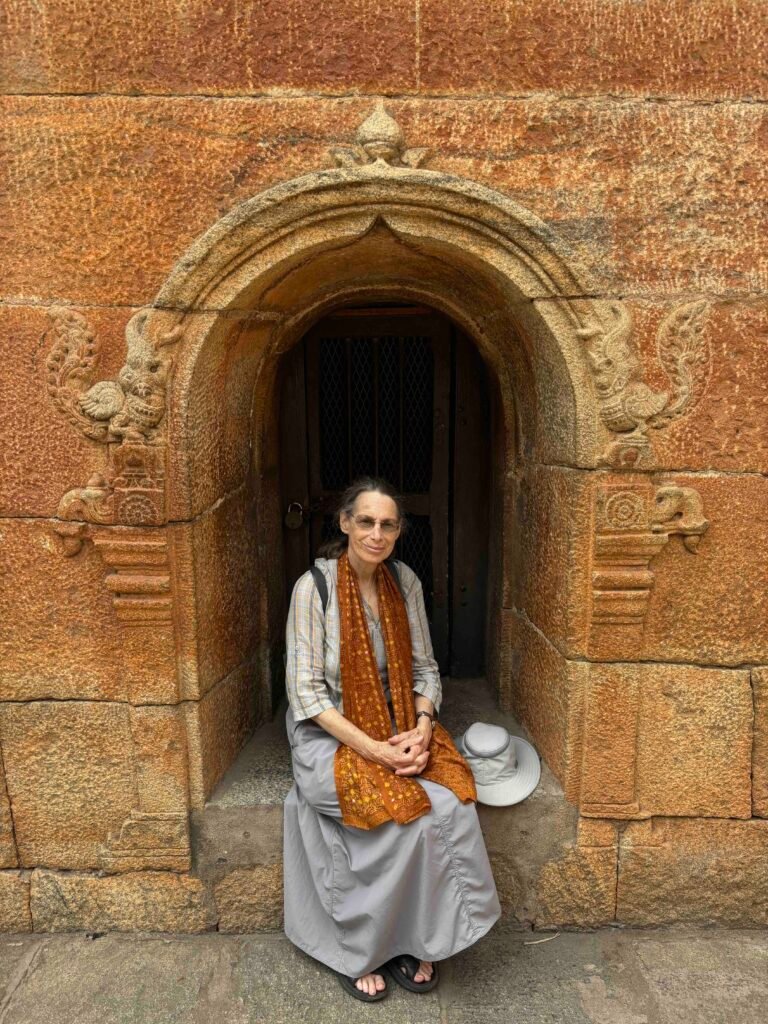
I am visiting my Indian sister Gayathri, whose family I lived with in Hyderabad during my Junior year abroad in college many years ago. I have stayed in close touch with her family and when I arrive here it is like coming home. It is a very traditional Brahmin urban house, which is also her dance studio where she is still teaching Bharata Natyam, classical South Indian dance, 6 hours a day, at age 73, together with her daughter who has followed in the tradition.
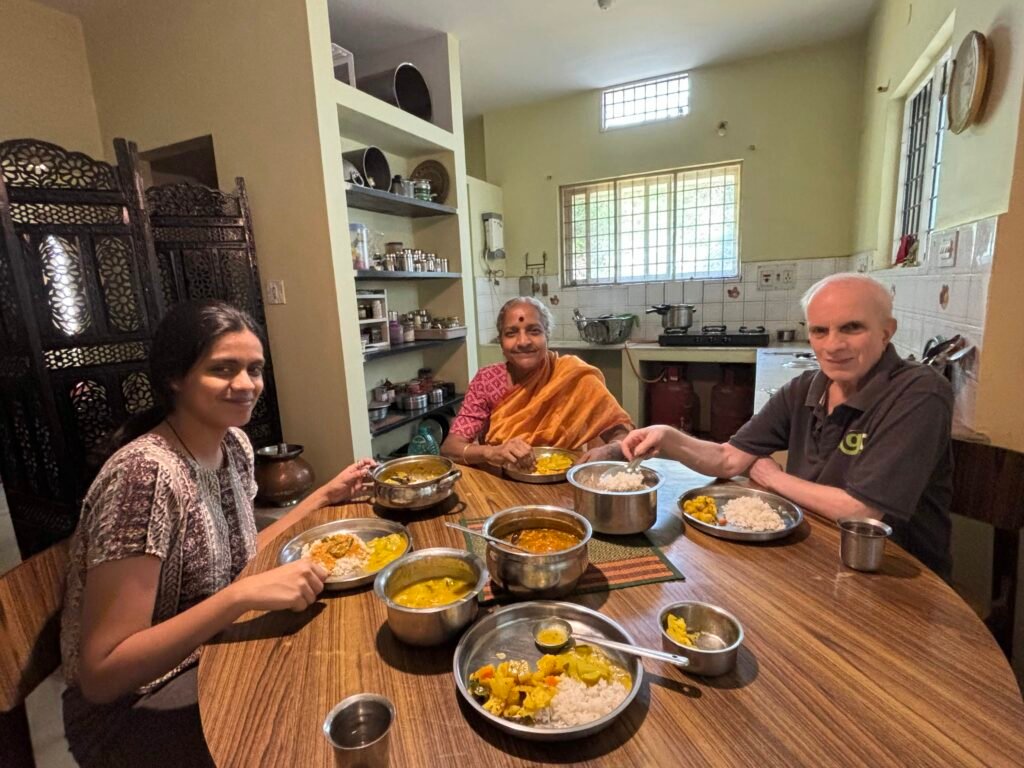
Delicious raw mango curry, okra tomato Sambar dish and mixed vegetables and rice. Propane cylinders and gas burners in rear.
Gayathri teaches some advanced students around the world on-line. Her two sisters-in-law each teach Carnatic singing on-lin to Indians now located in Germany, London, Australia, Singapore. These young Indians are taking singing classes because they very much want to pass a certificate exam in their art. I just asked Gayathri about this desire for a certificate and she says that South Indian parents feel it is very important that their daughters master some form of music or dance and push them to work towards completing a full course. But that these women then go on to become doctors and engineers and don’t sing or dance further in their lives. I asked if it was because it made them better marriage material and she says no, it has to do with the parent’s egos as they want to say their daughters have accomplished this high level of traditional art.
Walking down the very busy street outside Gayathri’s house is a physical challenge requiring every sense on high alert to avoid tripping on debris or colliding with scooters, motorcycles, motorickshaws and cars coming from all directions. Sharp eyes are needed every second to quickly calculate how to walk as there are no usable sidewalks, there are only a few feet of individual paved space in front of stores, often at odd angles from the road and from their neighbors, with power poles and street venders and broken concrete often blocking the way so it is necessary to walk into the road between vehicles cruising fast on one side and parked cars and food carts on the other. Crossing from one side of the road to the other is a courageous display of hope for a future.
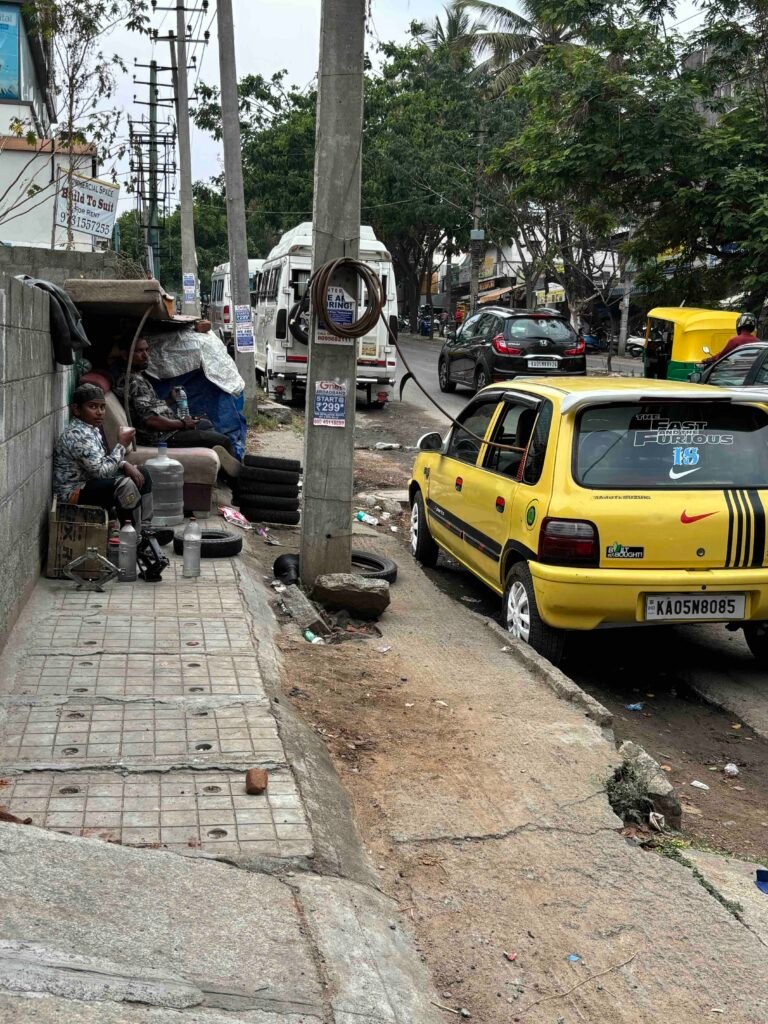
No option but to walk on very uneven pavement, through garbage and into the street.
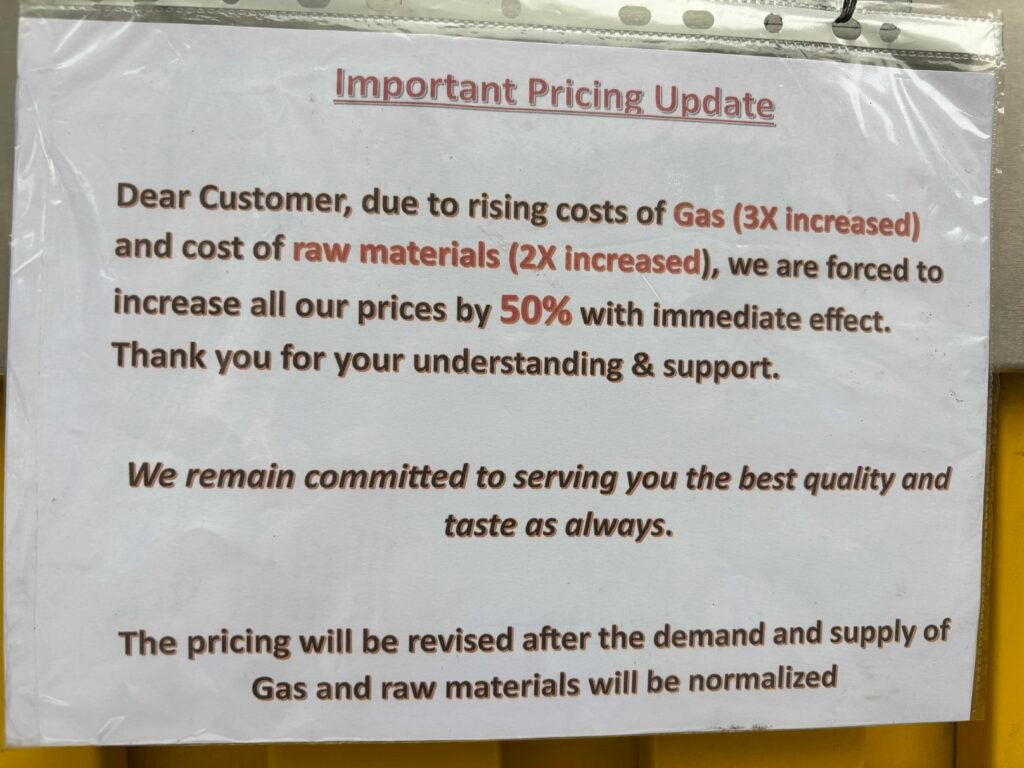
The ongoing war in Iran is having real impact in India, even in Bangalore, far from any borders, with many flights from its airport through the MidEast now being cancelled and disrupted. And far more pressing for the everyday person is that propane, used for almost all cooking in homes, restaurants and the many small food street venders, is now being restricted with fear of stoppage of deliveries from its source outside of this country. Here is a sign I saw on a sidewalk vender selling fried foods;
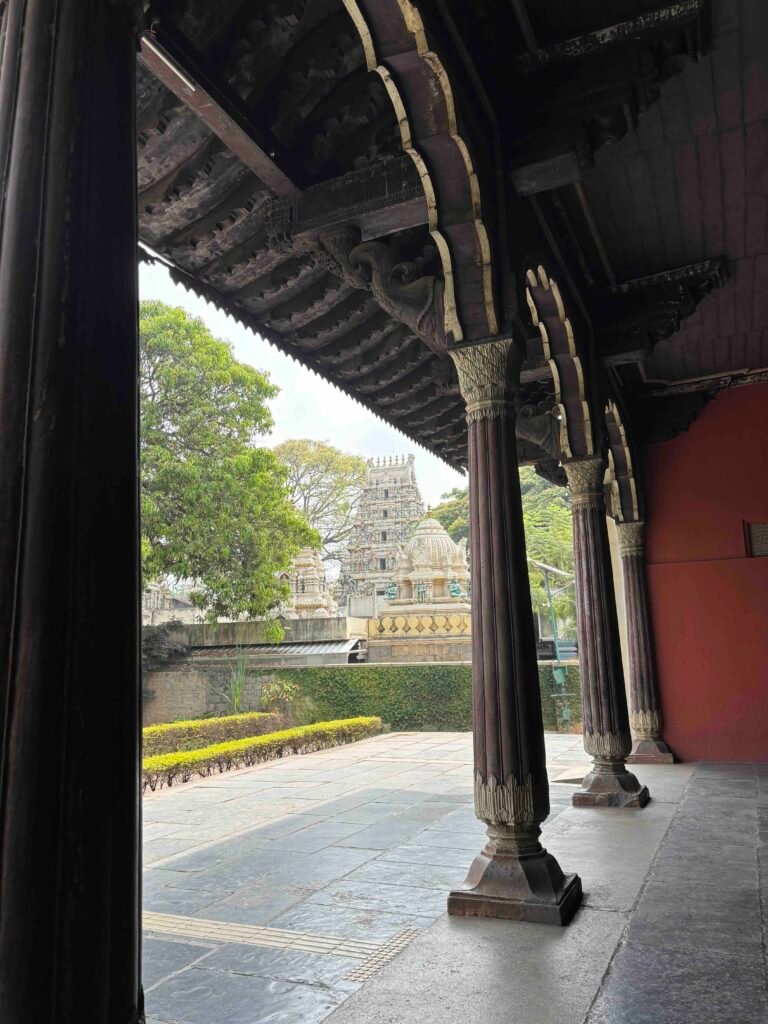
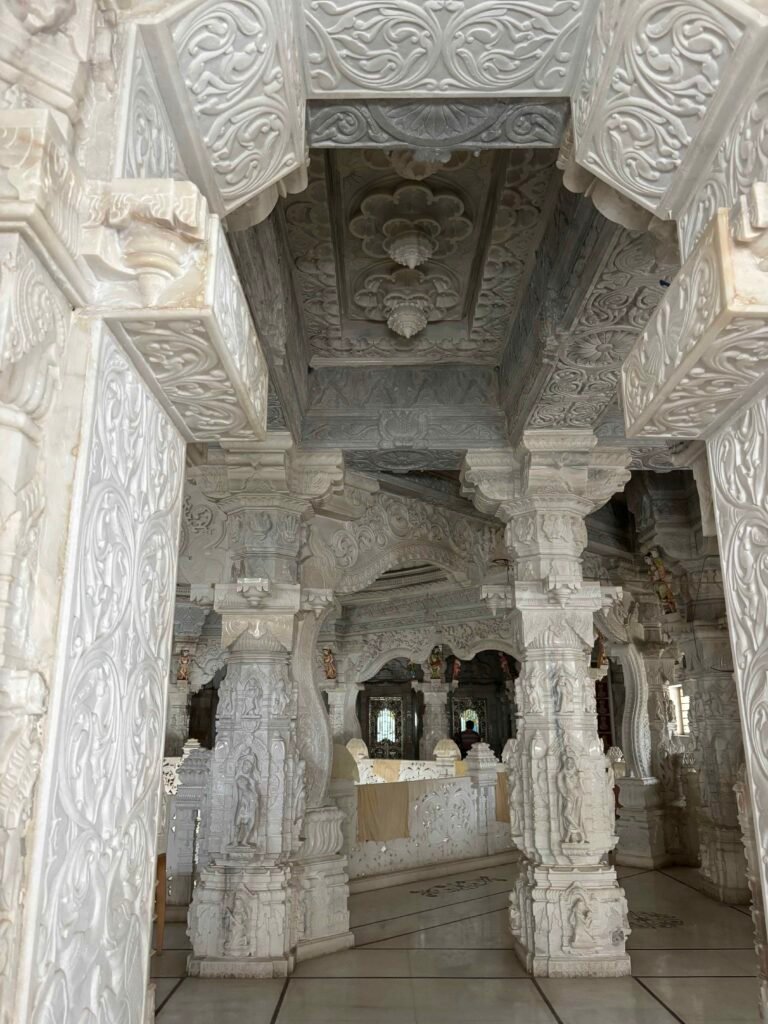
One day this week I signed up for a walking tour in the historical center of Bangalore. I had my own guide who was a photographer trying to make a living, talking non-stop about the history of the area going back 1800 years. He was exhausting but I did learn quite a bit and enjoyed his energy.
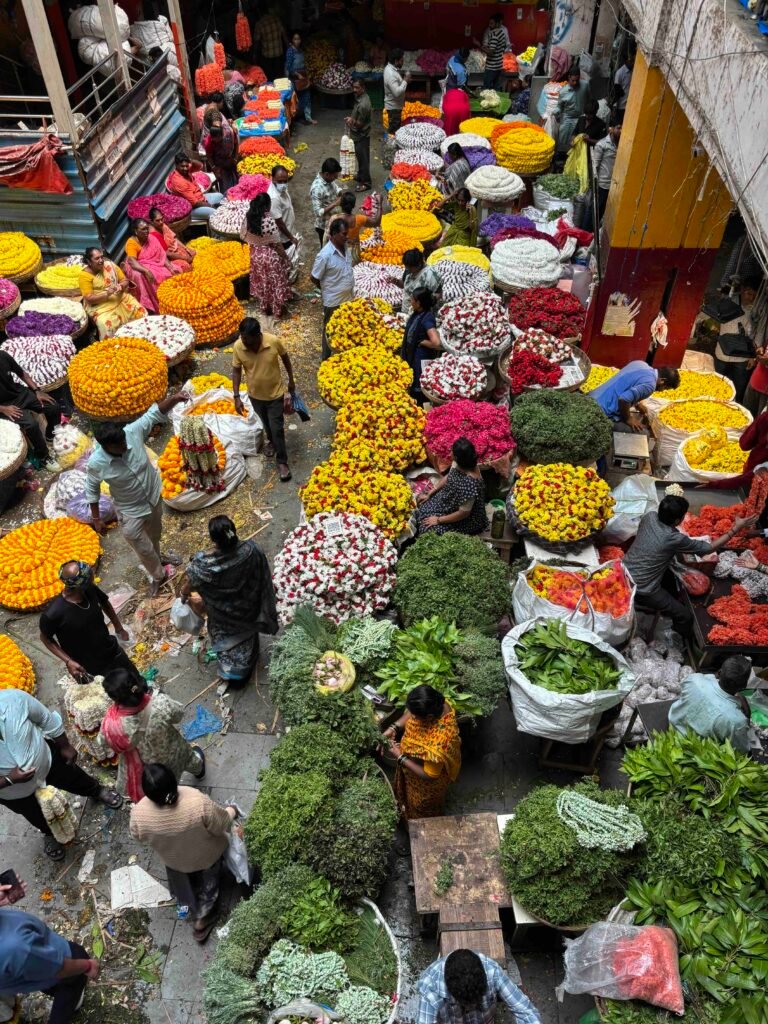
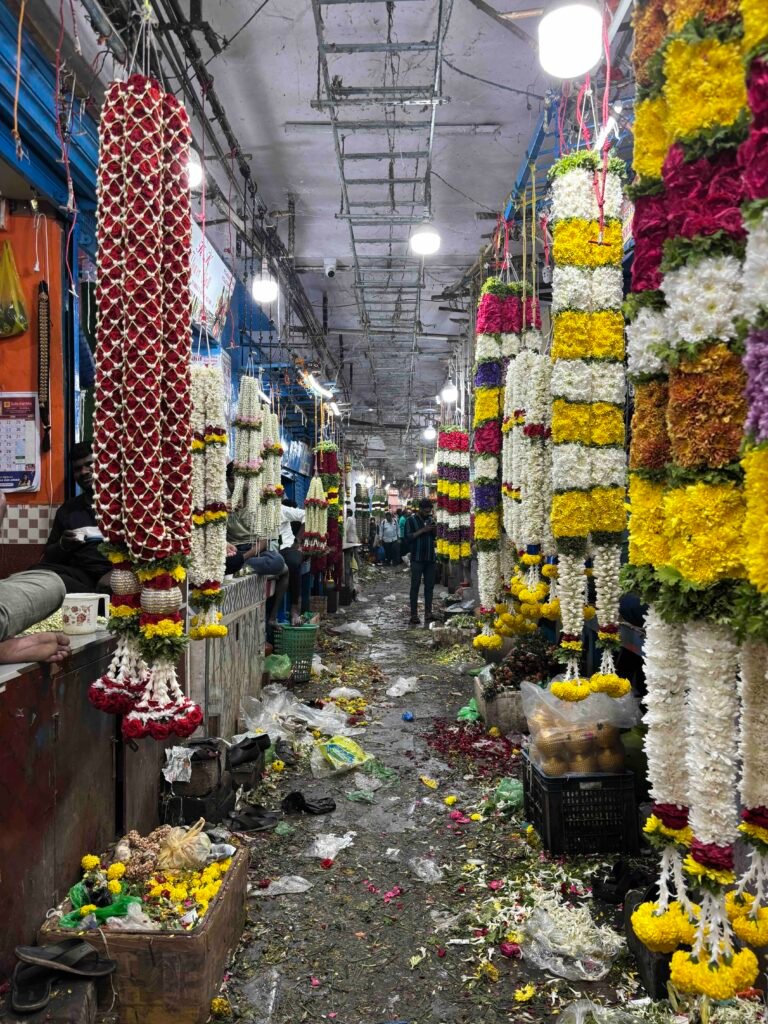
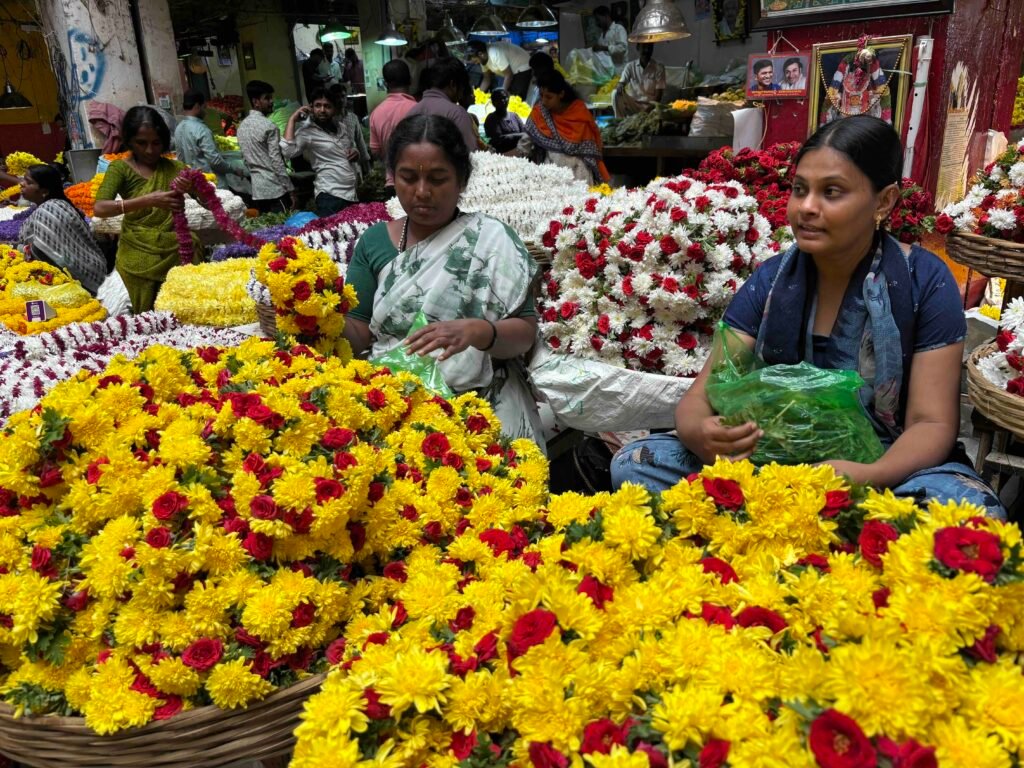
The highlight of the morning was the flower market, one of the largest I think I have ever seen, selling huge garlands for the gods given at special events, and smaller ones for daily home prayer.
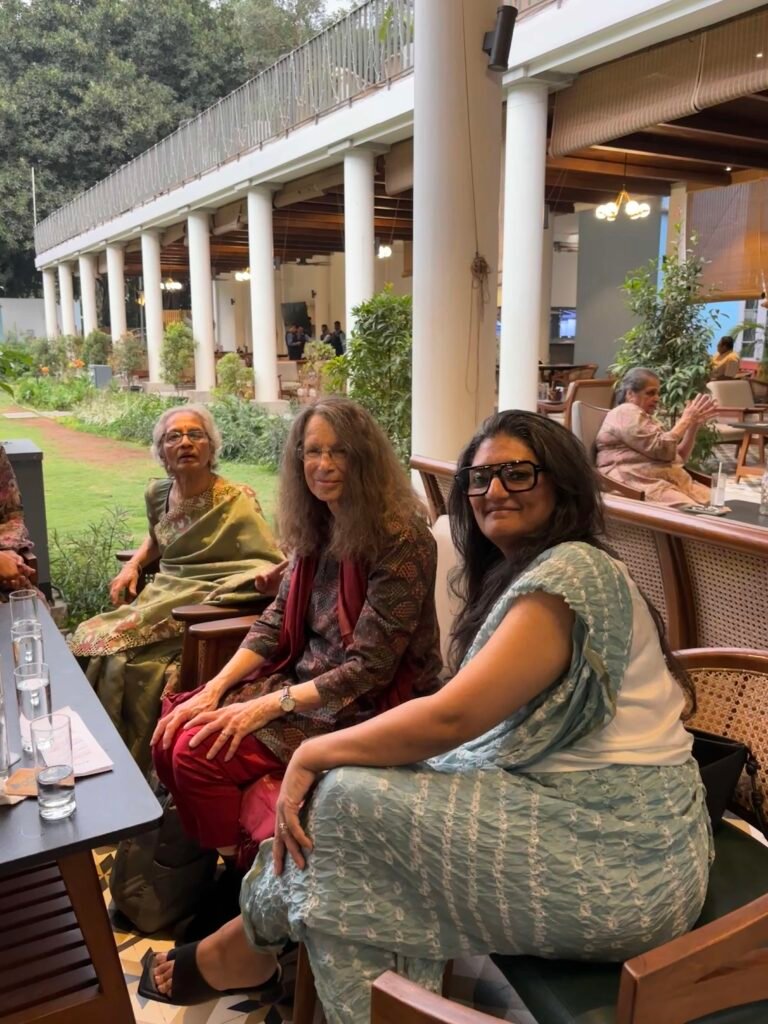
I went to visit an old friend who had also studied dance at the same time as I did in Hyderabad who is now dealing with Parkinson’s Disease. It is her birthday and her daughter flew in from Singapore to gather some of her friends for tea at The Bangalore Club where they are all members. Once the exclusive enclave of British Military Officers beginning in the 1860’s, the clubhouse was finally opened to the wealthier classes of India in 1946. It was a very welcoming and lovely group of women in a beautiful setting.
I’ll end this episode on Bangalore with a few words about a new museum I went to this afternoon — The Indian Music Experience Museum, bringing together exhibits and history of Indian music, from classical, tribal, ethnic, up to Bollywood and modern rock bands, with extensive sound tapes of various singers and musicians to hear through headphones. It made me feel rather old as I knew and attended concerts of many of the artists shown as part of past history, including my singing teacher from Madras. It was designed for children and adults to encourage a connection with the culture. It was especially wonderful for me to go with Gayathri and her daughter, who knew all the classical musicians being discussed, as well as Gayathri”s 10 year old grandson who thoroughly enjoyed the experience.
Tomorrow I invited the whole family to a local restaurant for lunch and then I must pack to get ready to leave first thing Sunday morning. Part of life, one day ends and another begins with the unknown before me.