
The Kaziranga National Park and Tiger Reserve is best known for its one-horned white rhinoceros. I personally think that although we are told there are 148 tigers now within the very large park’s. boundaries, sighting are rare and it is a title more for promoting tourism than any providing any reasonable chance of seeing one in the wild. However, to our local guides amazement, we saw an animal even harder to sight than a tiger – a sloth bear, although our viewing was just of a large furry creature crossing the road.
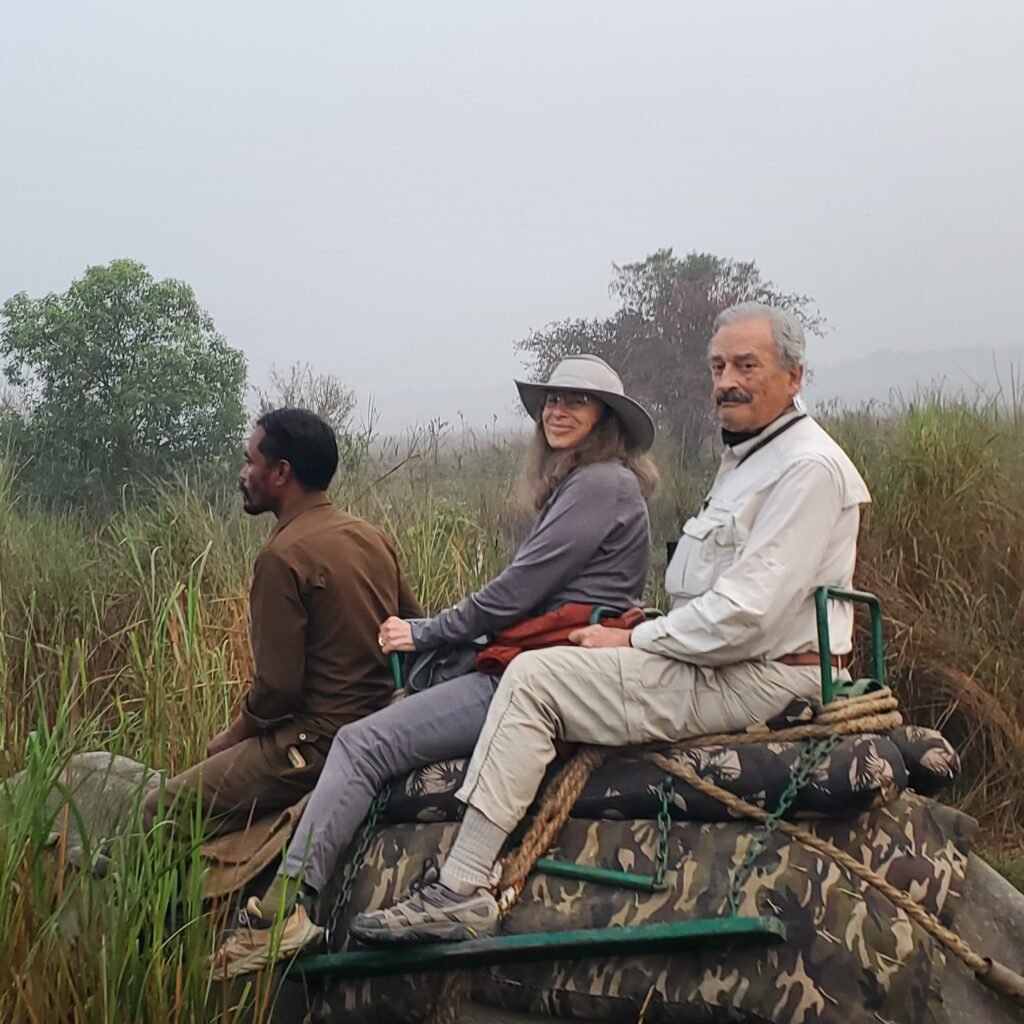
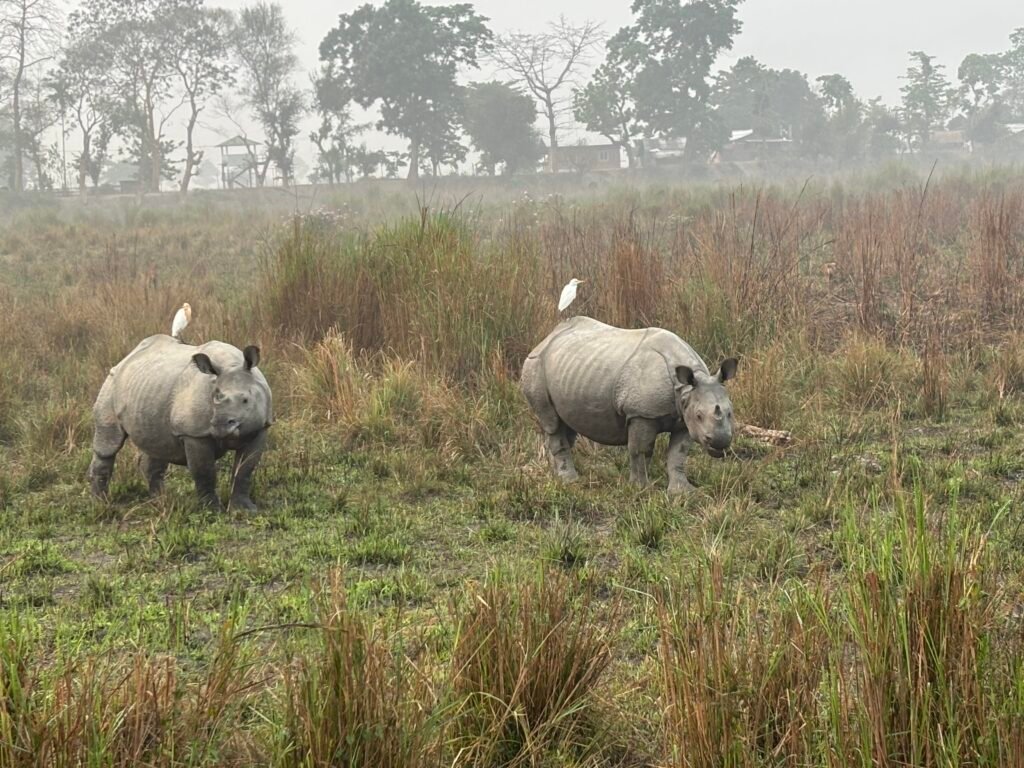
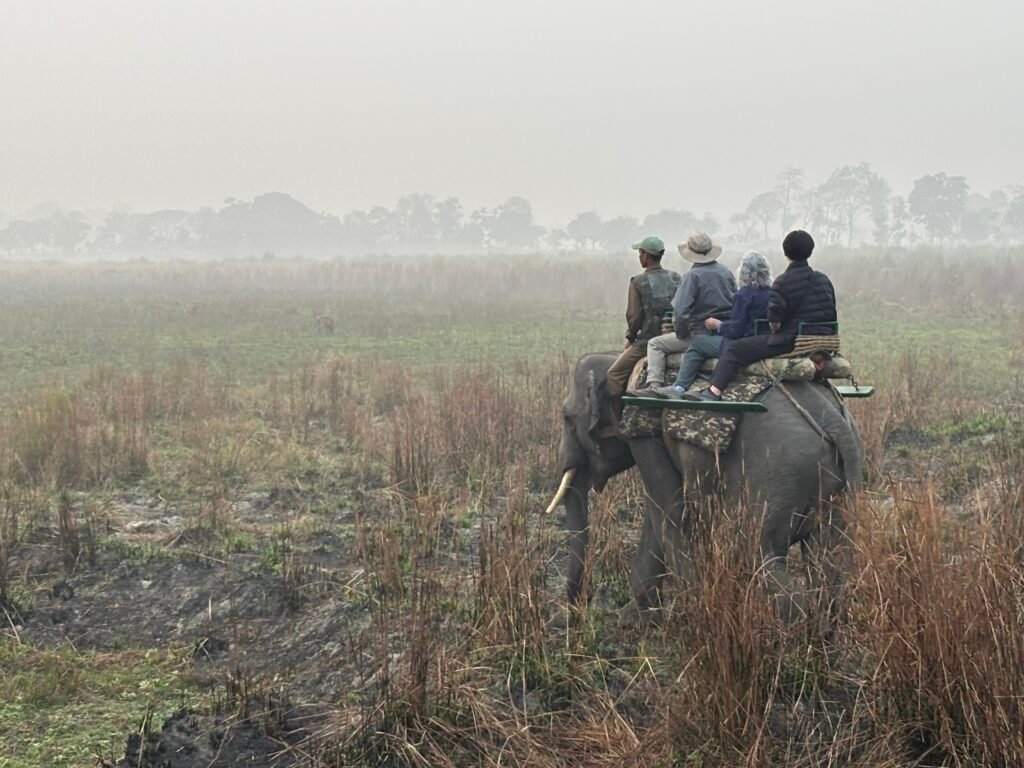
Our first outing was a very early morning Elephant Safari, when we, and other tourists, (all Indians except us) climbed onto the backs of well-used elephants, 2 or 3 people behind each mahout (mine spoke a lot to his domesticated partner in Assamese) who led us into the fields of the park. The elephants were continually stopping to break off large green rushes to snack on as they plodded through the open field. Hidden among the tall grasses were a number of rhinos, the most prehistoric looking to me of all quadrupeds. Birds sat on their armored backs. We were able to get quite close, which was surprising given the sound of the large swishing elephants passing by.
By the time we returned to the loading area, large numbers of other people were waiting for their turn and we were glad we had the 5:30 am reservations to go out into the early morning light with a red sun rising in the East. This was a worthwhile experience, not just the unusual fact we were riding elephants, but because this means of quiet transportation allowed us to see the wildlife in another perspective, both higher up but more importantly more part of the natural environment.
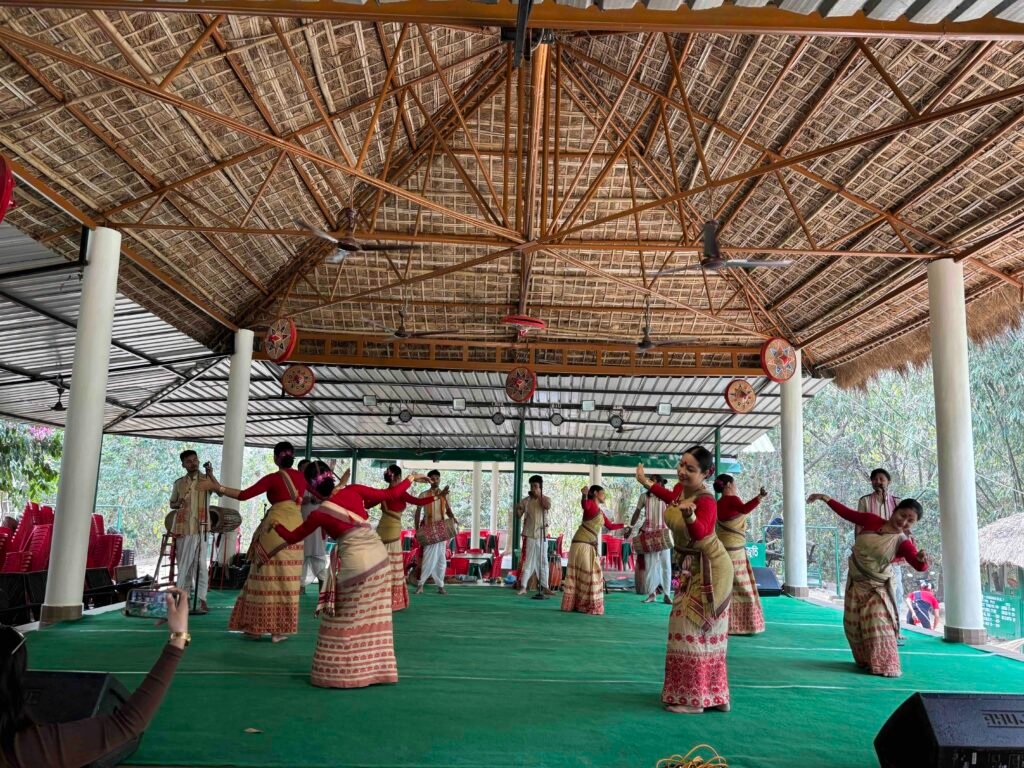
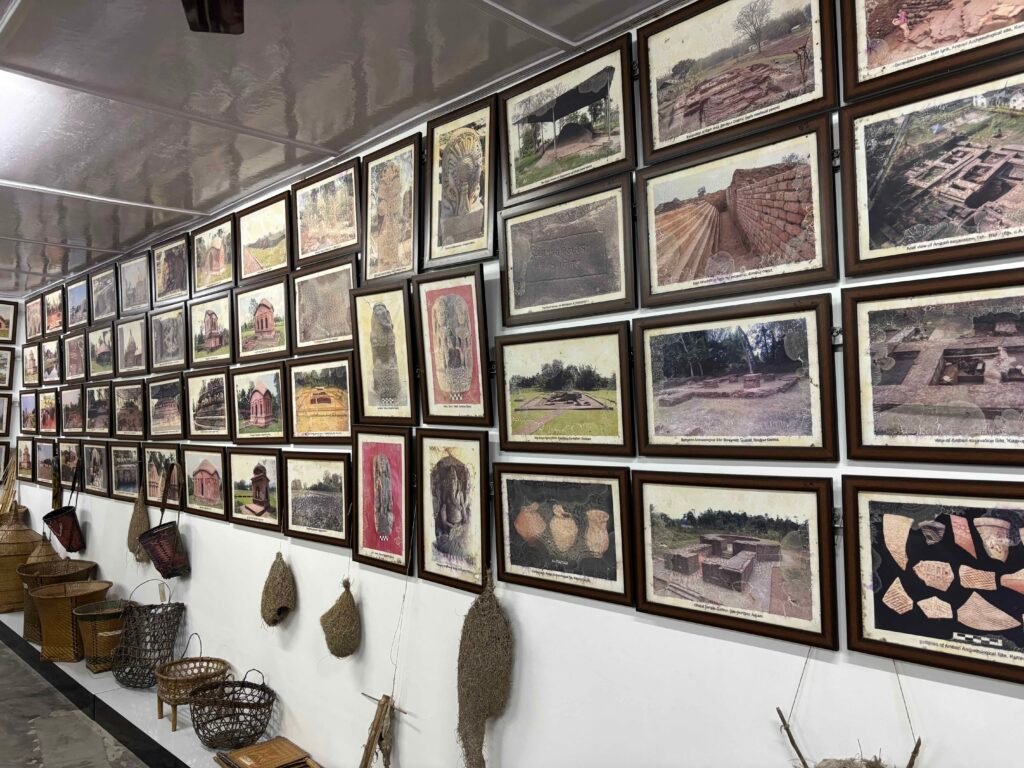
A quick nap back at the hotel and then a visit to the park’s orchid farm, said to the be the largest orchid farm in India, containing a greenhouse with aerial root beauties cascading down. But this was far more then orchids. There was a museum with artifacts special to Assam, a separate musical instrument museum, and a cultural show with local drumming and dancing, beautifully done but far too amplified to make the experience totally enjoyable. The solo male dancer was extraordinary, willowy and supple, androgynous in appearance and obviously well trained in the ancient art.
I have not yet written much about my self-enforced special diet on this trip, which due to my blood pressure issues requires very low salt and a request for 1-2 individually prepared dishes just for me at lunch and dinner. Seeing all the luscious North Indian dishes around me while I sit with my very bland dal/lentils, chapati or noodles and unsalted mixed vegetables has been difficult. I occasionally give in and enjoy a dollop of less salted curries but then I sometimes pay the price later on. However, this day, after our orchids farm visit we stop at John’s Kitchen for lunch and I have the best spiced dal (made without salt) and sweet and sour vegetables. Very enjoyable.
Our afternoon adventure was a jeep safari into the Western part of the park. Randomly assigned, we sat in a fairly ramshackle open jeep but with a very good naturalist whom we enjoyed being with once we adapted to his accent. There were many jeeps, with both Indian and foreign visitors, on the well-traveled roads with stops to view the numerous rhinos and 3 kinds of deer (very large sambar, smaller swamp and diminutive hog deer) that dotted the wetlands and plains. There were large wild water buffalo and many roaming boar that all seem to live together peacefully — except, we understand, when the tigers encroached and snatched their favorite meal. It was on this ride that we miraculously saw the sloth bear, a seldom seem mammal. I assume that the dark skies from the approaching storm made this animal willing to come out during the morningtime.
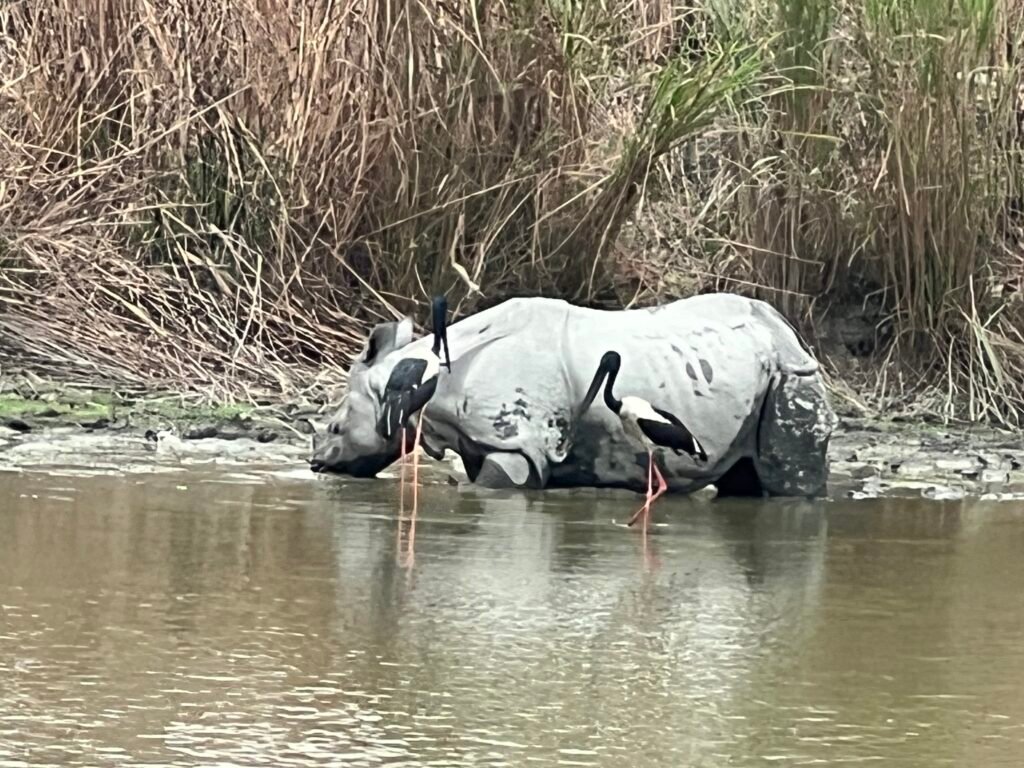
The birds are for many the highlight of visiting Kazaranga and are certainly the most numerous of wildlife to be seen and heard. Ranging from small birds, familiar in size to us, to the very large Greater Adjutant which can stand 5 feet tall, our guide was able to spot them for us in the tree branches and in the swampland.
Dinner in our comfortable rooms, then up again early for our last jeep ride in the most Eastern part of the park. This was a very different experience. Arriving around 7:15, we were the only visitors in the park except for government workers in several jeeps and 2 fully armed guards on foot who had full authority to shoot on sight any wandering locals. This aggressive policy has almost eliminated poaching in the park by hunters trying to capitalize on rhino horns prized by the Chinese and others for their flaunted medicinal properties. This practice left rhinos dead with missing horns and a decreasing population. But there was a project which debunked the medical value of the horns and then in 2021 the forestry department collected in a pile all the horns they had found from naturally dying rhinos over many years and burned them in a symbolic fire to impress on locals that the living rhinos were far more valuable then worthless horns. Poaching is now almost non-existent in Kaziranga.
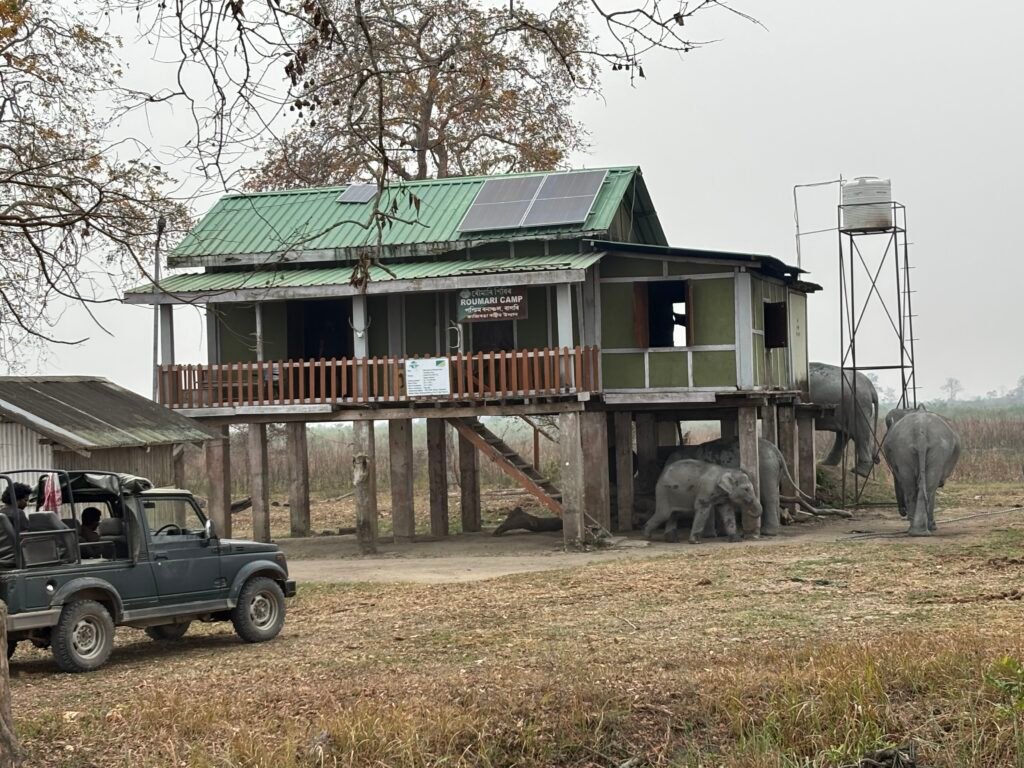
The landscape was beautiful, overcast grey and the animals were active in the morning, with many rhinos, deer, birds, buffalo and we came across in some wetlands a wonderful family group of wild elephants, elders, parents and babies. Suddenly, there was a huge crack of light lightening and a very small mist of rain began but even though we were in a totally open jeep, we hardly got wet at all. We continued our visit to this part of the park and consequently we were very surprised when we went back towards the exit that in addition to a number of covered jeeps carrying tourists, we saw significant puddles in the dirt road. When we returned to our hotel we learned from Jim, who did not come with us this morning, that there had been a monsoon-level deluge in the area. Miraculously, we were not adversely impacted in any way by the sudden change of weather. In fact, Bill has been commenting on how dusty everything is here which is not surprisingly at the end of the winter dry season and now — with the rains now here — the atmosphere should become cleaner.
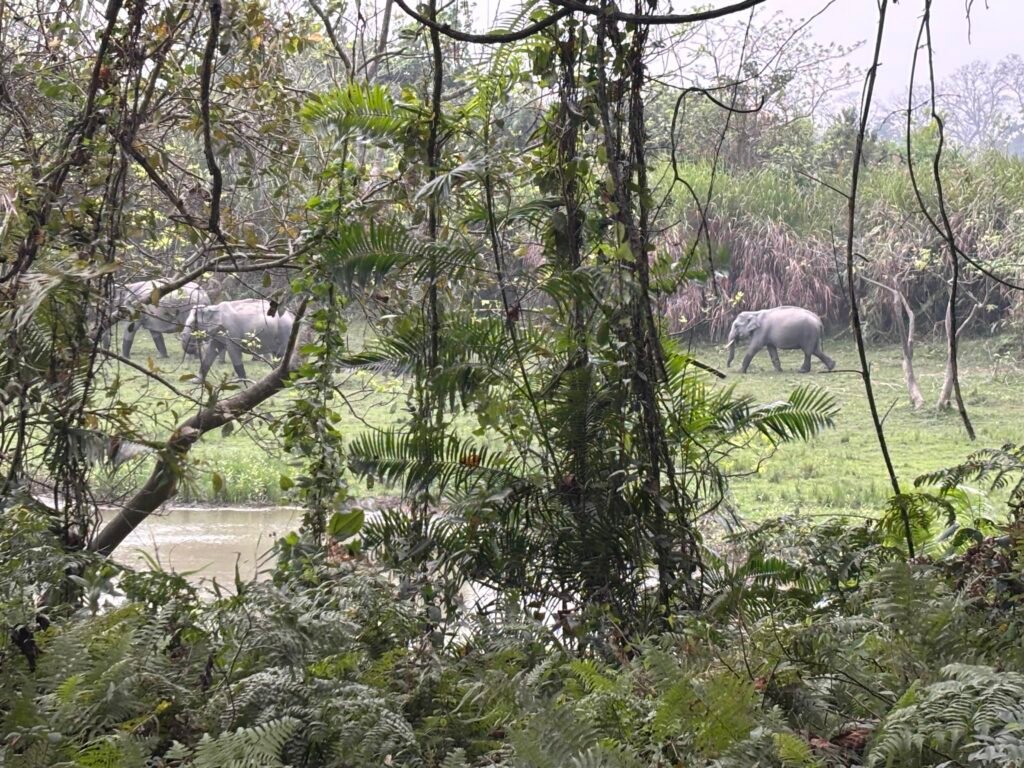
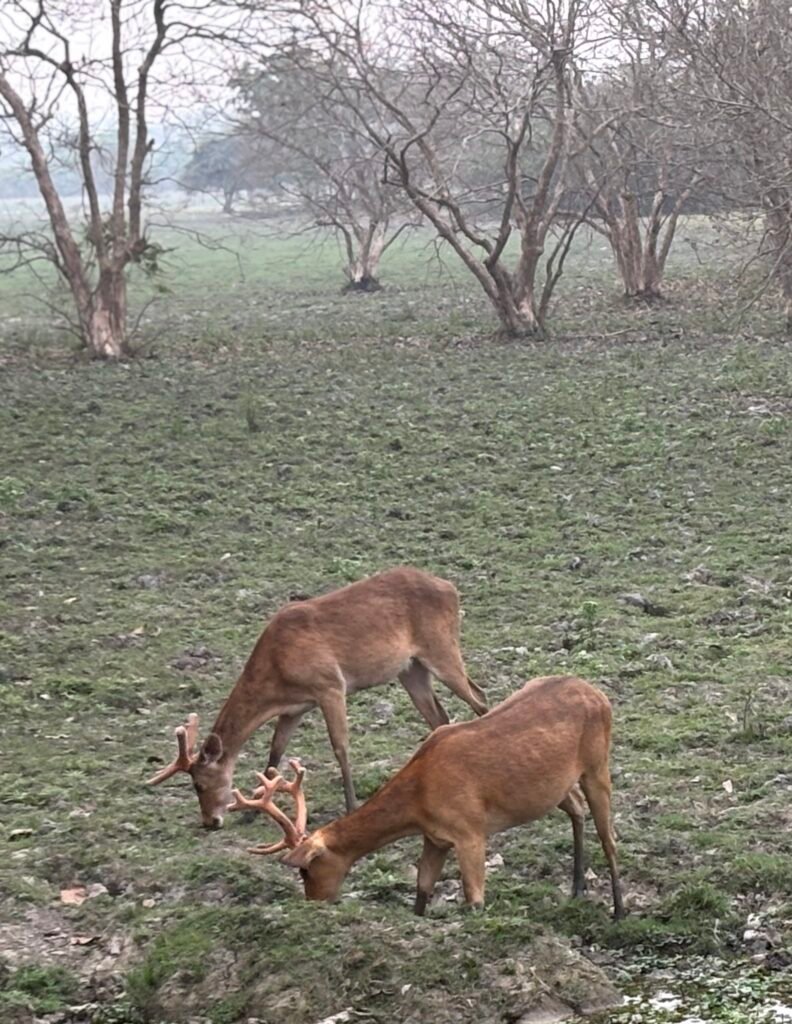
Our 3 different park outings were each very different. The Elephant Safari, in a class of its own, the main park experience with many other visitors pointing out the birds and animals to each other, and this last isolated jeep tour where we were the only tourists in a world of wildness.
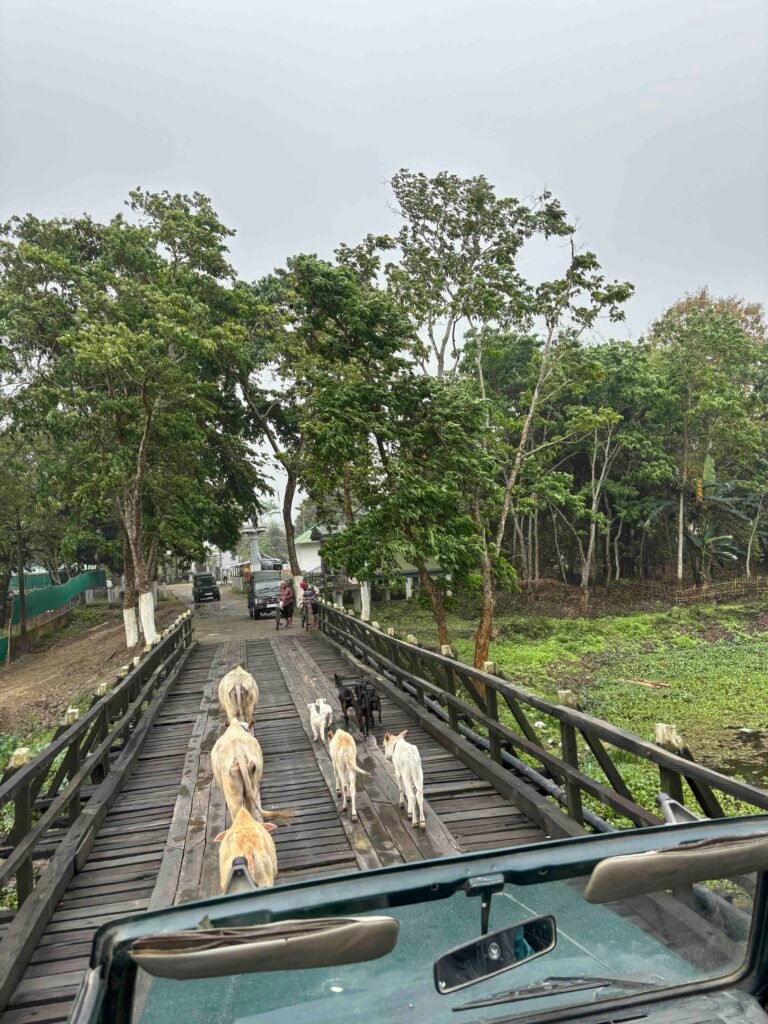
Outside of the park, goats are everywhere. Black, white and all colors inbetween. Every home, along every road, and every bridge. Since this is a non-vegetarian population, I assume they are raised for meat and wonder if they drink the milk as well.
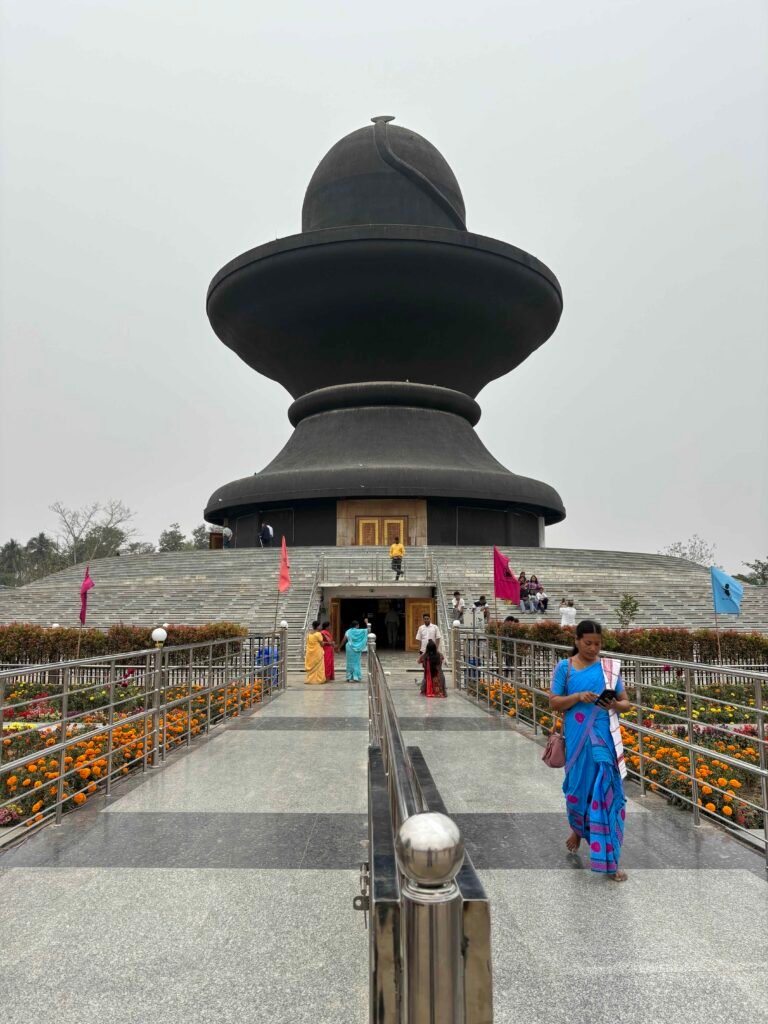
We are on our way to our last place on this tour, back to Guhawati. We just stopped at a new Shiva temple in an unusual shape, that of the lingam of Shiva and the oval offering plate to Shiva called a Yoni, representing cosmic balance of male and female principles. In its usual smaller form, I have seen priests pouring oil and milk over it as an offering. We were taken there mainly as a toilet stop with the additional experience of a well-frequented religious site.
Which brings me to all of our rest stops, mostly at petrol/gas stations which in general have “gents” and “ladies” toilet facilities, usually sort-of clean, with the women’s choice in the bigger stations of both the “squatter” or “throne” form. But in just about none of them is there any place to throw away garbage, like used toilet paper brought in for such purpose. Each time, I have to wander outside to try to find a trash bucket, sometimes near the gas pumps but usually non-existent. People just throw the trash somewhere on the ground. At one stop, earlier in our trip, the single toilet (marked “Ledies”) was located around the corner which required walking on a precipitous, narrow ledge without any guard rail below which was a sharp drop-off into a ditch. Opening the toilet room door could easily cause someone walking outside to get knocked off into the area below. Bill has pointed out to me that almost all the “new” toilet doors, both outside and in restaurants have a protective plastic tape wrapping with the manufacture’s name prominently displayed on it. Sometimes with a note that it is to be removed within 45 days of installation. But Bill thinks they all are now geologically solidified from age and can not be easily removed. Why? Bill wonders whether it is a badge of honor to retain this proof of authenticity for modern door products.
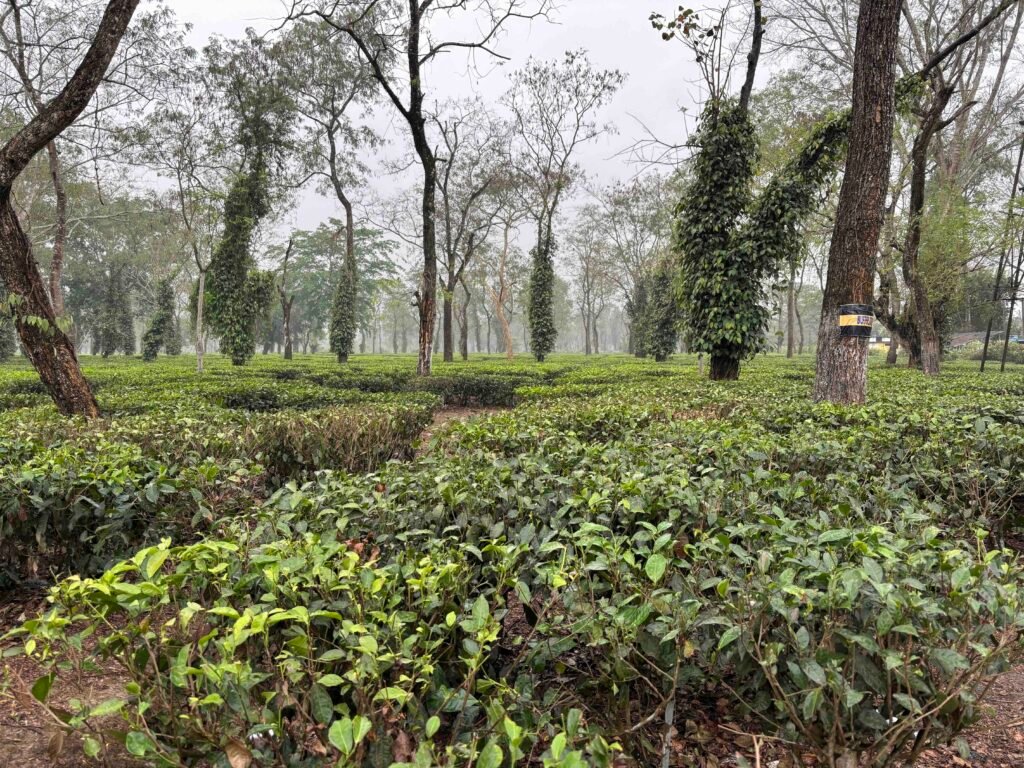
And everywhere we go in Assam are tea plantations.
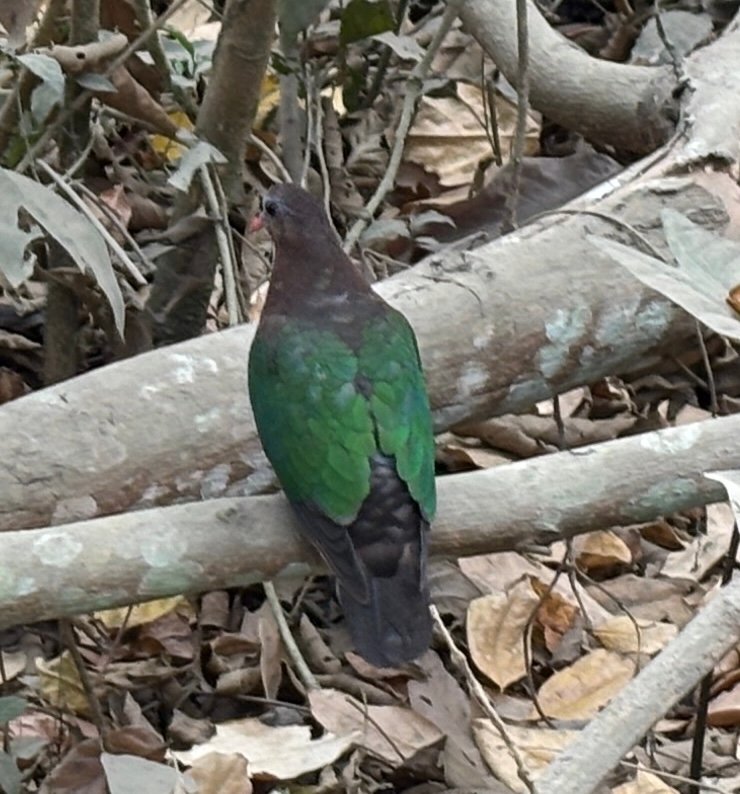
This is for Davis and any other of you birdwatchers, the rest of you can skip this next paragraph. These are some of the birds we saw in the park: Black-necked stork, Osprey, Oriental Darter, Greater Adjutant, Lesser Adjutant, Imperial Green Pidgeon, Pond heron, Bee-eater, Emerald dove, White Coated Kingfishers and other varieties, Mynah, Grey headed Fish Eagle and other eagles, Great Indian Hornbill, various Egrets, Bar-headed goose (the only bird said to be able to fly over Mt. Everest), Jacana, Black-headed Ibis, Open-billed Stork, Indochinese Roller (beautifully colored!), Redwattled lapwing, Wooly-necked stork, Scarlet Minivet, and Black Dongol.
There will be one more entry for this journey and then Bill, Nancy and Jim fly home. I am not overlooking the fact that the world is at war while we are at the moment in a sheltered location paying little attention to the chaos outside. Bill flys home through Dubai and his flight is still scheduled to leave as scheduled, with a minor change to the timing. Nancy and Jim go from India to London. I will remain in India for a few more weeks, first in Bangalore visiting friends, and the on a short tour around my favorite places South India which I will write about.