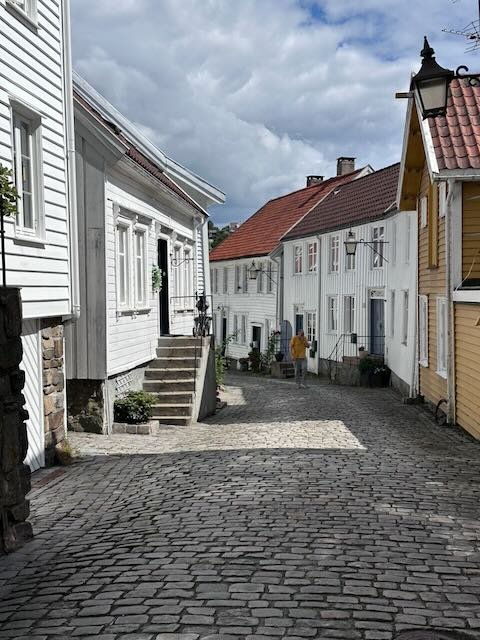
Mandal is described in the literature as one of the prettiest small towns on the Norway coast and its main street and local homes are indeed attractive and historical — and a little bit too much the same. This fits in with the history of the town which I learned about in their excellent Mandal Museum. Fitting in seemed to be the sociology of the last few hundred years, with a very monocultural emphasis based on salmon, timber and shipbuilding. It was known as an arts center as well and spawned great artists at the end of the 19th century, including Gustav Vigeland and his brother Emanuel Vigeland, Adolph TIdemand and Amaldus Nielsen.
Then came WWII, the occupation by Germany and the installation of German troops in town to set up protective defenses against a sea attack. We heard stories of how any woman caught with a German lover was ostracized and how at the end, an interment camp was setup outside town for the remaining German military.
The town itself was charming, as advertised, and gave us a look at its living style today with a walk around ts high school, middle school and elementary school and the ample playgrounds provided for its young citizens. A yellow sand beach, which is unusual for the Norway coast, curves around its side and is presently hosting tents and RVs with vacationeers enjoying the brief summer weather. There were many enticing shops in town, one of which lured me to buy a proper sunhat as I had left mine behind in Berkeley, and another charming toy store caught me walking out with a small present for one of my grandsons.
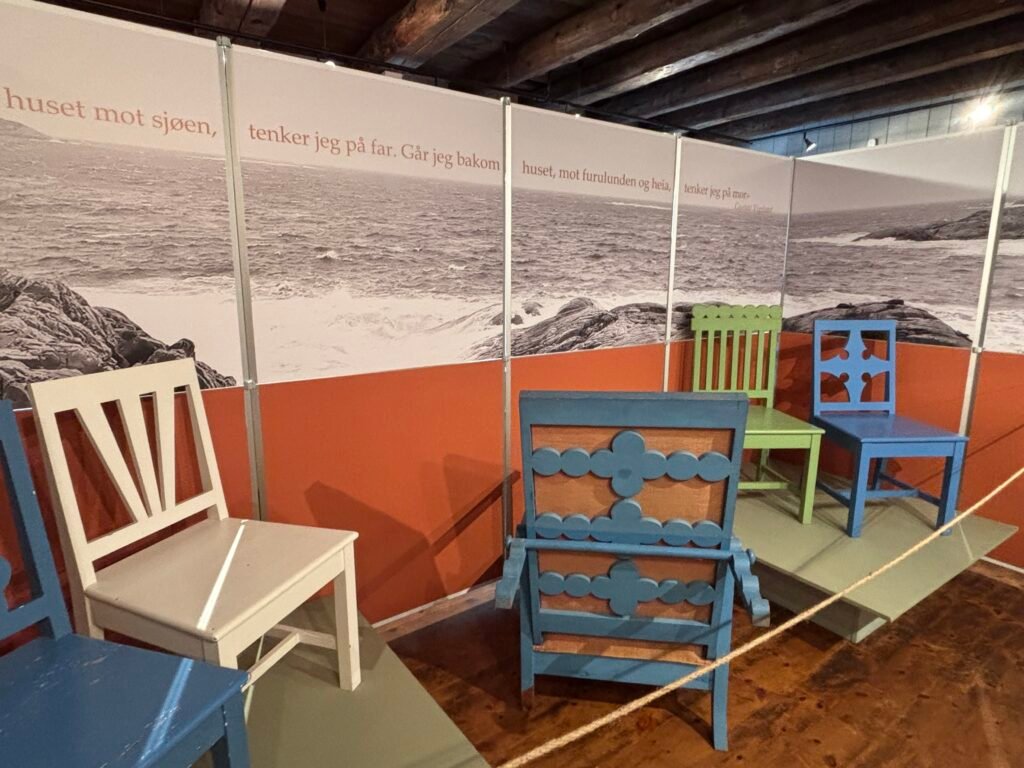
Ginny and I toured both the Mandal City Museum and then the Vigiland Hut, where the 2 brothers Vigeland were raised, complete with much original furniture which gave an idea of life in the late1800’s, crowded with minimal private space. Although my memory is poor these days, for some reason I remember this factoid from the museum: In 1930, there were 1009 houses in Mandal and only 69 of them had indoor plumbing. That left everyone else with outhouses.
Our tender boats which took us to and from the dock are small covered speedboats which look just like, and are probably the same as, the lifeboats for emergency evacuation. Marge, Rae, Ginny and I had a good and memorable lunch at a small well-reviewed restaurant, with Rae making friends with the woman who was both owner and cook and the young man who was both her partner and the waiter.
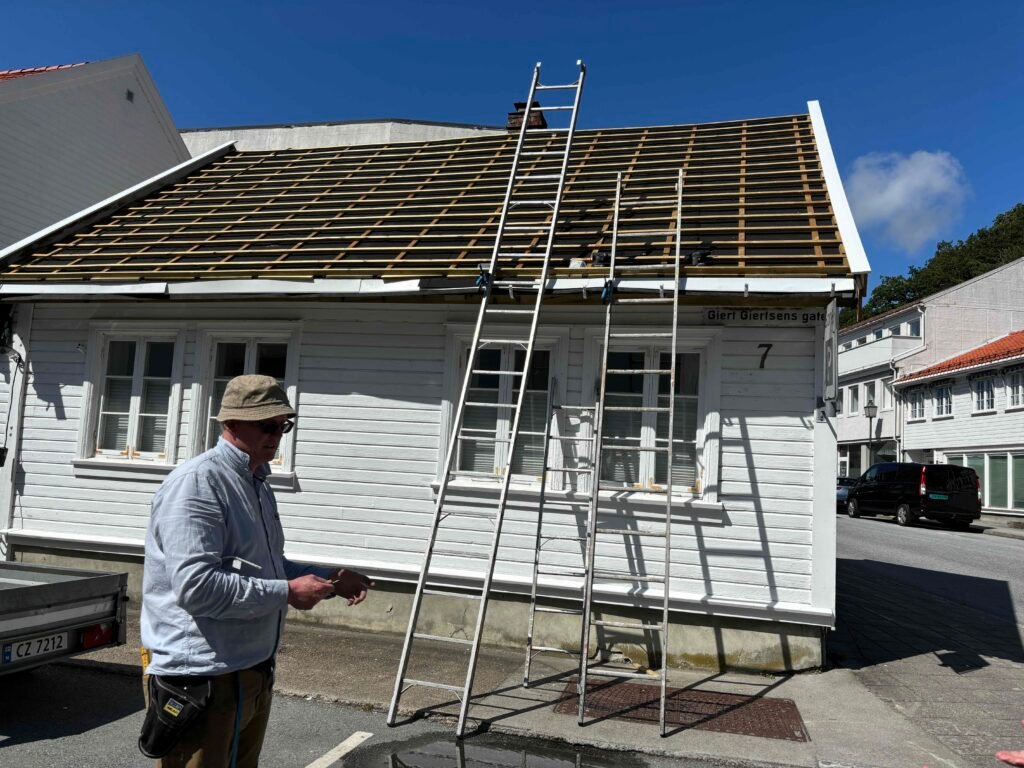
Ginny and I were interested in the reroofing of an old house with very heavy tiles and spoke to the workman about how the tiles were to be attached to the new supporting structure. His English was poor so we did not quite get a satisfactory explanation but were impressed by his remarks about the old ways of doing things and adaptions needed to make this work.
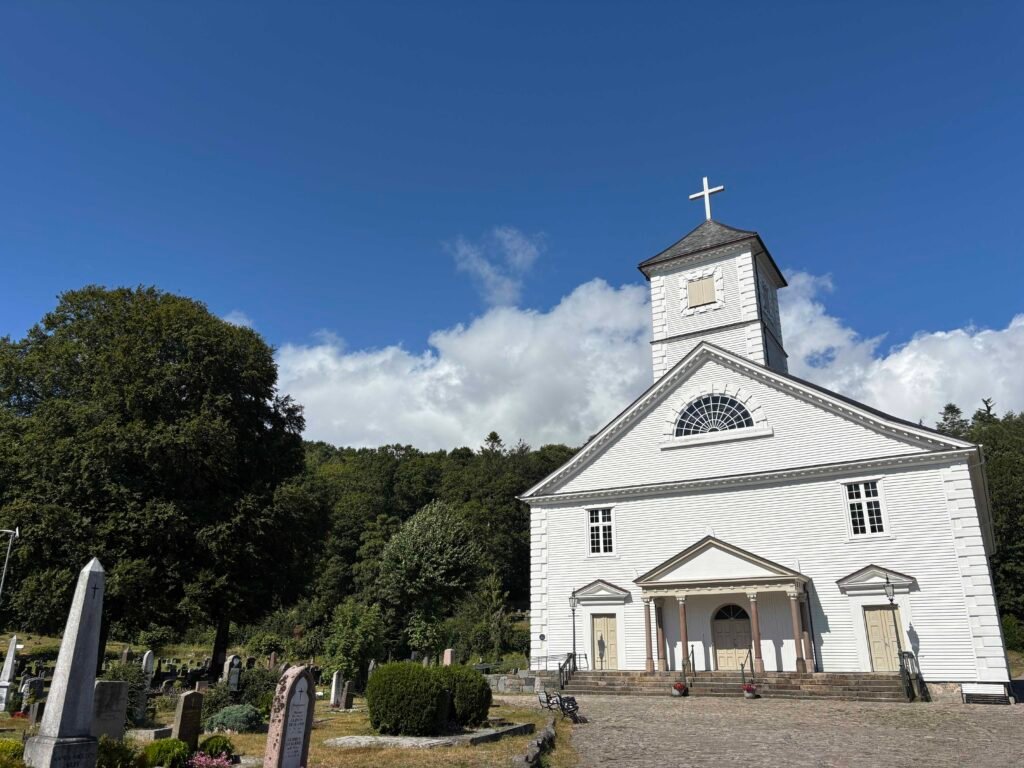
We then walked to the end of town and up a hill to find the main church, said to be the largest all wood church left in Norway – reflecting its protestant background and so plain and stark compared to the elaborate ancient Stave Church we had seen in Oslo the day. before. I think I prefer the rough and ornate shapes of the older style from the 1300’s, holding onto its Catholic beliefs and the splendor radiating from its design, compared to the bare minimalist presentation born of the reformation, keeping exuberance to a minimum and exalting in the pristine nature of belief.
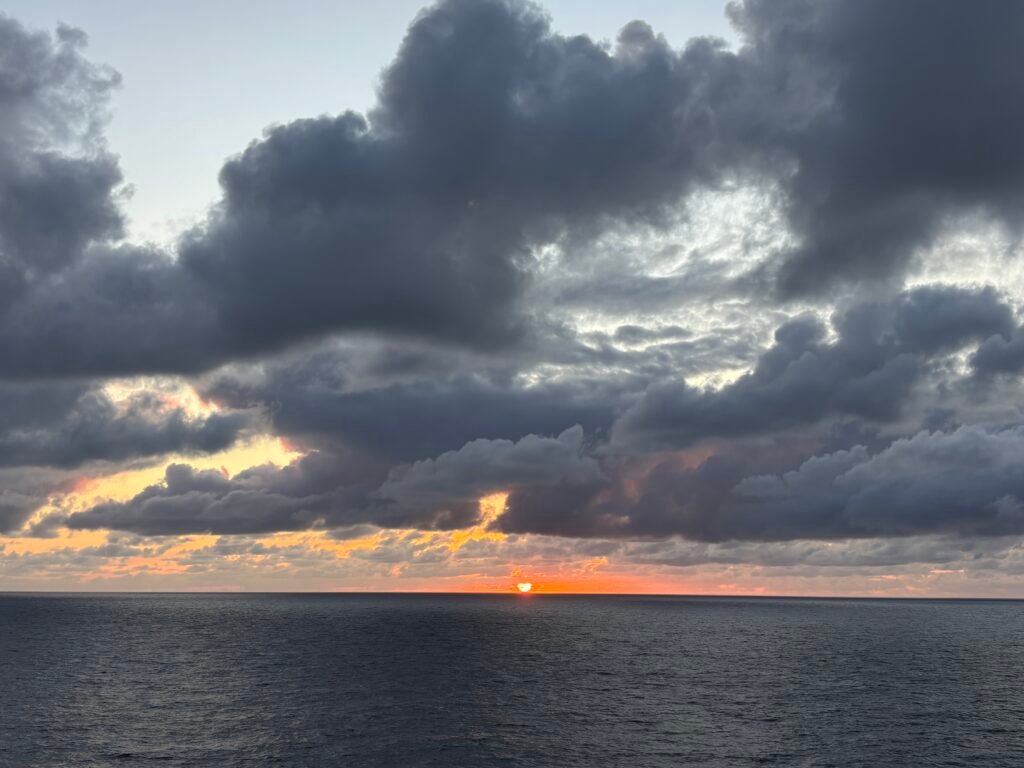
We tender back onto the ship close to its departure and relax having afternoon tea — even though dinner is not far away. Geri and I take a walk around the top of the deck after a very long and very filling elaborate dinner and experience a magnificent sunset over fairly calm waters. Tomorrow is a sea day when we are on board all day as we sail across the North Sea toward Scotland.