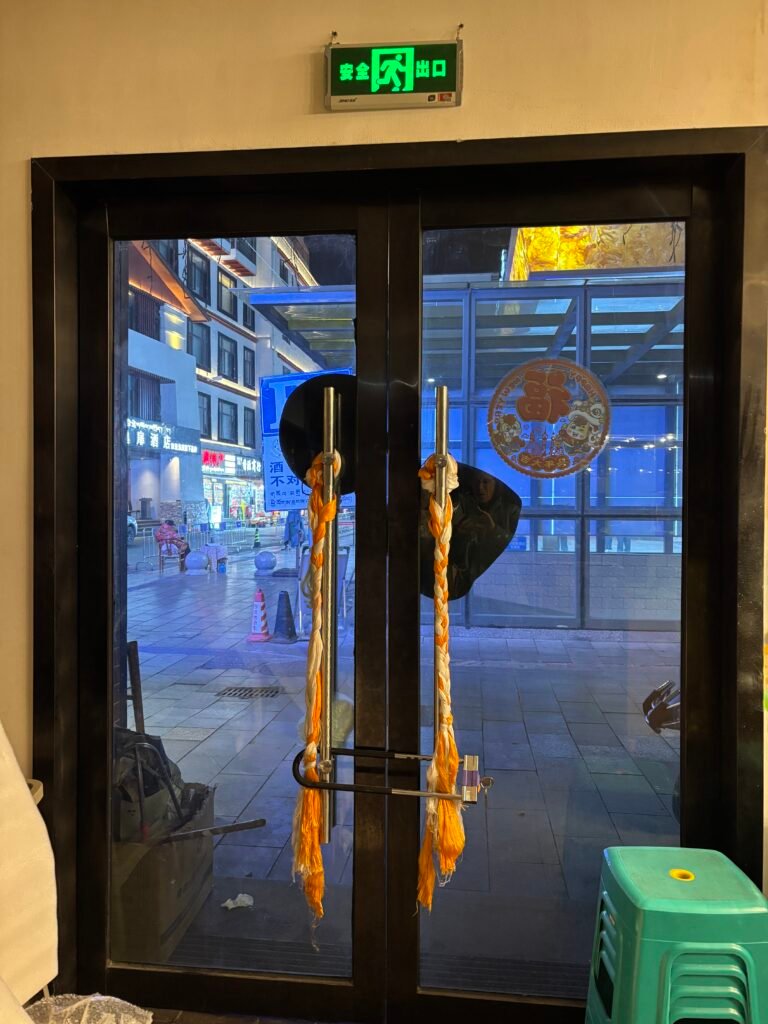
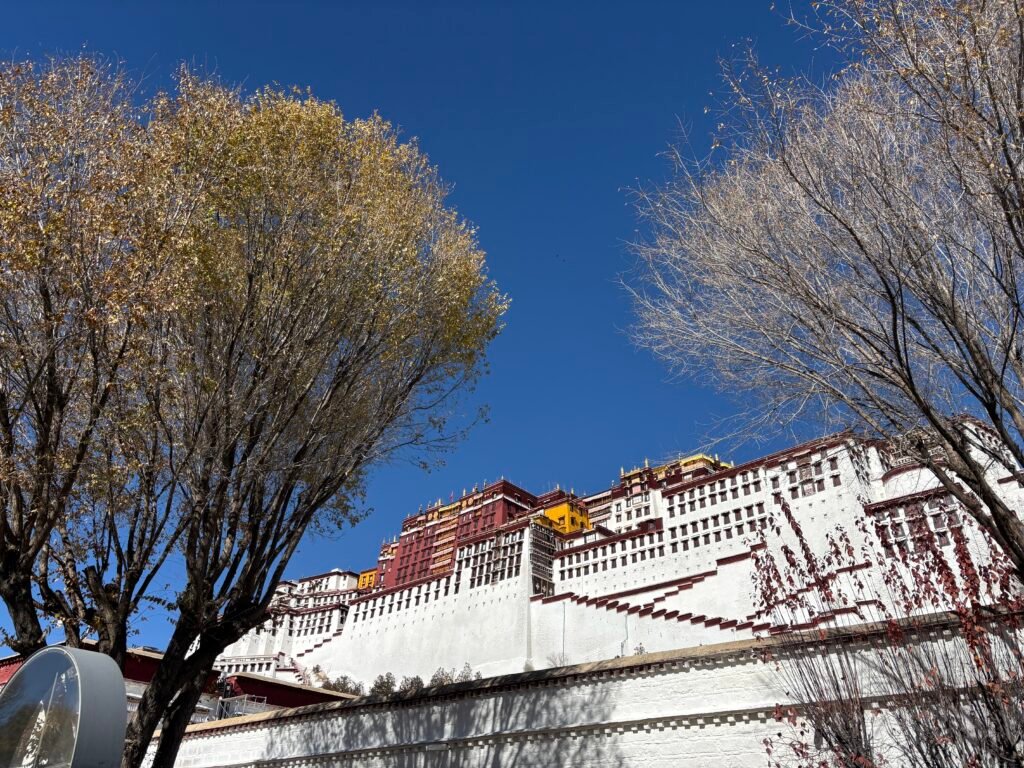
The lodestone of any tourist visit to Lhasa is the Potala Palace, hanging high above the city, casting its image of white walls below, red walls above. onto the populace below. Solid, secure, regal, it has dominated this landscape since the 17th century. It is 750 footsteps (and about 350 stair steps) to the top of this imposing many-level building which formerly served as the winter residence of the successive Dalai Lamas and the seat of the Tibetan Government. Early photos show there is nothing else built around it. Now there is an amusement park, with decorated boats on a man-made lake on gound level, a large public outdoor meeting area, a public park and commercial and residential developments near its base.
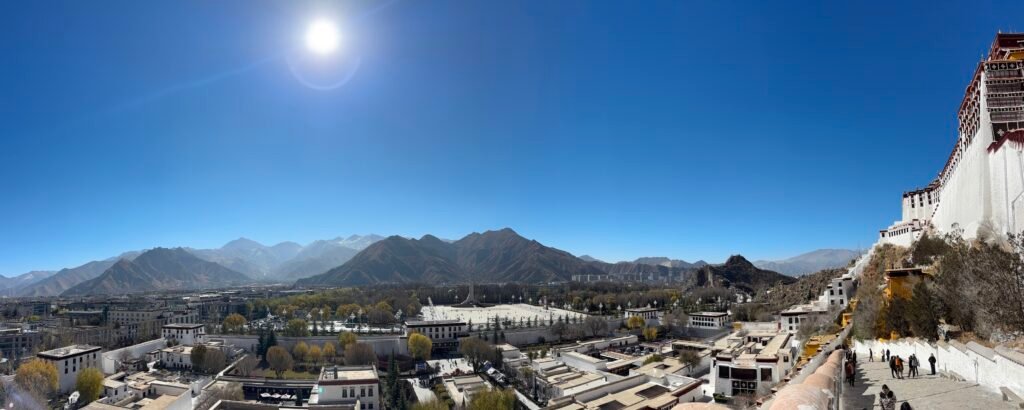
Many Tibetans circumambulate around it on a flat and easy walk from the sunny South to the shadowed North face of the rock hill it sits upon. Pema says that locals can enter the palace itself for free but there is still much security that must be endured, including facial recognition captures, and that may deter local people from making the climb more than once. Bill and I have been concerned whether we could make it, given our aging bodies and oxygen-deprived muscles, but slowly and carefully we make our way to the top. There are beautiful views over the city as we ascend and wind back and forth toward the top level.
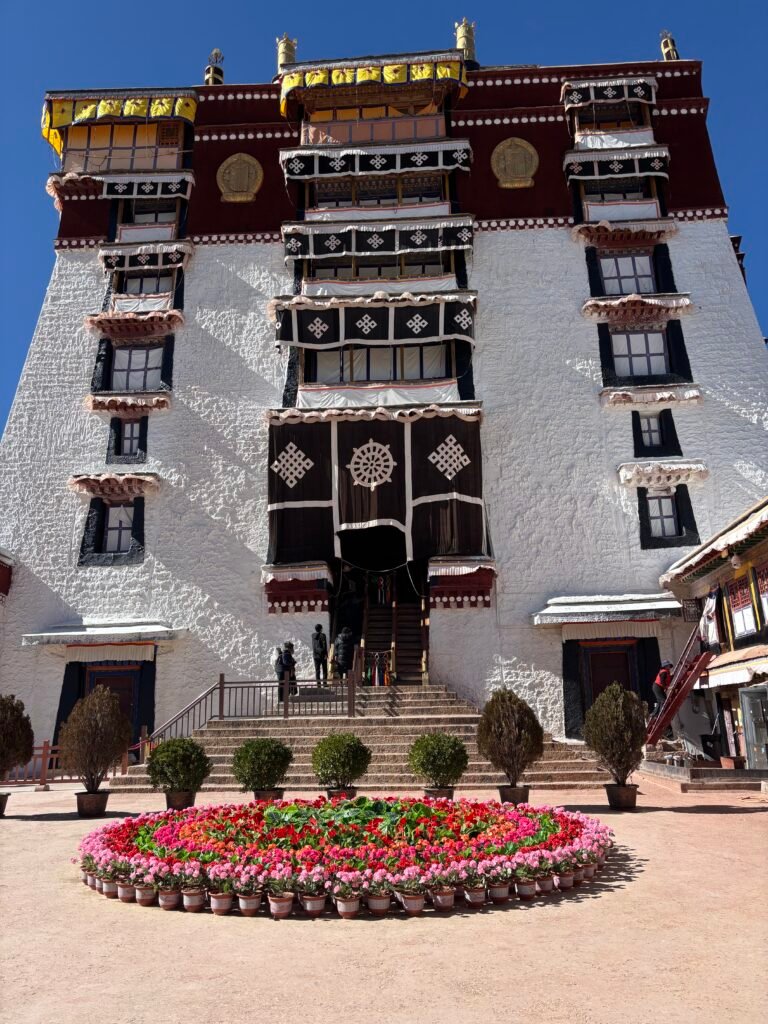
Near the top, we are at a beautiful court yard called Deyang from which the the tour options diverge. No photos are allowed inside unfortunately so my brief words will have to do. We continue on Tour 1 which takes us further up, climbing several more levels via indoor wooden ladder stairs, steep and narrow, but there are some side rails on which to hang on. Here are the personal living and prayer rooms for the 17th century 5th Dalai Lama which has been preserved and which, I assume, subsequent Dalai Lamas also used. I couldn’t help thinking about the present fourteenth Dalai Lama when brought to this mighty palace as a child, scampering up and down these stairs. Inside are incredibly beautiful Buddhist statues and thanka paintings used for meditation and prayers, carpets and fabric decorations. Living in such an environment, one would be saturated with the primary colors of life. It is a very intense visual experience.
We pass through visiting room for those who came to see the Dalai Lama who was not only the religious head of the Gelugpa school but the governmental head for many centuries. And then we enter great rooms of gold and silver statues and exquisite finely built Kalachakra filigree mandalas representing the wheel of time and path to enlightenment.
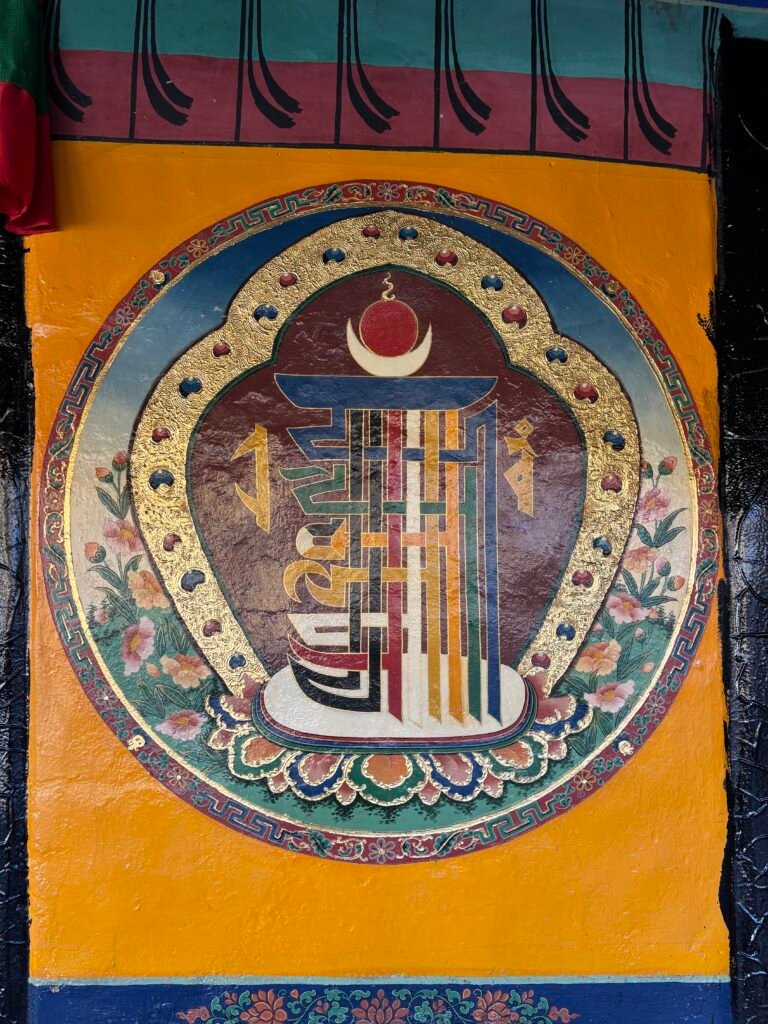
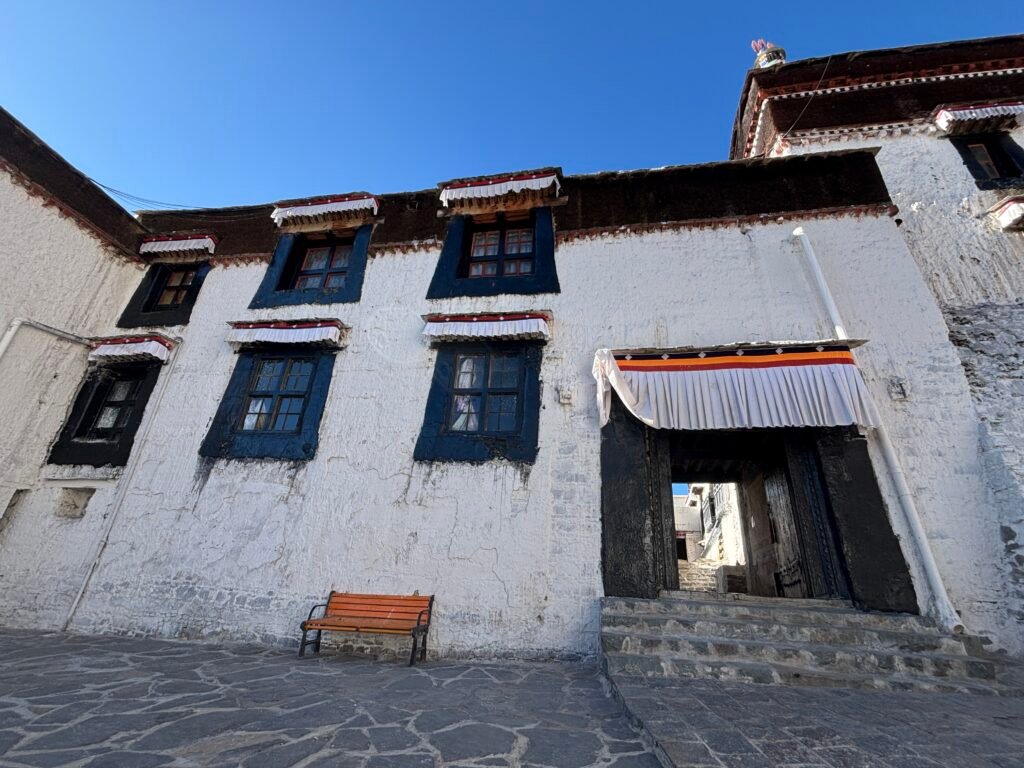
When the Chinese military entered Lhasa in 1959 and the destruction and pillage of Buddhist sites followed, it is said that Premier Zhao En Lai directed that the Potala be left intact and protected. So it retains its original decorations and artifacts which have been preserved and maintained as a national treasure. Every autumn the outside is repainted with a special white paint by pouring it down the steep sides, resulting in some messy splashes on the bottom. The black window frames are also often repainted and also look a bit messy, not only here but at other monasteries.
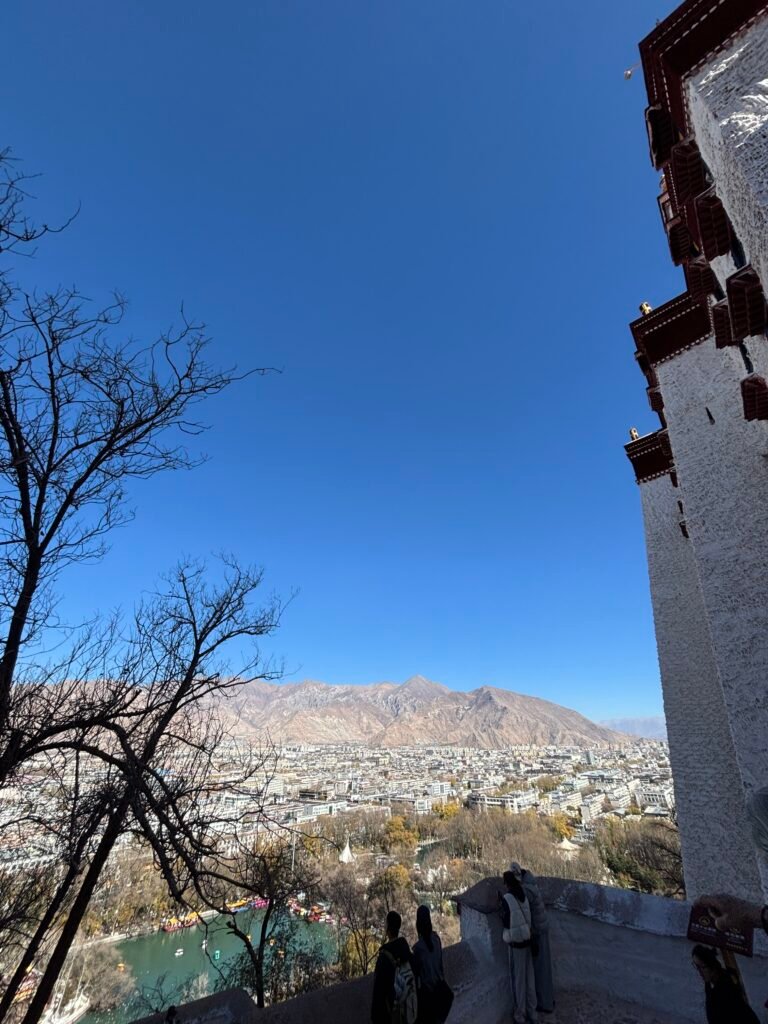
Our descent is down the stairs and paths on the back side of the Potala Palace, and we see another vista from this North side. I am glad when I get to the bottom and can walk again on a level path although with shaky legs.
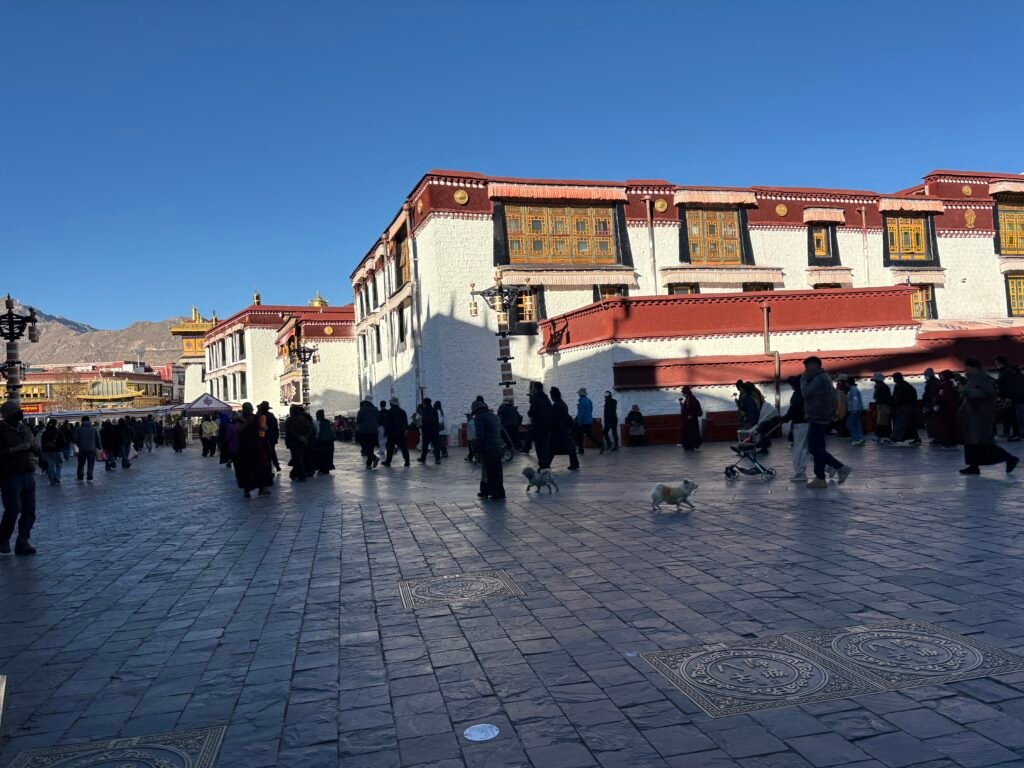
Still totally filled with the sights, sounds and smells of our experience at the Potala Palace, after lunch at a vegetarian restaurant (mainly existing to serve the visiting vegetarians from India) we walk to the Jokhang Monastery in the center of Lhasa. This monastery is considered the religious center of the Gelugpa (yellow hat) tradition. When we approach we see a cordoned off area outside in front of the building in which many people, Tibetan men and women, were doing full prostrations toward the main prayer hall. Pema tells me that many people take a vow to do 100,000 prostrations here in their lives and they break the task up into manageable units and come here every day or when possible.
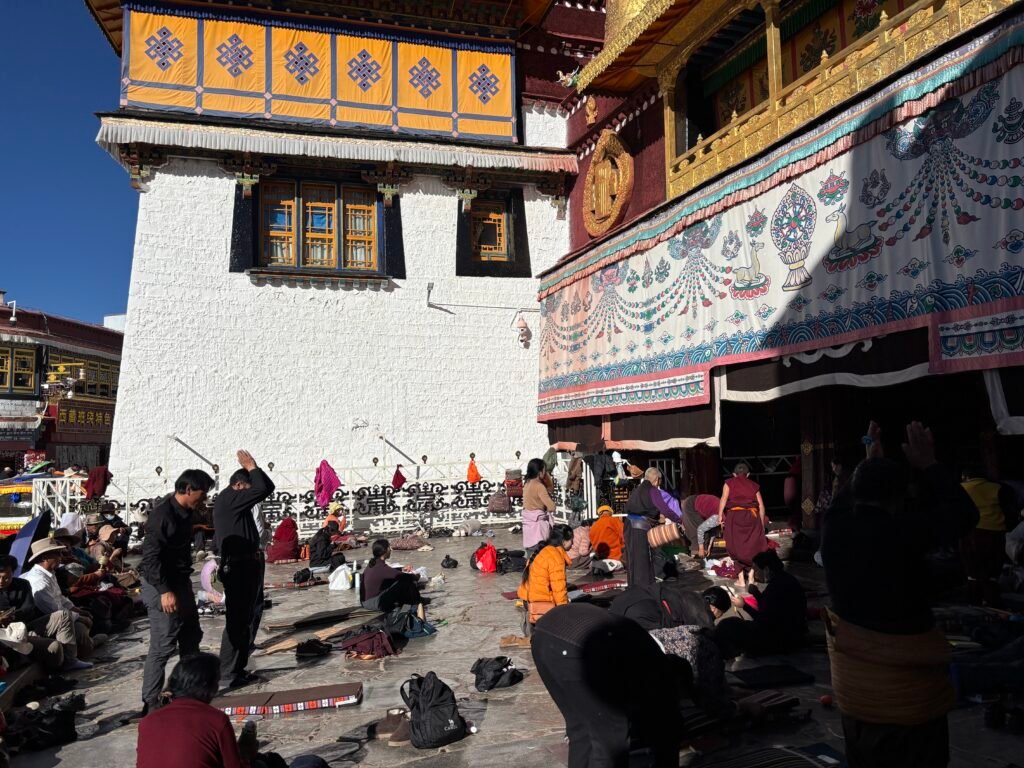
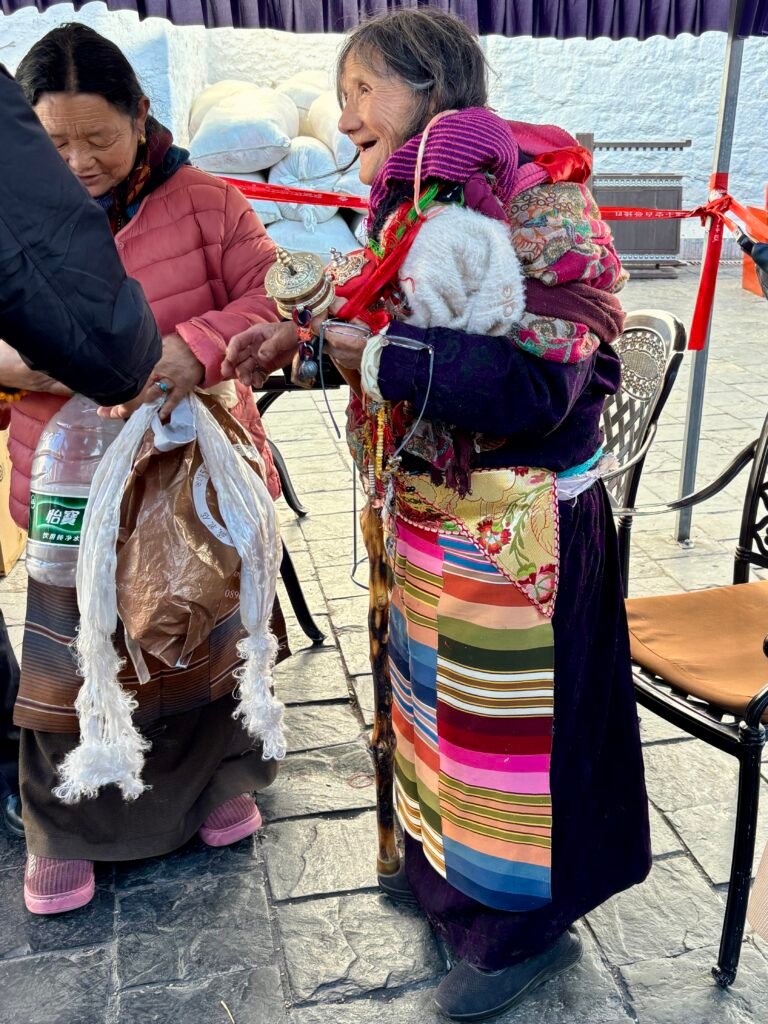
I imagine the winter weather deters even the most devout from outdoor prostrations on many days. And they must still pass through a security gate to gain entrance to this permitted area for this practice. I see an older woman interacting with one of the security guards while her friend’s bottle of liquid is being checked.
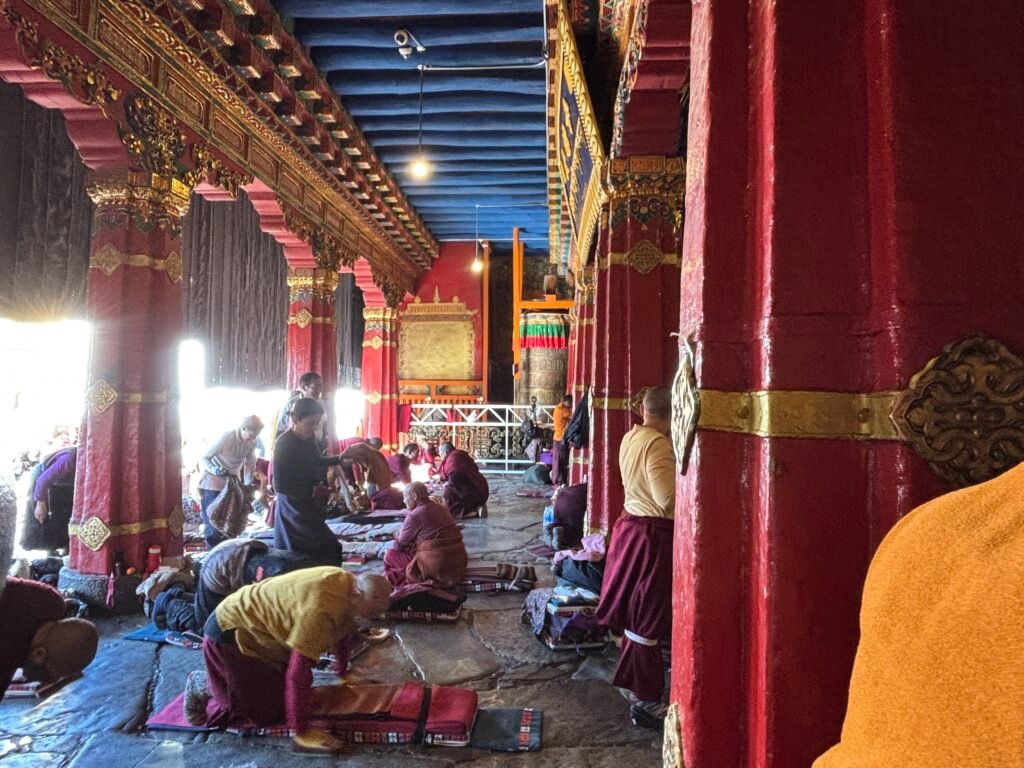
We get through the waiting entry line to the monastery itself, with no other non-local visitors in sight, with Pema providing a reservation slip and a fee as well as our passports and facial recognition. Inside there is a main prayer hall with 24 attached small chapels each containing 5-9 large status of various groups of the great dieties: Avalaoteshvara Maitreya Tsongkhapa, Amitabha, 8 Medicine Buddhas, Padmasambhava, plus others. Only one chapel has original art as all except 8 statues of the Tibetan Kings were destroyed during the cultural revolution and reimagined in the 1980’s with similar imagery and fairly similar appearances. The highlight of all of these, in a special place of veneration, is an ancient gold statue representing Shakyamuni Buddha when he was 12 years old brought from China. It is said 3 statues of Buddha at different ages were brought here by the 3 wives of one of the great Tibetan and Chinese kings of long ago but only this one remains. It is hard to see the details of this image, secured in a distant niche and covered with decorations.
Throughout this monastery of about 100 permitted monks, there are sitting areas in corners where one or two monks sit continually chanting with a pile of donated bills in front of them. They are all older men and I wonder if there will be another generation who will be sufficiently educated and devout to replace them. There are said to be about 30 monks as caretakers in the Potala Palace and all monks throughout Tibet must take a vow of allegiance to the Chinese Government.
I understand that the day we leave Tibet there will be a large annual festival, the Tibetan Women’s Festival in honor of the goddess Palden Llhamo, that takes place at the Jokhang, with long lines and many people. The police are already getting ready to set up control lines for this event and Pema tells me it will take 8 hours of waiting to get in. He says there is dancing and religious rituals that will take place. It is obviously part of the bifurcated culture of Lhasa as I asked someone who spoke some English at a nearby store about getting ready for the festival but she was Chinese and did not even know it would happen.
Tomorrow we leave by car for two days driving through the countryside visiting Gyantsey and Shigatse before returning to Lhasa. Bill and are are exhausted but glad we were able to experience these exceptional religious sites.