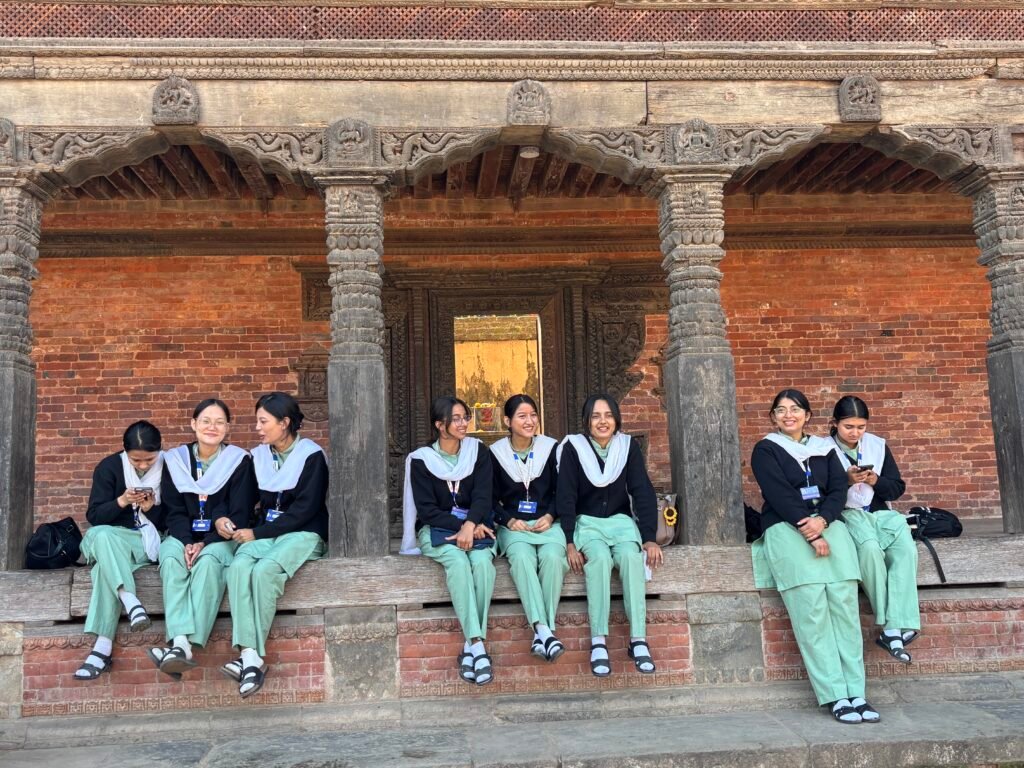
I am grateful it is a new day at the Namo Buddha Resort and that I did not fall during the night in my cabin – it is a continual exercise in attention as getting distracted could easily result in a slip over the many strange irregular steps inside and outside in this beautiful place.
Meditation and writing and then the group leaves for the Namo Buddha Monastery to attend their morning puja ritual, the only time the monks let visitors into their space. James leads us down a path and through a forest and up to the temple area, a large splendid building complex on the hillside overlooking the valley which contains a significant Buddhist history.
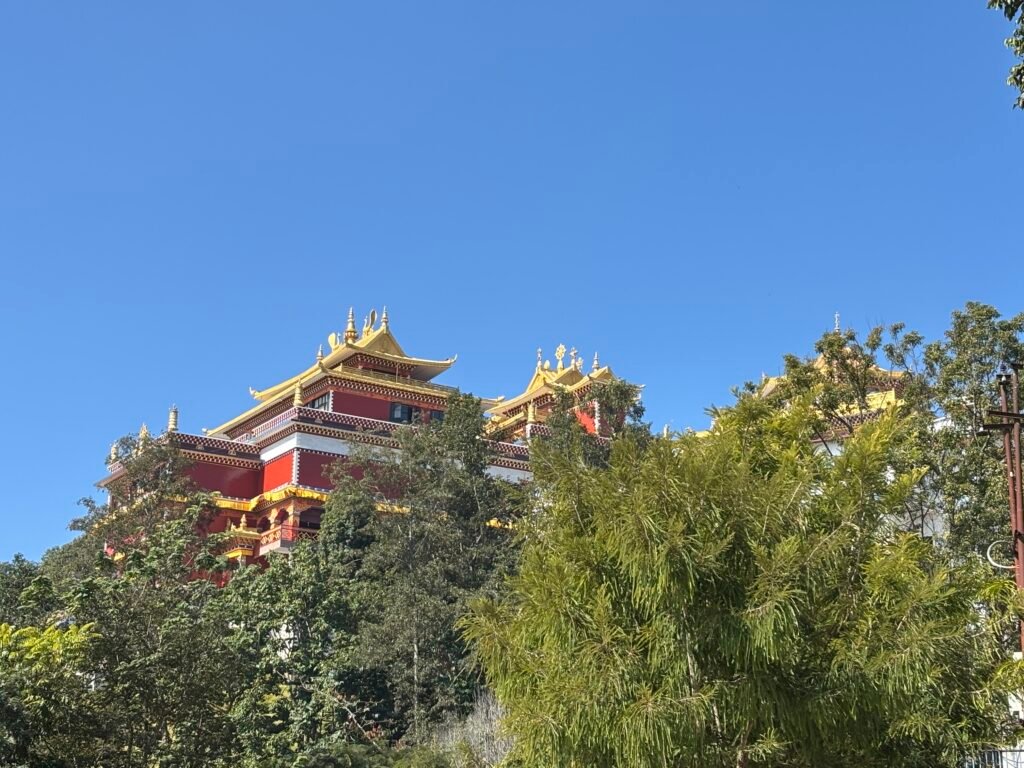
In summary, as written in the Jataka Tales about Buddha, a prince lived nearby and found a starving mother tiger who had just given birth to a number of cubs and was too exhausted to hunt and was dying So the prince in deep compassion offered his body to her, cutting himself so his blood would revive her although recognizing he would then be eaten. His parents found his bones and built a small stupa in his memory. Gautama Buddha many hundreds of years later visited this venerated site and declared he was the reincarnation of this prince and thereafter a much larger stupa was created as well as eventually a monastery. In its most recent form, this temple was revitalized by donors and was rebuilt and rededicated in 2008 and is a good example of new construction built on old principles and design. This monastery honors the story of the prince’s sacrifice with tigers as its motif and statues of a mother tiger and 4 cubs in a courtyard.
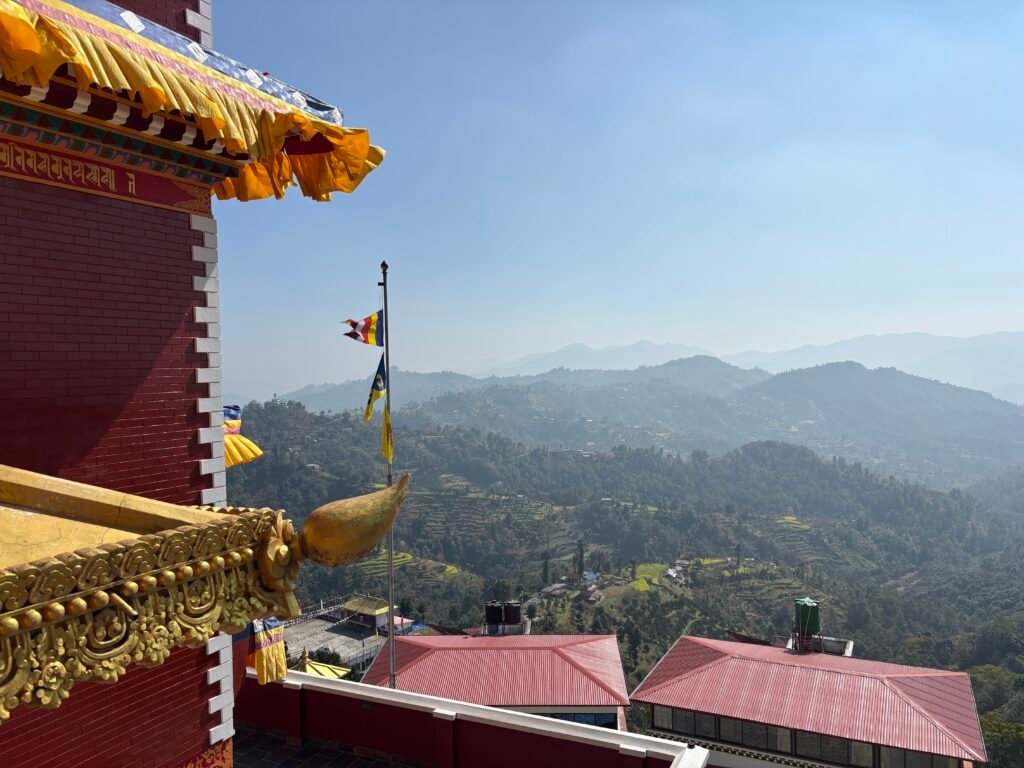
The main altar hall was filled with monks, visitors both local and international, and loud gongs and horns on top of the ritual chanting. There was a busload of Tibetans on a pilgrimage who journeyed from over the China border, deeply religious, traditionally dressed and stopping in front of each monk in the hall, from young to old, to donate some money to each of them. After the morning service ended, I saw a number of young monklets, happy and grinning with chips and snacks in their hands and I understood where some of those donated funds had been used.
The weather was beautiful when I walked with our group back to the resort. I passed by some small shops on the bottom level of homes set up to furnish visiting pilgrims with some food and drink. There was police presence at the main intersection of the roads where there was a government ticket collection point for visitors but, like elsewhere in Nepal, those in uniform were happy to talk and pose for photos and felt very non-threatening.
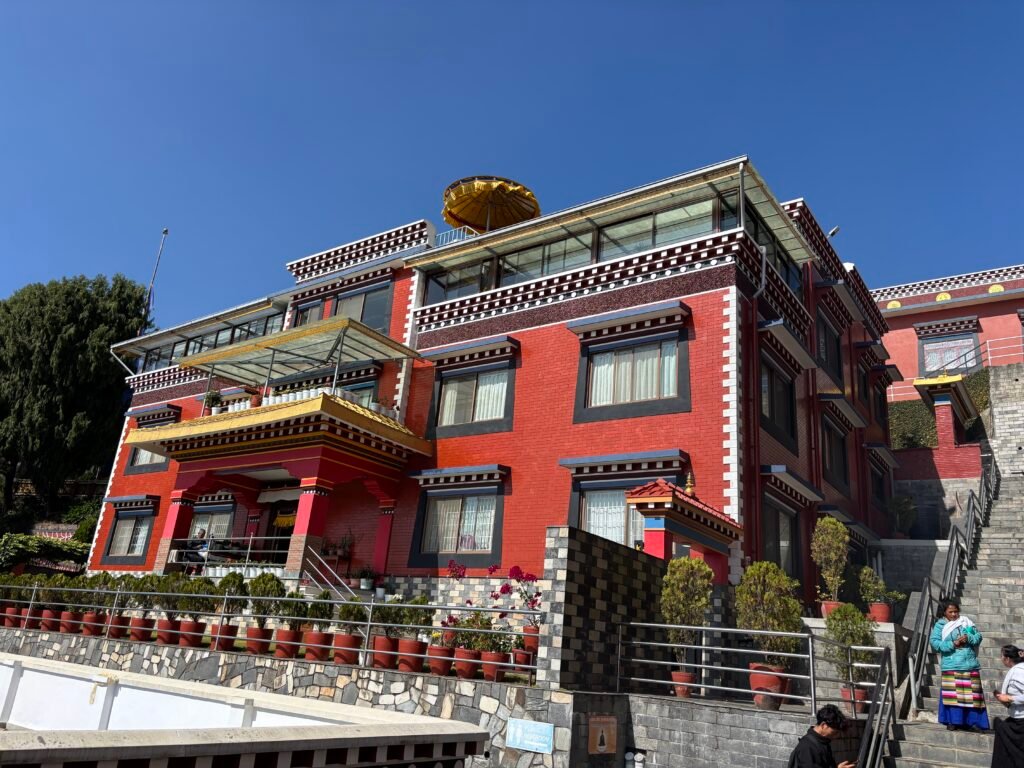
We meditate the next morning, our last time all together, in the beautiful upper level space with shining wood, light, and very comfortable seating before another memorable breakfast (they have been making oatmeal for Bill and me in the mornings while the others have made-to-order omelettes and pancakes). And then we drive back to Kathmandu.
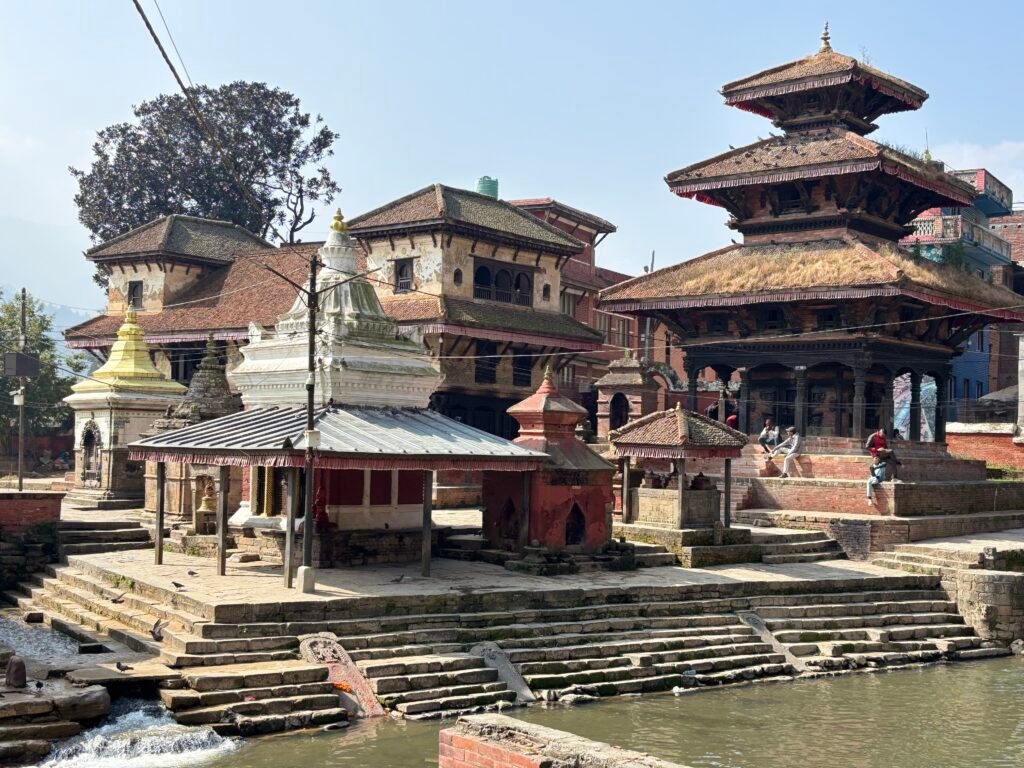
I had read about an old traditional village area called Panauti on our route and asked if we could stop briefly to visit it. It turned out to be a collection of old traditional temples including a burning ghat on the river bank where a cremation was going on.
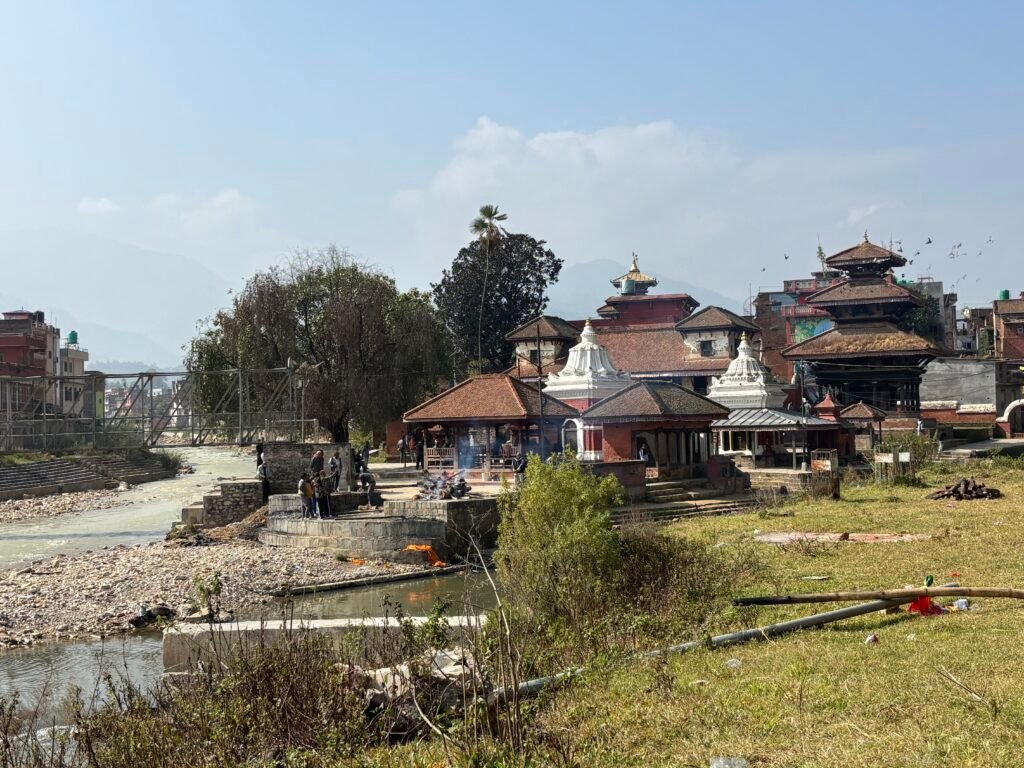
Bidur showed us the difference in mortar techniques between two adjacent plain brick rectangular buildings, an older one built with beveled bricks so the mortar was inside not outside and the newer form with mortar between bricks which has proved to not last as long as the older, but probably more expensive technique. Bill, of course, was especially interested. There was a separate Buddhist place by the river for cremation. As I have heard many times here, the distinction between Hindu and Buddhist here is hair-thin but I assume those who consider themselves Buddhist first would prefer a death ritual in line with those beliefs.
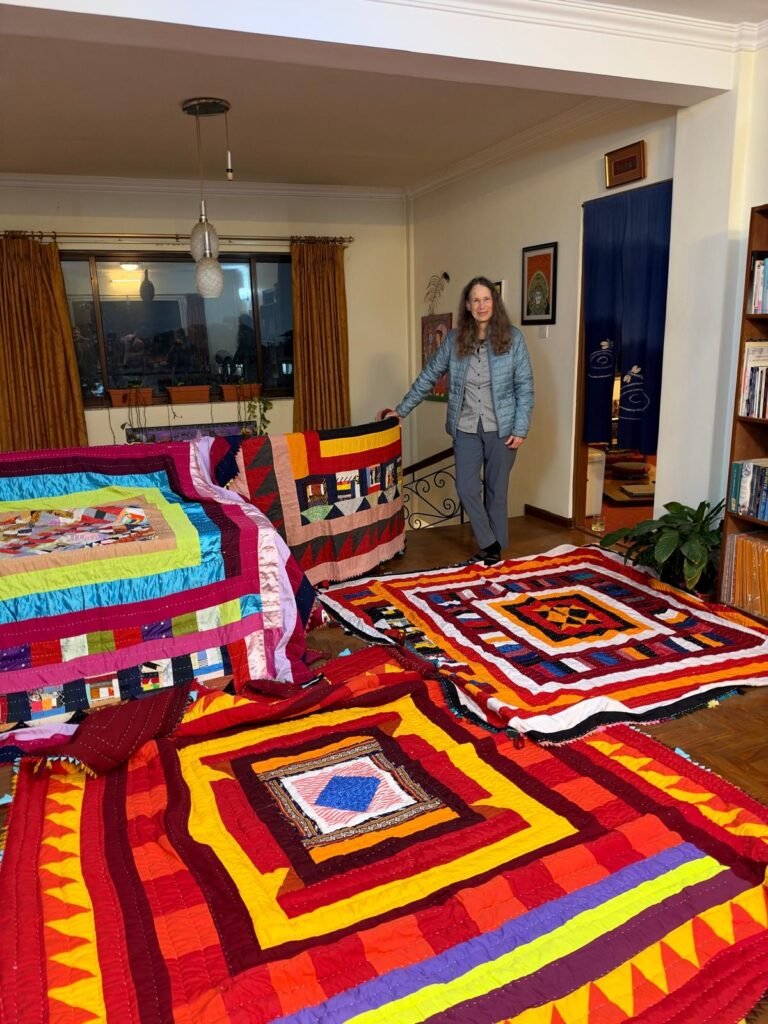
Back in Kathmandu, we all go to James’ apartment for a final farewell dinner together, catered by chefs trained by one of the many groups James knows who assist those in need due to physical challenges. In addition, James invited some of the girls we had earlier met at the Beggar’s Camp who had benefitted from the Quilts for Kids Project — and who brought with them some of the newly made quilts which some of us bought — so we will be supporting 6 girls in school for one year. If you are interested in finding out more about this project, here is the link: https://quiltsforkidsproject.com/
I spoke to Shova, the nursing student, and learned from her that it is the government nursing jobs that are most sought after here as they pay 3-4 times more than working for a private hospital or clinic and provide more security. But those jobs are often given to those with connections over ability even though testing is said to be the standard for the application process. Later James told all of us that after graduating with honors from the Nepal private nursing school, Shova was told that because she was not a Nepali citizen but was Indian (her parents emigrated from India), she could not be granted a license to work in Nepal (even though, as James pointed out, the school was happy to take the tuition money from the non-profit organization.) And she found out if she went to India and took their boards, she could not get certified because she trained in Nepal! Catch-22. But she is still determined to become a nurse – with the courage and perseverance that few of us have.
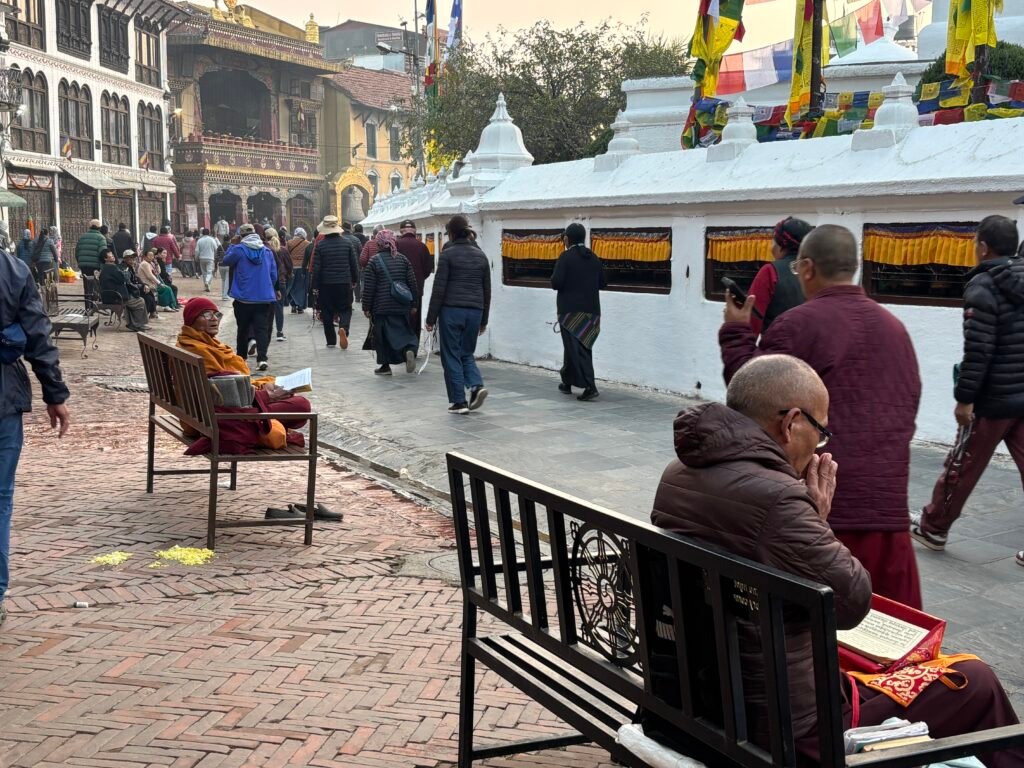
On my last morning in Kathmandu, I head at 6 am by myself to the Kora around the Stupa, walking around a few times watching my breath but the last time dedicated to sharply observing what was going on around me. That included the many devoted Buddhists, up early before work or before attending to others, with mala beads clicking behind them, most men and women in traditional Tibetan dress, older women with canes, young people in pants and sweatshirts walking briskly around, a few men sitting by themselves with prayer books intoning out loud words that have been spoken for two thousand years. Altars in niches around the circle with people stopping and praying, lighting incense and votive candles. It is both solemn and devotional and a personal expression of hope for the future.
Bill and I decide to spend our last day in Nepal visiting the UNESCO World Heritage City of Bhaktapur, once one of the 3 major kingdoms in the area. So we arranged for Bidur to pick us up and we drive and walk up into another world – 16th-18th century temples and palaces. These were once the enclosures of the royal elite and are now preserved but being fully used by the locals with restaurants and shops in every available space. It is very much a living and active city.
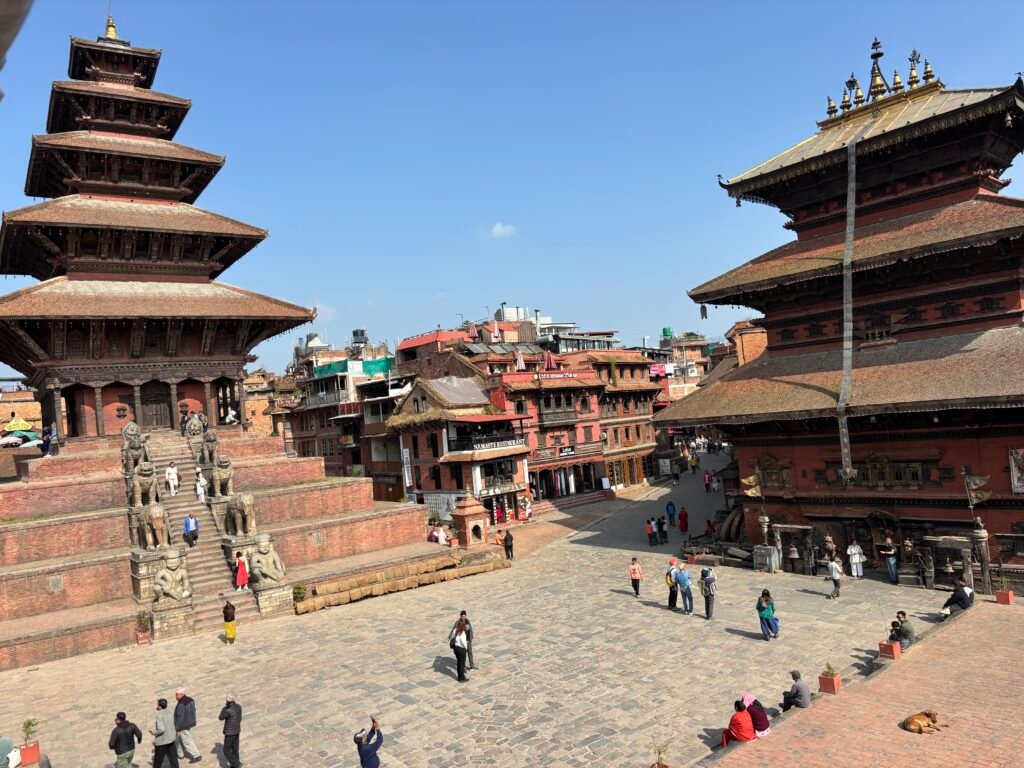
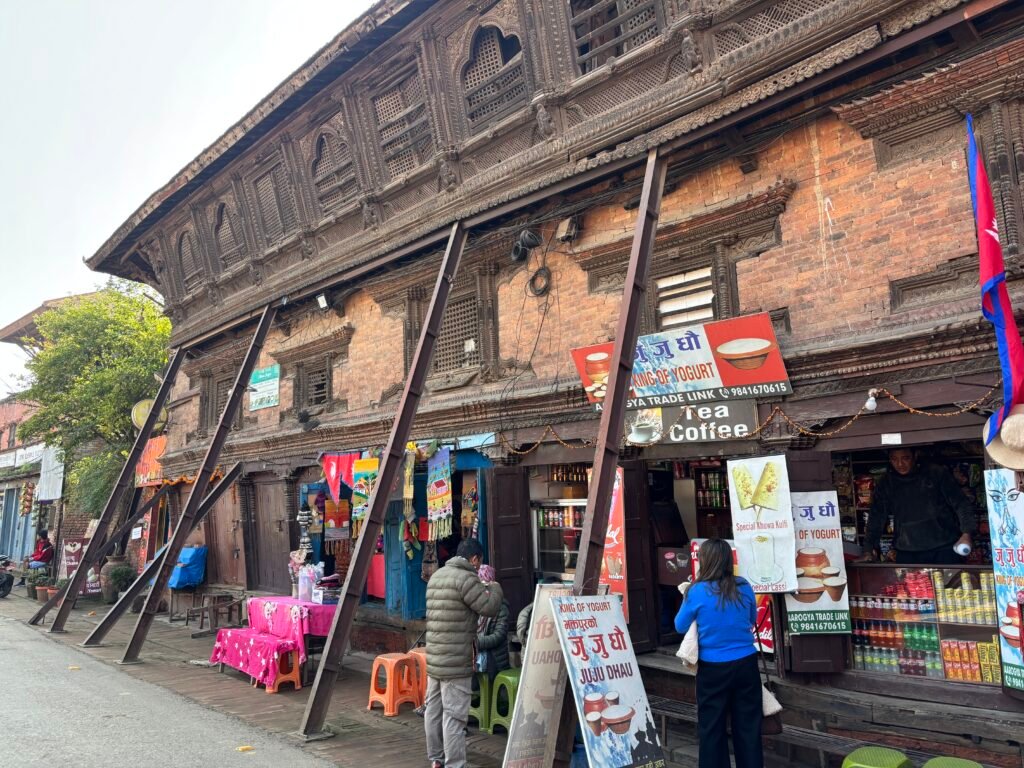
The 2015 earthquake damaged many buildings which are shored up with the same hard sal wood used for the intricately carved window and door frames. Rebuilding is still under way. Because wood decomposes fairly quickly over time, artisans have continually been trained in the art of fine carving which is now necessary as building laws here for re-construction require matching new trim to the original to the extent possible.
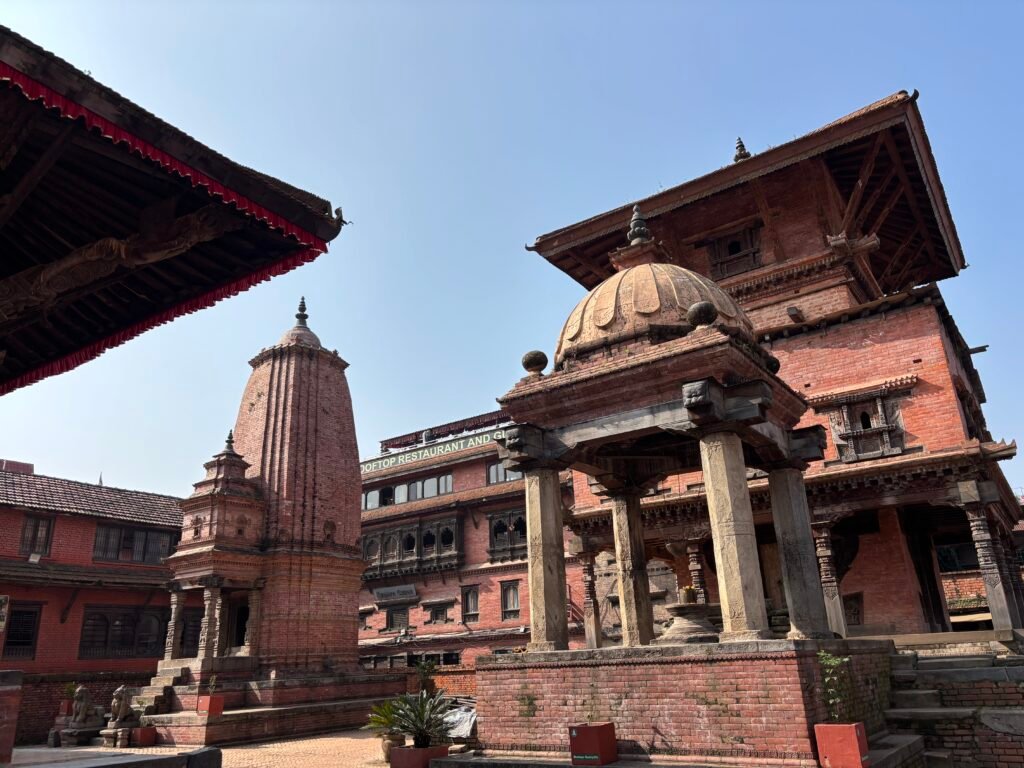
Bidur spends a good deal of time explaining the details of the various architectural styles to us, Shikara, Pagoda/Tiered Roof and Stupa, all within the same small central area. Bill and I are enthralled by the details. Lunch overlooking one of the many squares surrounded by these old structures and we head back mid-afternoon for a final dinner at Utpala Cafe before packing and getting ready to leave at 5:30 for Tibet the next morning.
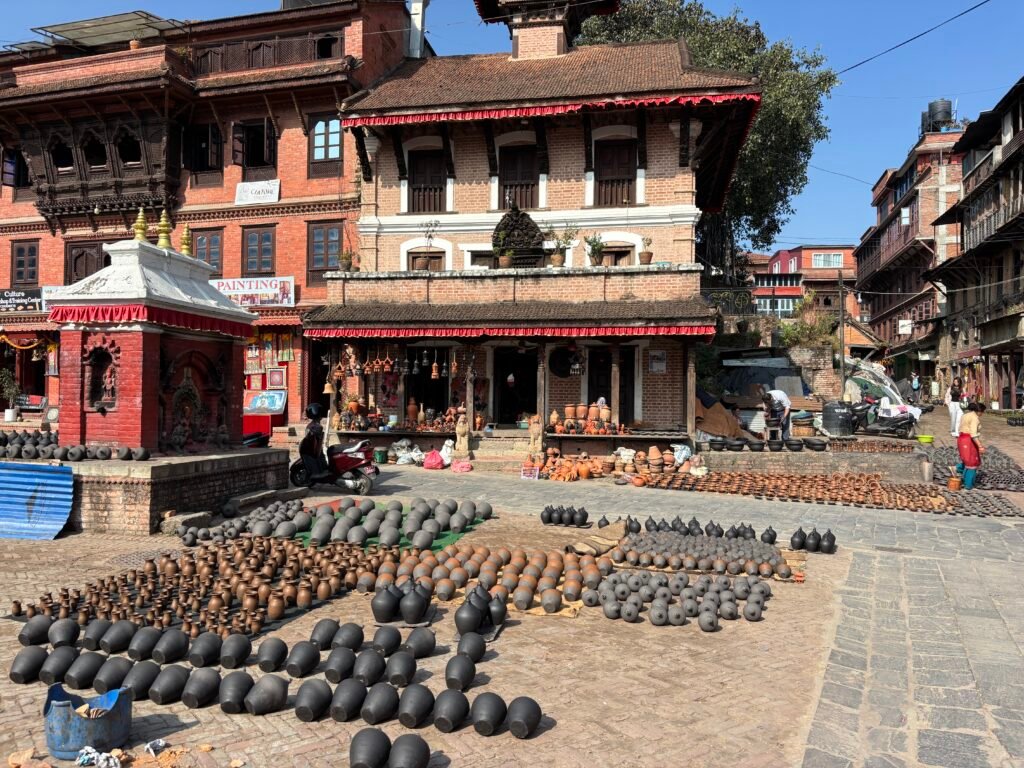
Our time in Nepal has been meaningful for me and I think for everyone in our writing group. I expected 10 days of laid back writing directed by Laurie with one hour of meditation to start the day and a few local excursions. Instead, it was a deep immersion into Nepali culture and Vajrayana Buddhist life, led by James, as well as very deep and personal written expression and sharing, led by Laurie. A truly wonderful experience.