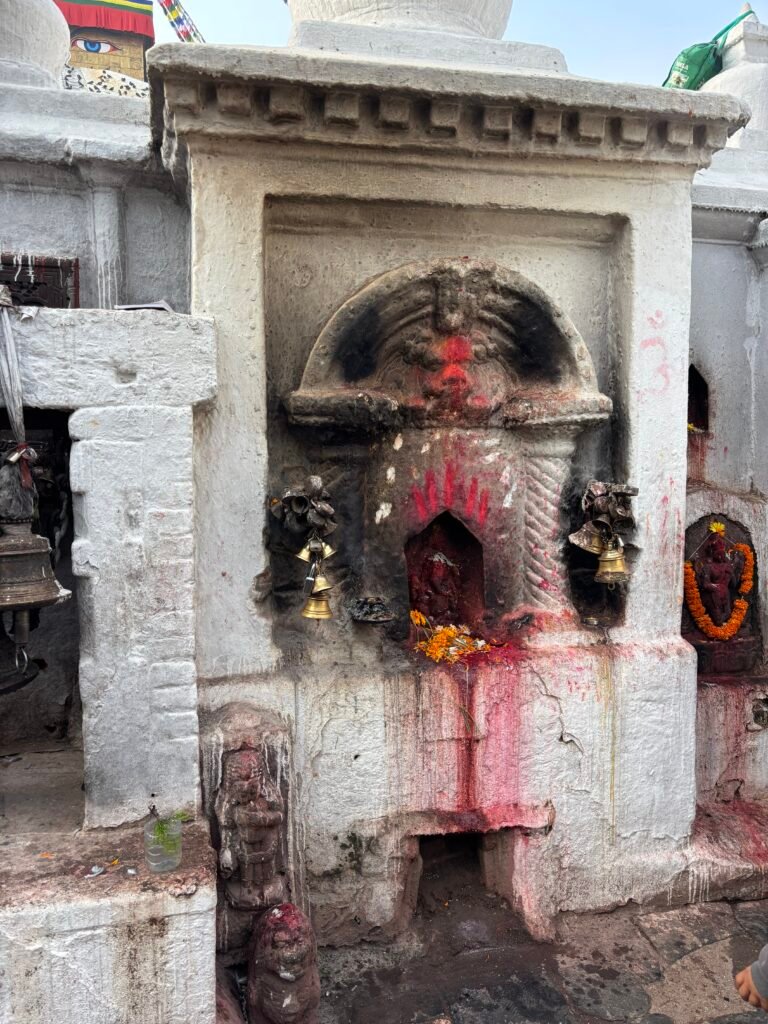
We wake up for our last morning in Boudhanath, wrap up for the cool morning and head for the Stupa to begin our walk-in meditation practice. With smell as a point of attention this morning, I inhale the various incense odors as we walk ]as well as the smell of the clothing of the people we meet, a very local scent I can not identify.
In the Tamang monastery across from the stupa for the last time, I appreciate the strength of the daily practice with the young ones slowly learning all the parts of the ritual, when to clap, when to chant, when to move and when to turn the page on the beautiful long rectangular prayer books lying in front of them. This morning, I realize there is a separate room to the side of the main alter where a single older monk is reciting and occasionally using a large drum and gong separate from the sounds from the other monks in the large hall.. He is, I think, accepting requests from individuals who stop by for a special prayer – older people go in, stay a short while, and then bow out.
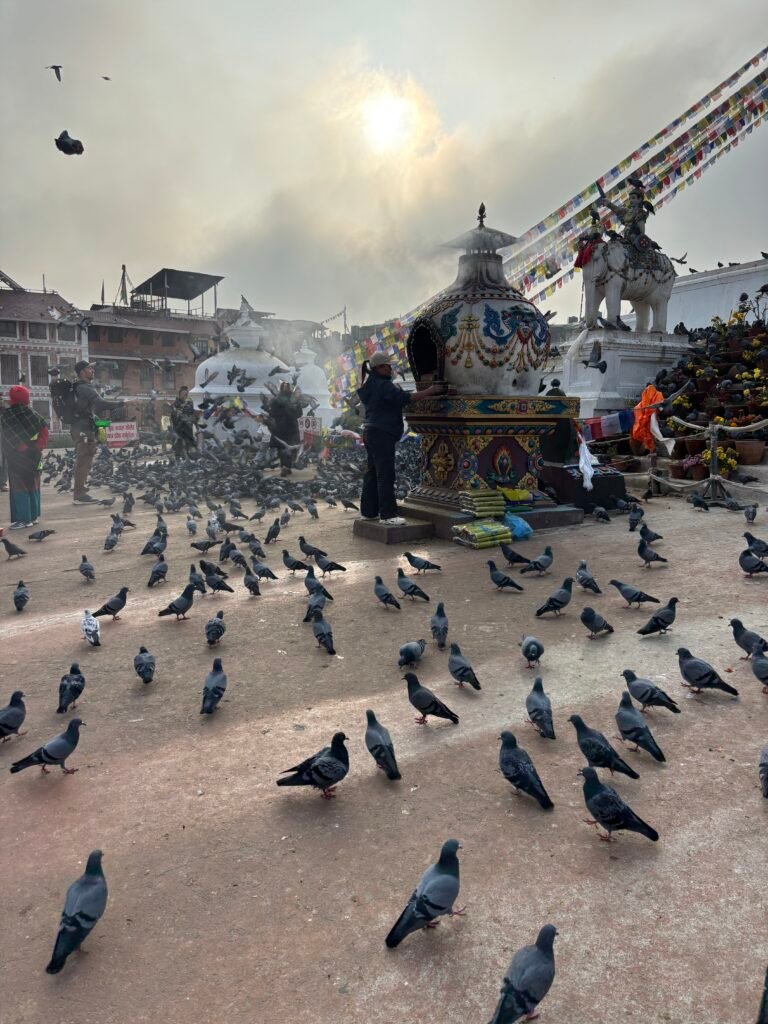
As a final act around Boudhanath, James brings us up the stupa steps to where people are feeding huge flocks of pigeons, trays of corn in their hands as they scatter the food on the ground. An act of compassion but perhaps creating a nuisance from the bird droppings and pigeons can be a health hazard.
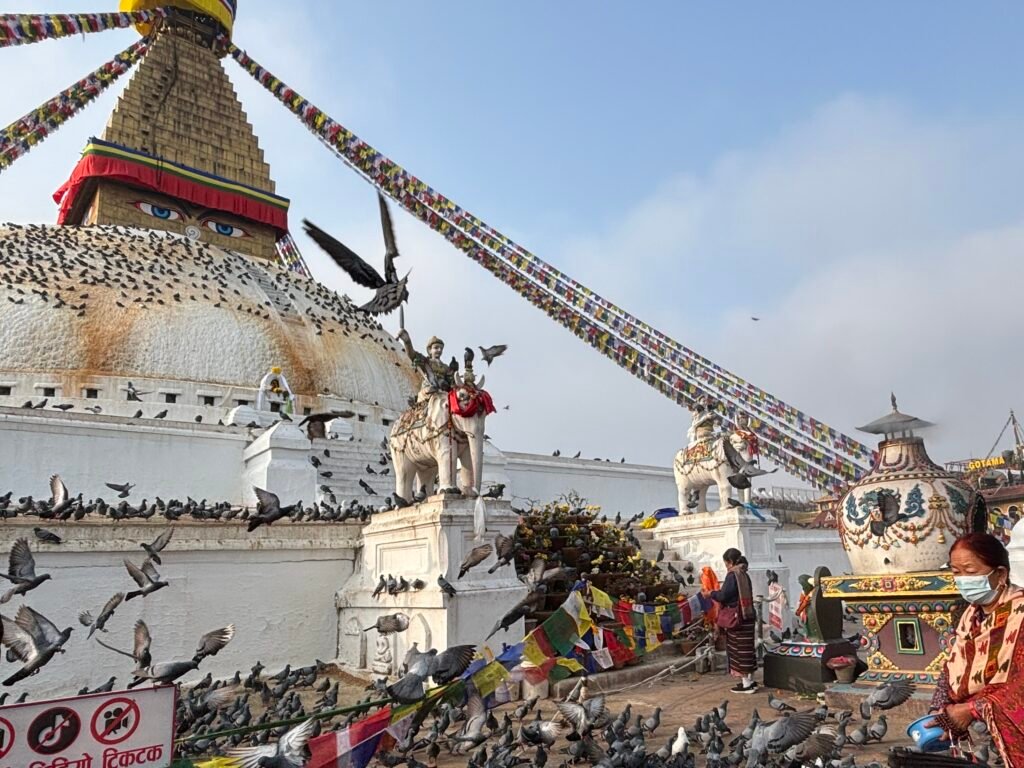
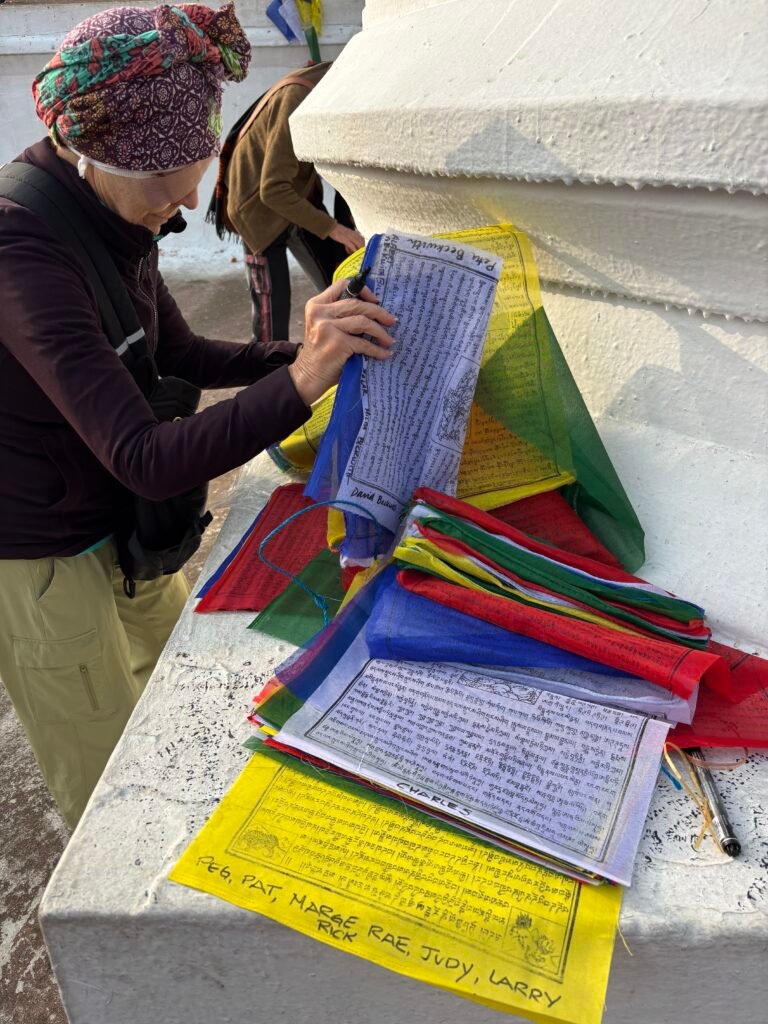
Nearby there are some men who arrange to hoist your own prayer flags, blue, white, yellow, red, green, up to the top of the stupa. We are given indelible pens to write the names of our loved ones, those here and those gone, on the bottom of the flags so our wishes will fly up into the sky and perhaps be received in spirit. We hold them in our hands for a few minutes and say some prayers and then send them off. They will later be raised up among the four long lines of flags reaching from the bottom to the top of the stupa. They will remain up for a few days and grace this beautiful historical relic until replaced by the wishes of others.
After our wonderful morning writing session, we leave our hotel and travel in a van together to our next destination, the Namo Buddha Resort near the Namo Buddha Monastery which is about 26 miles away and is scheduled to take 1.5 hours. But we encounter significant road reconstruction as we pass through one of the main towns along the route. The road almost the entire length of the town is dug up and has been in this process for already several years. The buildings in the center of this town are 6-10 stories high, covered with layers of dust from construction, some modern glass and some more traditional concrete, all looking as if they could be targets for demolition as they appear in such poor condition. Maybe when the road is finished and the buildings can be cleaned or if the great monsoons rains take care of the issue, it will look more like a living city. For now it looks like a deserted urban landscape although in fact, the small restaurants and office buildings are still functioning. After we are through this very rough bumpy area of road work, we start up the mountain and wind our way on a very curvy road. This road is in good condition because a high-end Dusit Thani Hotel has recently been built in the area which means it pays to keep the road manageable for high-paying guests.
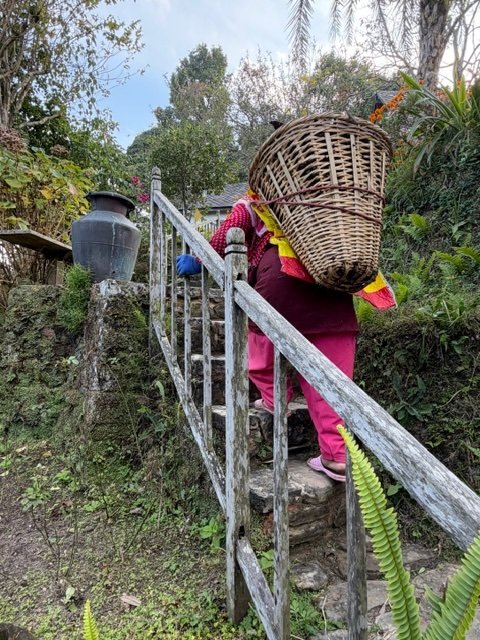
We find upon arrival a very rustic set of cabins built by a German couple with some additional community members as a self-sustaining organic farm, wood cabins built in the indigenous Newari style with unusual slate roofs, most of them 2 story with the sleeping quarters upstairs via wood ladders and a bathroom downstairs. The slate walkways are very rough and uneven and it is a large challenge for me to negotiate some of the steps as, although there are old wood banisters that don’t seem very steady along many of the stairs, there are some without. The stairs themselves can differ greatly in height and width. The cabin I am assigned is quite a distance down the hill and does not work for me at all as the only bed is up a ladder stair without a banister and it is far too risky for me to attempt this knowing I will need to get up once or twice in the dark in the middle of the night. So I am changed to another cabin, half its size and without a shower or even anywhere to sit as the upstairs loft bed is re-arranged for me in the sitting area downstairs. But it is comfortable and warm.
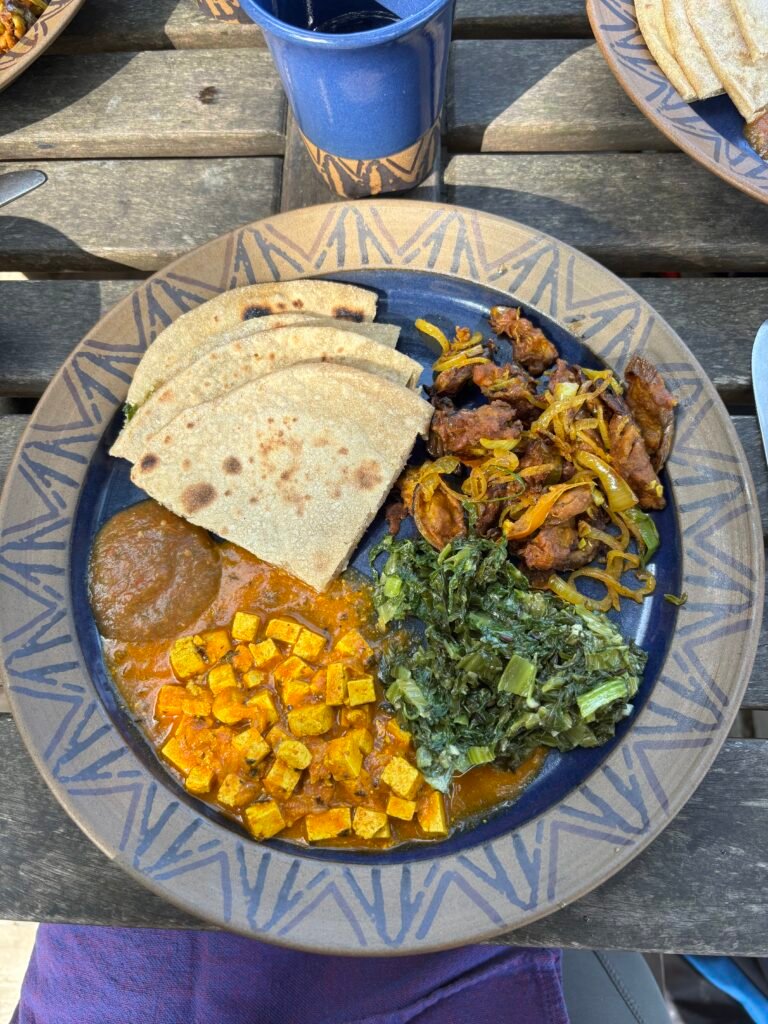
The food here, all vegetarian, is wonderful – the vegetables are organically grown here on their land and the 3 prepared meals a day are excellent, definitely the best we have had in Nepal and this food is a reason that local people keep coming back again and again. Special vegan low-salt options were very kindly prepared for me for which I was very grateful.
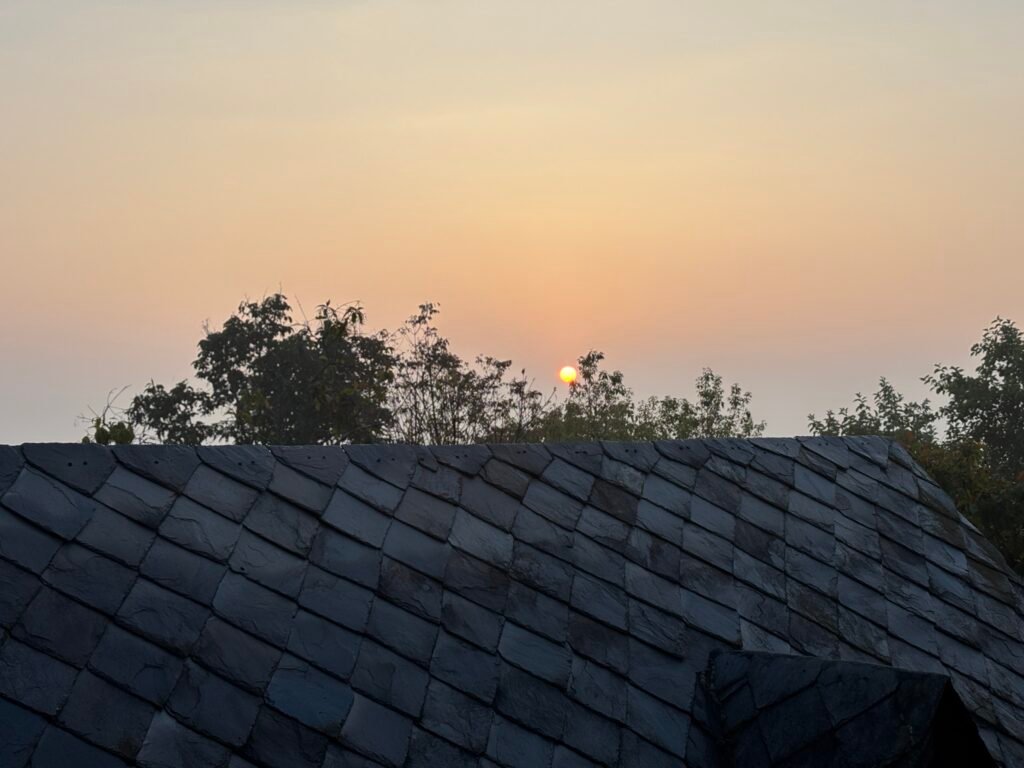
In the morning we meet at 6:15 to watch the sunrise in the East, casting a pink glow on the high mountains to the North. It is a true sunrise coming over the mountains, coming out of the mist, like the savior of us all that it is. Meditation is in a separate building where we sit together upstairs and James leads us there through several practices. Breakfast on a table outside under an old fig tree and then Wild Writing which pulls us into ourselves and out of ourselves.
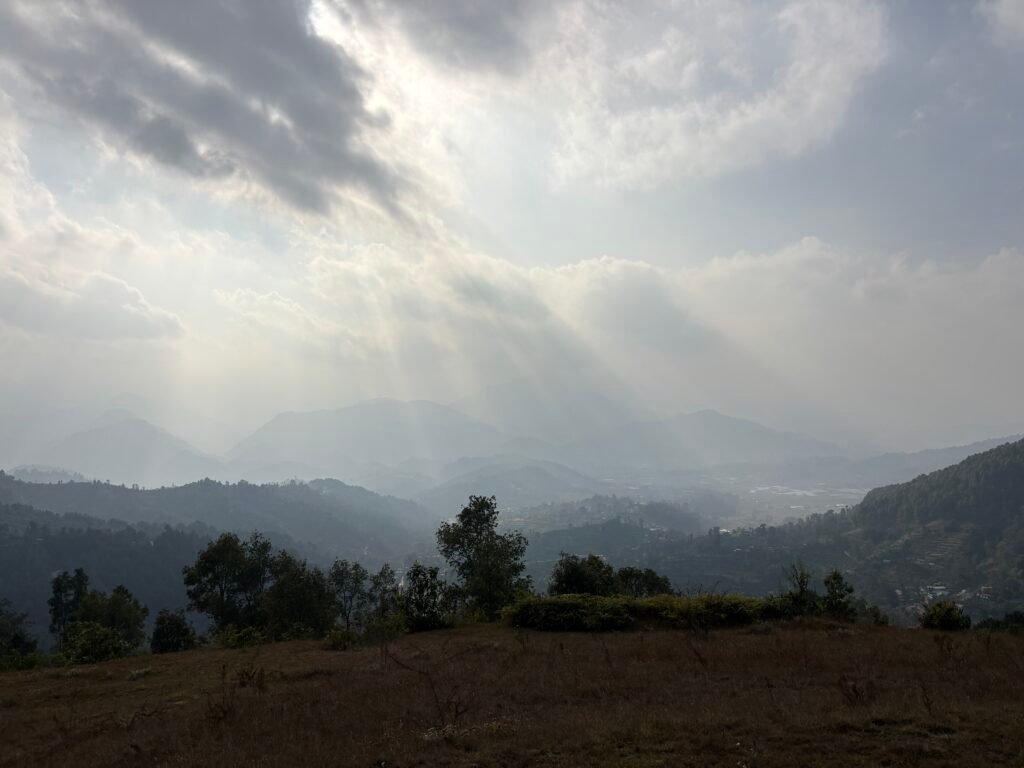
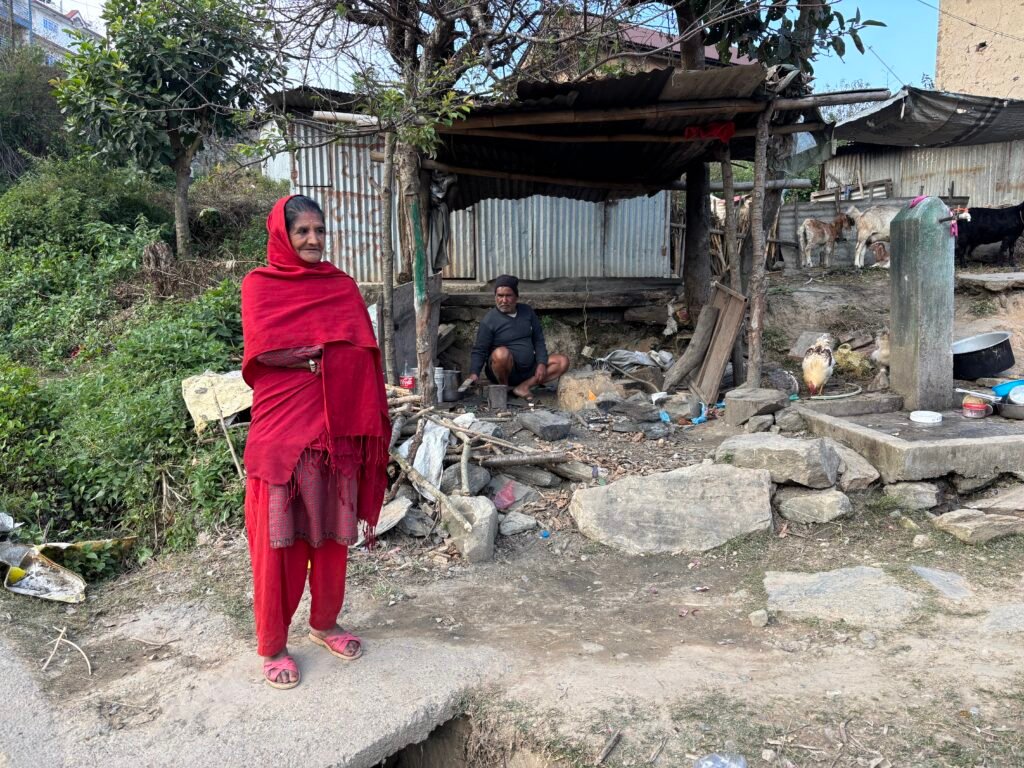
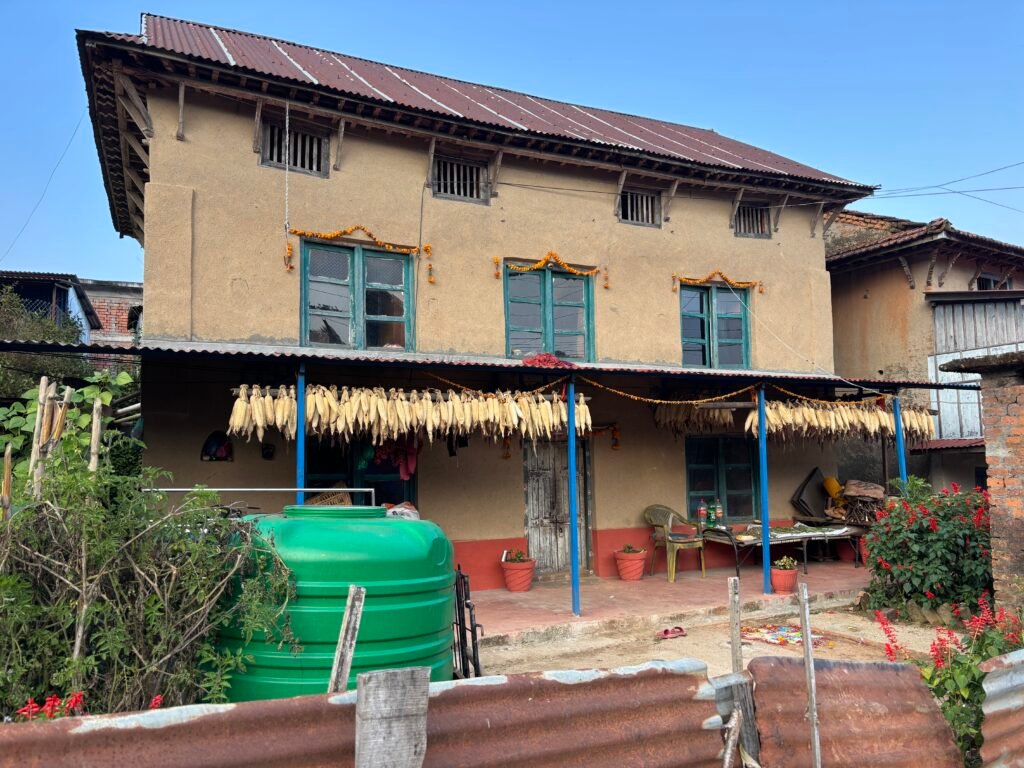
After a wonderful lunch (carrot Halvah for dessert), 3 of us, including Bill and myself, and James go on a guided walk for 2 hours. We walk through the local forest, then into the fields with expansive views over the valley, and then into the small local village before we return to our resort home. We were told by our guide who grew up near here that he had to walk 1.5 hours each way to get to school. Now there is a local school and we even see a new bright yellow school bus drive by and there is a big soccer field for the kids who are actively using it on this Sunday. James and the guide also remark that the paved road now makes a big difference as well.
I note that garbage is an issue even in this remote place. People routinely throw their garbage on the ground and out windows. On this walk, we run across piles of plastic cups and food wrappers which have been thrown on the ground by the local picnickers who come up here to enjoy the beautiful peaceful scenery. There are no public garbage bins so people would need to start carrying bags to carry their garbage out. It does not seem to be a concern here although as visitors, it is a little painful to see the disregard for the environment.
Very tired, it is one week since my arrival here and now, as I have experienced in the past, I finally get my first full nights sleep.