
Early morning in Assam, India. The fog is lifting over the green fields of tea. The caw of various birds is loud as the sun rises red through the slightly smoky sky. I can hear the clang of buckets as water is used for morning rituals and cooking. An approaching train whistles nearby. For me it is all a comforting sound as I recognize that although the world is now falling apart for many people in many nations, there still remains somewhere the steady hum of a slow moving agrarian society.
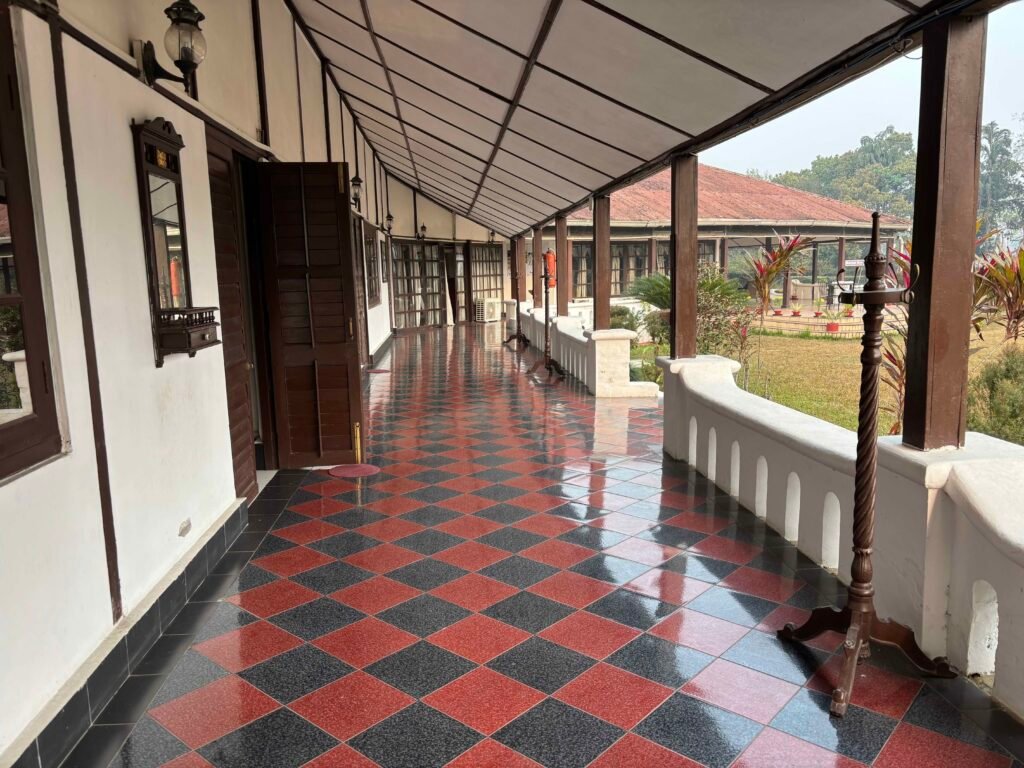
If you believe in reincarnation, then I have been part of the British Raj in India in another life. Sitting on the verandah of a beautiful old British tea plantation manor feels incredibly familiar. A more likely explanation is that my first experiences in India, when I was in college and when I moved into adulthood, still resonant inside me so that images from that time are still clear and sharp.
Our drive from Ziro in Arunachal Pradesh to the Assam border crossing at North Lakhimpur and then on to the river island of Majuli was a fascinating condensed version of traveling from the Himalayan Range in the North, down to the Central Plains of Hindu India and then crossing the river to the flood plains of tropical Kerala. Three very different physical environments. To do this trip took 7 hours of driving due in part to a traffic holdup in one small town where a political rally took place. There is always something unexpected happening when visiting India.
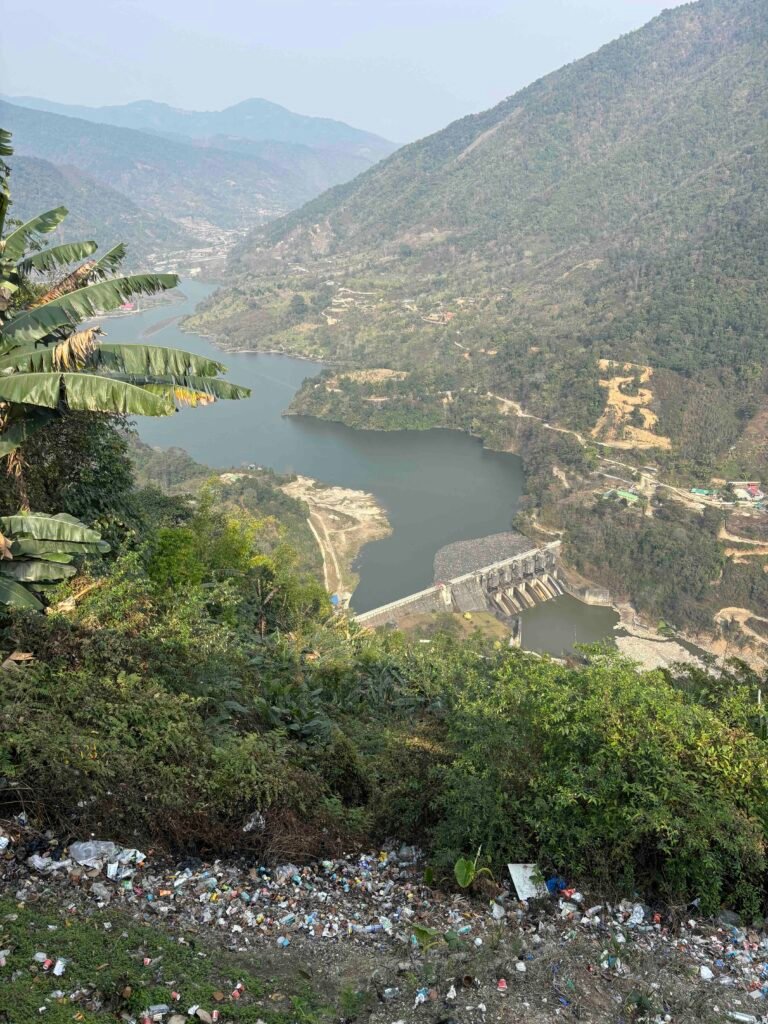
Our earlier stop before leaving Arunachal Pradesh was a rest stop at a beautiful vista point – with piles of refuse tossed by those passing through into the ground below. Although most of central India has made a significant step to clean up the plastic waste, it appears the NE States are a few decades behind. Trash is everywhere.
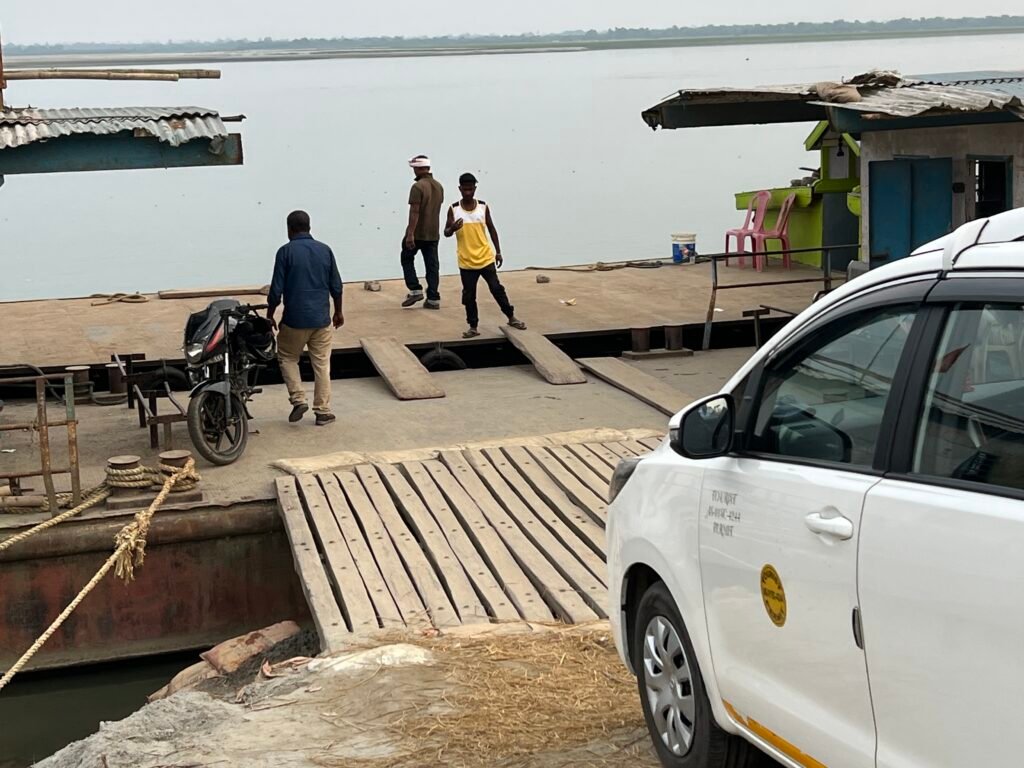
The last step, crossing the Brahmaputra River, was an adventure in itself. Our guide had arranged private water transport just for us although large public ferries ply the river carrying other travelers and cars. Bill describes our ferry as a flat bed providing space for up to 3 cars oriented port to starboard with rustic thick wooden planks thrown down and positioned to hopefully provide sufficient support for the auto wheels to be driven onto the deck. Stones are put under the tires to block the wheels and then the boat shifts forward for the next car to be driven on with the same planks repositioned. With our two cars safely loaded, we passengers embark and were given four ubiquitous plastic resin chairs to place on the flat open deck, without any railings, guardrails or life jackets. Once on board, the trip was thankfully smooth and very pleasant with a setting sun over the large expanse of the mighty Brahmaputra.
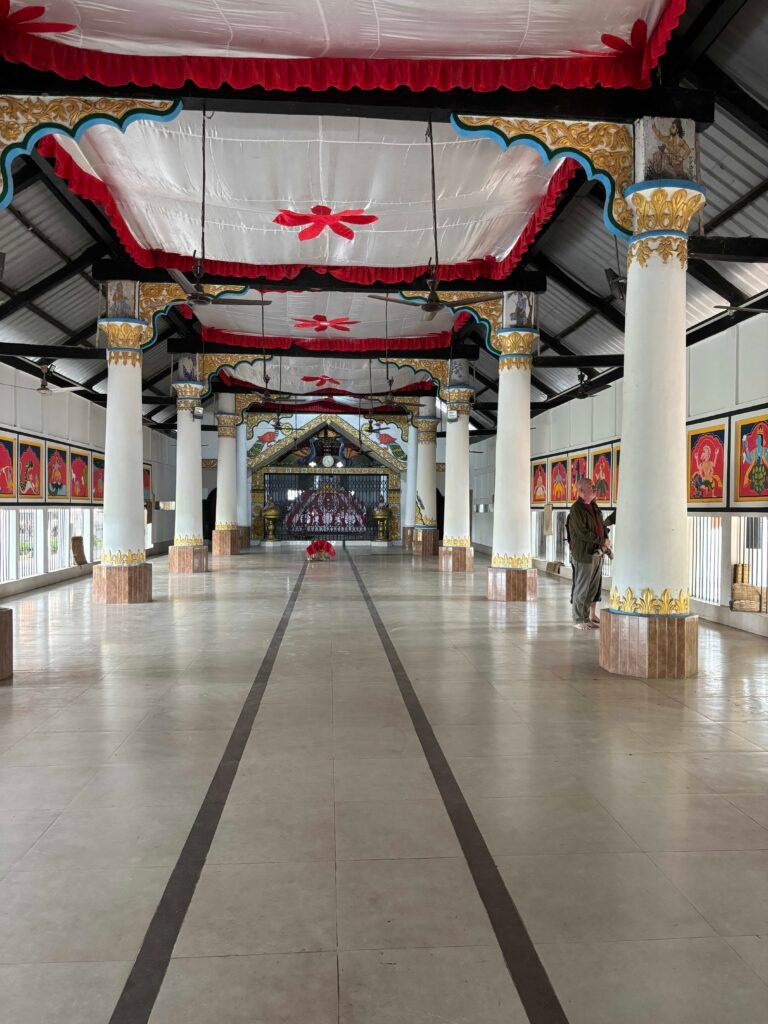
On Majuli Island, said to be the largest river island in the world, we visit the Sri Utter Kamalabari Satra, a Vaishnavite monastery for about 200 males established in the 1500’s. It is a very different Hindu sect from any I have previously come across: Based on Krishna devotion and centered upon “the book” which contains songs about Krishna’s life rather than standing statues of Gods, everybody there trains in a specific form of dance-drama, called Sattriya, which was originally created to attract people to the sect. I am told what distinguishes this form of Hinduism is that it is non-hierarchical — no Brahmin priests, everyone is equal. Young boys are given over to the monastery from about ages 8-18 and some stay for life. Unfortunately, we were there when the monks were in their rooms so saw not a single devotee at the time.
It is also a surprise to me to learn that the Hindus here in Assam, both believers in Shiva and Vishnu, are not vegetarians and eat all available meat. They are also very accepting of other religions.
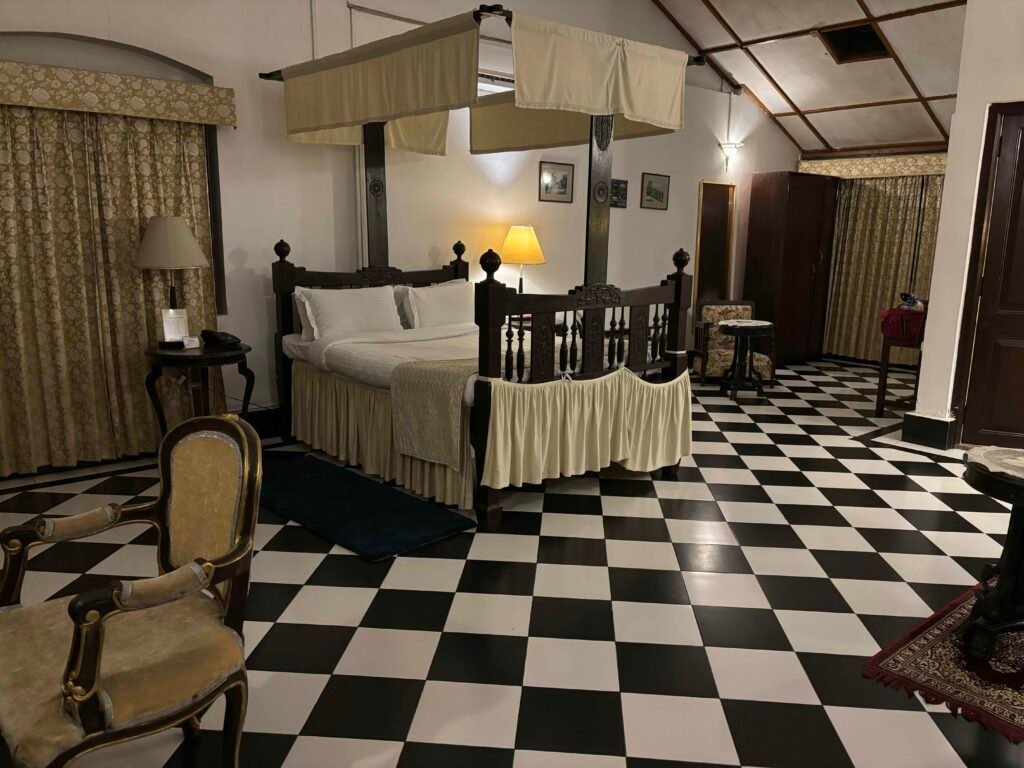
After settling into our peaceful tea estate lodging at the Banyan Grove, passing first by a large noisy Holi party at a nearby temple, we have a good dinner in the empty dining room — we are the only visitors occupying 3 of the 10 available rooms. Each room is very large, mine with black and white tile floors, old teak furniture and a bathroom with a bathtub and individual hot water heater. Very comfortable and I sleep well until the sounds of morning prayers interrupts my dreams.
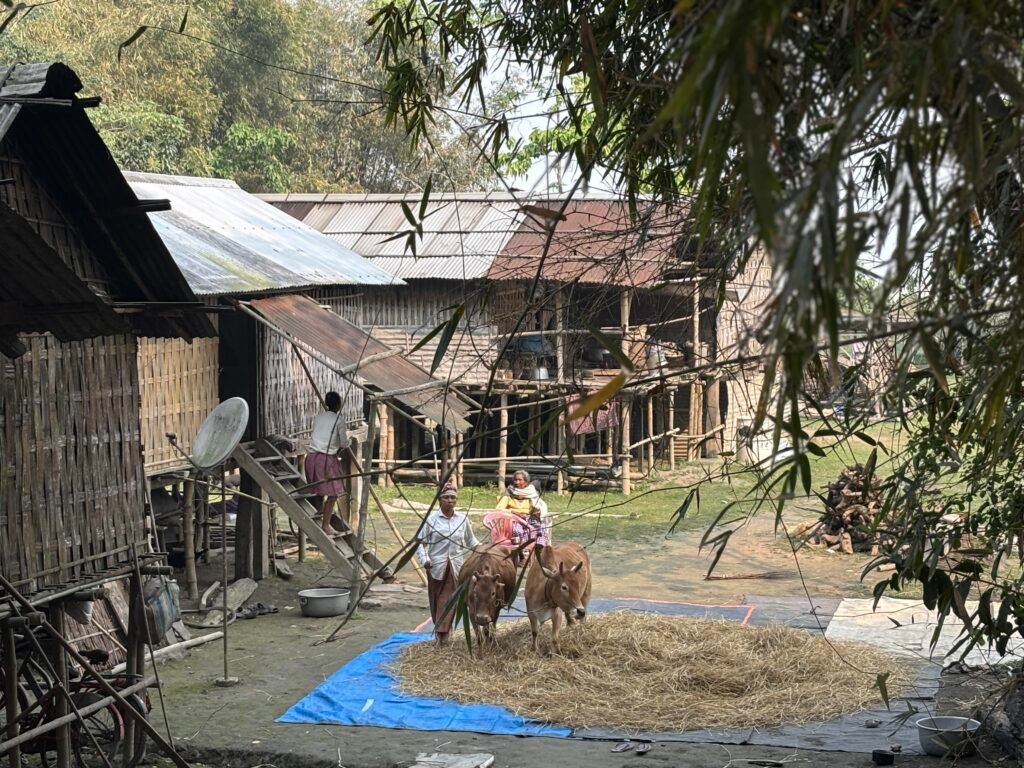
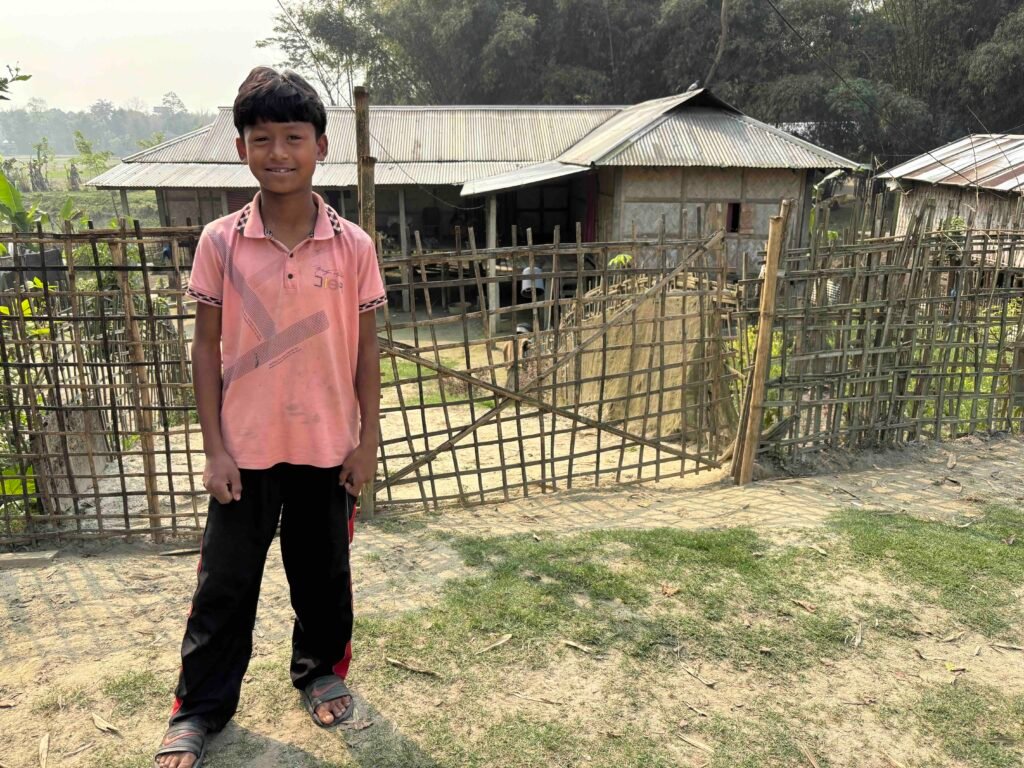
The first part of the next day was a memorable visit to a Mishing Village, a main tribe in Assam, which was not originally on our itinerary but in which lives a friend of our guide whose name is Manju. This was an extraordinary glimpse into another way of life. Groups of elevated wooden huts, men working the fields or along the road, women working around the houses. We saw some women weaving, some cleaning their compounds, two picking through rocks and one was threshing with a bullock, as done hundreds of years ago.
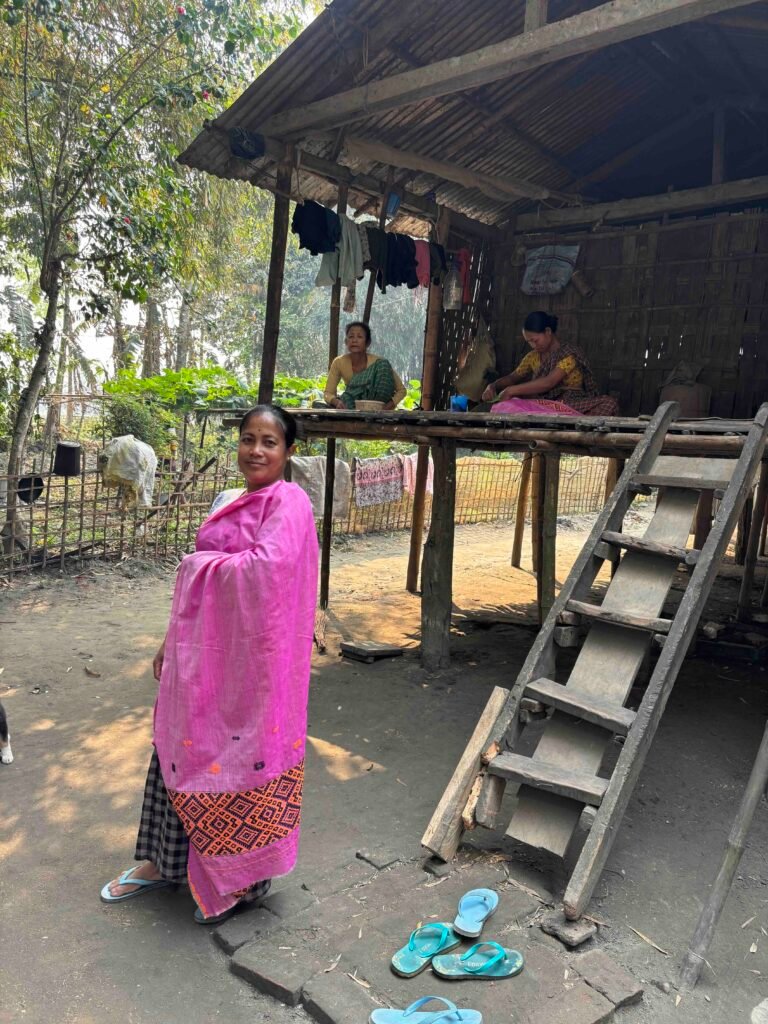
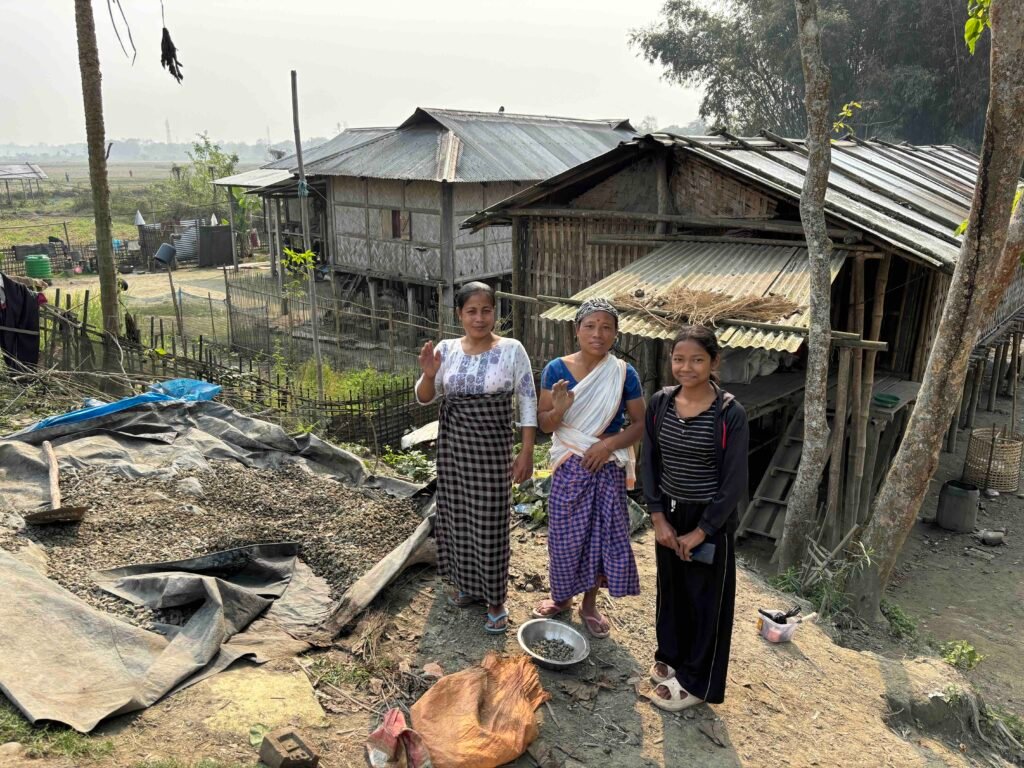
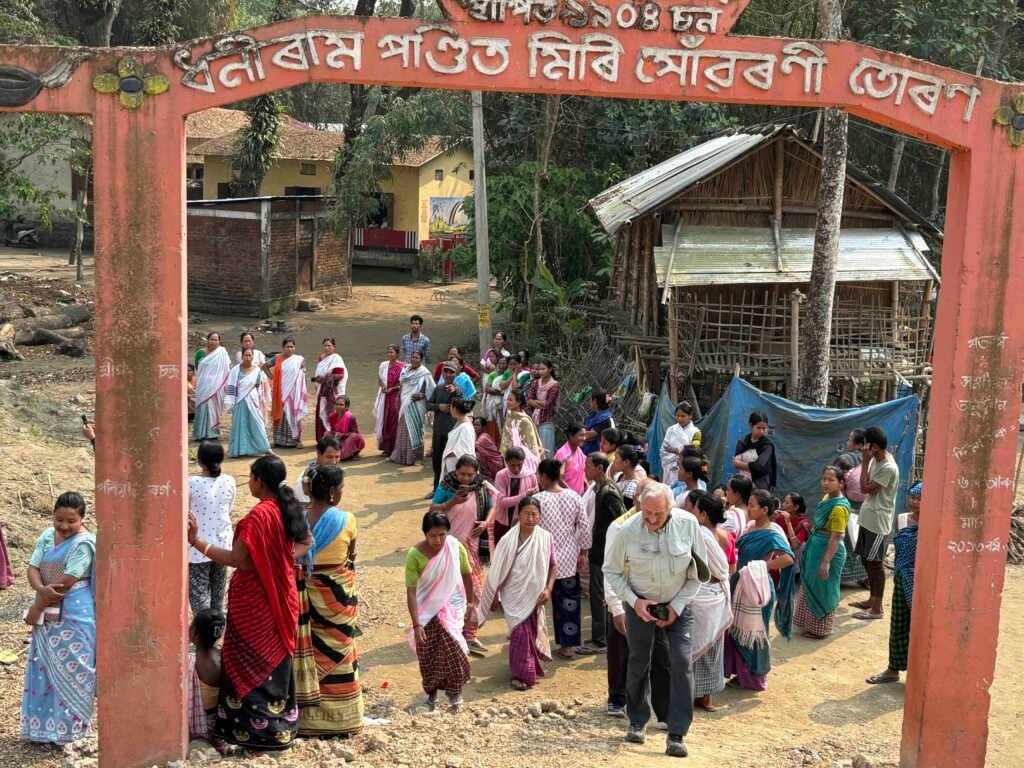
A large group of women were waiting together for “work cards” which will allocate paid government work in the village to them, such as preparing food for the school children’s lunch.
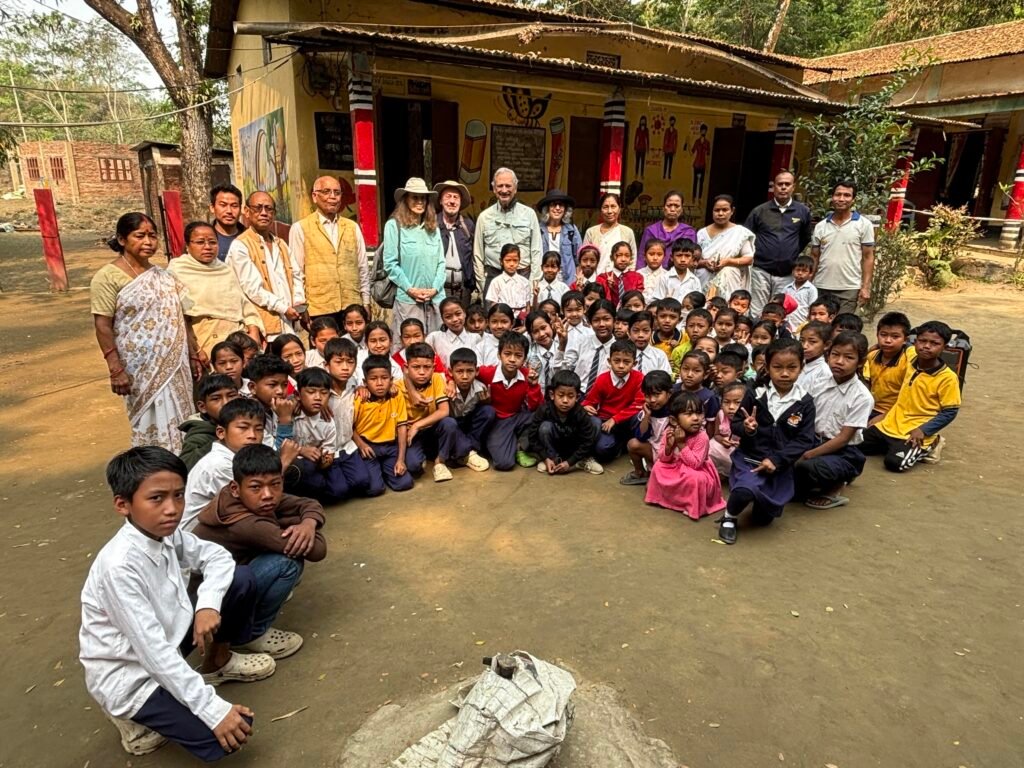
Our favorite event was a visit, at my behest, to the local lower primary school for children about 6-8 years old. The students all ran outside to meet us along with their teachers, most of whom did not know English but speak Mishing and Assamese which is the language of instruction taught in the school. I suggested that the children sing us a song and then the four of us would do the same. Their choice was a long song eagerly and enthusiastically sung to us which I was later told was from a very popular current singer and then a more regional song to which 3 of the young girls did a traditional Assamese dance, swaying their bodies and using studied hand gestures. We, in turn, sang “Do Re Mi” from the Sound of Music which we managed to do without embarrassing ourselves. Everyone wanted pictures and only one child in the group, obviously from a wealthy family, had her own mobile phone.
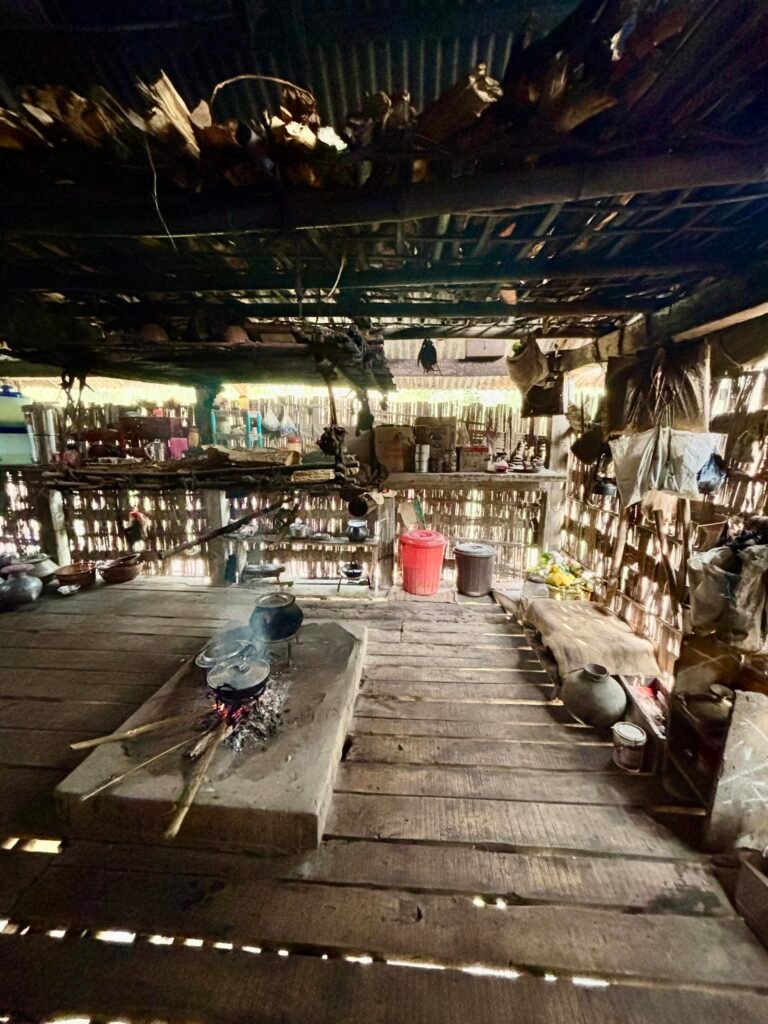
At the end of our visit, we were invited to Manju’s house where we met his wife, new baby, mother and other close relatives. We went inside where the same traditional wood fire arrangement with a metal grate hanging above and I learned that this was where food was stored in the wet season to keep it dry and in the case of meat, so that it became smoked from the fire below.
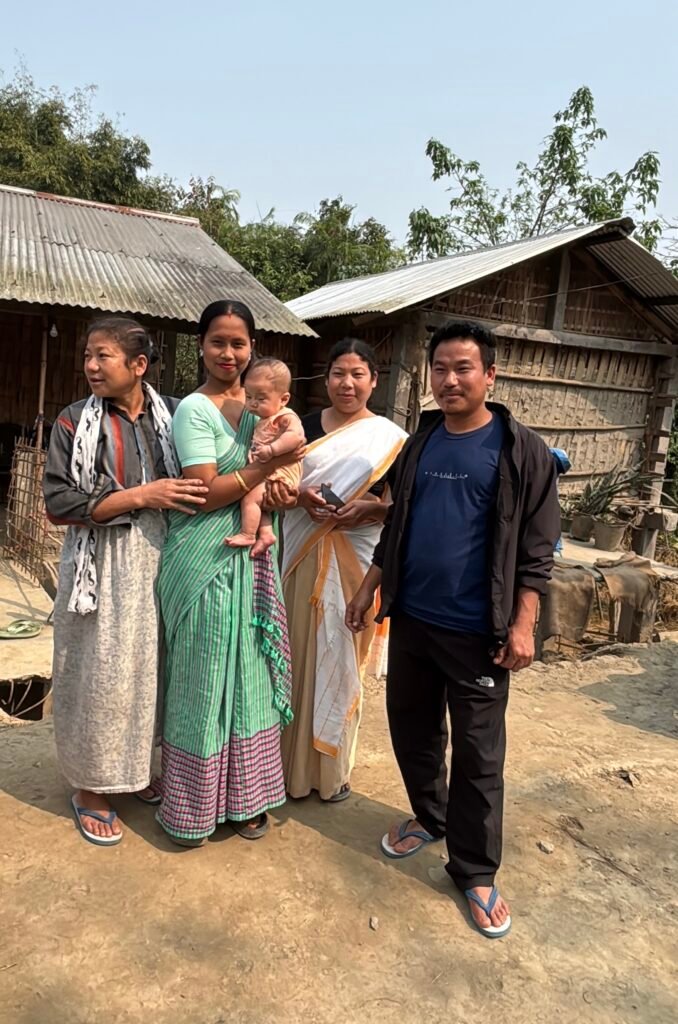
Although these villagers are very poor by our standards, they seemed remarkably friendly, happy, healthy, and gracious. We may have seen only one sunny side of the picture, but it was an impressive show of another kind of possibility for life.
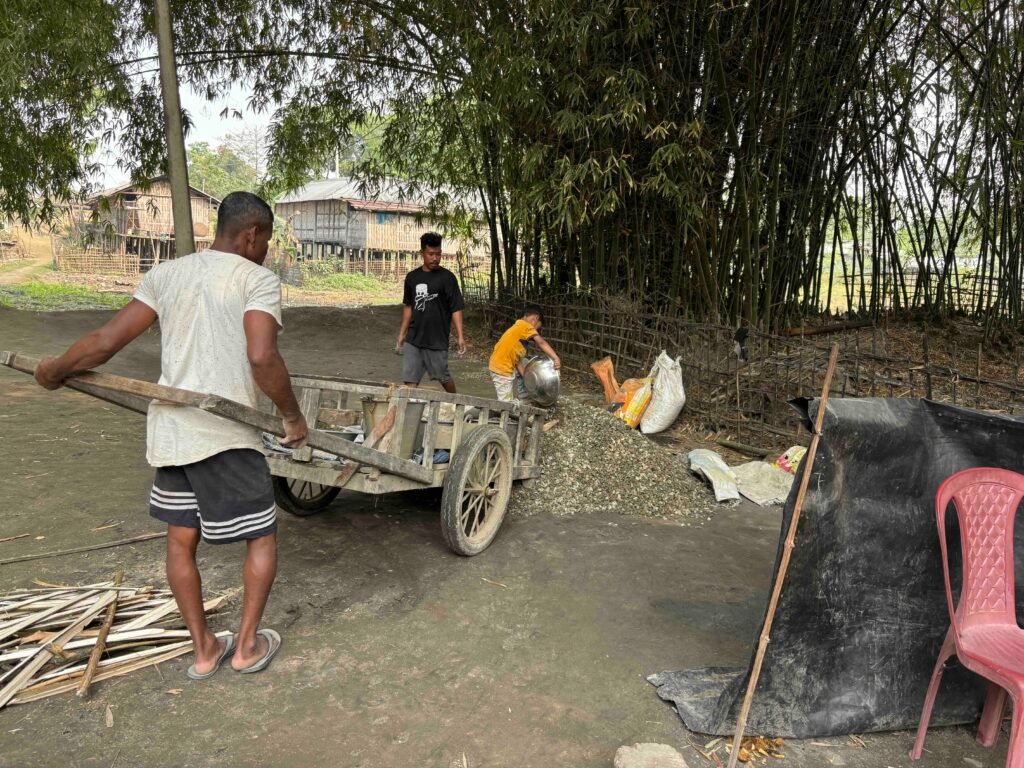
To balance this, I did notice a young boy of about 6 who should have been in school working hard with his father to move building materials. And Bill noticed that one or more of the school teachers had very rotten teeth as dental care is not government sponsored and not accessible for many. Modern life has some advantages.
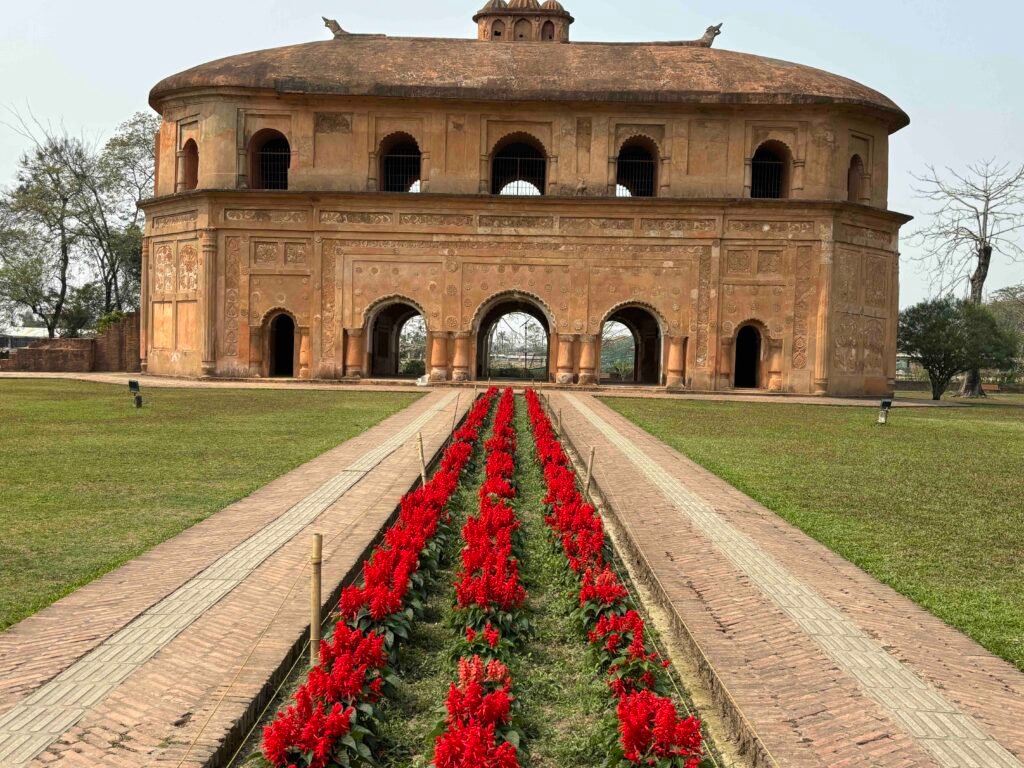
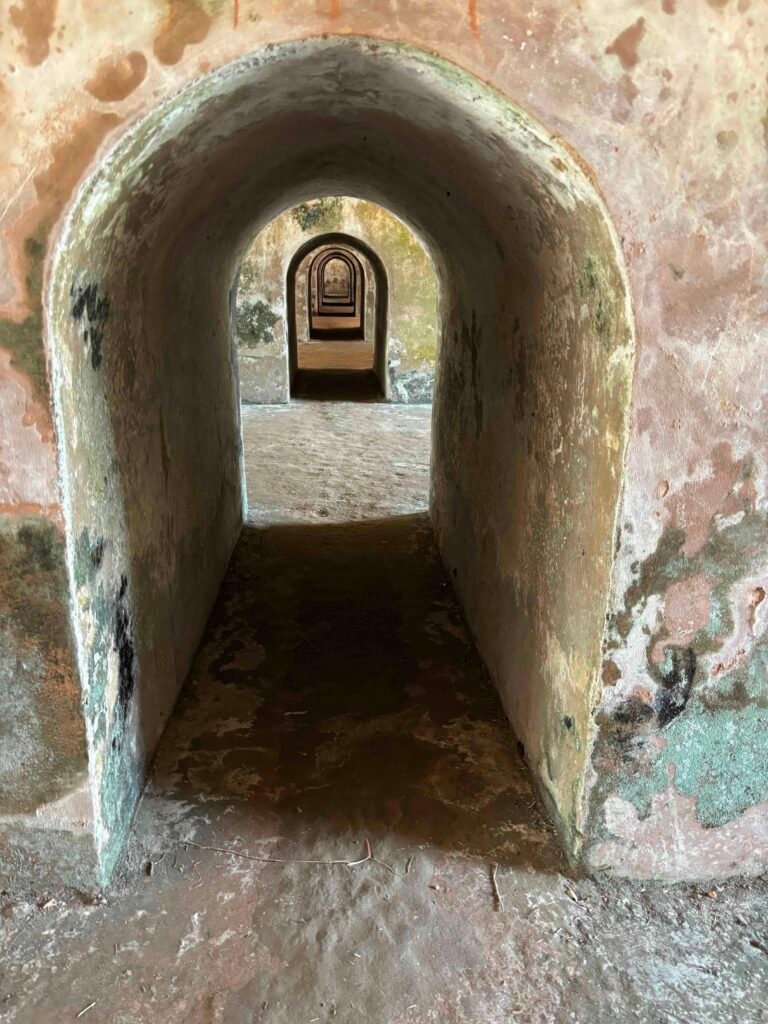
During our very active morning, we stopped at a large Shiva Temple in town. I went into the inner sanctum where the priests were accepting offerings and giving blessings — something as a non-Hindu that I am not allowed to do everywhere in India. Then, with lunch along the way, we visited archeological sites, the Talatal Ghar, an old Ahom palace and fort, the Rang Ghar, used as a pleasure palace by the Ahom Kings (1228-1826 when, after the Ahom rulers asked the British for help, a treaty was signed between the invading Burmese and British and the British then took over administration of this area).
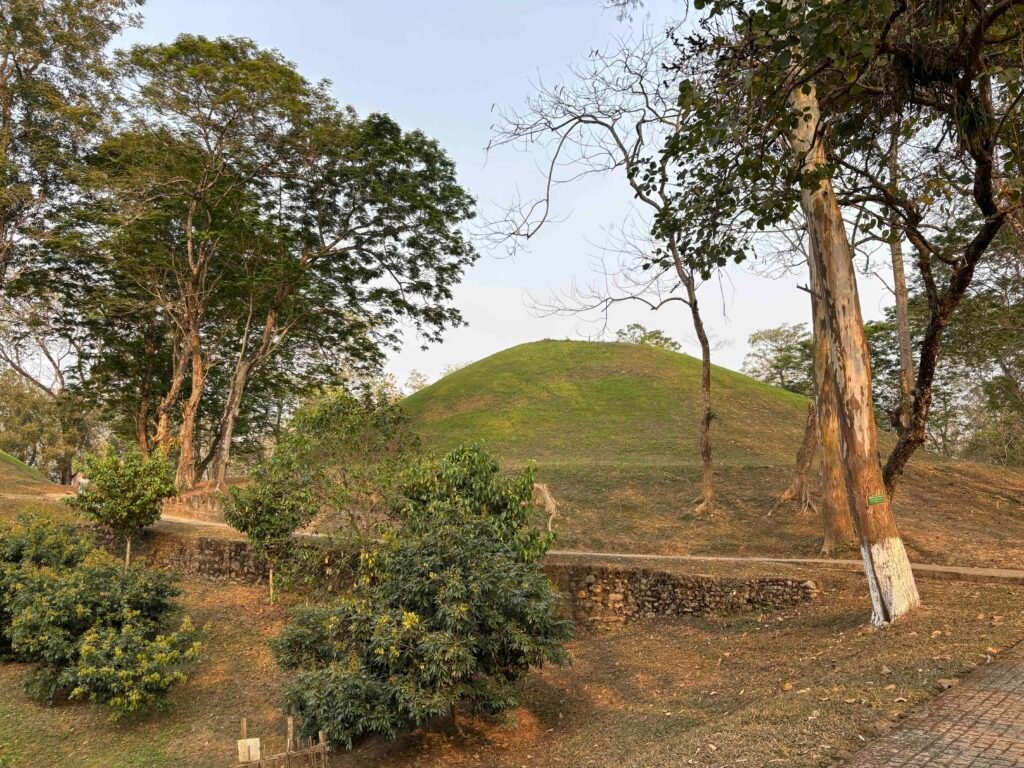
In the late afternoon, we visit the Charaideo Maidons, the great burial mounds used by the Ahom royalty and now a UNESCO World Heritage Site. Once a year there are offerings made at these sites. Although none of these were spectacular remains, they did give some background to the history of the area. Our way back to our hotel was on a very rough road under construction, many miles of deep ruts and dirt bumps. Not for those with back issues.
We did not return to the hotel until 6:30 PM and were grateful for a good dinner and bed. I note in closing that since arriving into NE India, we have seen only 1 non-Asian tourist, who was at our hotel in Tezpur a few days ago. We understand that this is the low season, with the rainy months coming soon ahead and with Oct-January having more holidays and special events that pull in tourist money. The result of this is that everywhere we go, people ask to have us pose with them for a photograph – rare looking beings that we are, white skin and grey-haired. Until tomorrow.