Traveling through the state of Tamil Nadu in Southern India is a visit to the past in the form of ancient Chola Empire temples while at the same time experiencing modern Hindu prayer and devotion as practiced every day by local devotees at these still-thriving sites. The temples are a result of a complicated history of Indian dynasties battling each other for supremacy, with a short phase of invasion from the Muslims coming down from the North, and colonial rule of the British, ending at the present day with Unesco World Heritage recognition.
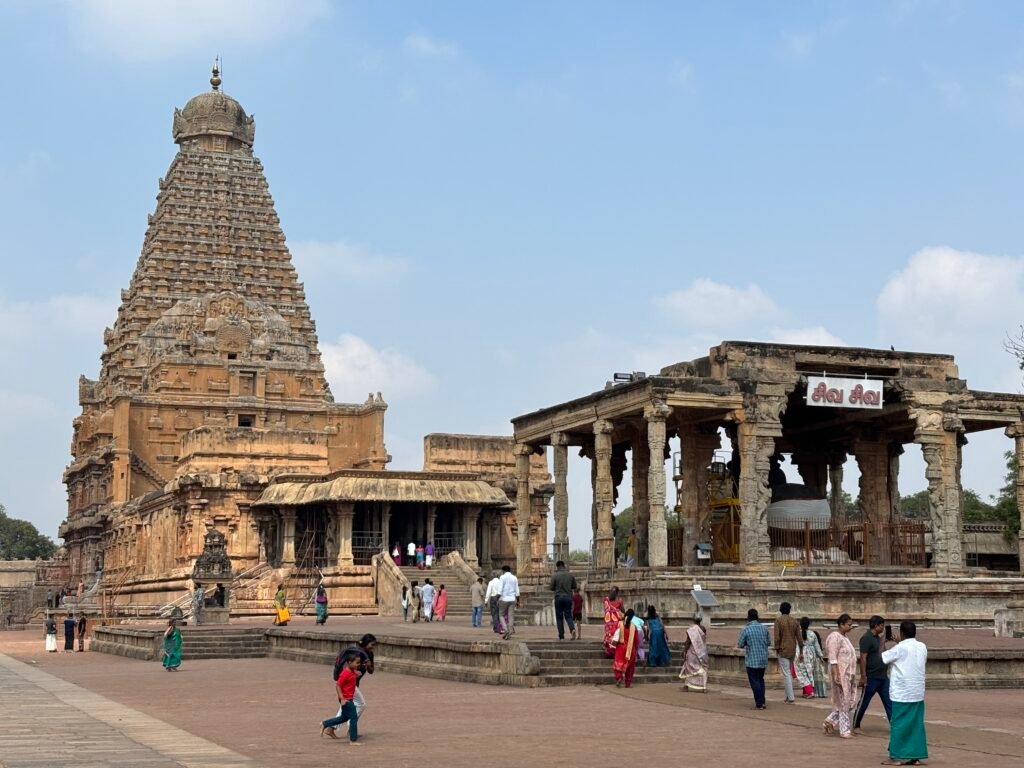
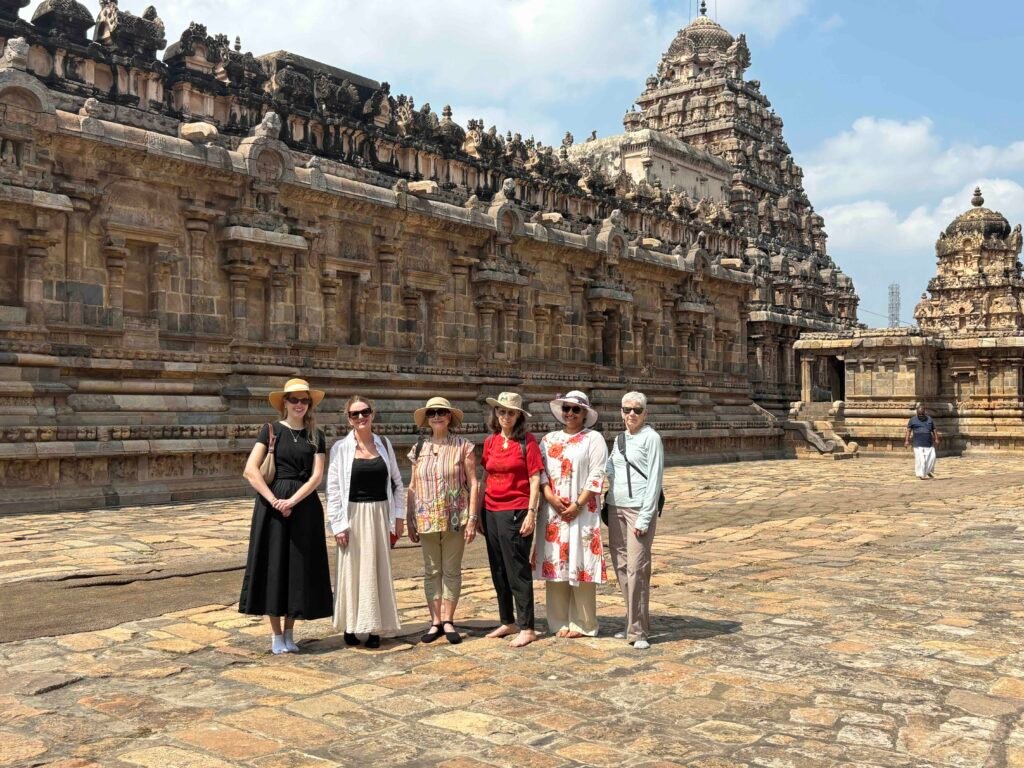
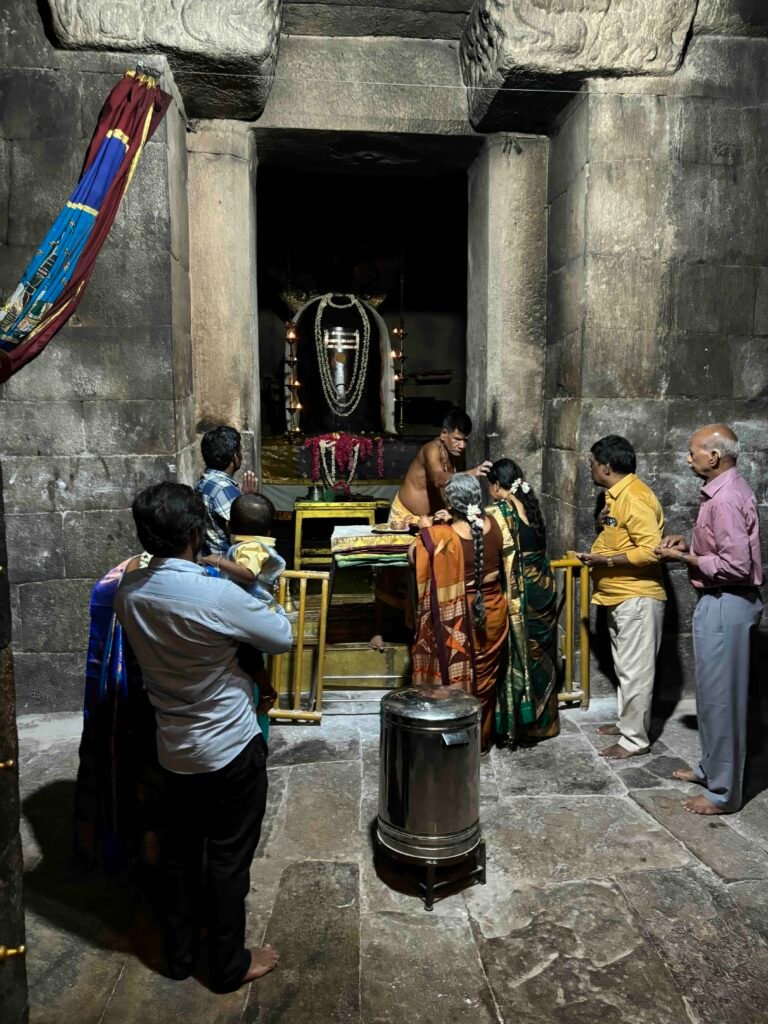
We traveled between three of the greatest of these temples of the Chola Empire (9-13th Century): the Gangaikondacholapuram Temple, Airavatesvarar Temple in Dharasuram and the Brihadisvara Temple in Thanjavur, each a UNESCO World Heritage Site. Our guide pointed out the present tension between government archeologists attempting to preserve the temples in their original form as required by their UNESCO designation and the religious practitioners who wish to continue their traditional ways of worship at the site. The former preservationists have put harsh cages around some parts of the temples in desperate effort to maintain the structure while the devotees despite warnings continue to reverently pour oil, honey, and milk over their gods and wrap them in colored cloth.
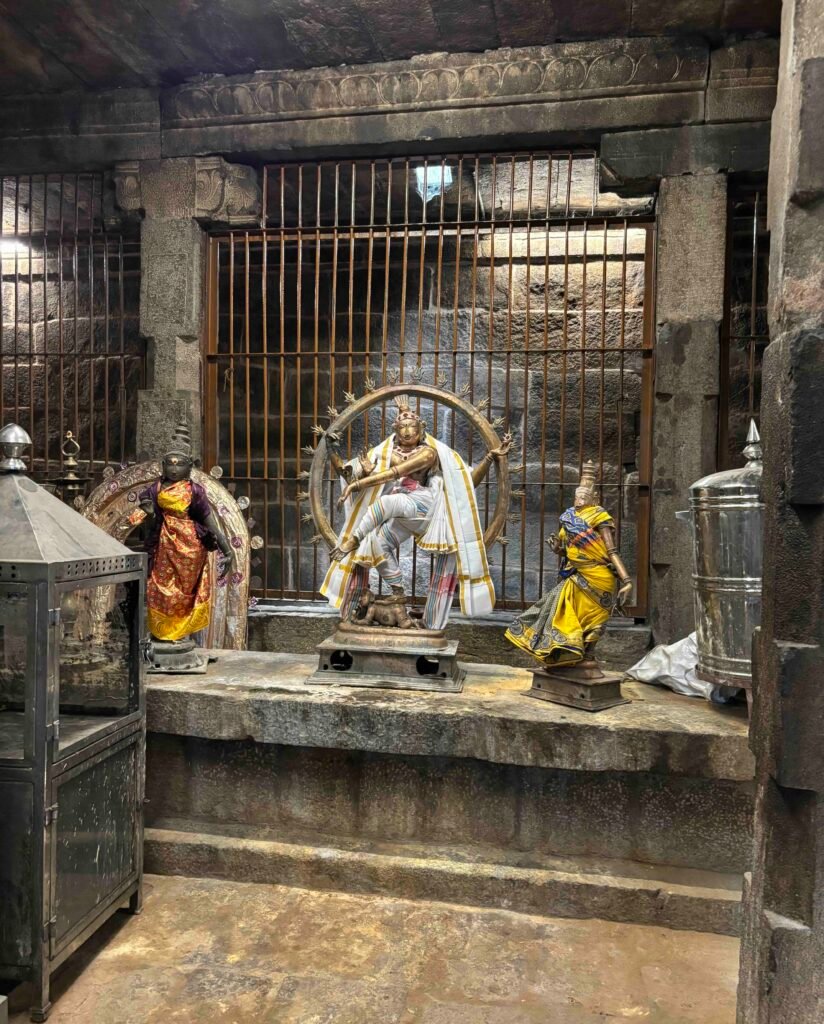
Photo taken between bars in front of area of worship.
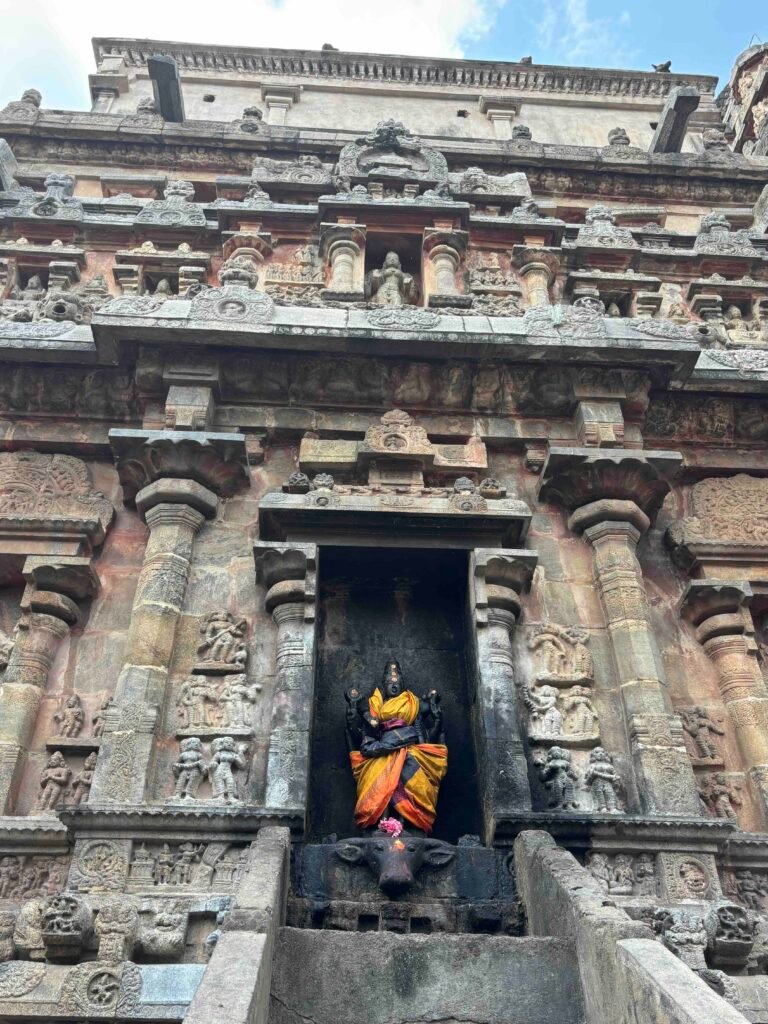
At Dharasurum.
At the Thanjavur Temple, in addition to the large main gopuram, there are two other smaller highly decorated structures each representing a different architectural styles, described as comparable to the changes over time in the Greek pillars of antiquity. The difficulty of transporting large blocks of granite from far away and erecting a 12 story tower was pointed out to us by our guide who is an expert in this subject – including the similarities between these and the great towers in ancient South America.
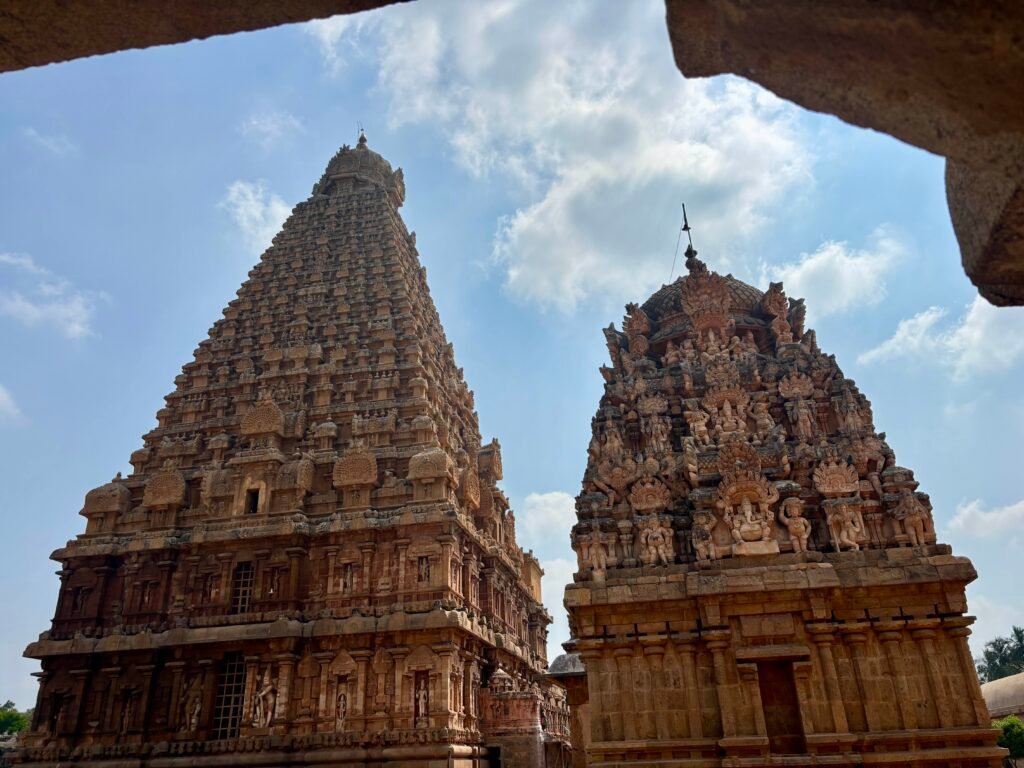
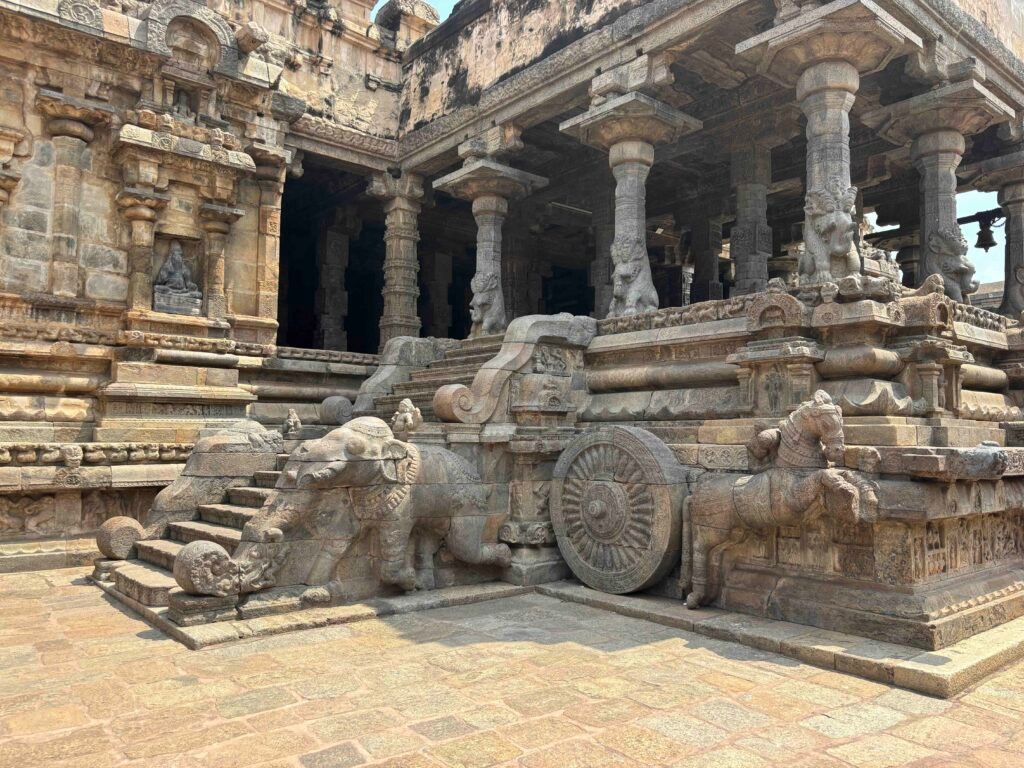
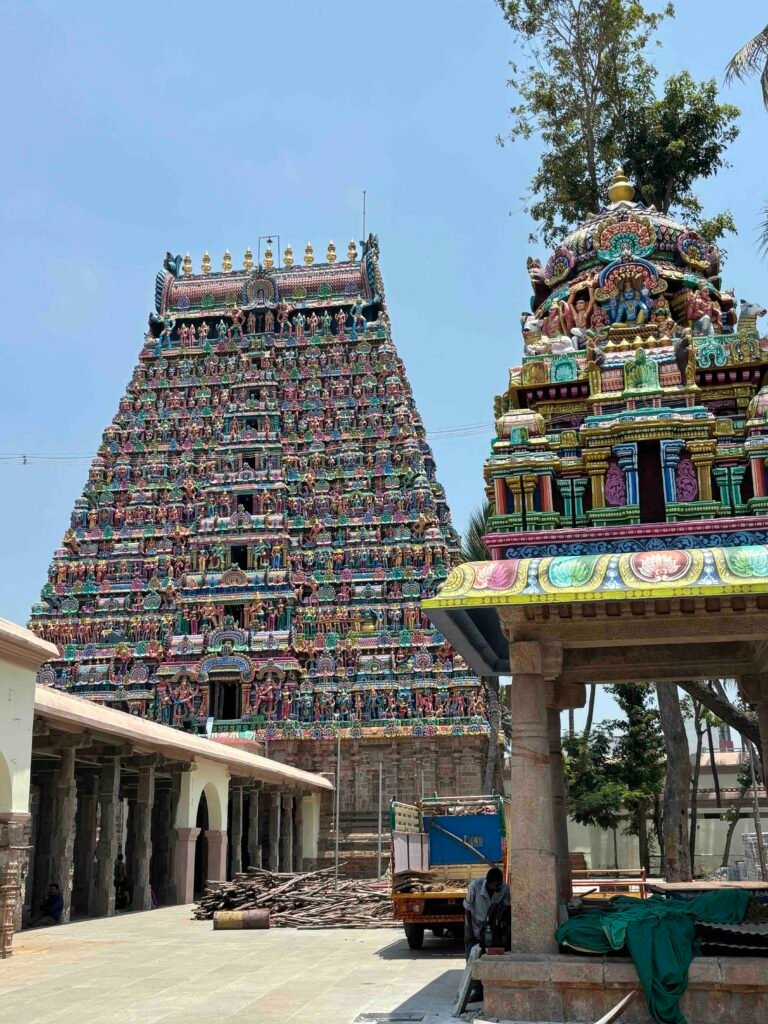
The many temples in the area all have tall multistoried gopuram towers, heavily decorated with stories of the gods, with each higher level decreasing in size, most of the ancient ones unpainted, like the Thanjavur temple, but some are in new bright colors, like the Kumbakonam temple in the middle of that town. The UNESCO sites do not allow the desecration of the structures by re-painting but the sculptures certainly stand-out when clearly differentiated in bright colors.
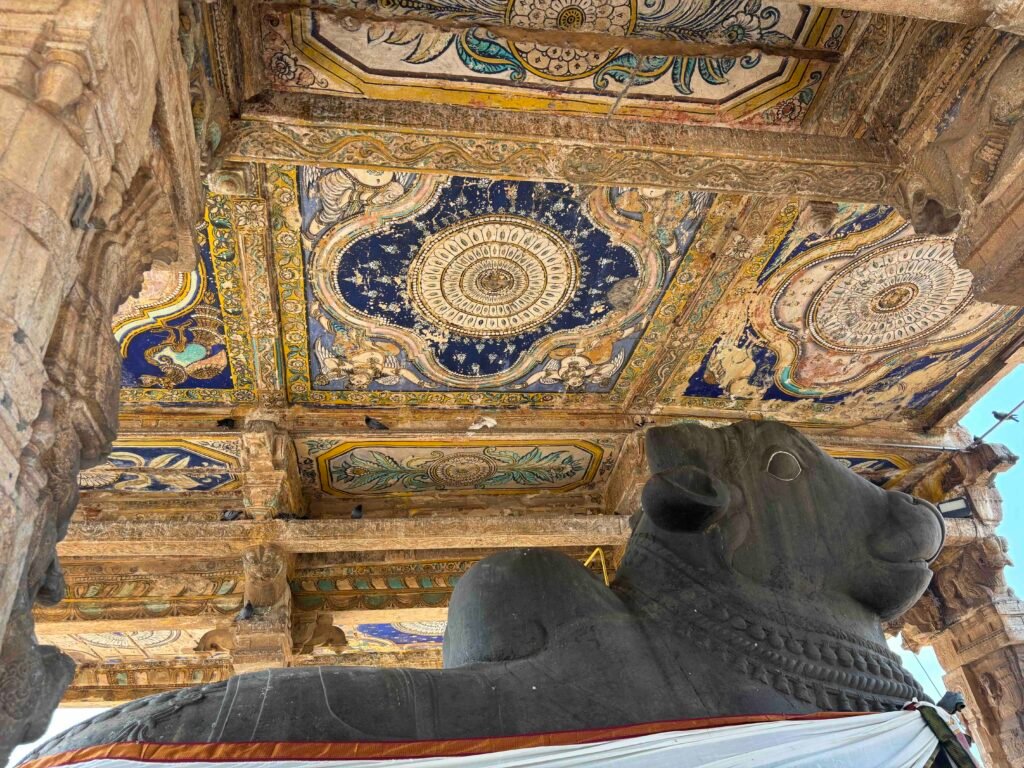
Nandi the Bull, the vehicle of Shiva is out front of the Shivaite temples facing the inner sanctum and I am told he is washed down every few weeks with milk and water. We enter inside to the center of worship, walking past huge pillars of stone and wait in a long line until we reach the priest who takes the offerings and money and gives us blessings, with a fingerprint of color in the middle of our foreheads.
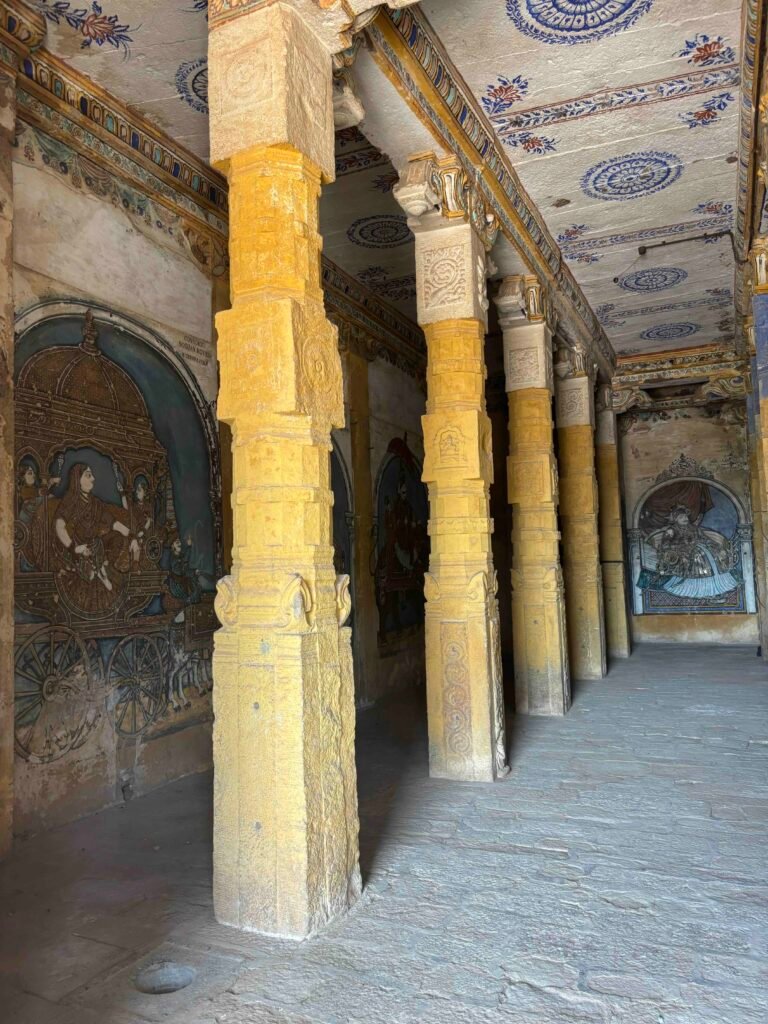
Thanjavur painting is a form of devotional art with 3-dimensional gold decoration and jewels together with painted images of the Hindu pantheon of gods and we visited a local artisan who is still practicing this craft. With the vast increase in gold prices, the 14 carat-gold leaf paper is making these pieces significantly more expensive. Originally used in family shrines for worship, I was told they are now mainly purchased as part of wedding gifts. I failed to bring my camera for this outing, unfortunately. But in the temple we saw the original form of devotional painting from which the more portable kinds were developed.
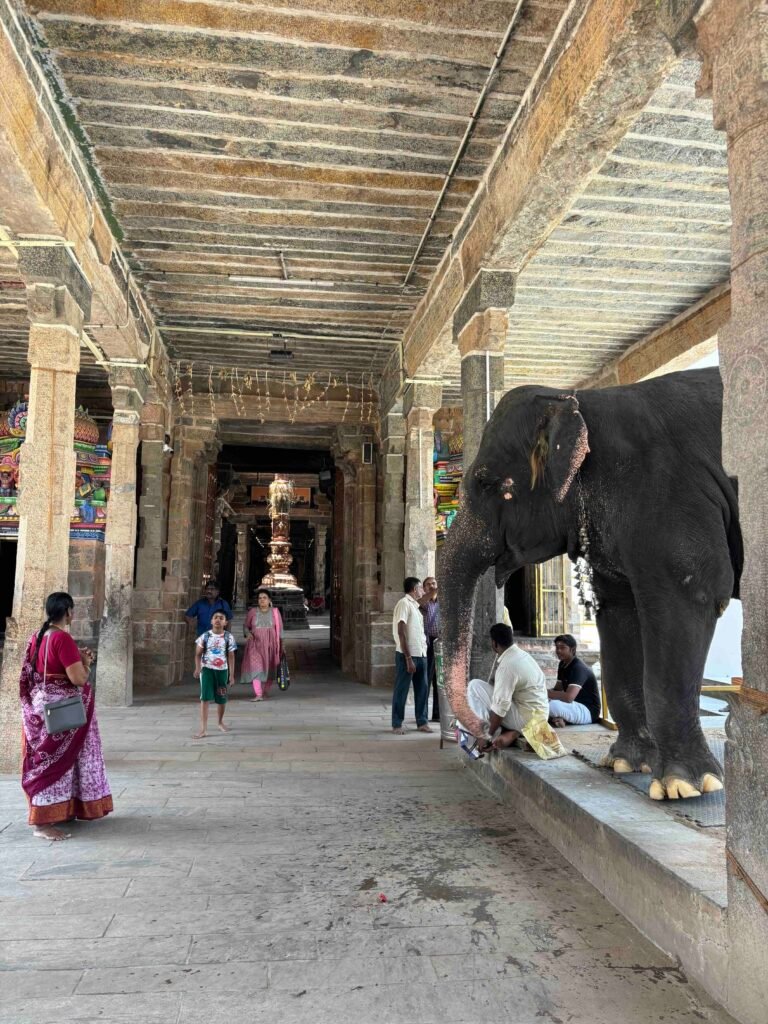
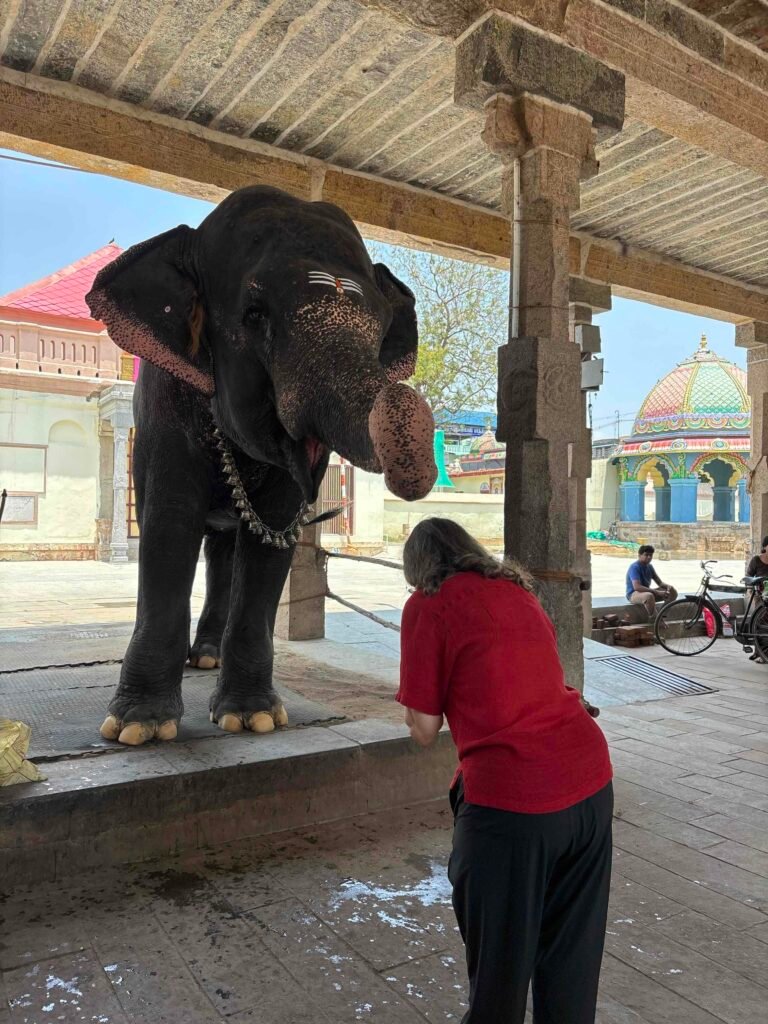
I have had a number of blessings recently and although I don’t believe in the Hindu theology, I do think the more positive energy received the better. The most memorable blessing I received was at a smaller temple we stopped at in the center of the town of Kumbakonam at which there was a female elephant with her trainer. One could place a ten rupee note into the opening of her trunk and in turn she placed her trunk on you as a blessing. It was 10 cents well spent.
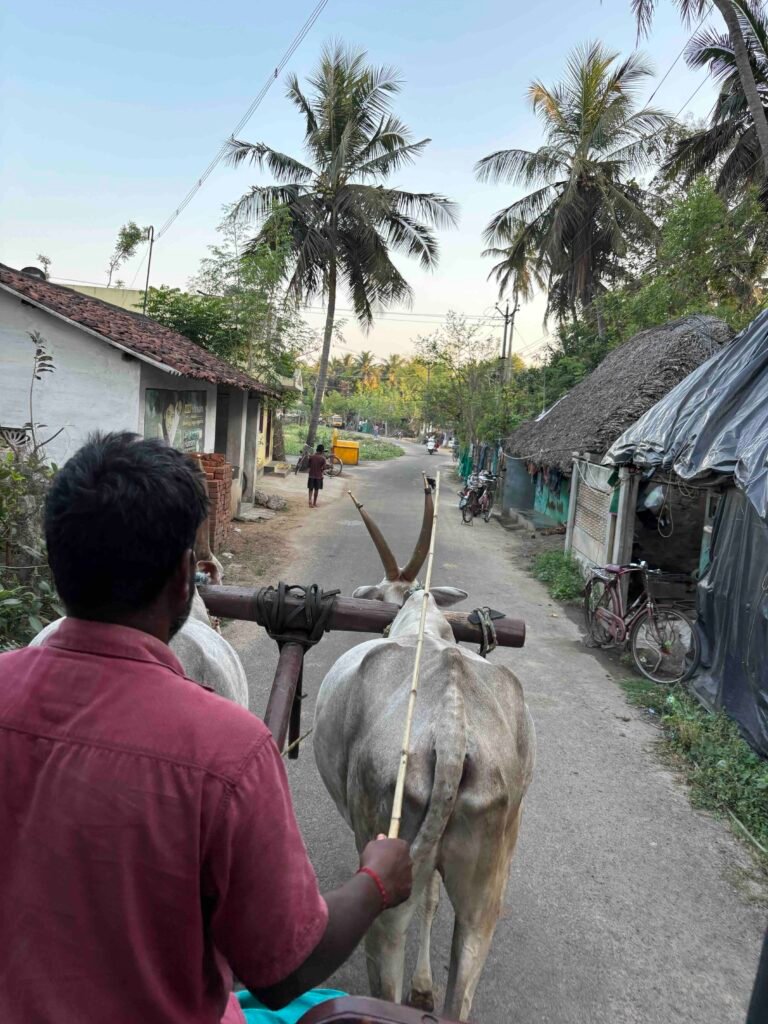
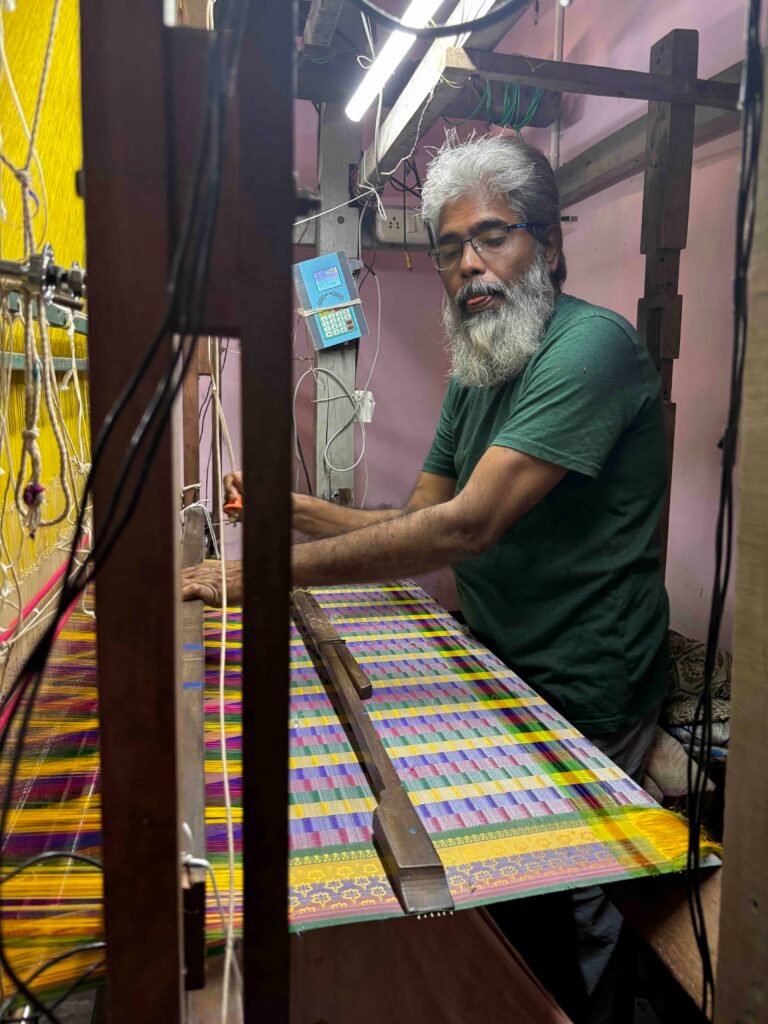
Our other activities over the last few days included trying our hand at pottery making on a wheel, watching a traditional silk weaver at work at his home, visiting a bronze statue creator, for which this part of South India is well-known, viewing a kalamkari artist and enjoying a butterfly garden with a naturalist who is also an expert on snakes. The young naturalist also accompanied us on a bullock cart ride through the neighborhood of our warm and welcoming traditional hotel, the Mantra Koodam. We ride in a cart with padded seats behind two lumbering white bullocks, whose owner sits and directs them forward, sometimes with a little touch on their backs with his whip. There are paddy fields just planted with new green sprouts, small homes under trees, cows and goats by the roadside — and we even saw two small horses which surprised us. There is a small temple sitting in the middle of a pond of water and local boys on bicycles who pass us by with a wave. The sun is about to go down and there is a cool breeze to break the high heat of the day. A very relaxing and bucolic experience.
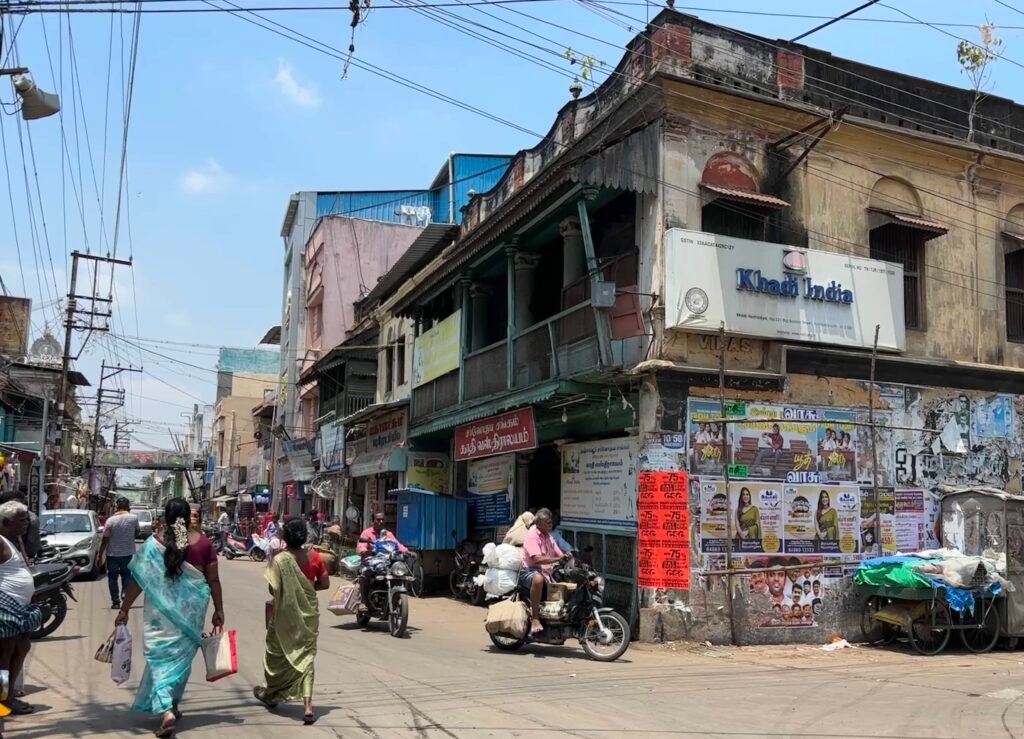
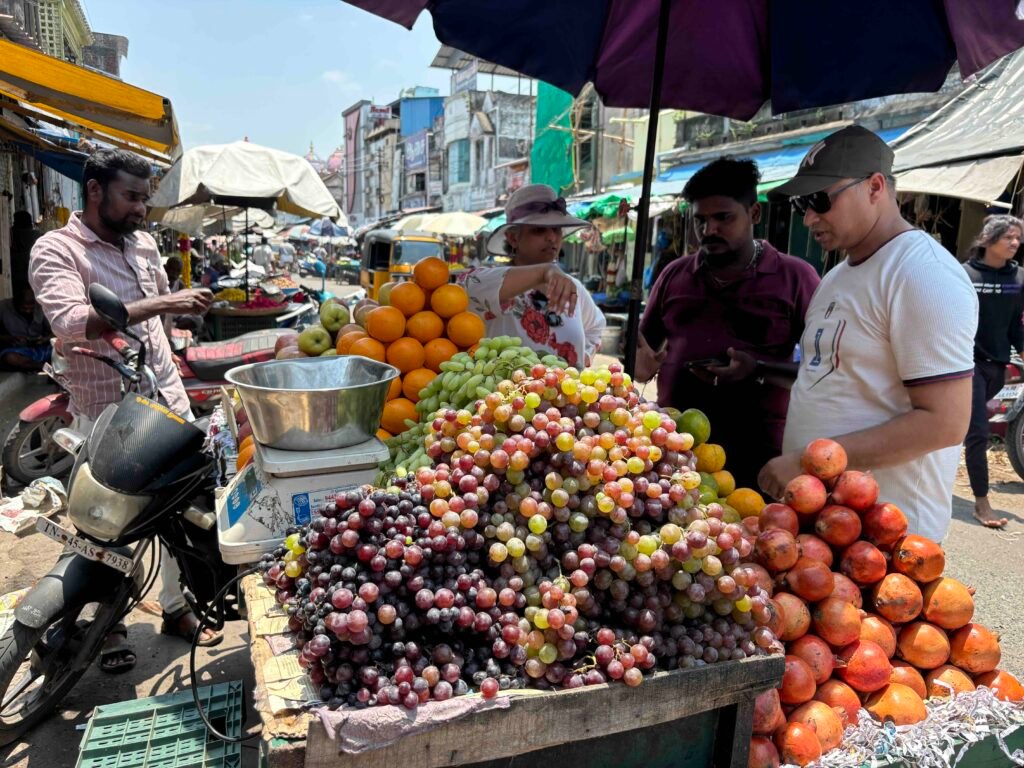
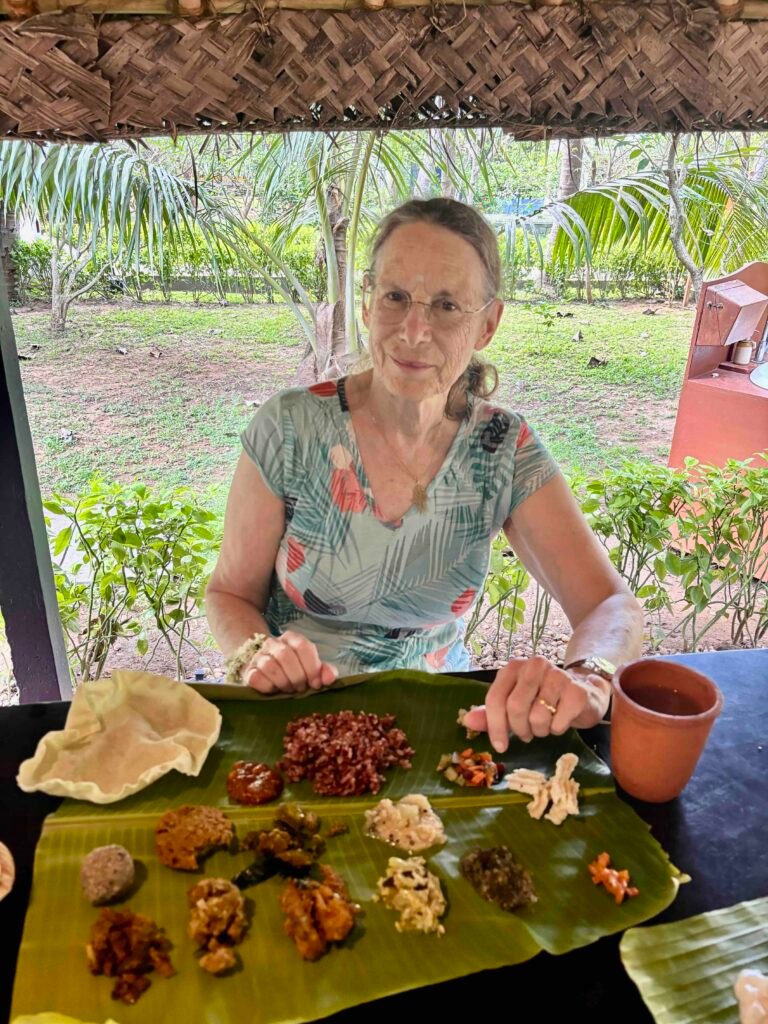
We have been having great South Indian food – a thali plate of vegetable dishes for lunch. An assortment of local delicacies for breakfast: idly, pongal, uppuma, coconut sevai, all delicious. It is hard to stop eating.