
Before I began considering a trip to NE India, I had not heard of Guwahati, whose suburb contains Dispur, the official capital city of the State of Assam. Guwahati seemed upon our first arrival almost two weeks ago as a typical Indian city, part of Shiva’s great cosmic dance of creation and destruction occurring at the same time. Large concrete bamboo-scaffolded layered buildings rising from every vacant lot next to structures that are crumbling back into the earth as we watched. But now, returning from Nagaland, Guwahati looks positively modern. Especially today when there are many police and army members on the roads, controlling traffic, with large banners along the roads of Prime Minister Modi and his entourage who are in town for the day.
We are staying at a wonderful small boutique hotel in the center of town, the Guhawati Address, where we had spent our first night. Now at the end of this journey, we reach it just as it begins to rain very heavily. Jim and Nancy walk down the street to a local ATM and come back completely drenched, with open sidewalk spaces becoming small streams in a matter of minutes. We hear thunder and the pounding of the rain and hope tomorrow will bring more pleasant weather when we go out with our guide to visit the holy Kamakhya Temple.
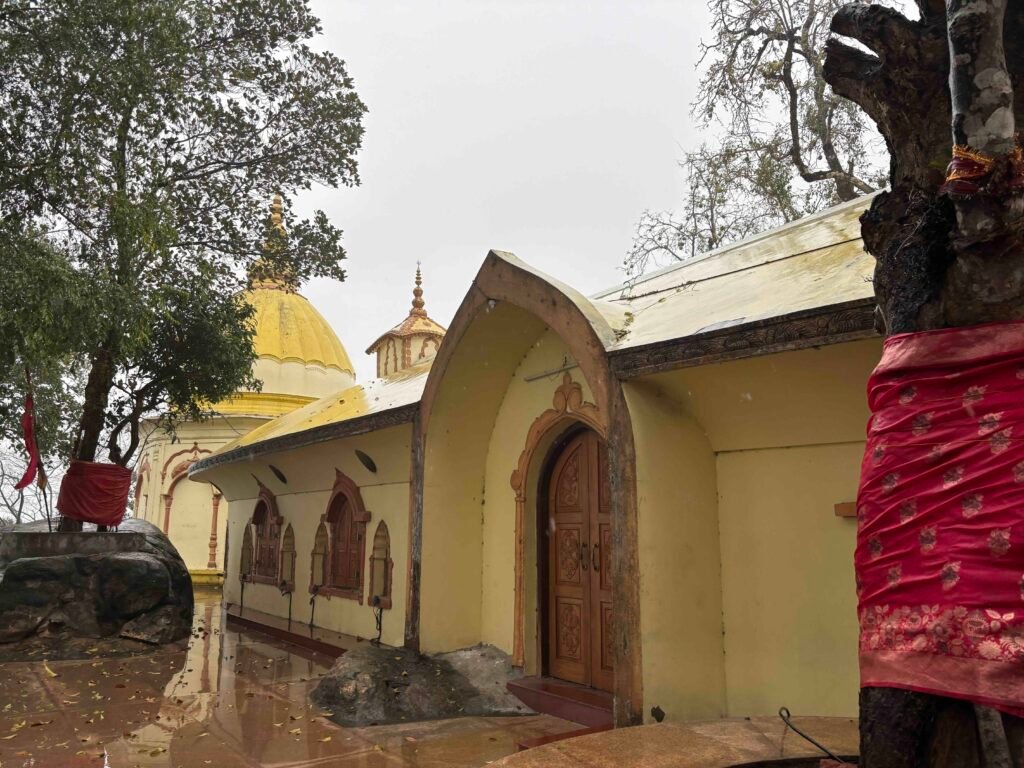
In the morning it has stopped raining except for an occasional light sprinkle as our driver works his way through the perpetual traffic to the sacred hill on which sits the Kamakhya shrine where Vishnu placed the womb of Lord Shiva’s deceased consort Sati after Shiva wandered the land in grief. But we first drive to the top of the hill where sits the smaller more intimate Bubaneshwari Temple and, taking our shoes and socks off as tradition and respect requires, we walk on wet, muddy stone slab steps leading up to the shrines, trying not to slip on the wet leaves that have fallen on the surface. There are very few people here, perhaps due to the weather or more likely the strong draw from the more important temple a short way down below. We non-Hindus are not allowed into the dark interior but shelter from the downpour under a covered pavilion before returning with very muddy feet to our shoes and our cars.
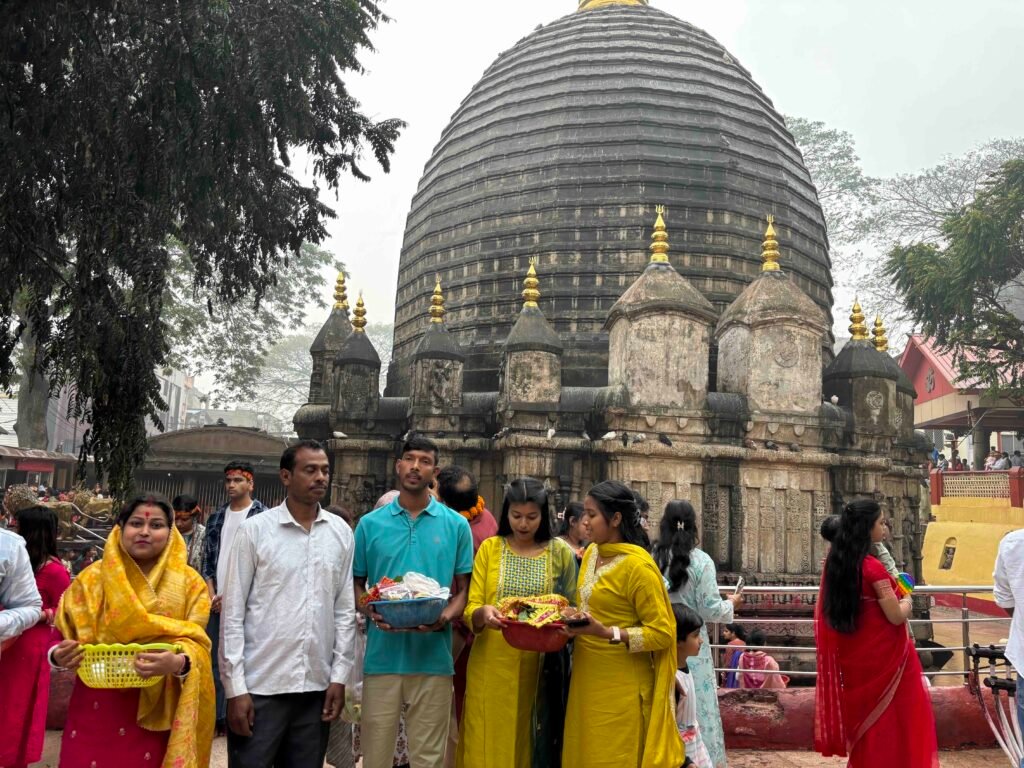
The Kamakhya temple is a far different experience. Teeming with devotees who come from great distances to worship here, it is a 3-6 hour standing wait with a ticket for Hindus to be allowed into the inner sanctum. Many people choose instead, or perhaps in addition, to make their offerings around the main structure, with priests available to bestow blessings.
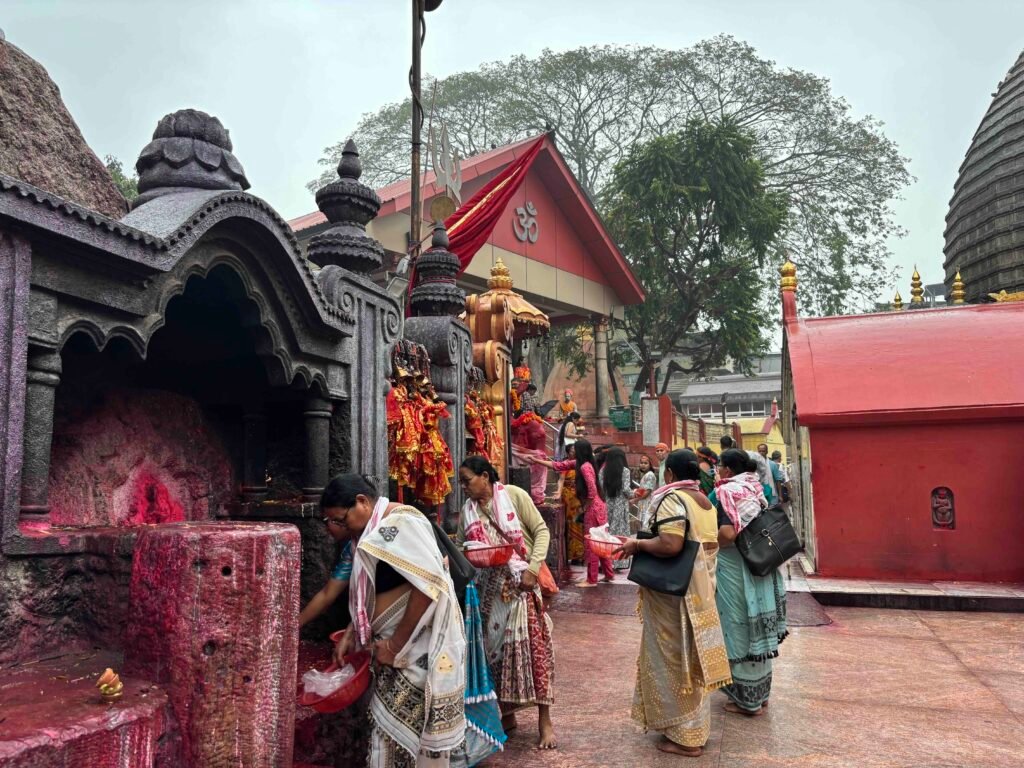
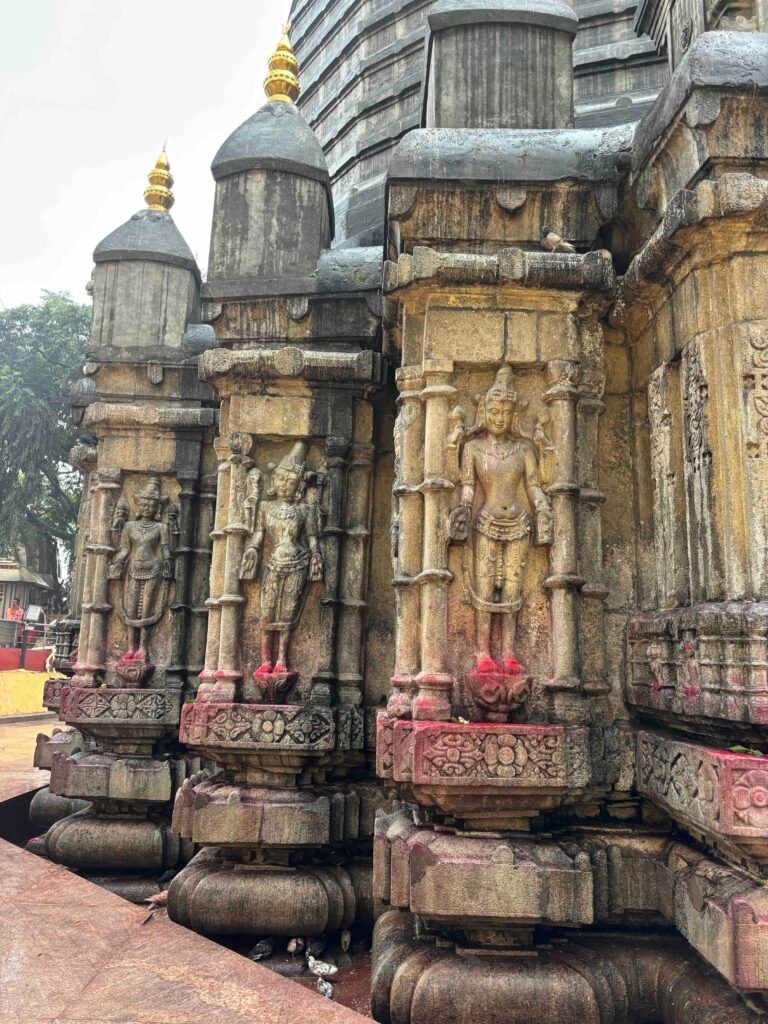
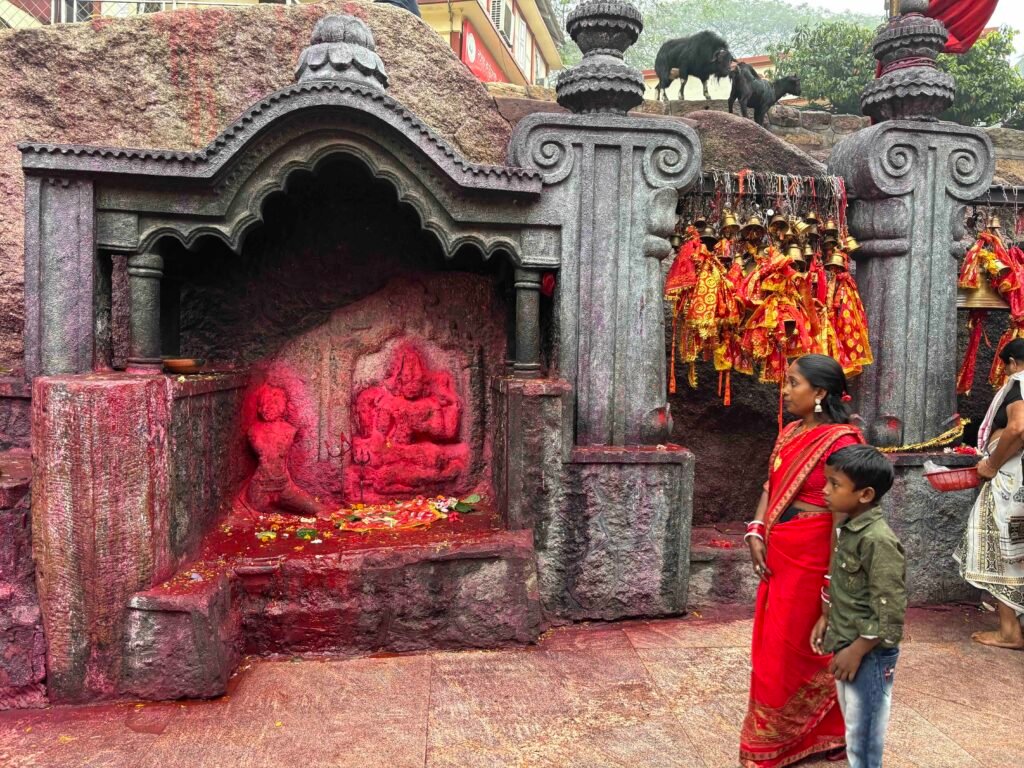
We see the faithful, alone and in family groups, reverently praying and offering flowers, food, and, most shocking to me, live goats for sacrifice. They are in people’s arms, black and white, being led, some unwillingly by ropes, some standing tied to the temple’s structure, unaware of what awaits them. Although I recognize this is not that much different than people, or a corporation, bringing an animal to a butcher for slaughter, the fact that it is happening at a Hindu shrine, a religion advocating a vegetarian life style for many of its adherents, is very jarring to me. Although the concept of sacrificing something material to achieve a more important spiritual goal has probably been a part of mankind’s communal activity for vast ages, seeing it here, now, is disturbing.
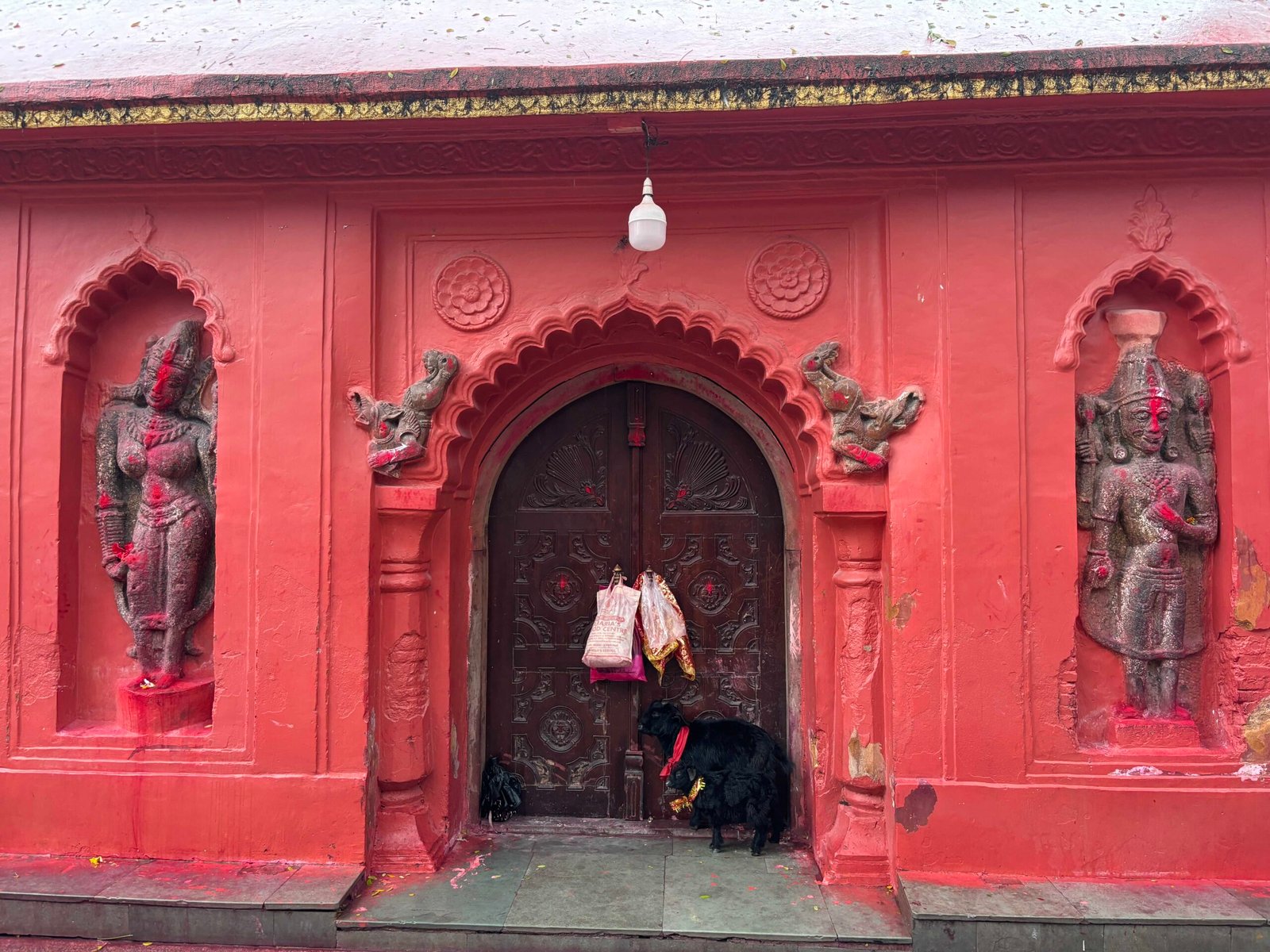
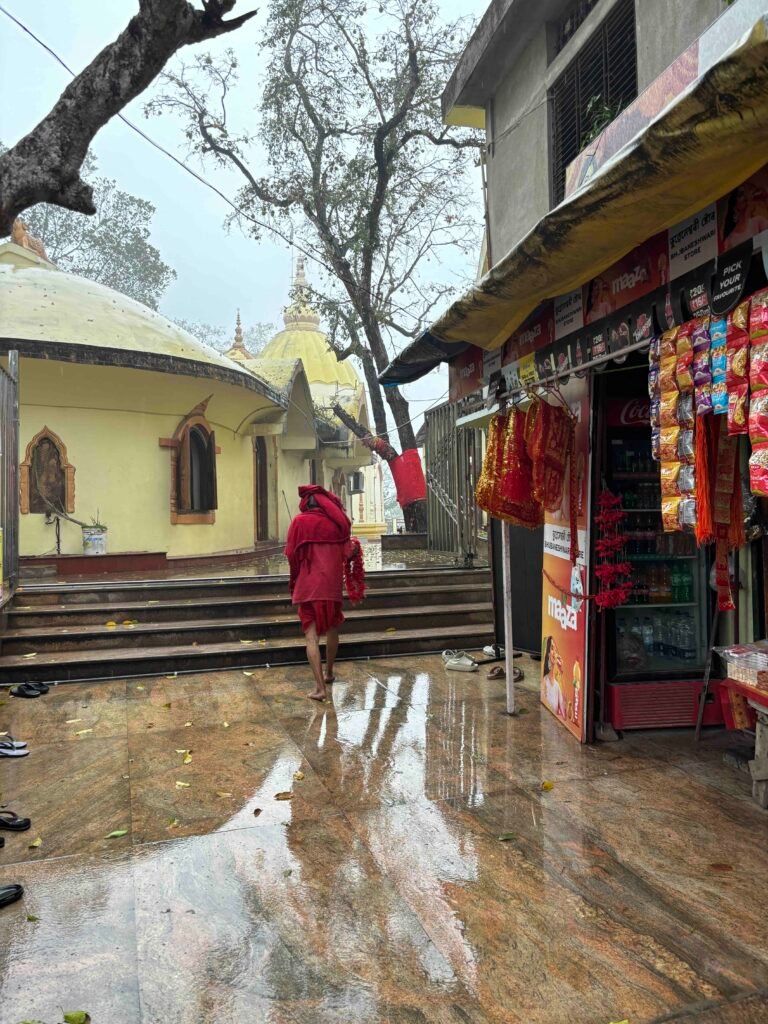
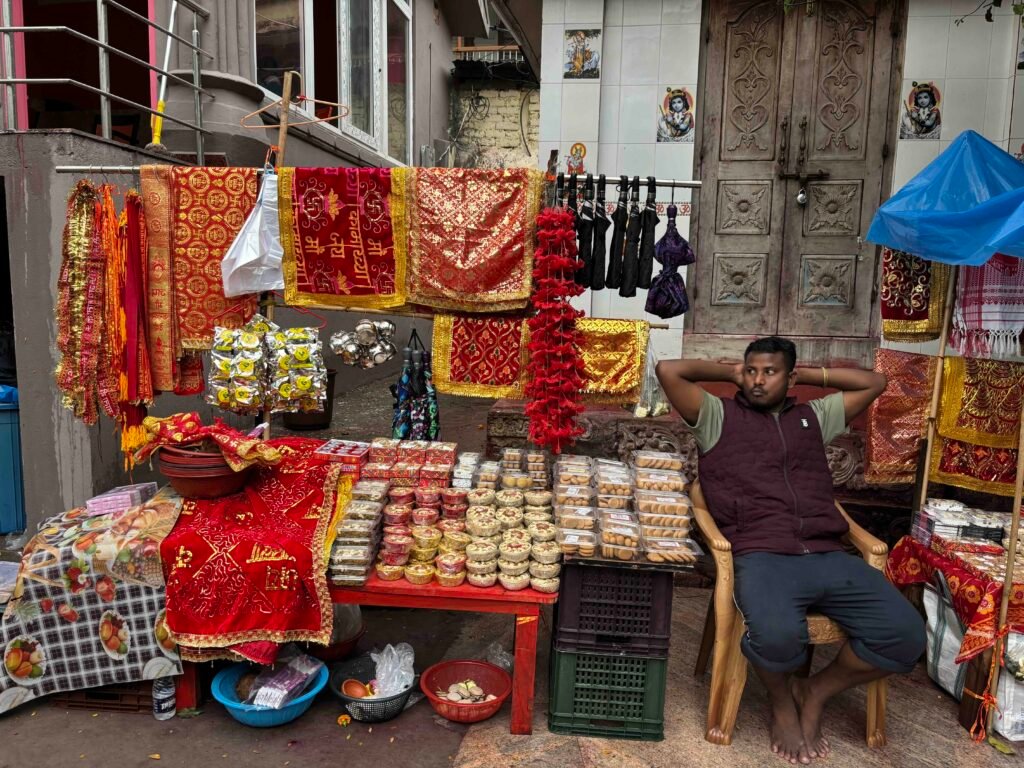
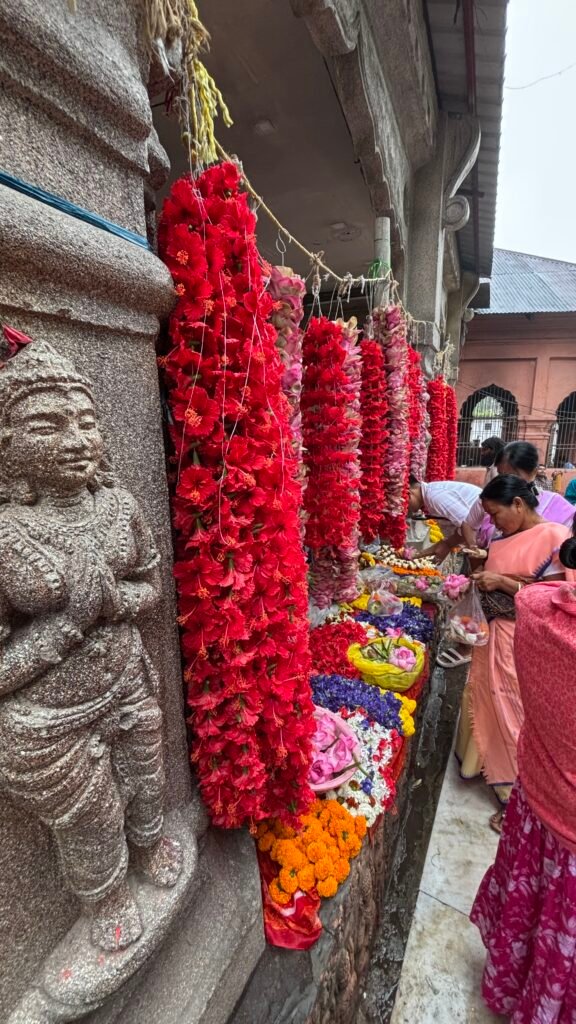
The street leading up to the temple is a riot of color dominated by the red which is associated with menstruation and fertility and the Goddess Kamakhya, a powerful form of Sati, who lives here. The majority of the pilgrims are wearing red clothes as well as a special red and gold headband inscribed with a prayer which is, of course, available for sale at all the stalls along the way. Those coming to pray range from the wealthy and educated, coming to celebrate major life milestones, to the very poorest hoping for better times in this life and the next. There are holy men, sadhus, heads wrapped in red and saffron, some standing with a begging bowl as well as women asking for alms. There is a sense of positive communion among everyone, all equal in their fervor and devotion and happy to be in this auspicious place together. The rain has stopped but the steps and walkways remain muddy and slippery for all.
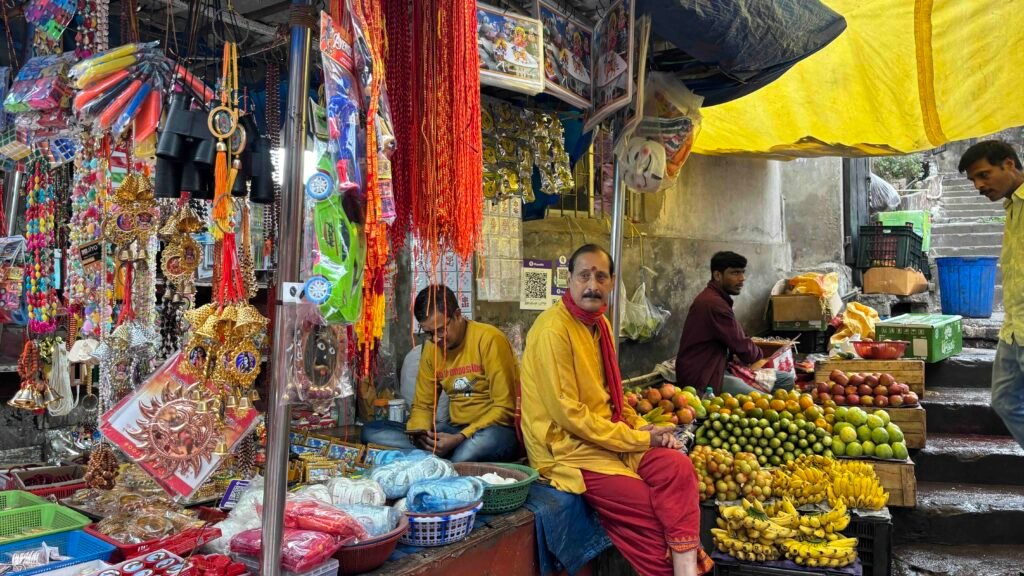
Back down in the lower levels of the city, we visit the Brahmaputra Heritage Center, in a structure designed in the 20th century as a British Commissioner’s house to withstand earthquakes such as the one in 1897 which demolished a good portion of the city. Its rooms celebrate life on the great river and the culture along its banks. It has a well known attached park but the weather is too foreboding for us to venture outside.
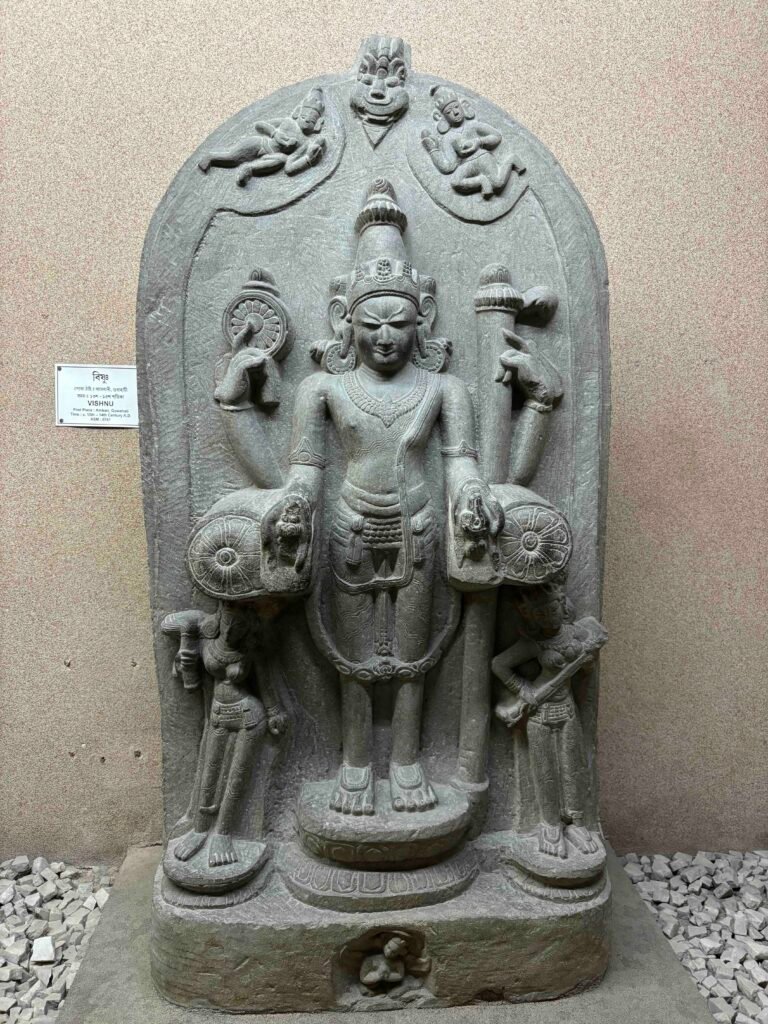
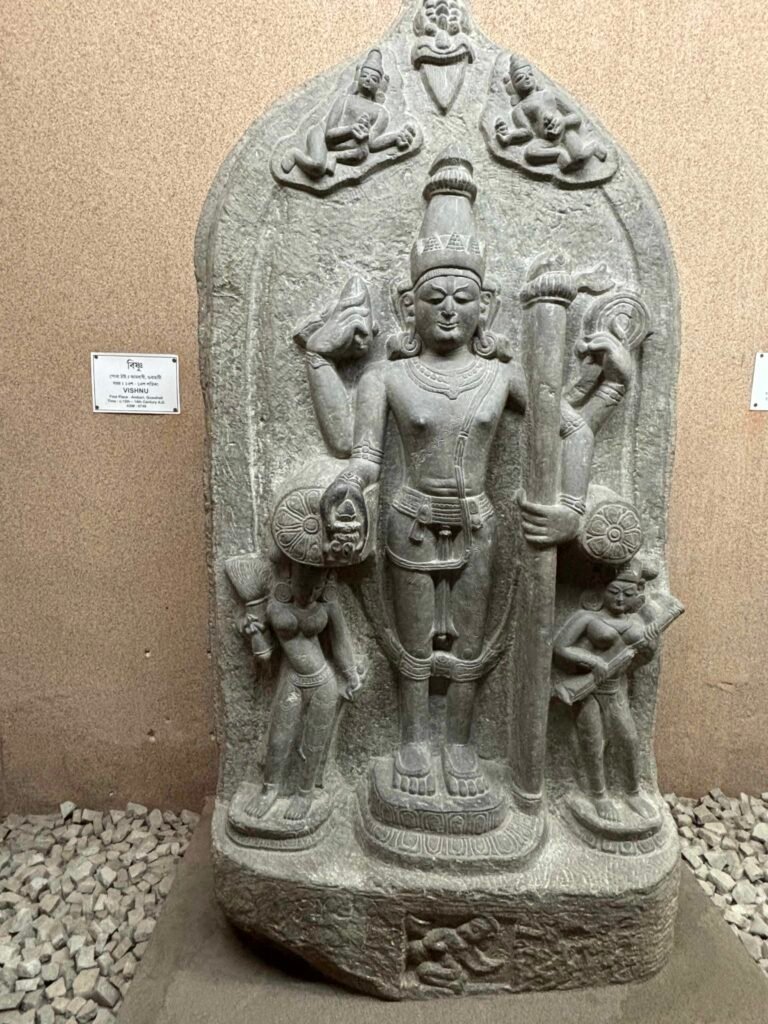
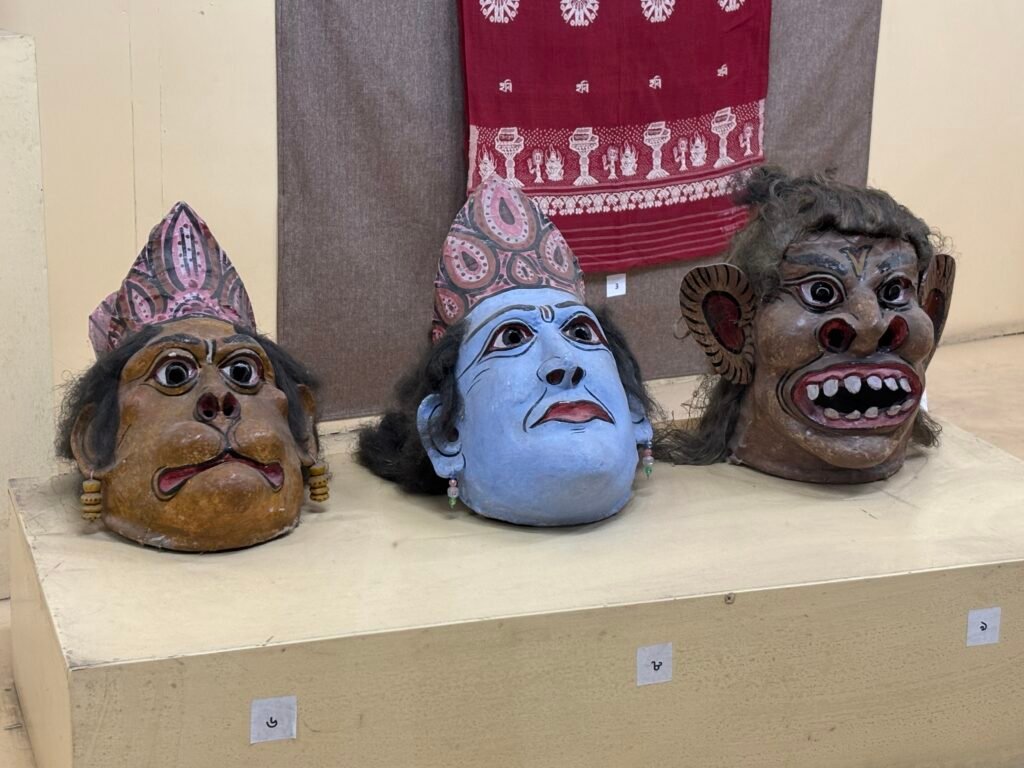
Our stop before a late lunch is to the Assam State Museum, which is a pleasant surprise. It is a very well curated and designed repository of some of the great archeological finds of the area. In the 1960’s a large trove of stone sculptures and some pottery was found nearby in the Ambari area, which appears to have been a center for artistic creativity in the 10-14th centuries. These are not small shards but large, intricate and imposing stone sculptures, many of Vishnu and Surya, the Sun God, displaying a high level of craftsmanship. Below are two version of a classic Vishnu statue found in the area from the same period with a distinctive facial style I have not seen before with
Sculpture from other areas of the state are also on display as well as textiles, wood, metallurgy and some odd pieces of history such as a protective uniform and gas mask left behind by the Japanese after the battle of Kohima and an unexploded ordinance from the same era, as well as older instruments of war.
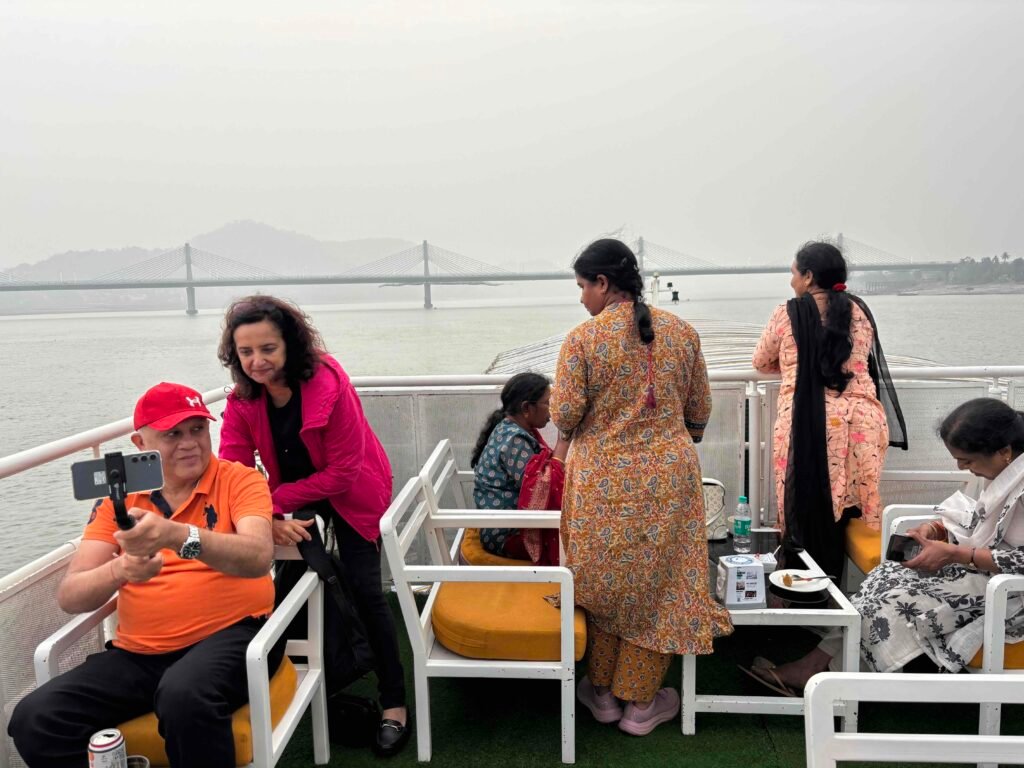
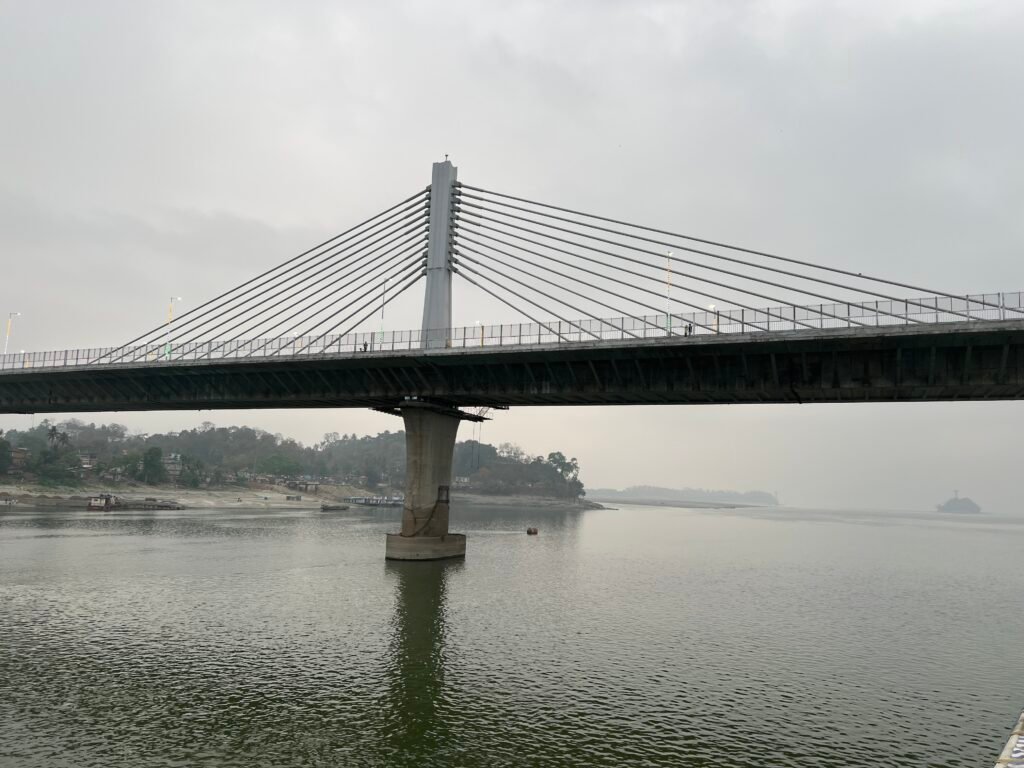
The last event in our itinerary is a sunset cruse on the Brahmaputra before dinner. We are on the topside deck and we are sailing (motoring is a more accurate term) under a brand new bridge crossing the river which was just opened up, in time for or perhaps generating the Prime Minister’s arrival. There is little to see in the dusky water-logged atmosphere except the bridge itself and the enjoyment of the local tourists around us, dancing to the too-loud live disco music emanating from the deck below.
Our final dinner turns out to be stressful as Bill tries to check-in on line for his international flight tomorrow and discovers it has been cancelled. He and I spent the rest of the evening trying to reach Emirates which we do successfully and he is rebooked to get him home on his original flight from Dubai. Nancy and Jim go to sleep assuming their flight from Delhi to London on British Air does not have a problem only to discover when they are already in Delhi and try to check in that their flight has also been cancelled. The impact of the senseless war. The solution they are eventually given is to fly through Abu Dhabi, 2 days later than expected. As I end these posts about our group tour, Nancy and Jim are still in Delhi and Bill should be about to land in San Francisco. I am very happily at the home of my Indian Sister, Gayathri, in very modern Bangalore, relaxing and enjoying family hospitality, good food, and much needed sleep.
I feel our tour to NE India was successful and memorable due in part to the remarkably good weather we experienced except for the last 2 days of rain, the good company of our group, and the surprise of being some of the only international tourists in the area with quiet access to villages and local people. A remarkable journey. Now I have to hope everyone gets home safe and sound.
In addition to cancelled flights, the war added another dimension to our experience. The Indian population here is worried about lack of gasoline and propane and electric generation if energy supply lines do not open up. We are all one.