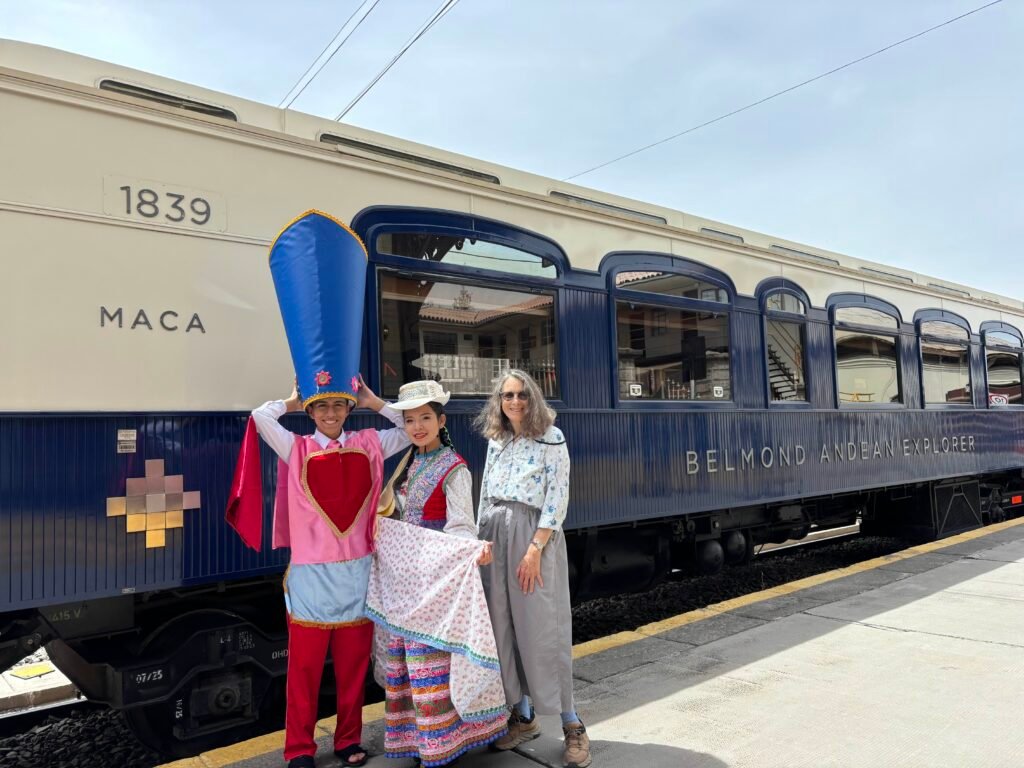
I am at the moment on one of my favorite travel experiences: a train traveling through a new landscape. This is the Belmond Andean Explorer in Peru from Araquipa to Cusco with a few stops including at Lake Titicaca.
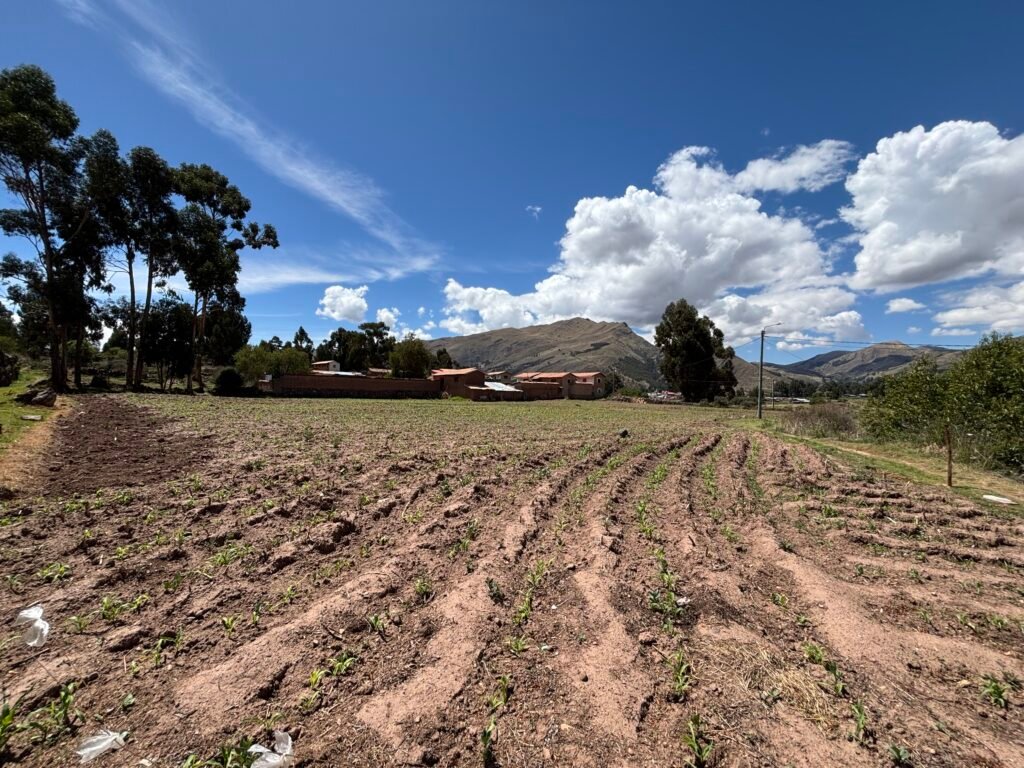
The landscape on this high “altiplano” with the Andes rising on both sides is a beautiful landscape of a county still in agrarian farm mode, with small individual fields and mud brick houses and sheds scattered among sturdier more modern structures. A study in green and brown punctuated with red brick tiles and corrugated metal roofs. People walk by who are from another century: women with long braids behind their short pleated work-ready skirts and round sun hats, often with a sling around them of a beautiful fabric embracing a child or some produce; hard working men at 7:30 in the morning ready for a day in the fields with sunhat and sturdy work shoes. Cows, sheep and llamas roam around and eat what is available around them.
My earlier time in the small city of Arequipa with a population of 1 million was very enjoyable. A beautiful place with its old building constructed out of white volcanic rock, giving it the name tag of the “white city”. it is in fact surrounded by a number of active volcanoes, especially El Misti which rises imposingly and has caused considerable destruction in the past.
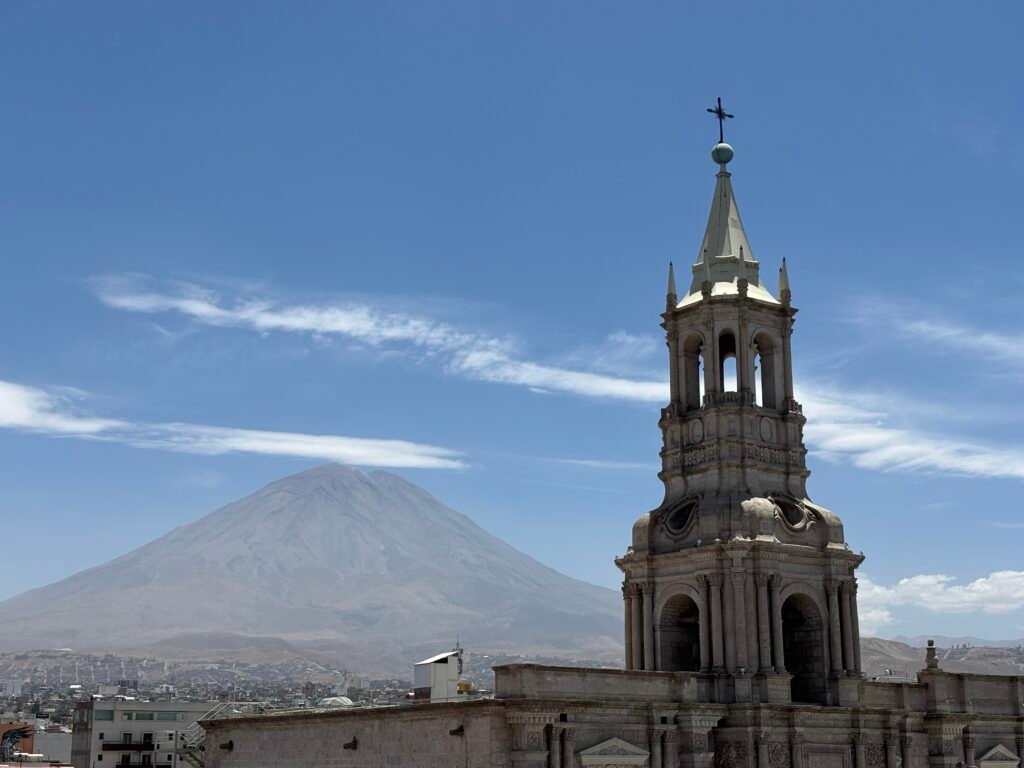
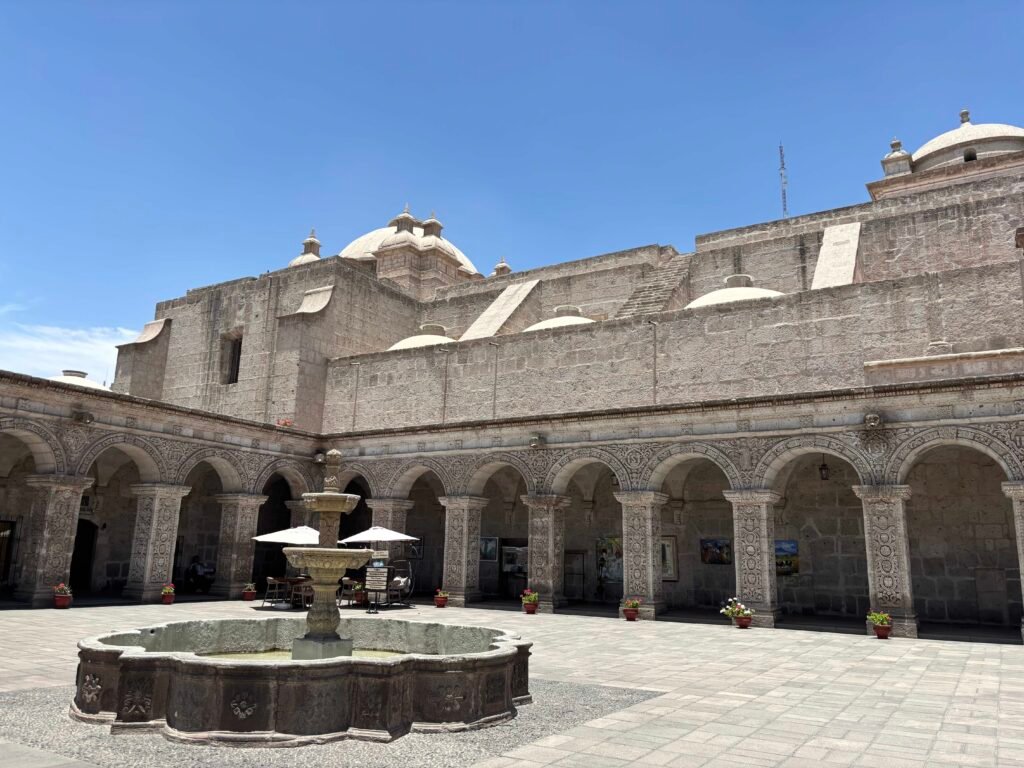
Its main plaza, like that in Cusco, is a central focus for the population, with friends and families gathering on the many benches under the trees to spend time together. It is a valuable component to a community which is missing from the American social fabric. Around the square, in addition to the Cathedral, are many tourist shops but on nearby streets, unlike Cusco, there are also stores for the residents so it feels much more part of real life than the tourist world around Cusco’s Plaza des Armas.
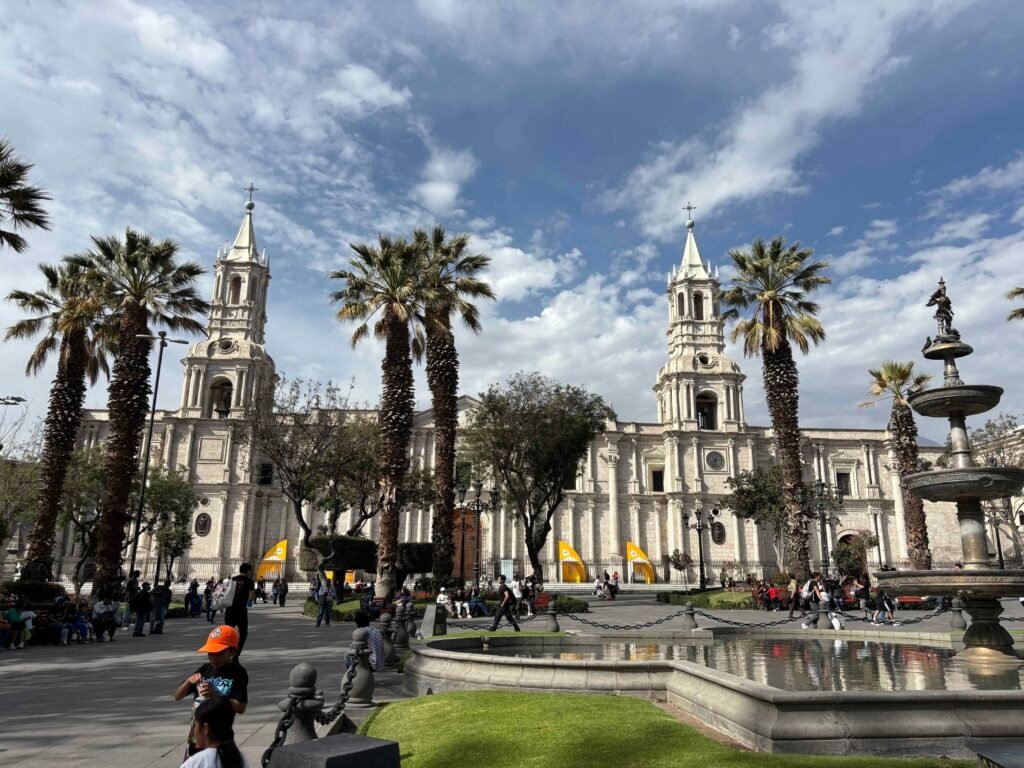
I stayed near the center of town and was able to walk to the main historic sites as well as to some memorable restaurants for meals (food here is expensive, high American costs, but of excellent quality. I went on a walking tour in the morning with a small group that took us to some of the more hidden places in the center. In the afternoon I visited The Church of the Companions of Jesus which once was the center of the Dominicans of the area who held a great deal of power and were eventually thrown out of their holdings and another sect more agreeable to the government in power took over all their premises
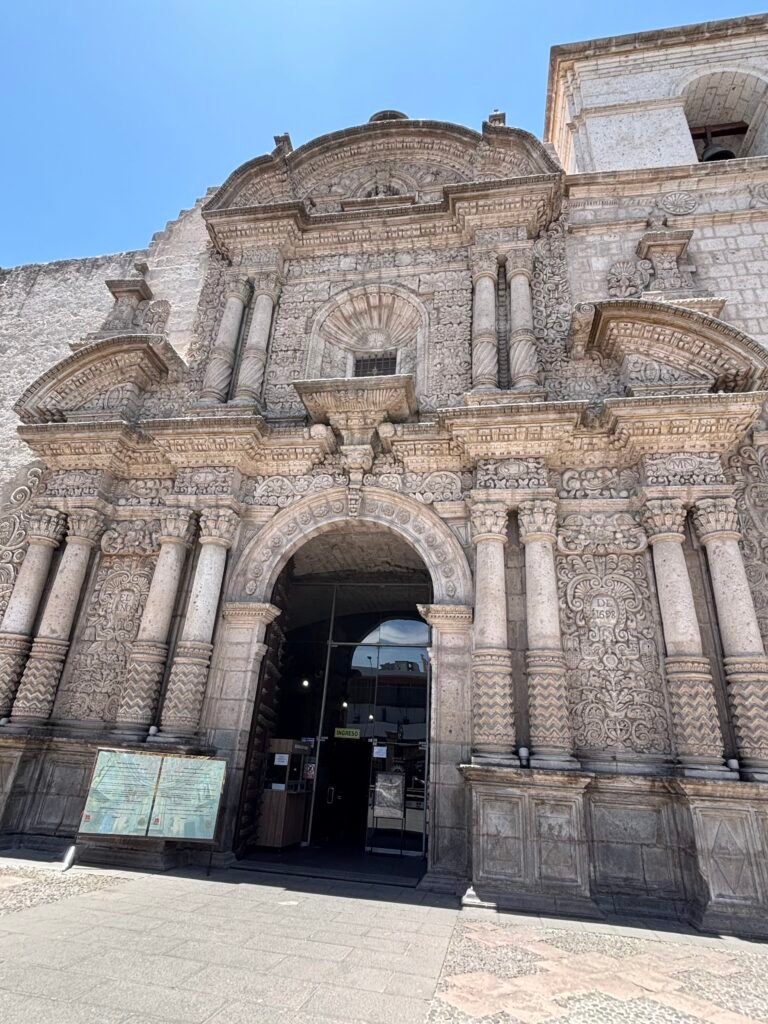
The major difference in Arequipa is that it was actually founded and created as an urban commercial center by the European colonizers so that it doesn’t feel like it holds the ghosts of the Incas in its history. It main struggles were within the various Catholic sects who vied for power in this new world. Augustinians, Jesuits, Dominicans all flocked here to convert and bring their version of Catholicism to others, often sparring for a position of power.
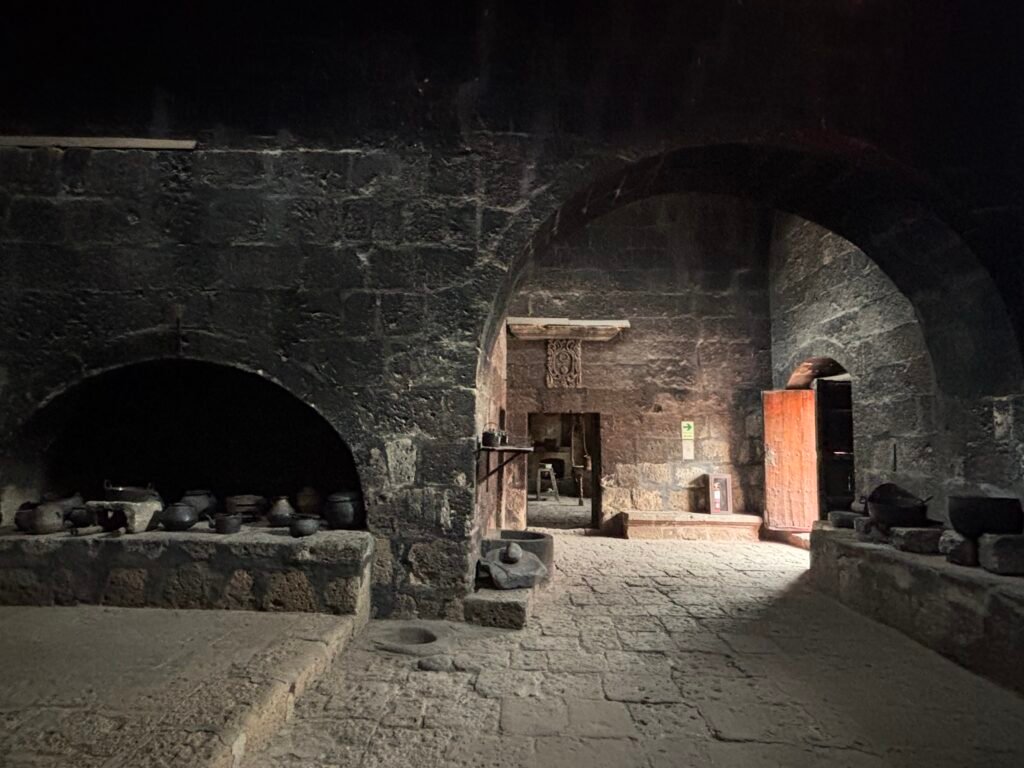
The Convent of Santo Domingo is one of the main structures in town, with a large foot print of ground. It is still an active convent with only a handful of nuns left, including some novices (the youngest being 35) but my private tour helped me understand some of the earlier dynamics of this institution, As the society grew, young women from prominent European families were given over to the convent at about age 12-14 to live in group homes as novices. It shed honor on their parents. They could take the veil when they were 16 — either the “black veil” if their dowry and contribution to the convent was sufficient or else the “white veil” with more duties of servitude. But 7 hours of prayer a day was a prerequisite for all. Once taking the veil, the nuns were given their own quarters, sharing a kitchen facility with others.
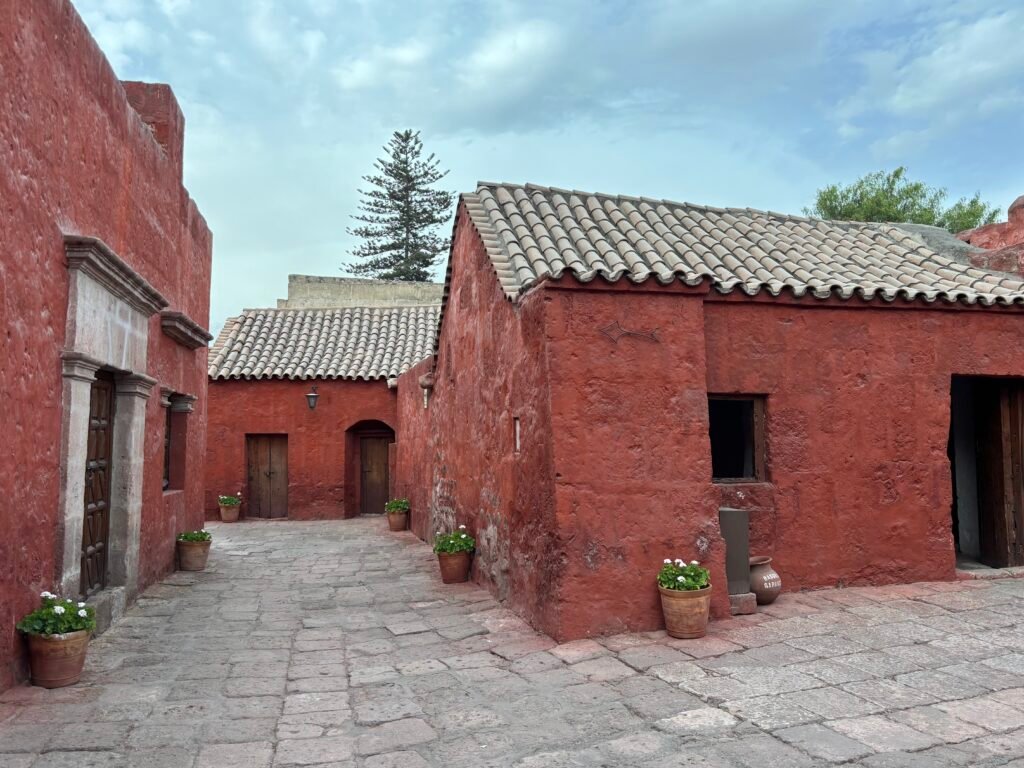
There were 50 group houses of nuns so that a small village exists within the convent, which has been reconstructed and still stands today, with its streets and areas for meditation and relaxation, laundry areas, large rooms for baking and cooking, as well, of course, as the main chapel separated from the area available to family and the public for worship.
It was a hard life — but the only other way of life for women in those times was an arranged marriage and the dangers of childbirth, being subjected to the rule of a mother-in-law and the diseases that rampaged communities at the time.
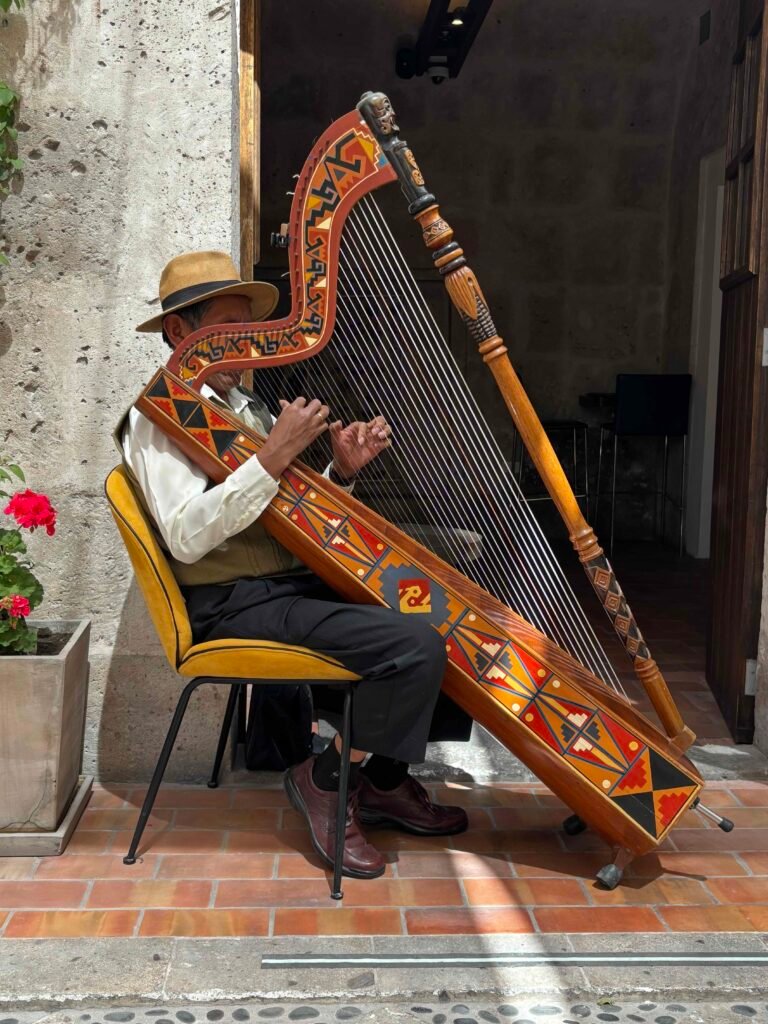
I had some fabulous dinners on my own in Arequipa and enjoyed this older harpist in the hotel courtyard who played as beautifully as his harp.