
The last days of our tour found us in Cuzco, once the capital of Incan Peru and still proud of its heritage. The history, in a nutshell, is that at the point in time when the Spanish conquistadores arrived, two Incan rulers who were brothers were warring for supremacy of the Incan world. This allowed Francisco Pissaro and only 180 soldiers with their 1532 AD high technology guns and their far more ancient European diseases to completely destroy the Incan world, demanding a ransom for one of the leaders of 6 tons of gold and 10 tons of silver which was shipped back to Spain. Greed took over from there and immigration and the Spanish Catholic culture engulfed the known Peruvian world.
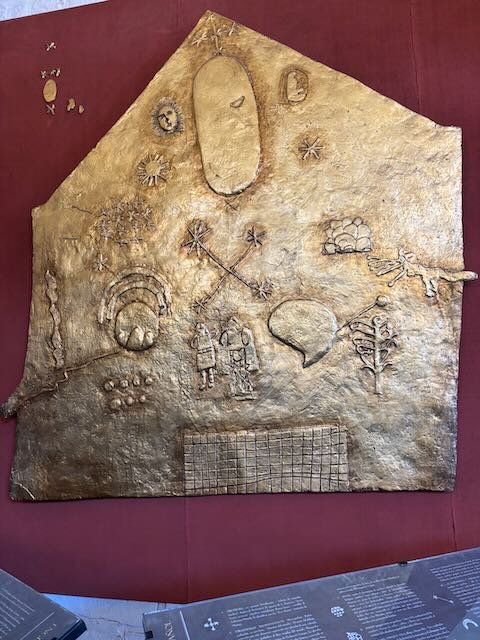
of the Incan culture
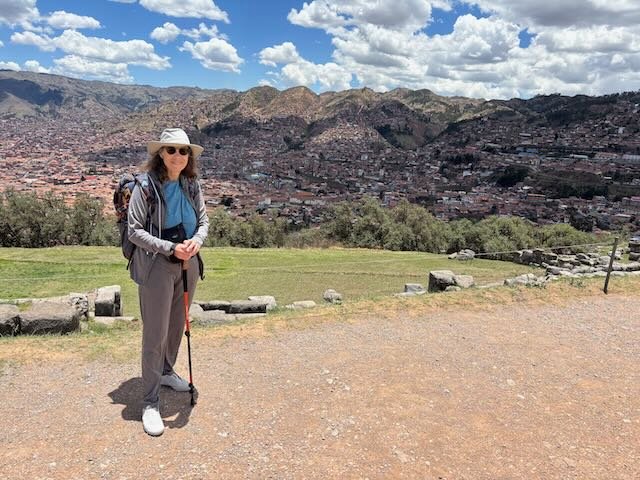
Our introduction to the older world was a visit at the top of a mountain at 12,000 feet (Cuzco itself is at 11,000 feet) to the ancient fortress and religious site of Sacsayhuamán, with large stone blocks still forming walls and windows which stretch a considerable distance along a flat plane.
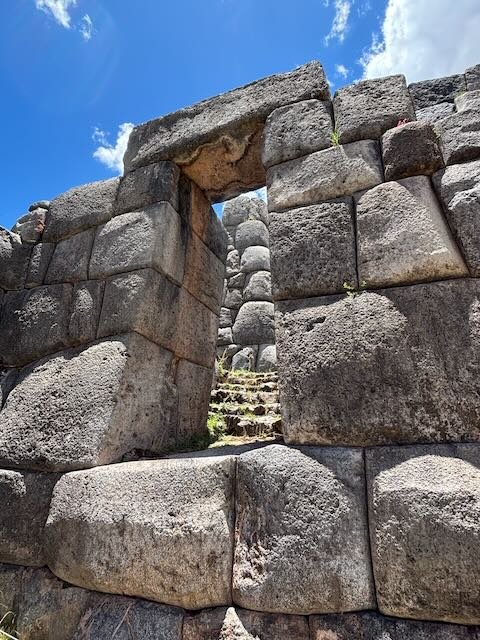
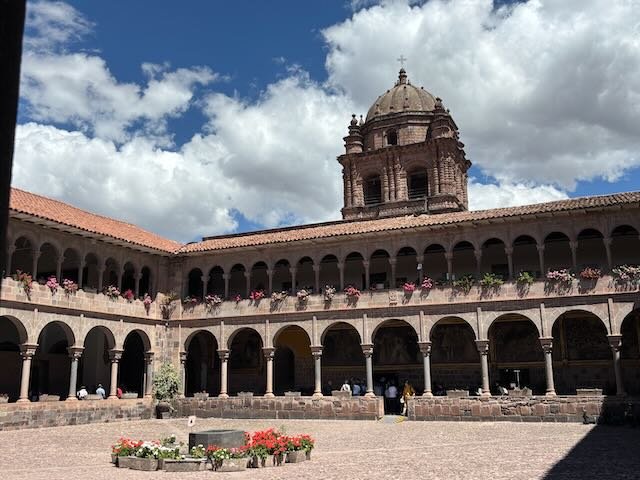
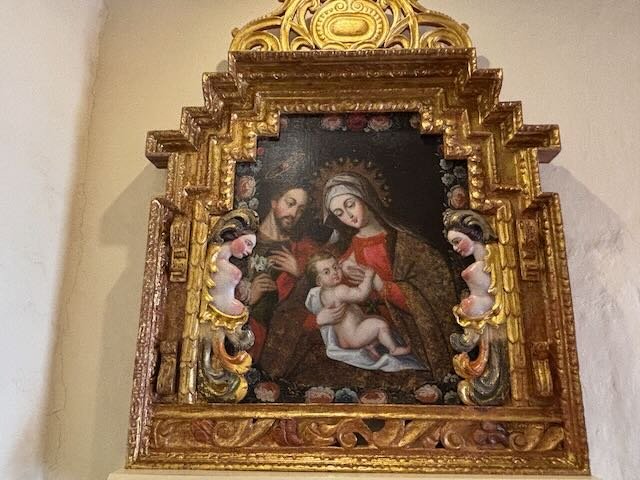
The newer world was experienced by us lower down in the center of town by entering the Convento Santo Domingo which is now a museum trying to balance the stone relics which still remain of the Incan world incorporated into the Catholic artifacts of the conquerors.
In the afternoon, after Marge and I had a good lunch (food here is pretty amazing) , we went to the regional museum which helped us understand the history, and the resistance by some brave citizens, against cruel Spanish rule.
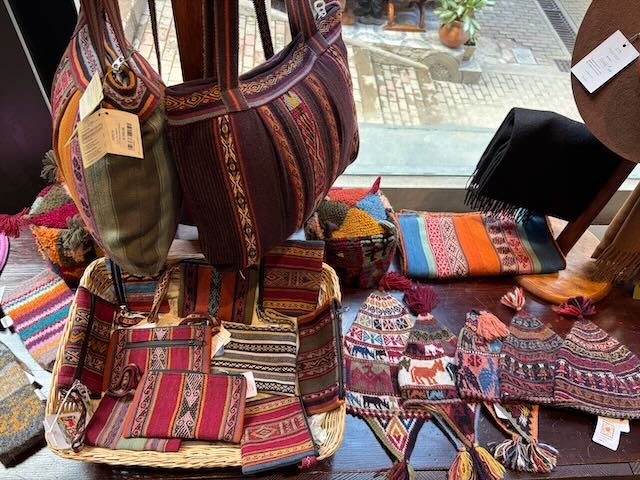
The main downtown area of Cusco is covered with shops selling expensive “pure alpaca” textiles sandwiched between small shops selling more reasonable mixed wools and lots of bright colored take-home hats, gloves, socks, scarfs, trinkets, stuffed toys. Products for tourists is obviously the main industry here. And who knows what the textiles are really composed of or where they are made. The touts tell us there is a big difference between “baby alpaca” and “adult alpaca” wool, while we hear some items are mixed with cotton, sheep’s wool, rayon, nylon, spandex. It is a seller’s paradise.
For our final group dinner, there was a many course meal to taste some of the local dishes, which Marge was able to experience, including their main delicacy of guinea pig. I heard how families have special dinners together on Sundays, with guinea pig being the first food of choice. There is artwork in the Churches and museums which show the last supper of Christ — with a cooked guinea pig in the center of the table. It was also pointed out by one of our guides that Judas is always shown with much darker skin than the other apostles. It appears for no other reason than prejudice.
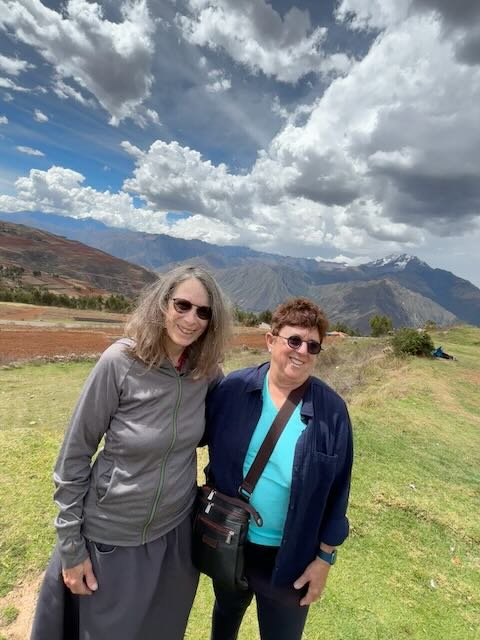
I sadly said goodbye to Marge in the morning as we went off to different airports, Marge to Lima and home and me to Araquipa and my next adventure, a special high-end train back to Cusco.
.